


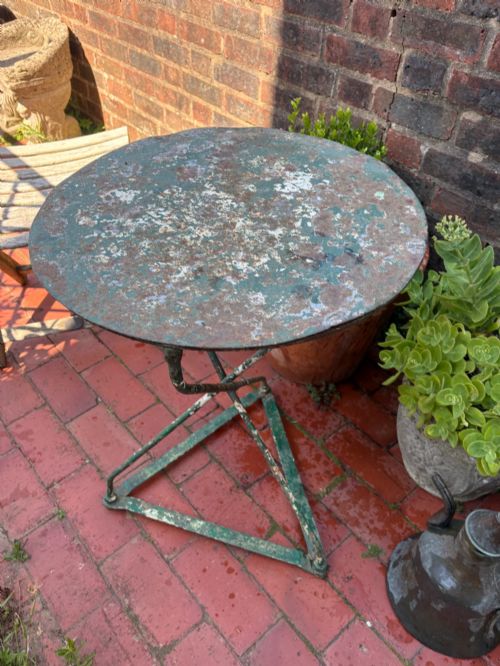


French Garden Plant Stand
A French garden plant stand brings architectural structure and rustic charm to a terrace or conservatory.
French Garden Plant Stand
When searching for a French garden plant stand, buyers encounter utilitarian and decorative metalwork designed to elevate pots and urns. These pieces organise greenery and create height variations in garden rooms, patios and conservatory spaces.
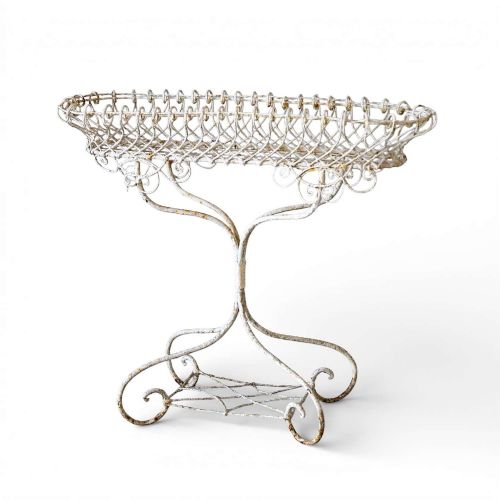
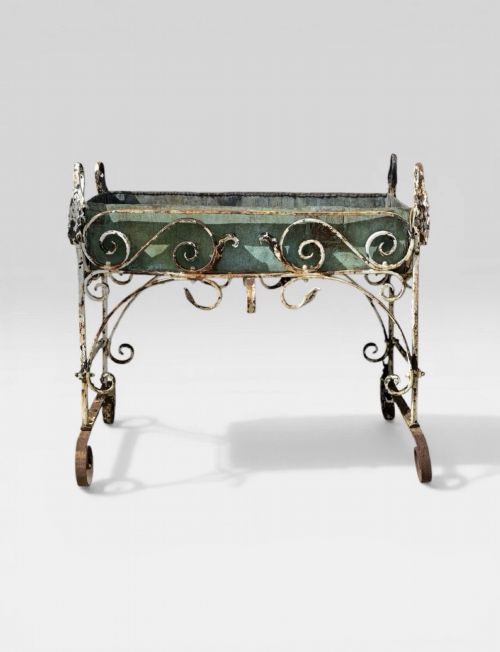
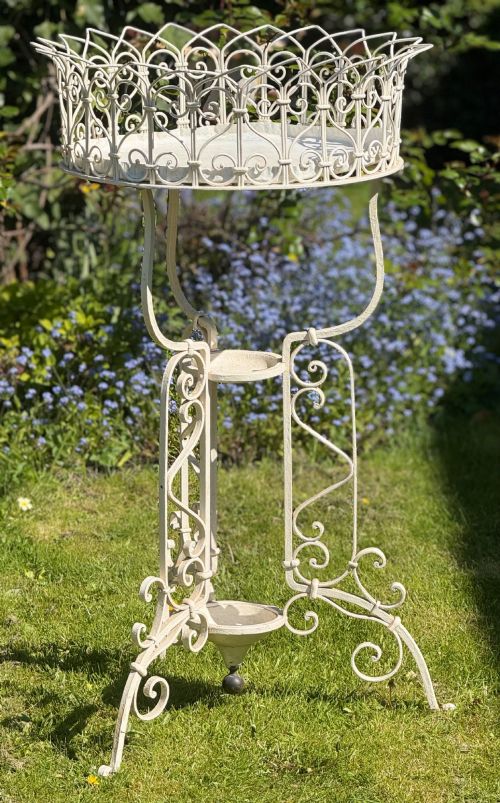
The selections on this page span the nineteenth century into the early twentieth century, incorporating Victorian and Edwardian examples alongside French country designs. Wrought iron, cast iron and wirework dominate the forms, frequently retaining traces of old paint.
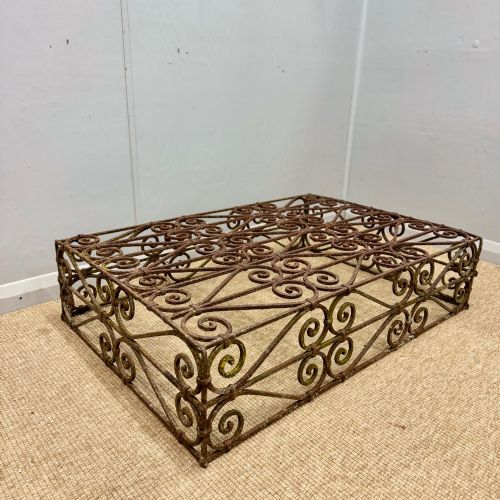
Beyond standard plant stands and jardinieres, the category stretches to include low tables, gueridon tables and garden planters. Buyers frequently choose these items to bring functional display surfaces into outdoor and indoor planting schemes.
How they were made
Makers utilised forged wrought iron and bent wirework to construct lightweight yet sturdy frames for botanical display. Scrollwork, lattice baskets and strapp work demonstrate the manual skill involved in shaping structural metal components.
Foundry-cast iron provided heavier, robust bases for round tables and urn supports, often finished with protective layers of green or white paint. Carpenters also contributed timber pieces, seen in golden oak examples lined for indoor botanical use.
What varies in quality
Quality rests in the intricacy of the metal manipulation, from simple linear wirework to elaborate scrollwork and hand-formed lattice baskets. Heavier gauge ironwork and sophisticated structural joinery distinguish finer decorative pieces from purely utilitarian items.
The integrity of the surface finish plays a role, with original or patinated paint finishes holding greater visual depth than uniform modern resprayings. Form and proportion also dictate standing power, as balanced proportions separate accomplished workshop pieces from standard garden furniture.
The French Garden Plant Stand Glossary
- Jardinière
- An ornamental pot or stand designed to hold flowers or plants. These decorative receptacles often feature drainage liners or decorative metal galleries.
- Guéridon
- A small French round table supported by one or more central columns. Originating in the seventeenth century, these functional stands suit intimate display roles.
- Strapp work
- Metal straps arranged in geometric or decorative strapwork patterns across furniture frames. This technique provides structural rigidity while adding visual texture.
- Wirework
- Metal rods or wire bent and soldered into openwork mesh or grid structures. Victorian makers utilised this technique for lightweight conservatory plant stands.
French Garden Plant Stand: Frequently Asked Questions
How do I use a plant stand indoors?
These metal stands integrate smoothly into conservatories, sunrooms or living spaces to display potted ferns and trailing foliage. Their open wire and iron frames keep room layouts feeling airy while lifting greenery to eye level.
Protect interior flooring by placing saucers beneath pots inside wire baskets or solid trays. This prevents moisture from reaching vulnerable wooden surfaces beneath older stands.
Can these stands stay outside all year?
Many of these pieces were built for outdoor use from durable iron, zinc and wirework. However, prolonged exposure to winter dampness can accelerate metal oxidation on unprotected surfaces.
Move delicate wirework pieces into sheltered garden spots, greenhouses or sheds during harsh winter months. Regular cleaning and careful monitoring of painted finishes help preserve the metal.
How do I date a metal plant stand?
Dating relies on examining construction methods, material gauges and stylistic cues from periods like the Victorian era or early twentieth century. Hand-forged wrought iron and complex wirework typically point toward nineteenth-century workshop production.
Factory-cast components and standardised bolts often indicate later manufacturing dates around the Edwardian period or the nineteen-twenties. Comparing decorative motifs like scrollwork against dated examples helps narrow down the decade.
What is the difference between a jardiniere and a plant stand?
A jardiniere typically refers to a container or trough designed to hold potted plants directly, often supplied with a protective metal or ceramic liner. These are built to contain soil and moisture.
A plant stand functions as an elevated piece of furniture designed to support separate pots at various heights. Stand designs focus on skeletal frameworks of wire or iron rather than containing vessels.