

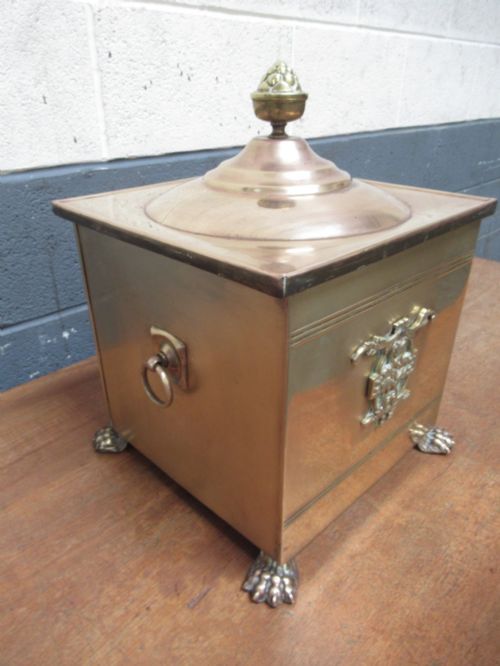
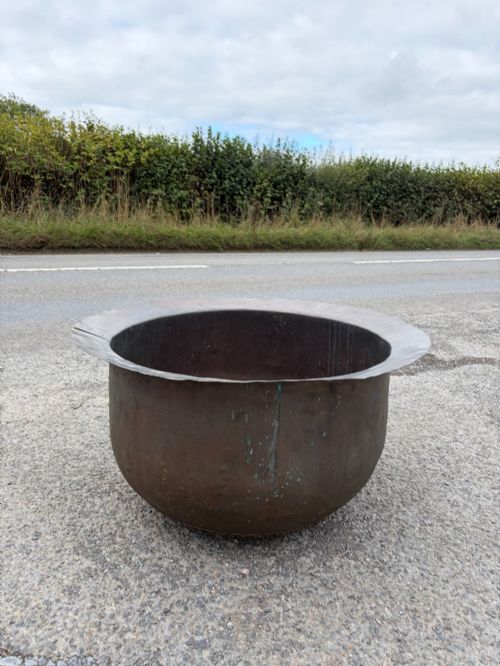
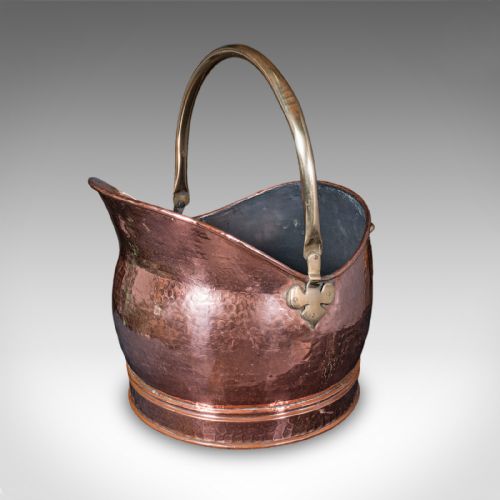
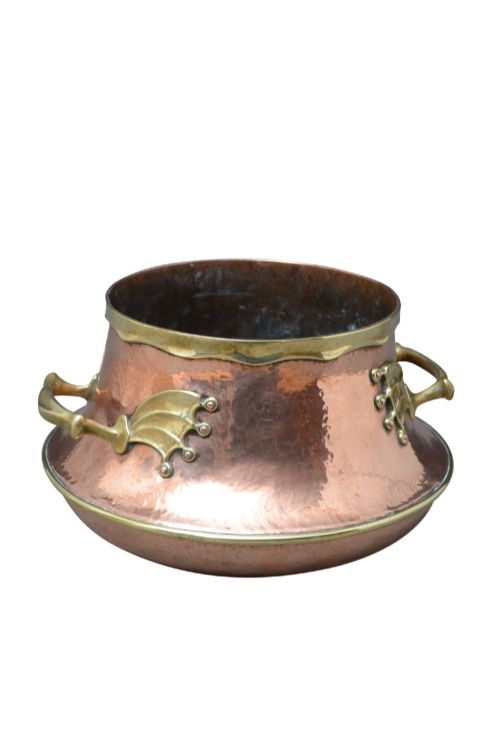



Vintage Copper Log Bin
These vintage copper log bin vessels bring practical hearthside storage and warm metallic texture to a room.
Vintage Copper Log Bin
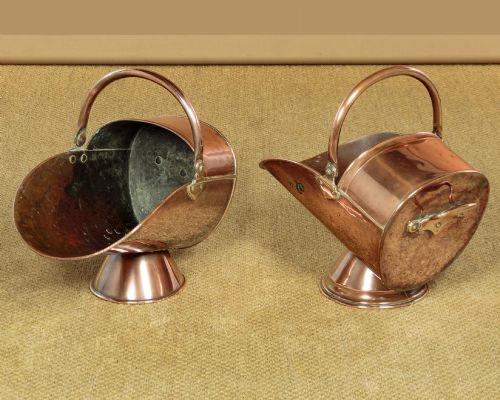
A vintage copper log bin serves as a sturdy receptacle for hearth fuel, drawing upon utilitarian forms originally fashioned for solid fuel storage. These pieces bridge the gap between functional fireside utility and decorative home display, often doubling as substantial indoor planters.
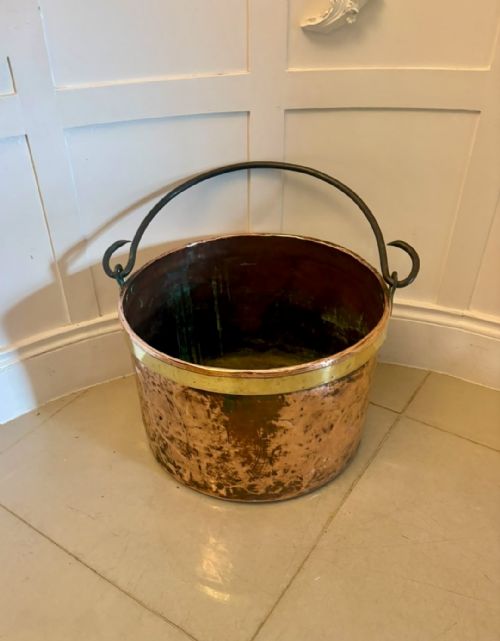
The selections encountered on this page predominantly hail from the nineteenth century, including specific Victorian and Georgian examples. Such items frequently incorporate brass banding, iron handles, or decorative embossing characteristic of period metalwork.
Buyers will find considerable variety in scale, ranging from compact coal scuttles to exceptionally large cauldrons and wash tubs. Many retain functional attributes such as wrought iron swing handles or original iron frames.
Materials and construction techniques
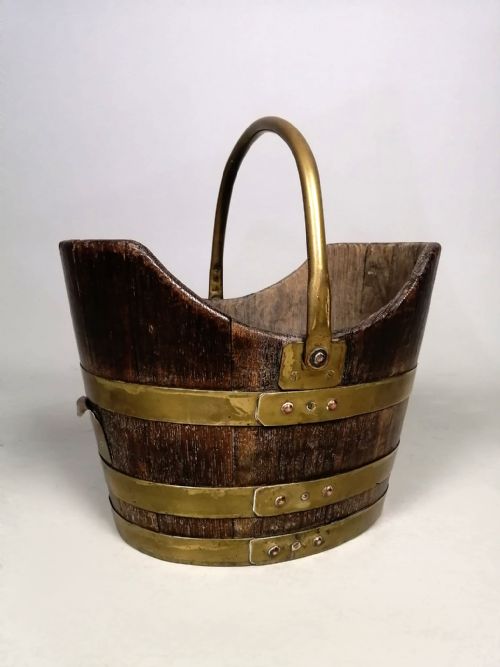
Makers constructed these vessels primarily from heavy sheet copper, often augmenting the body with brass bands, rims, or feet. Wrought iron frequently appears in the formation of sturdy swing handles and supportive frames.
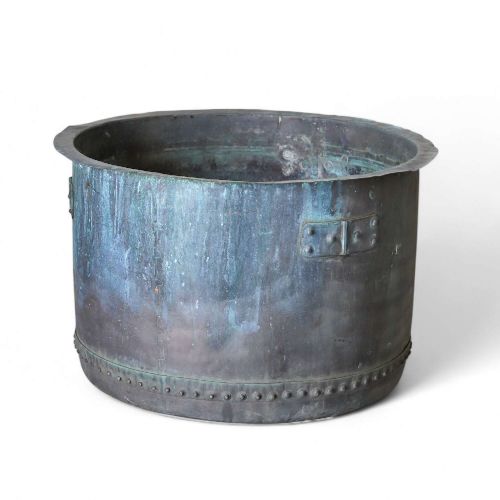
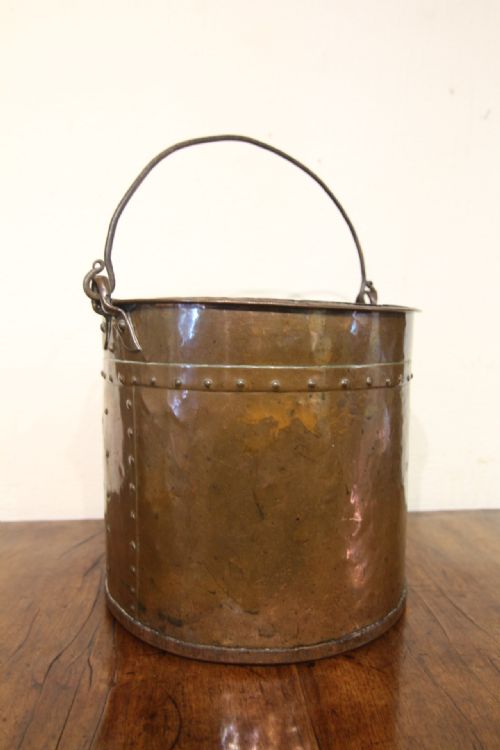
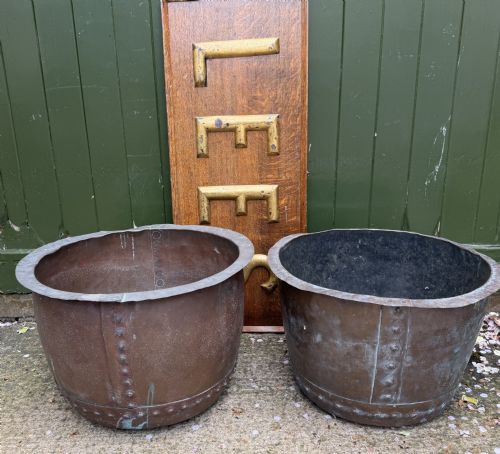
Techniques relied heavily on hand-riveting to join the copper plates securely, ensuring durability for heavy loads of coal or logs. Hand-hammering and embossing added structural rigidity while introducing surface texture to the metal.
Vintage Copper Log Bin Retail Price Guide 2026
Typical asking prices for vintage copper log bin among the pieces listed under this phrase on Sellingantiques today, from the lower quarter to the upper quarter. They describe what is for sale here now, not the wider market.
Grain measures disguised as heavy copper log bins prove that Victorian agricultural equipment enjoyed a surprisingly heavy-duty second act by the fireplace.
Evaluating the standard of metalware
The distinction between standard utility items and superior examples lies in the weight of the metal and the integrity of the construction. Heavier gauges of copper resist denting and maintain structural form far better over centuries of use.
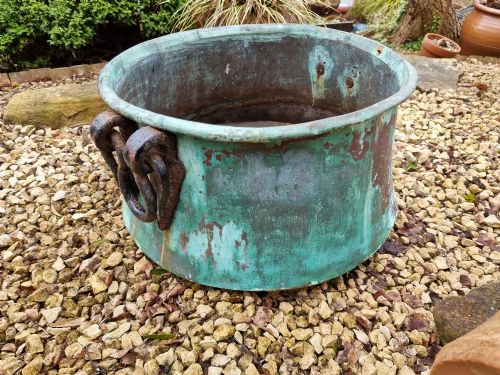
Details such as hand-hammered rivets, well-fitted brass accents, and the presence of original wrought iron hardware elevate the character of a piece. Natural patination and verdigris surfaces indicate genuine age and unpolished history rather than modern chemical treatments.
The Vintage Copper Log Bin Glossary
- Verdigris
- A green patina that forms naturally on copper and brass through atmospheric oxidation over long periods. This surface layer acts as an indicator of genuine age.
- Cauldron
- A large, rounded vessel traditionally used over an open fire, often adapted in these listings as a substantial log holder or planter. These possess sturdy iron swing handles for lifting.
- Jardiniere
- An ornamental pot or stand designed to hold live plants, frequently sharing forms with coal buckets and log bins in nineteenth-century metalwork.
- Coal Scuttle
- A specialised bucket or container designed for carrying and storing coal near a fireplace, often featuring a shaped mouth and a pivoting handle.
- Embossing
- A technique where a pattern is raised in relief from the surface of the metal using hammers and punches from the reverse side.
Vintage Copper Log Bin: Frequently Asked Questions
How do I clean a copper log bin?
Maintenance depends entirely on whether a buyer prefers a bright metallic shine or an aged historical appearance. Gentle dusting and occasional wiping with a soft cloth preserve the natural surface.
Harsh chemical polishes remove the historical patination that collectors value on nineteenth-century metalware. Many owners choose to leave the weathered verdigris untouched.
Can these bins hold actual logs?
Most of these vessels were originally engineered to contain heavy loads of coal, wood, or peat for fireside consumption. Their robust construction and riveted seams make them entirely practical for holding firewood.
Users should simply ensure the interior remains dry to prevent unnecessary moisture accumulation against the metal base.
How can I tell a Georgian bin from a Victorian one?
Georgian pieces, particularly those from the eighteenth century, tend to display simpler, robust proportions with heavy brass banding and hand-wrought details. They reflect a utilitarian elegance distinct from later eras.
Victorian examples frequently showcase heavier machinery influence, featuring more elaborate embossed decoration, varied handles, and distinct Arts and Crafts or Art Nouveau styling.