


Vintage Commercial Wall Clock
A vintage commercial wall clock brings purposeful utility and striking scale to a room, drawing the eye with bold dials and utilitarian housings.
Vintage Commercial Wall Clock
When you search for a vintage commercial wall clock, you encounter timepieces designed for public spaces, transport networks, factories and shops rather than domestic parlours. These items carry the weight of institutional history, originating from periods spanning the Victorian era through the 1940s and incorporating styles like Industrial, Art Deco and traditional British design.
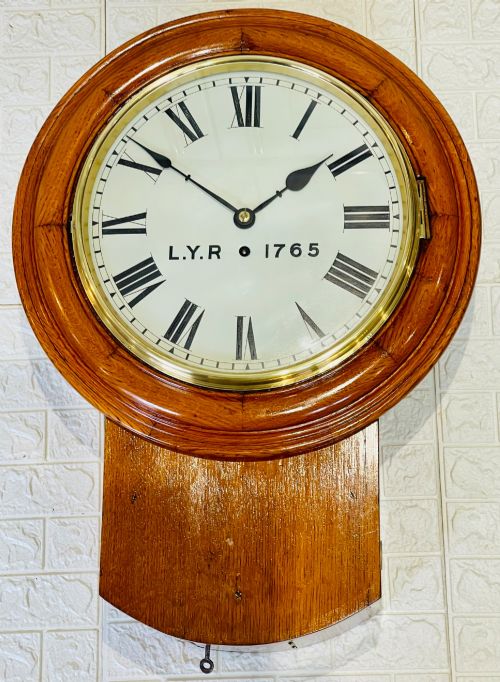
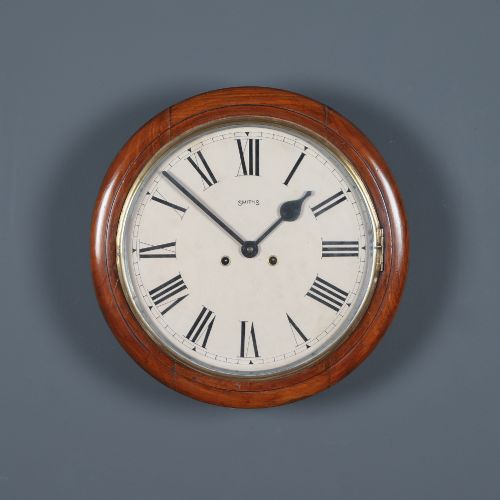
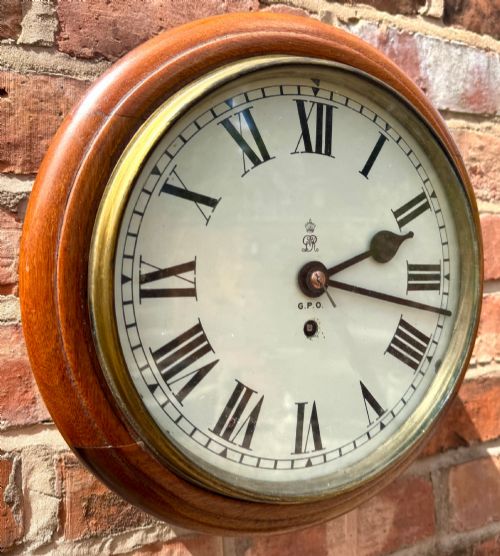
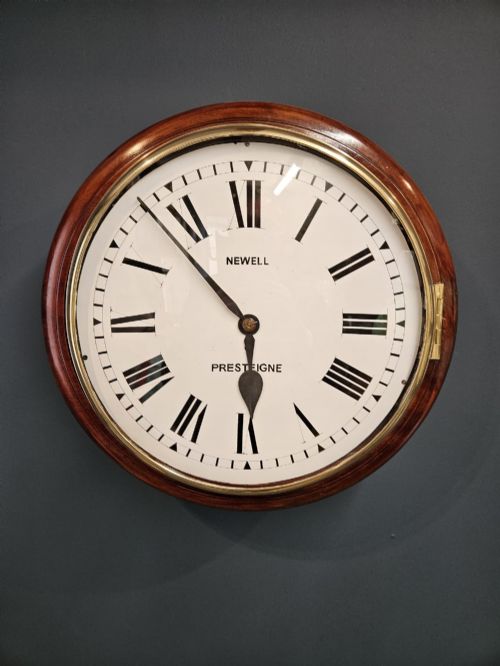
The version you are most likely to meet on this page is the round dial wall clock, often housed in mahogany or oak frames with glass faces. Many of these examples hail from railways, the Post Office or municipal buildings, featuring fusee movements or simple timepieces built to keep strict time in bustling environments.
How they were made
Timbers such as mahogany and oak formed the robust surrounds for dial clocks, turned or carved into deep drum cases and drop dials designed to withstand public use. Brass components and fusee movements provided the mechanical reliability needed for heavy institutional service.
Metal housings emerged in iron, chrome and green metal as industrial design shifted through the early twentieth century. Glass protected the painted paper or metal dials, while specialist makers applied clear typography for legibility across large rooms.
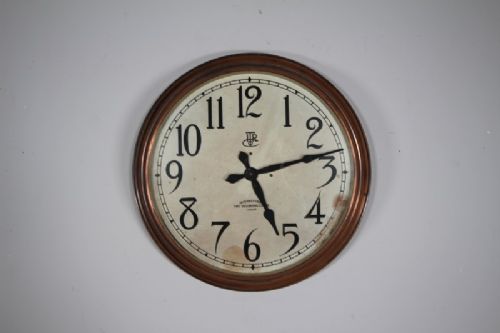
The selection includes specialist time recorders designed for industrial clocking in alongside double-sided factory and railway station clocks.
What varies in quality
The distinction between standard utility timepieces and superior examples lies in the integrity of the original movement and the provenance of the casing. Clocks bearing stamped numbers from specific railway lines, government departments or named makers hold greater historical interest than unmarked variants.
The preservation of original painted dials and unpolished timber surrounds dictates the character of the piece. Refurbished elements alter the historic balance, whereas untouched dials bearing the honest wear of decades in service command deeper appreciation from collectors.
Smiths of London·John Walker·Camerer Cuss·Josef Herzog·Anglo Swiss Watch Co
The Vintage Commercial Wall Clock Glossary
- Fusee movement
- A conical pulley device connected to the mainspring by a chain or cord, ensuring even tension and consistent timekeeping as the spring unwinds.
- Drop dial clock
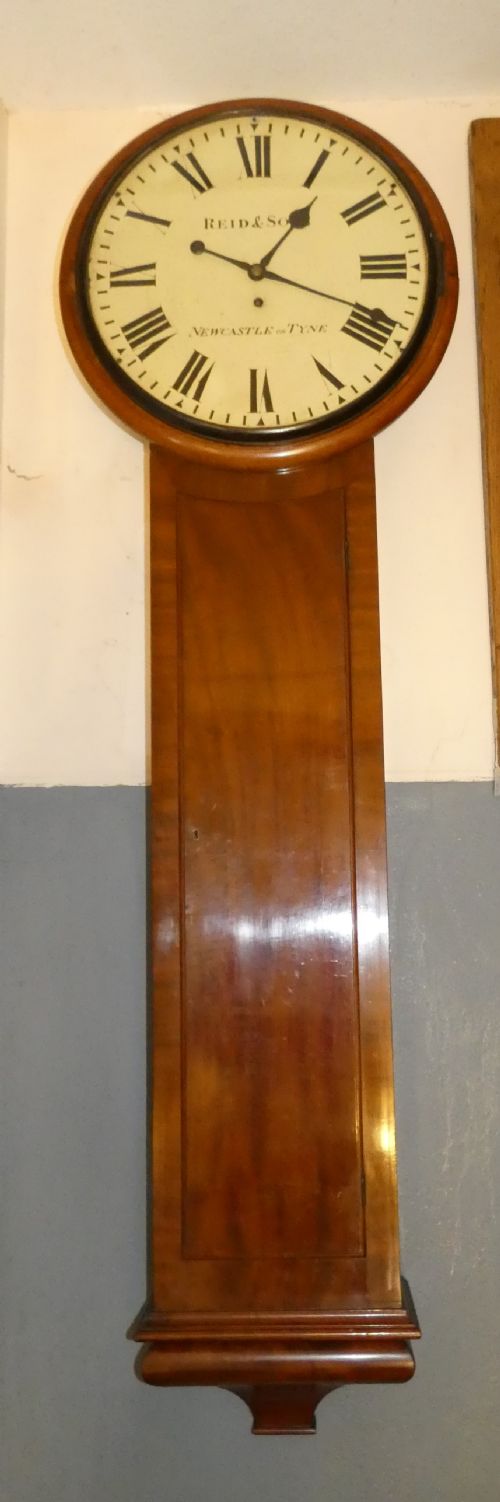
- A wall clock featuring a circular dial above an extended wooden trunk or case, which houses the pendulum and weight.
- Timepiece
- A clock that indicates the time of day but does not strike the hours or chime.
- GVR
- A cypher denoting the reign of King George the Fifth, frequently found stamped on clocks commissioned for official use.
- Trade sign
- A large directional or advertising object, sometimes incorporating a clock face, used outside shops and businesses.
Vintage Commercial Wall Clock: Frequently Asked Questions
How do I wind a fusee clock?
A fusee clock requires a specialised winding key inserted into the dial aperture to tension the chain around the conical drum.
Care must be taken not to overwind the movement, turning the key steadily until resistance meets the stop.
Where were these clocks originally used?
These timepieces hung in railway stations, postal sorting offices, factories, schools and jewellers' shops where public punctuality mattered.
Their robust construction allowed them to endure industrial environments and heavy daily traffic.
How do I date a railway clock?
Dating relies on examining the timber case style, the shape of the bezel, and any stamped railway company initials on the dial or movement.
Monarch cyphers like GVR also provide a clear timeframe for manufacture during specific royal reigns.
Can I hang a heavy wall clock safely?
Wall clocks with solid mahogany or oak cases carry substantial weight and require secure fixing directly into masonry or heavy wall studs.
Using appropriate wall plugs and screws matched to the hanging bracket ensures the clock remains stable.