

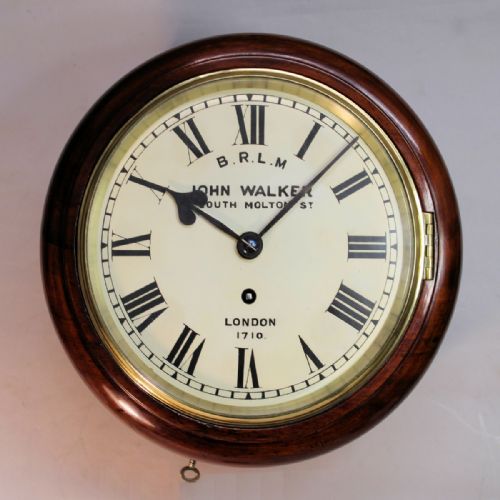
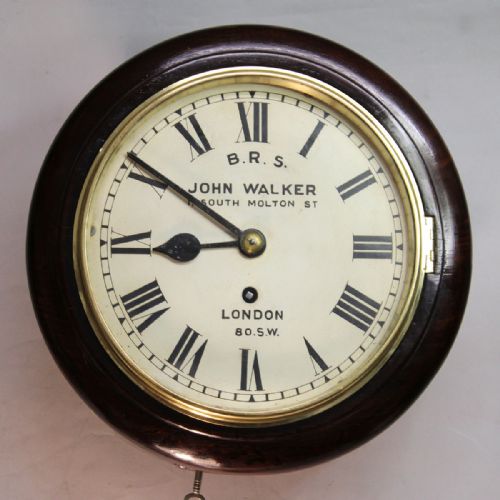


British Railway Station Clock
These british railway station clock examples are robust timepieces built for punctuality, and you want one for an industrial interior.
British Railway Station Clock
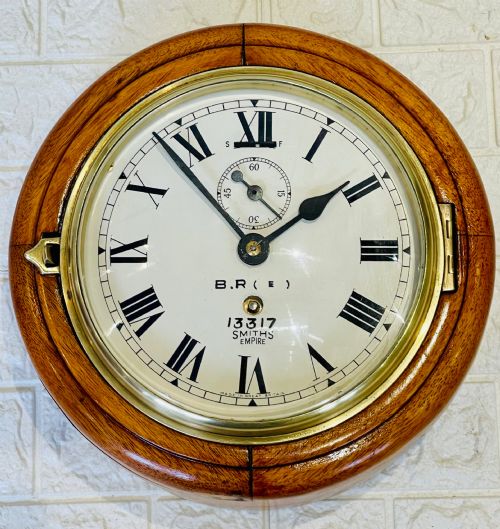
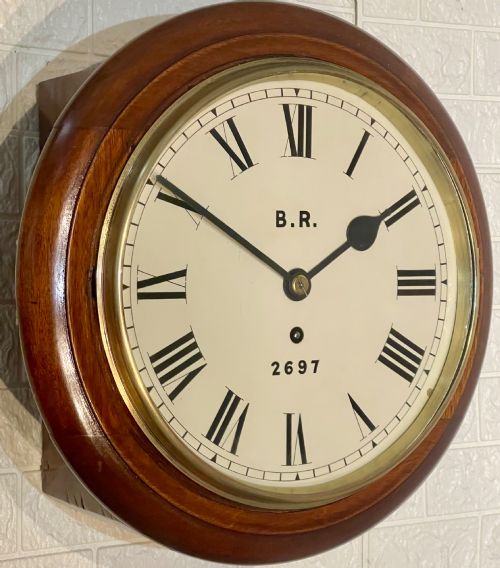
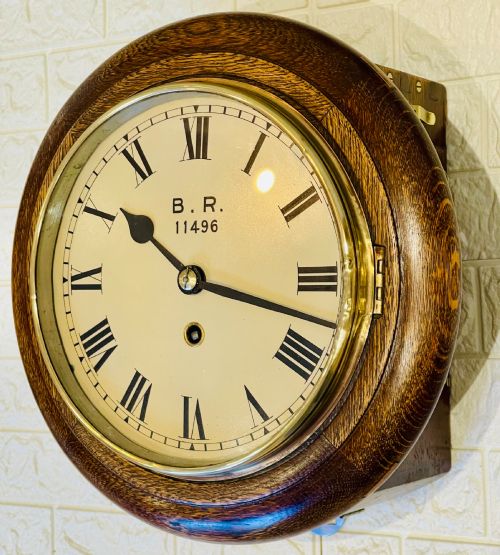
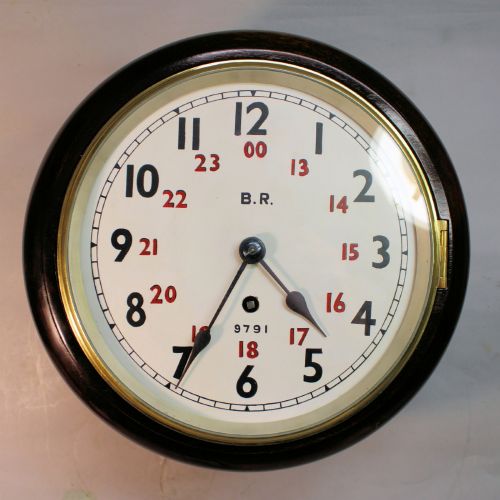
When you search for a british railway station clock, you are looking at utilitarian wall timepieces that once regulated passenger travel across the network. The pieces listed here span the Victorian, Edwardian, and mid-century eras, originating from companies such as the North Eastern Railway, London Midland and Scottish Railway, and London and North Eastern Railway.
You are most likely to meet round dial wall clocks housed in sturdy wooden cases made of mahogany, oak, or other timber. These range from standard eight-inch faces to larger station master examples, and occasionally include specialised pieces like double-sided factory clocks or East Waterways variants.
Materials and Construction
Makers housed these movements in substantial cases of mahogany, oak, and general wood, often paired with brass bezels and protective glass fronts. Iron and steel also appear in the heavier industrial variants, while later mid-century pieces incorporate materials like Bakelite.
The defining mechanical feature across these wall clocks is the fusee movement, designed to maintain even tension on the gear train as the mainspring unwinds. This mechanism ensured the timekeeping precision demanded by busy timetables.
Listings include oak and mahogany cases alongside iron, steel, brass, and Bakelite materials across Victorian, Edwardian, and mid-century periods.
Qualities of Construction and Provenance
Quality in a british railway station clock rests largely on the maker's signature and the documented provenance of its station or line. Dial signatures from respected retailers like John Walker or Camerer Cuss elevate a piece above unmarked municipal timepieces.
The integrity of the wooden case, the preservation of the original fusee movement, and clear station markings from locations such as Lymington Town or Peterborough East separate standard utility clocks from exceptional survivors.
John Walker·Gents of Leicester·Camerer Cuss And Co·Smiths
The British Railway Station Clock Glossary
- Fusee
- A conical pulley used with a cord or chain to maintain a constant force on the clock movement as the mainspring runs down. This mechanism is central to the accuracy of traditional railway timepieces.
- Dial
- The visible face of the clock where the numerals and hands are displayed. On railway clocks, these are typically clear and bold for rapid reading by staff and passengers.
- Bezel
- The ring of brass or other metal that holds the glass cover over the clock dial. It often hinges open to allow access for winding and setting.
- Station Master
- A large wall clock typically hung in the office or main concourse of a railway station. These pieces often bear specific regional railway company lettering on the dial.
British Railway Station Clock: Frequently Asked Questions
How do I wind a fusee railway clock?
Use the appropriate key inserted into the dial aperture to turn the movement clockwise until it stops. Take care not to overwind the mainspring.
Ensure you support the weight of the key and turn smoothly to protect the vintage mechanism.
Where were these clocks originally hung?
They were mounted on walls in ticket offices, platform waiting rooms, and station master offices across the British rail network.
Their bold dials ensured railway staff could coordinate timetables at a glance.
How do I date a railway clock?
Examine the dial typography, the style of the wooden case, and any company lettering associated with specific railway regions. Victorian and Edwardian examples often feature fusee movements in mahogany or oak cases.
Later twentieth-century pieces transition to different materials and simpler industrial housings.
Can I hang a heavy wall clock safely?
Mount the clock directly into a solid wall stud or use heavy-duty wall anchors rated for the substantial weight of hardwood and brass.
Railway clocks are heavy due to their thick timber cases and robust mechanical movements.