
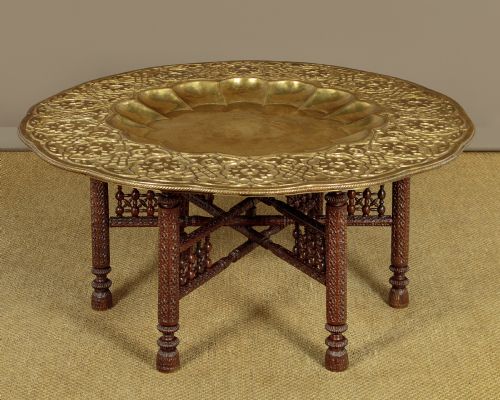
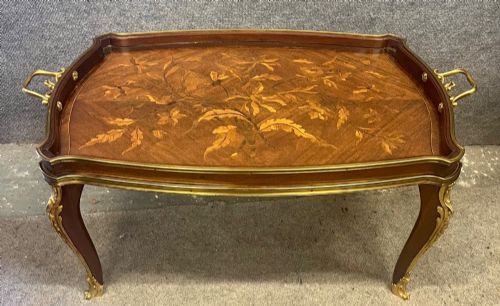
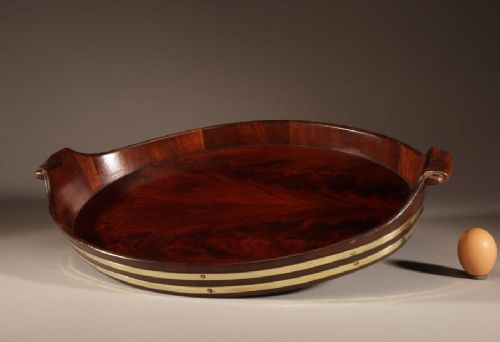
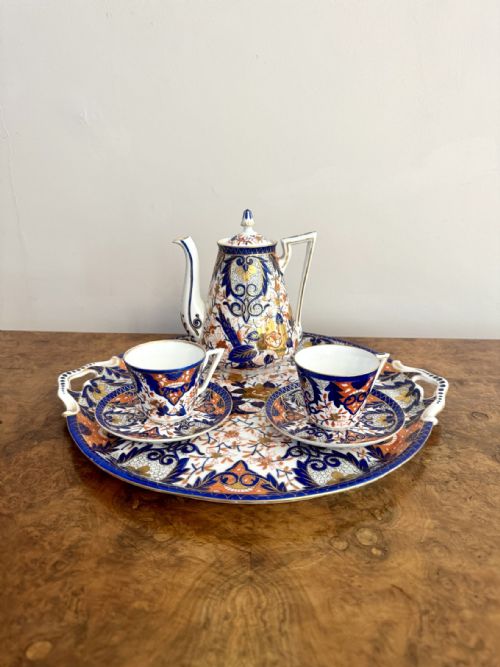

Vintage Coffee Tray
A vintage coffee tray brings functional historic charm to a room, offering a sturdy surface for drinks while displaying period craftsmanship.
Vintage Coffee Tray
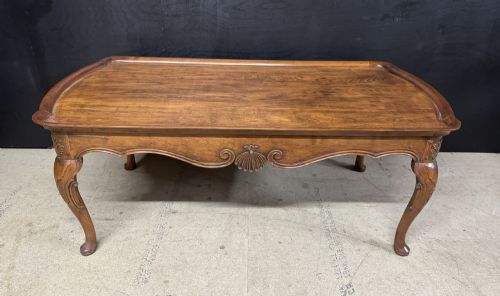
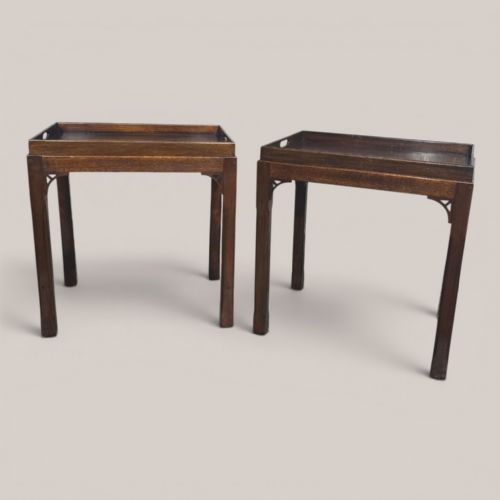
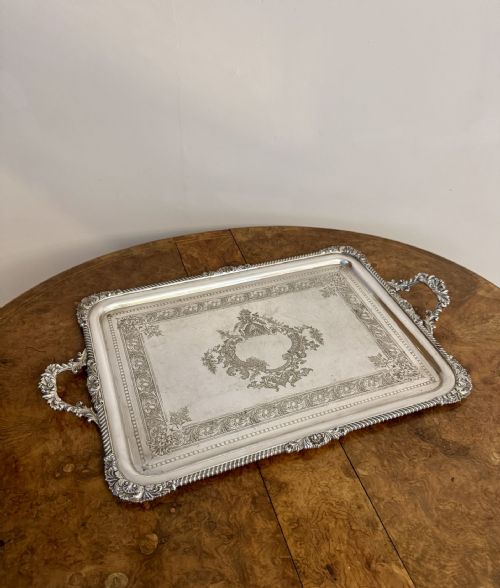
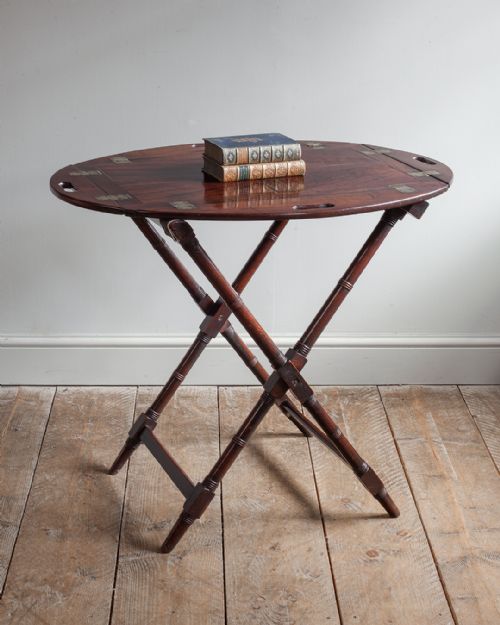
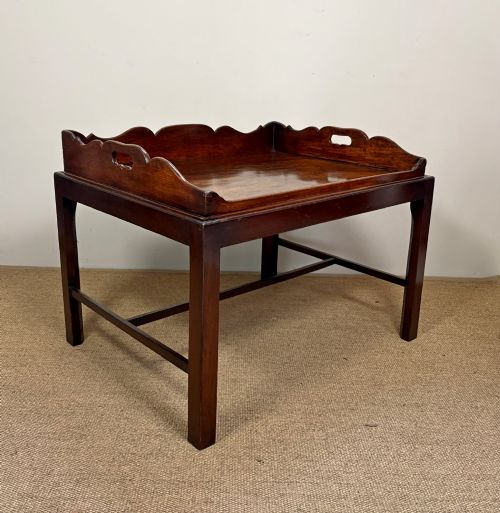
When buyers search for a vintage coffee tray, they encounter a diverse array of serving platters, butlers trays on folding stands, and low occasional tables. These pieces span multiple centuries, ranging from eighteenth-century Georgian designs to twentieth-century Art Deco and revival styles.
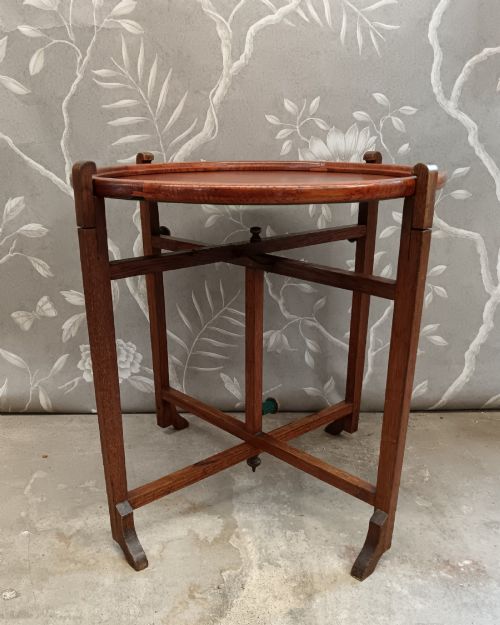
The most common formats on this page combine removable wooden or metal trays with dedicated folding or fixed stands, transforming portable serving ware into permanent low coffee tables. Common materials include mahogany, oak, walnut, brass, copper, and silver plate, often associated with English, Anglo-Indian, and French traditions.
Materials and construction methods
Cabinet makers utilised dense hardwoods like mahogany, oak, and walnut, frequently employing fine marquetry, coopered construction, or carved galleries to raise the edges of serving surfaces. Trays designed for portability often feature integrated handles or dovetailed joints to withstand regular lifting.
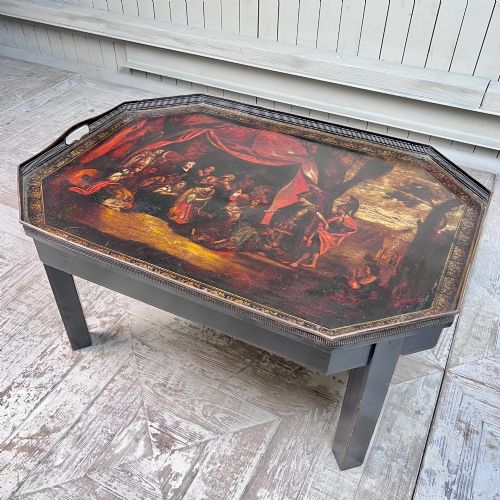
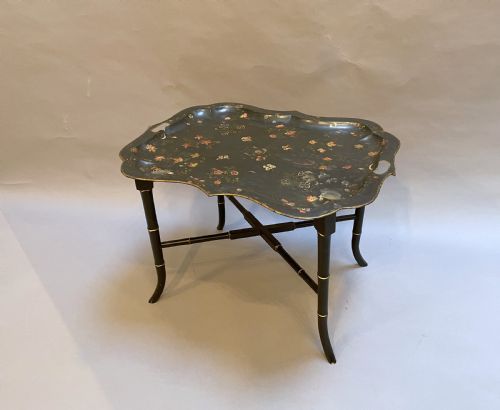
Metal versions rely on beaten brass, copper, and pewter, sometimes paired with folding wooden bases for collapsible storage. Surface ornamentation includes toleware painting, chinoiserie lacquer, and silver plating over base metals to achieve decorative contrast.
Listings feature items spanning from the eighteenth century through the Art Deco era, encompassing both wooden furniture and metal serving ware.
Distinctions in quality and execution
Quality rests upon the integrity of the timber selection, such as figured burr walnut or dense mahogany, and the precision of the joinery in stands and tray galleries. Hand-carved details, crisp toleware painting, and substantial silver plating separate standard utility items from finer decorative pieces.
Proportion and stability dictate practical execution, ensuring that folding stands lock securely and removable trays fit flush against their supports without wobbling during use.
Armada Pewter·Mappin & Webb·Elkington
The Vintage Coffee Tray Glossary
- Butlers tray
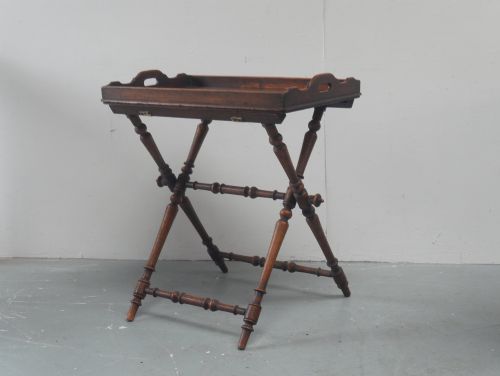
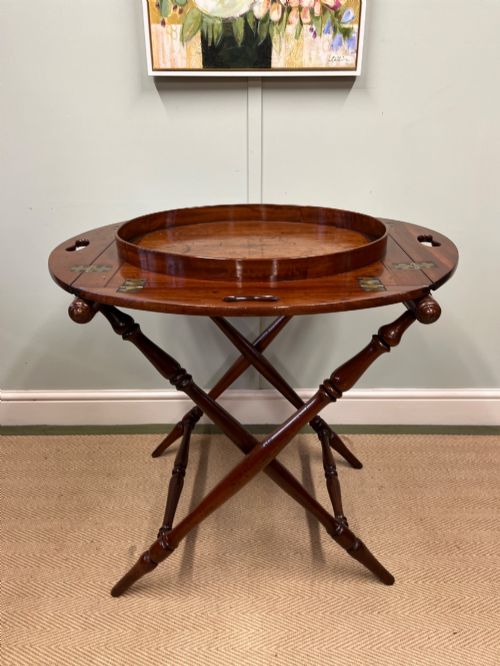
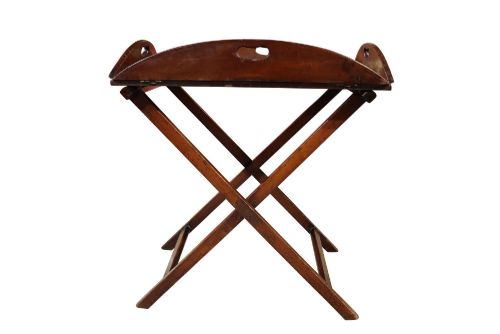
- A portable wooden tray with hinged or fixed sides, traditionally used for serving and placed upon a folding X-frame stand.
- Toleware
- Painted or lacquered metalware, often decorated with floral or scenic motifs in rich colours.
- Coopered
- Constructed from curved wooden staves joined tightly together, similar to barrel-making techniques.
- Galleried
- Having a raised decorative border or rim around the edge of a tray or table top to prevent items from sliding off.
- Chinoiserie
- European artistic styles reflecting Chinese motifs, typically executed in lacquered finishes.
Vintage Coffee Tray: Frequently Asked Questions
How were butlers trays used historically?
Domestic staff utilised these portable trays to transport heavy china, silver, and beverages from kitchens to reception rooms. Once in the room, the tray rested upon a collapsible folding stand to serve guests.
Over time, many of these practical serving items transitioned into permanent low tables for modern living spaces.
Are the trays removable from their stands?
Many traditional designs feature a detachable tray that lifts entirely off its folding wooden base. This dual functionality allowed servants to carry the tray independently.
Other variations secure the tray directly to the base, creating a fixed coffee table structure.
How do I date a wooden tray table?
Stylistic markers, such as Georgian bracket feet, Victorian gallery edges, or Art Deco geometric motifs, provide initial chronological clues. Timber choice and construction techniques, including hand-cut dovetails or modern screw fixings, offer further verification.
Matching the wood grain and wear patterns of the tray to its stand helps determine if the pairing is original.
Can I use a metal tray table for daily drinks?
Brass, copper, and silver-plated surfaces handle everyday use well provided moisture is wiped away promptly. Periodic cleaning maintains the metal finish without stripping historical patination.
Folding metal tray tables also offer flexible placement since they pack away easily when floor space is needed.