


Folding Wooden Tray
A folding wooden tray brings adaptable surface space and period character into a room without claiming permanent floor space.
Folding Wooden Tray
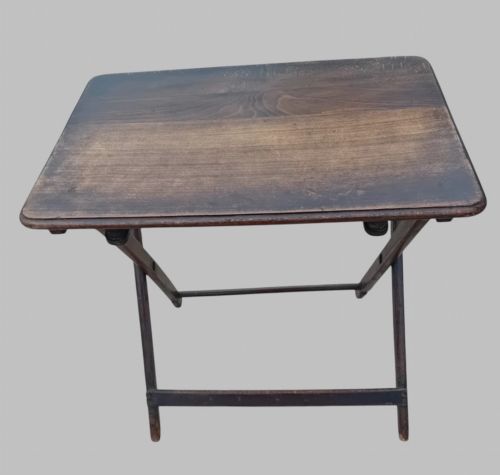
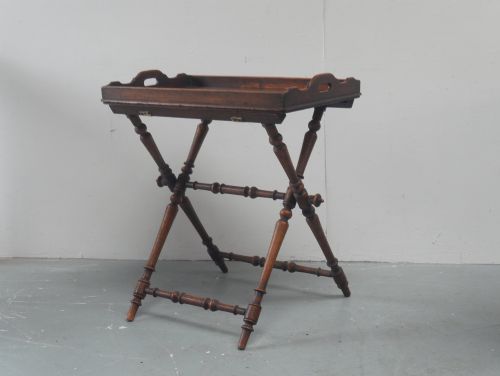
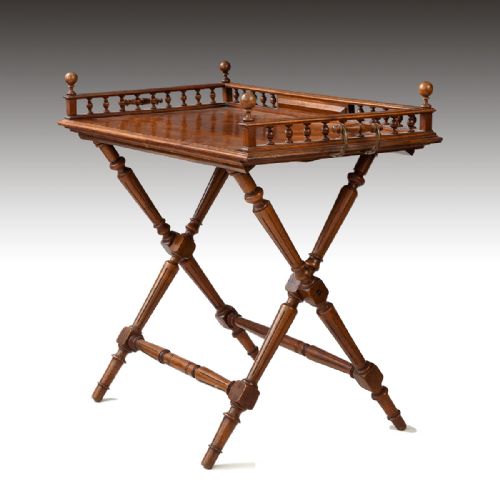
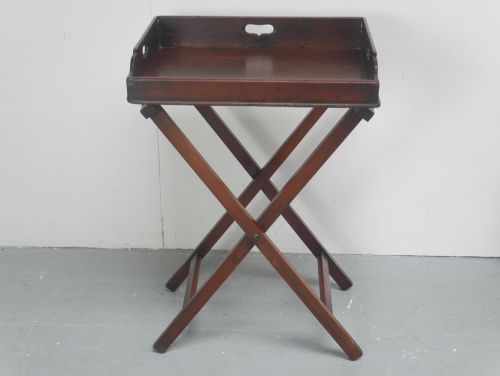
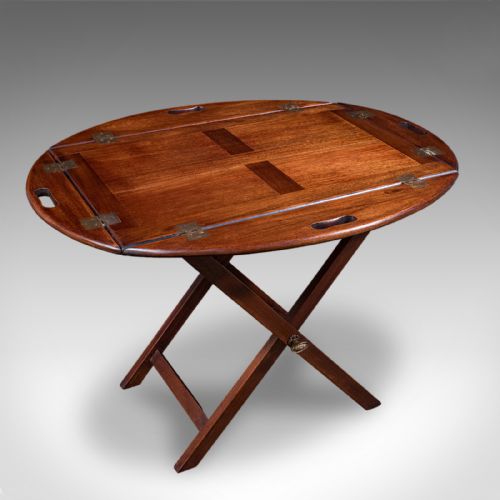
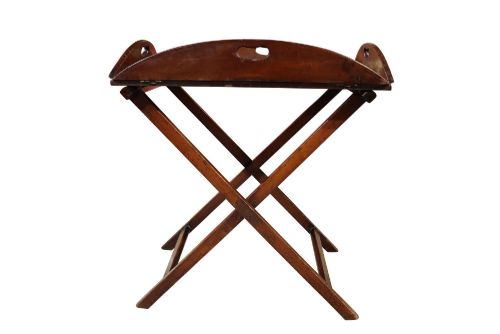
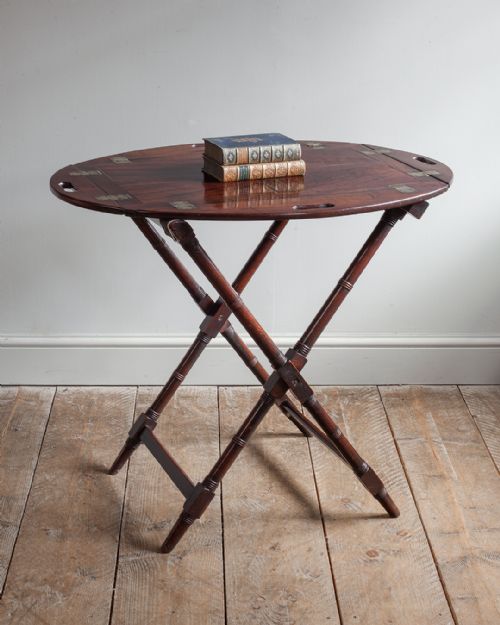
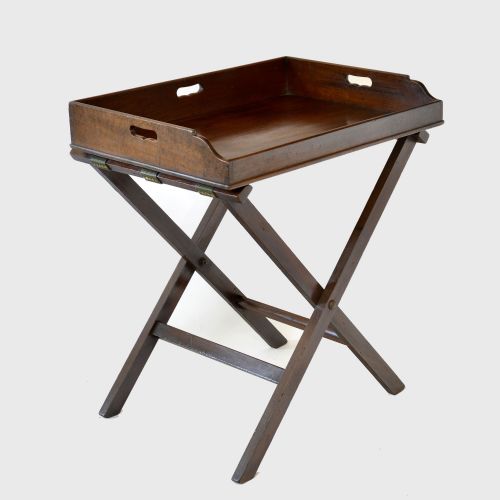
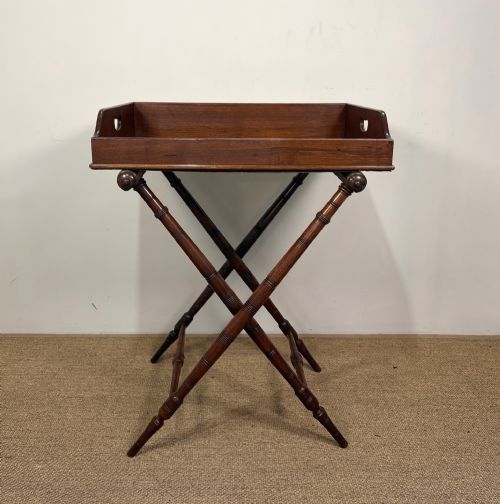
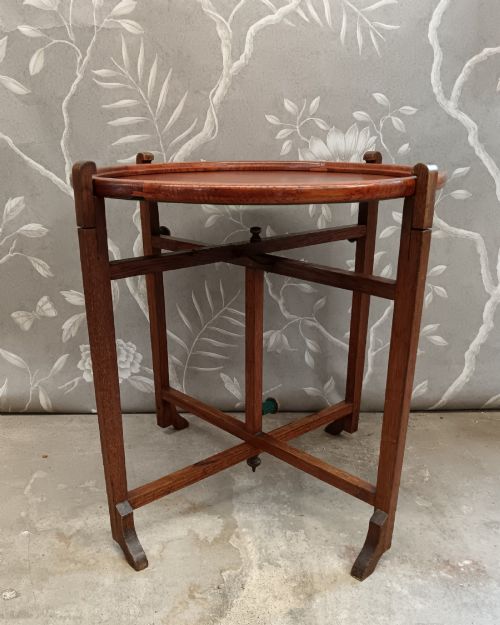
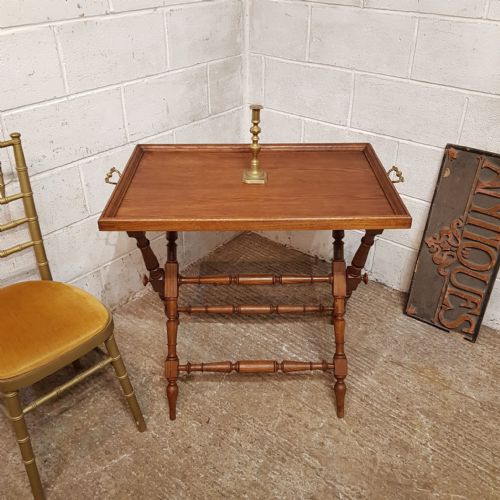
When you search for a folding wooden tray, you find practical serving pieces designed to lift off their collapsible supports. The version you meet most often on this page is the butler tray on a stand, originating in periods from the eighteenth century through to the early twentieth century.
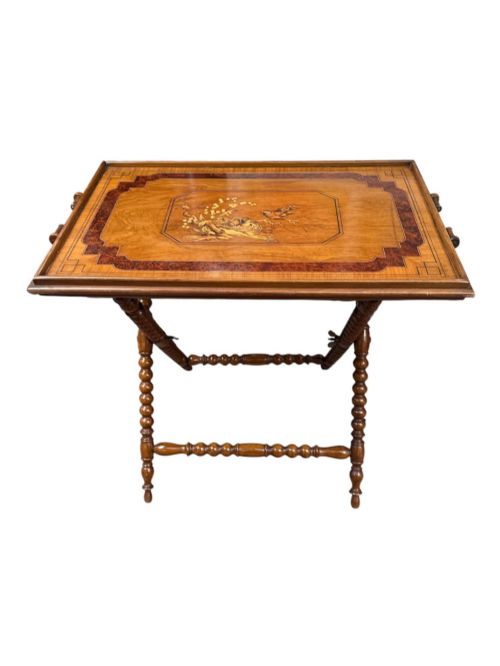
These items span formal Georgian and Victorian domestic service equipment alongside campaign style furnishings and occasional tables. Makers built them in forms ranging from oval mahogany boards to oak or walnut tables with drop flaps and dedicated folding stands.
How they were made
Carpenters constructed the trays and stands predominantly in solid mahogany, oak, walnut, beech and teak, selecting timbers for strength and grain. They shaped hinges, drop flaps and folding X-frame supports to allow the entire unit to pack flat for storage or travel.
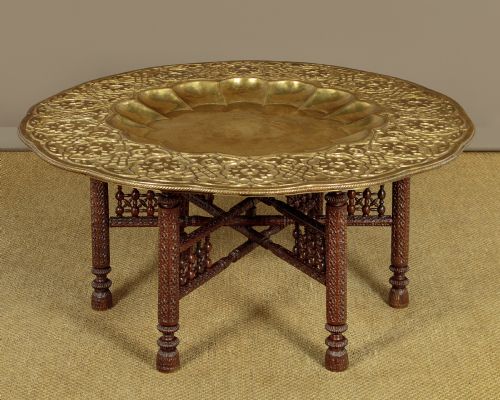
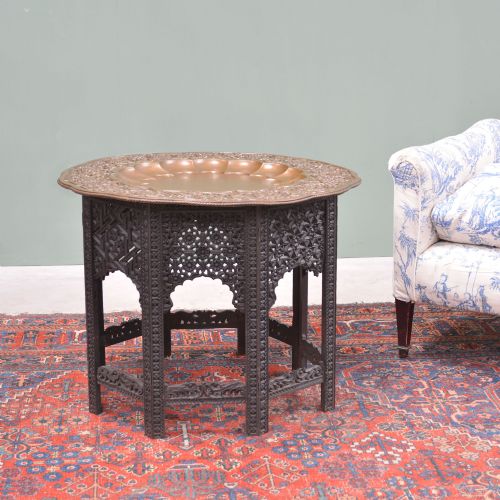
Workshops applied marquetry details, intricate carving or brass fittings to enhance the timber surfaces. Certain examples incorporated metal elements like copper tops or brass tea services paired with hardwood folding bases.
Object forms include conventional tray tables, coffee tables, tiered stands and occasional tables with folding frames.
What varies in quality
Quality rests upon the integrity of the folding mechanism and the selection of timber. Superior pieces display crisp carving, matched grain patterns across the tray and stand, and robust joints that hold the serving surface steady without wobble.
Simpler utility items contrast with high status butler trays that feature fine edge mouldings, original patinated surfaces and finely turned wooden stands designed for drawing rooms rather than field service.
The Folding Wooden Tray Glossary
- Butler tray
- A portable rectangular or oval wooden tray, often fitted with shaped carrying handles or hinged drop flaps, designed to sit on a separate folding stand.
- Campaign style
- Portable furniture engineered with folding frames, recessed handles and demountable parts to facilitate easy transport for officers and travellers.
- Sorrento ware
- Woodwork decorated with micro-mosaic marquetry depicting pictorial scenes or geometric patterns, originating from the Italian town of Sorrento.
- Drop flap
- A hinged section on the edge of a tray table that lowers or lifts to alter the surface area of the furniture.
Folding Wooden Tray: Frequently Asked Questions
How did original butler trays function?
Original butler trays served domestic staff as portable units for carrying food and drink from kitchens to living spaces. The removable tray sat securely atop an X-frame folding stand so servants could set up temporary side tables wherever required.
Once dining concluded, the tray lifted off and the wooden stand folded flat for compact storage in pantries or hallways.
Are these trays stable enough for daily use?
Traditional folding stands utilise hinged scissor actions or cross-braced joints designed to lock firmly under the weight of the tray. Well preserved examples remain sturdy enough for holding drinks, books or lamps.
Checking the pivot pins and hinges ensures the frame supports weight safely without shifting during use.
What timber types appear most often?
Mahogany dominates eighteenth and nineteenth century examples, prized for its deep colour and durability. Oak, walnut and beech also appear frequently across domestic and campaign pieces.
Selected items integrate brass or copper surfaces into the wooden framework for varied visual texture.
How do I distinguish a campaign style piece?
Campaign pieces typically feature collapsible wooden frames, minimal ornamentation and robust construction intended for travel. Beech and mahogany feature prominently in these portable configurations.
The engineering prioritises quick assembly and disassembly alongside resistance to demanding travel conditions.