

Vintage Cocktail Cabinet Furniture
Vintage cocktail cabinet furniture brings serious architectural presence and hidden hospitality into a room, offering fitted internal compartments for glassware and bottles behind striking period facades.
Vintage Cocktail Cabinet Furniture
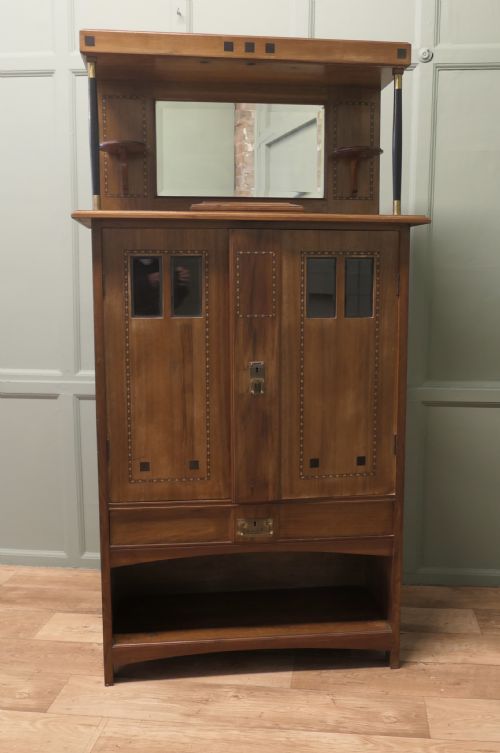
Buyers seeking vintage cocktail cabinet furniture encounter case pieces designed specifically to house spirits, wine, and glassware for entertaining. These items emerge most frequently from the nineteen-thirties, deploying bold silhouettes that prioritise social hosting.
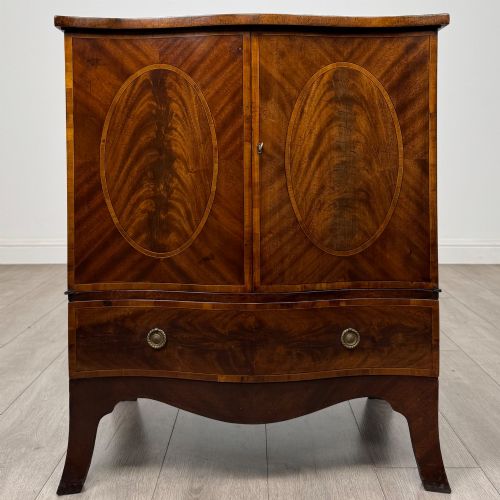
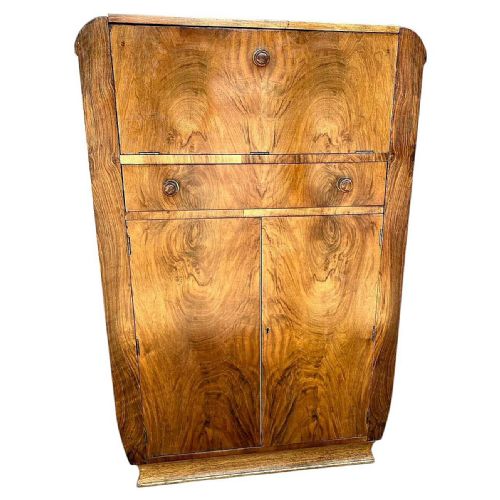
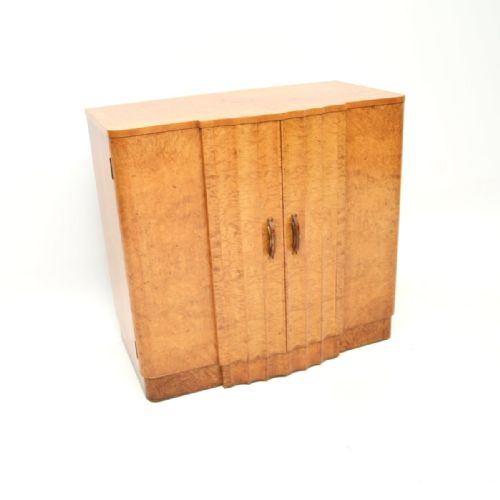
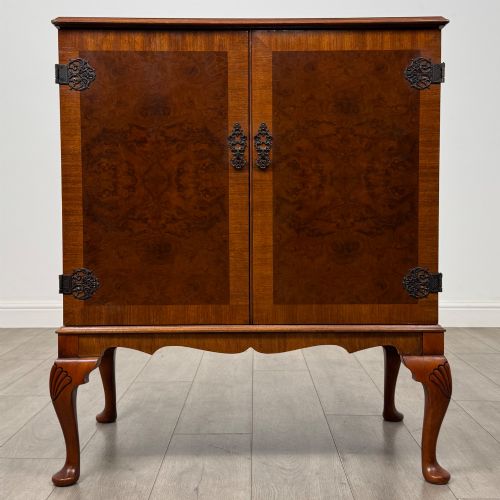
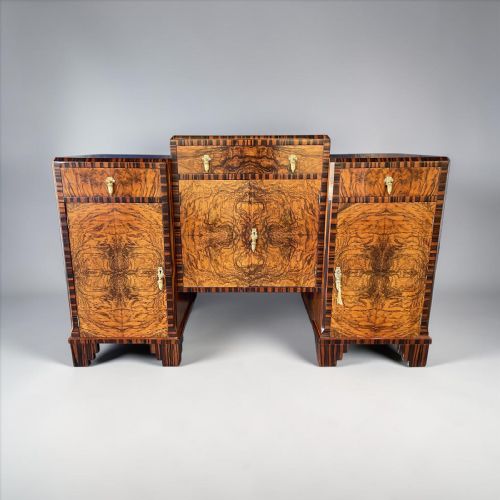
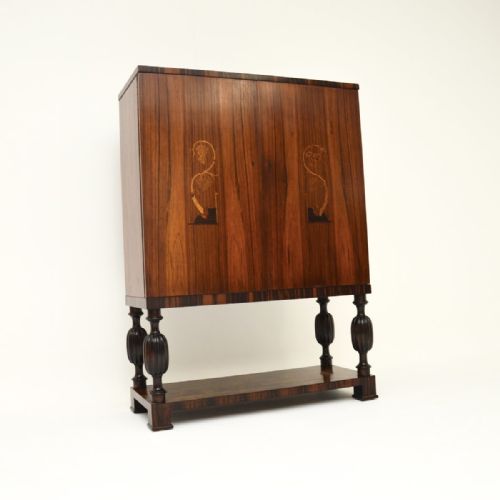
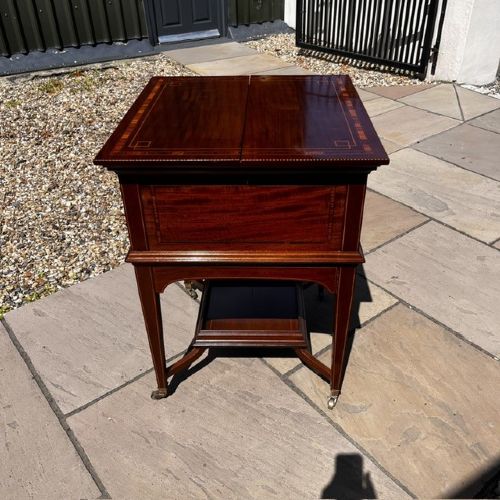
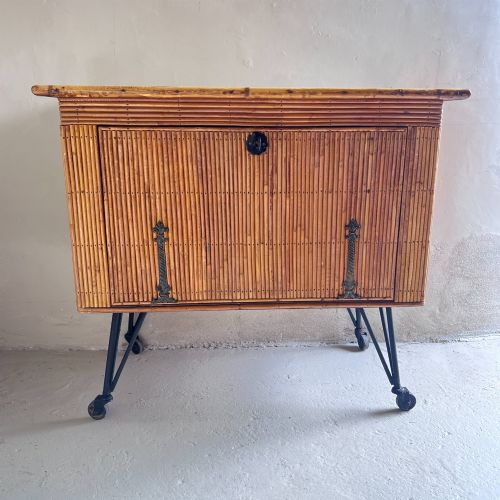
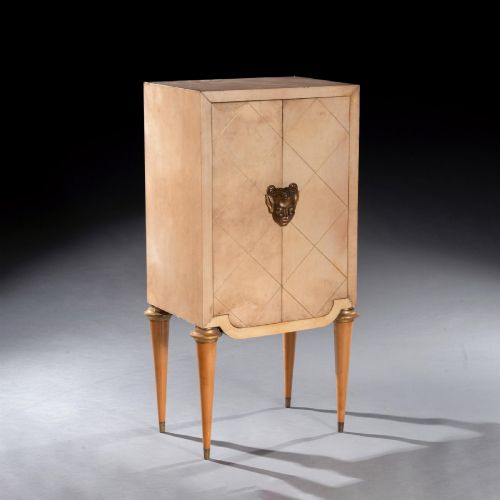
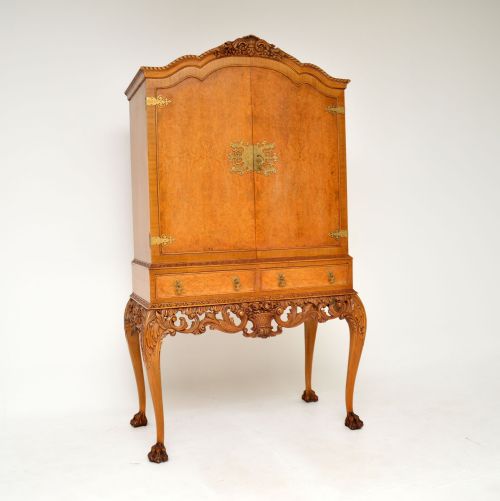
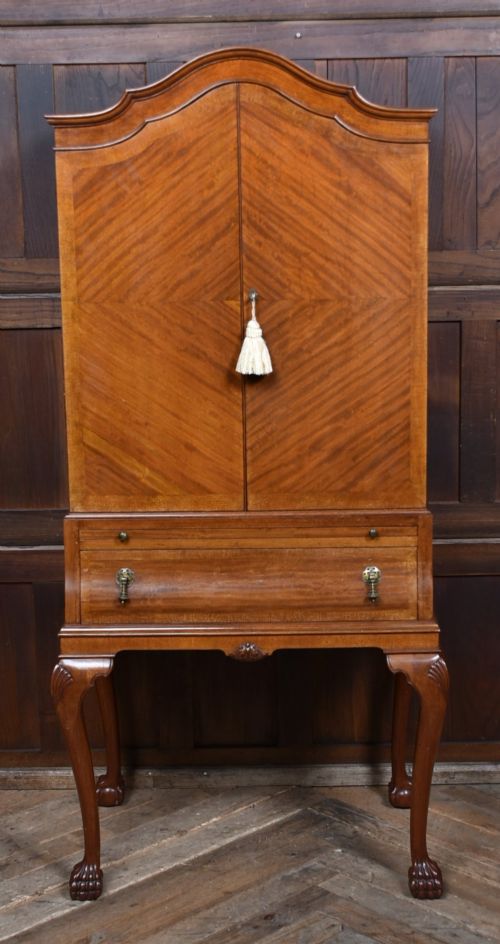
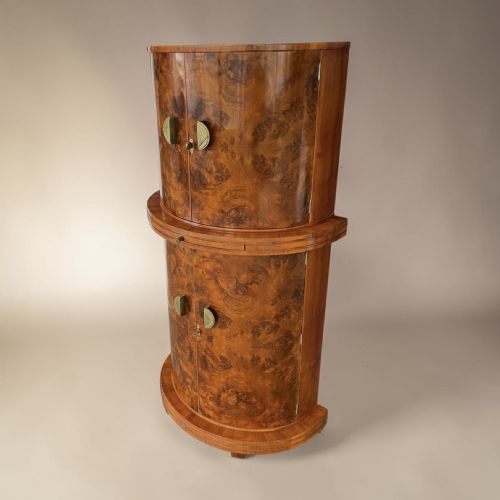
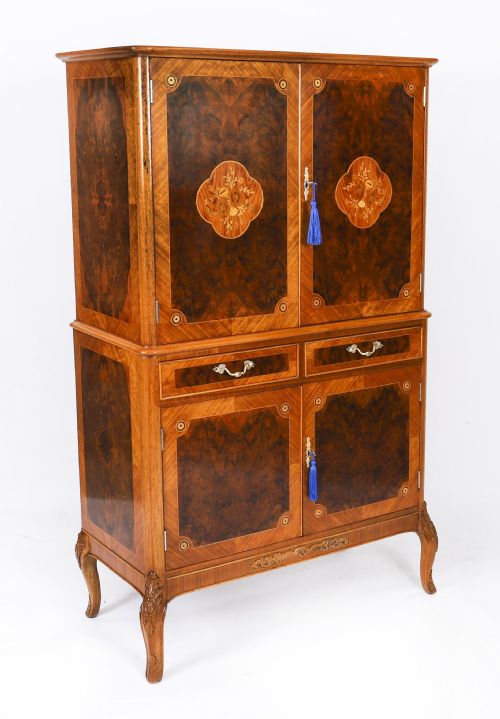
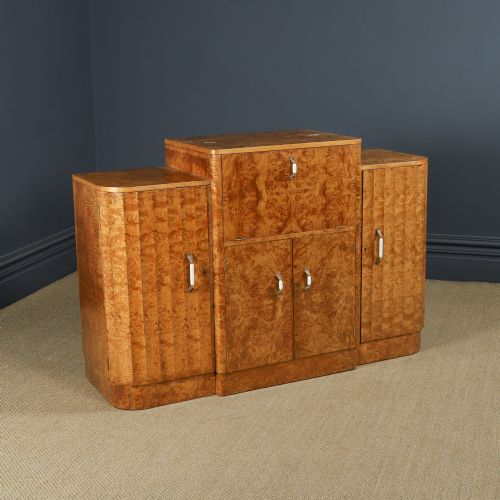
The selection ranges across distinct historical revivals and modernist movements, with Edwardian period mahogany designs sitting alongside nineteen-twenties double bow front pieces and French interpretations. Art Deco examples dominate the selection, bringing figured walnut, burr walnut veneers, and clean geometric lines to the domestic interior.
Interior fittings define the function of these cabinets, often incorporating pull-out mixing slides, mirrored backs, and dedicated bottle storage. Sideboards, credenzas, and dry bar tables also appear under this heading, expanding the range of forms available for storing drinks.
How vintage cocktail cabinet furniture was made
Construction relies heavily on solid timber carcases overlaid with decorative veneers, allowing makers to showcase dramatic wood grain patterns across wide flat surfaces. Burr walnut, figured walnut, mahogany, and satinwood provide the primary visual textures, frequently arranged in symmetrical marquetry or inlay motifs.
Metal and glass components integrate structural and decorative roles, utilising brass hardware, cast-iron legs, and original mirrored glass panels internally. Specialised construction techniques support complex opening mechanisms, drop-down serving flaps, and internal electrical lighting fittings seen in mid-century examples.
Listings span periods from the nineteenth century to nineteen-sixty, with nineteen-thirty Art Deco walnut designs forming the majority.
What varies in quality in vintage cocktail cabinet furniture
Cabinetmaking distinction rests on the selection and matching of wood veneers, where superior examples exhibit continuous, book-matched grain across doors and drawers. The weight and stability of the underlying timber carcase dictate durability, separating robust construction from lighter decorative frames.
Internal engineering marks the division between standard production and master workshop output, particularly in the smooth operation of pop-up mechanisms, drop-front flaps, and fitted bottle racks. The integrity of internal mirrors, specialised glass shelves, and original metal mounts further indicates the original tier of manufacture.
Harry and Lou Epstein·Hille·Hamptons of Pall Mall London·Maurice Jallot
The Vintage Cocktail Cabinet Furniture Glossary
- Burr walnut
- A wood grain harvested from the warted growth of a walnut tree, producing swirling, intricate patterns highly prized on cabinet doors.
- Marquetry
- The art of applying pieces of veneer to a structural structure to form decorative patterns and pictorial designs.
- Secessionist
- A stylistic movement originating in central Europe that rejected historical academic art in favour of clean, geometric modernism.
- Drop-front
- A hinged panel that folds down horizontally to create an impromptu serving surface or mixing desk for drinks preparation.
- Book-matched
- A technique where adjacent veneer leaves are mirrored to create a symmetrical pattern resembling an open book.
Vintage Cocktail Cabinet Furniture: Frequently Asked Questions
What is vintage cocktail cabinet furniture?
These pieces are dedicated storage units engineered for domestic entertaining, designed to hold bottles, decanters, and cocktail glasses behind decorative doors.
Most examples originate from the early twentieth century, spanning Edwardian traditional styles through to nineteen-thirties Art Deco modernism.
How were these cabinets used originally?
Hosts utilised them to prepare and serve drinks during formal gatherings, keeping glassware and spirits concealed until guests arrived.
Drop-down flaps and pull-out slides functioned as temporary mixing bars, while internal mirrors and lights displayed the glassware collection.
How do I style these cabinets at home?
Position them in living rooms or dining spaces where their bold wood veneers and geometric silhouettes can act as focal furniture points.
Keep the top surface uncluttered or style with vintage barware to complement the period aesthetic of the cabinet.
How do I tell Art Deco from Edwardian pieces?
Edwardian versions generally favour traditional timbers like mahogany with satinwood inlay, reflecting Georgian or Queen Anne revival proportions.
Art Deco items employ dramatic burr walnut veneers, blonde maple, or contrasting black lacquer with streamlined geometric shapes.