

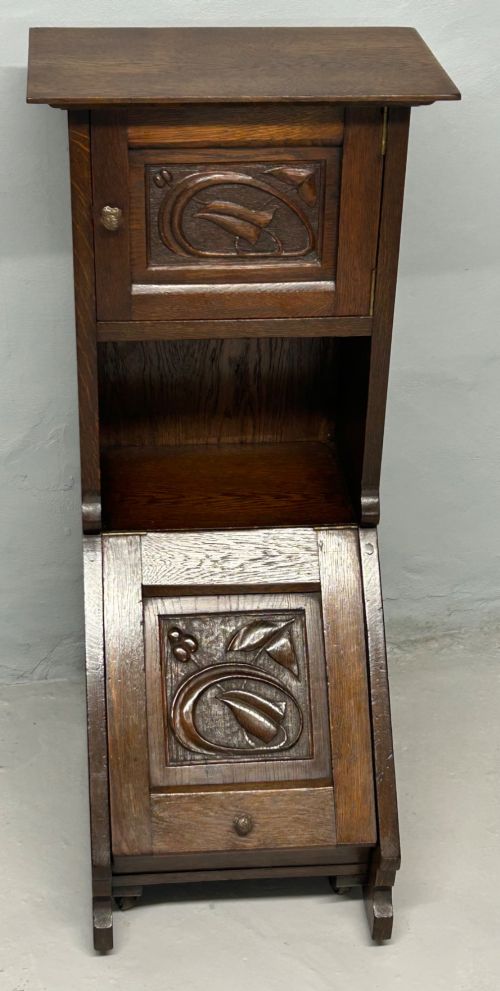


Vintage Coal Scuttle Cabinet
A vintage coal scuttle cabinet offers a practical place to store fuel beside the hearth while adding period character to a room.
Vintage Coal Scuttle Cabinet
A vintage coal scuttle cabinet serves as a fireside container designed to hold coal near the hearth for domestic heating. The examples appearing on this page span the Victorian and Edwardian eras, encompassing the late nineteenth century up to nineteen hundred.
Buyers frequently encounter variants styled as coal boxes, purdoniums, and fireside cabinets. These furnishings take the form of enclosed wooden cabinets and bins built to conceal the fuel container within a tidy exterior.
Originating in periods that relied on open fires for warmth, these items combine utility with decorative cabinetwork. They reflect the domestic habits of nineteenth and early twentieth century homes.
How they were made
Makers constructed these cabinets predominantly using solid timber frames of mahogany, oak, and pollard oak. These woods provided the structural integrity needed to withstand the daily weight of coal and the dry heat near a fireplace.
Metal components such as brass fixtures and ormolu mounts reinforced corners and provided functional handles or hinges. Marquetry, boxwood inlay, and carved details were added to elevate the appearance of the piece for formal rooms.
Vintage Coal Scuttle Cabinet Retail Price Guide 2026
Typical asking prices for vintage coal scuttle cabinet among the pieces listed under this phrase on Sellingantiques today, from the lower quarter to the upper quarter. They describe what is for sale here now, not the wider market.
Victorian households expected even their coal dust to be politely contained behind polished mahogany and gilt ormolu.
What varies in quality
The standard of timber selection and cabinet joinery dictates the overall grade of a coal cabinet. Superior pieces utilise finely figured mahogany or pollard oak with precise boxwood inlay and robust internal metal liners.
Stylistic ambition also separates standard production from finer work, seen in elaborate rococo revival or Louis XV style shaping. Ormolu mounts and detailed carving demonstrate a higher level of craftsmanship applied to a utilitarian object.
The Vintage Coal Scuttle Cabinet Glossary
- Purdonium
- A specific type of coal cabinet featuring a sloping front door that drops forward to reveal a metal-lined interior box for fuel. This design makes shovelling coal easier while keeping domestic dust contained.
- Ormolu
- Gilt bronze ornamentation applied to furniture for decorative effect. It adds bright metallic contrast to dark woods like mahogany.
- Marquetry
- The art of applying pieces of veneer to a structure to form decorative patterns. This technique appears on the exterior panels of finer cabinets.
- Pollard oak
- Timber taken from trees that have been pollarded, producing a heavily figured and mottled grain. It was favoured for high-status Victorian furniture.
- Boxwood inlay
- Contrasting light wood inserted into recesses in the primary timber to create geometric or floral borders. It provides delicate detail on Edwardian surfaces.
Vintage Coal Scuttle Cabinet: Frequently Asked Questions
What is a coal purdonium?
A coal purdonium is a designated cabinet designed to house household coal near a fireplace. It typically includes a drop-down front and an internal metal liner to hold the fuel.
These items kept hearth areas tidy by hiding dirty fuel inside a polished wooden exterior that matched other reception room furniture.
How do I date these cabinets?
Dating relies on observing the timber choices, revival styles, and construction methods recorded in the piece. Victorian examples often feature heavier carved mahogany, while Edwardian pieces frequently showcase lighter oak and delicate inlay.
Looking at the brass hardware and internal liner materials also helps place the cabinet within the late nineteenth or early twentieth century.
Where were they placed?
These cabinets sat directly beside the fireplace in Victorian and Edwardian drawing rooms, parlours, or dining rooms. Their position allowed servants or family members to replenish the fire quickly.
Because they doubled as decorative furniture, they were designed to complement the surrounding interior woodwork and mantelpiece.
What woods were used?
Cabinet makers primarily used mahogany and oak to build the carcasses of these fireside containers. Pollard oak also appears on decorative examples.
Inlays utilised contrasting timbers such as boxwood to create geometric or floral patterns on the exterior doors.