

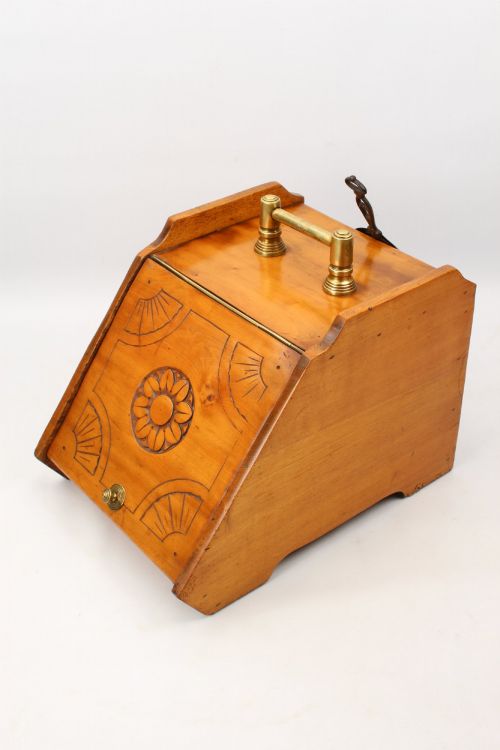


Carved Wooden Purdonium
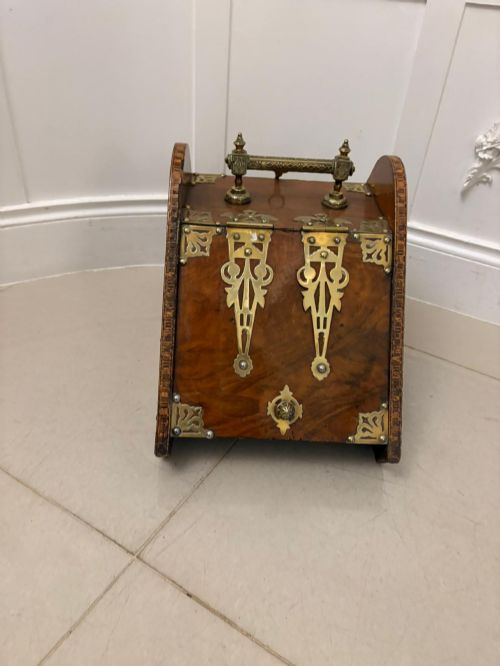
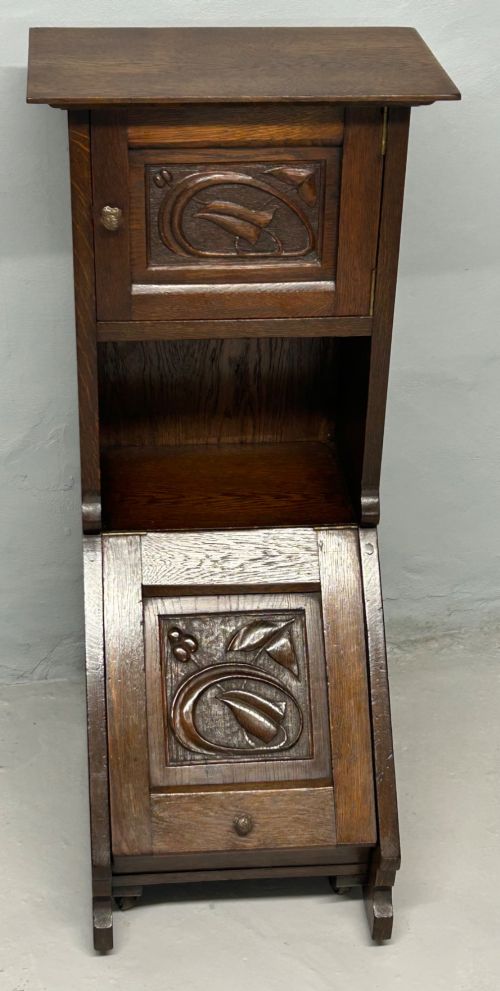
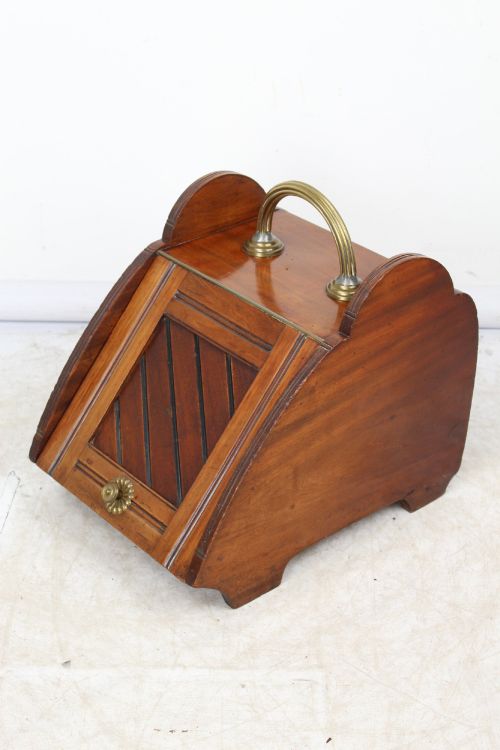
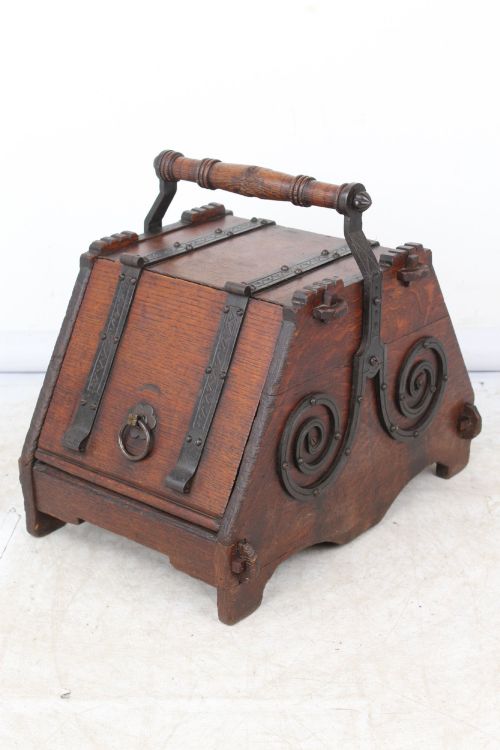
These carved wooden purdonium examples combine hearth utility with period craft, offering an enclosed storage solution for coal beside the fireplace.
Carved Wooden Purdonium
A carved wooden purdonium is a dedicated fireside storage box designed to hold coal and fuel neatly away from the hearth. Most pieces met on this page date from the Victorian and Edwardian eras, spanning the nineteenth century and the opening years of the nineteen hundreds.
Forms range from traditional coal boxes and scuttles to upright cabinet purdoniums fitted with drop-front doors and internal liners. Stylistic influences vary from plain vernacular timber work to Gothic Revival and Louis XV Revival ornamentation.
The objects served a practical daily purpose in period drawing rooms and parlours, combining timber cabinetry with metal handles and shovels. They remain functional fireside accessories today.
How they were made
Makers constructed these pieces primarily from solid hardwoods including oak, pollard oak, mahogany, and walnut, often selecting figured grain for the visible front panels. Carved decoration on the exterior reflects the prevailing taste of the Victorian and Edwardian periods.
Functional hardware such as brass handles, hinges, mountings, and iron elements were integrated to withstand regular handling near the hearth. Internal metal or glass liners were fitted to protect the timber from dust, moisture, and coal debris.
Carved Wooden Purdonium Retail Price Guide 2026
Typical asking prices for carved wooden purdonium among the pieces listed under this phrase on Sellingantiques today, from the lower quarter to the upper quarter. They describe what is for sale here now, not the wider market.
Listings feature oak, mahogany, walnut, and pollard oak timber.
What varies in quality
The standard of a carved wooden purdonium depends on the crispness of the timber carving and the selection of cabinet woods such as pollard oak or figured walnut. Robust construction of the drop-front mechanism and heavy gauge brass mounts separate standard utility boxes from finer examples.
The presence of original fitted metal liners and matching shovels contributes significantly to the integrity of the piece. Subtle design touches like Louis XV Revival shaping or Gothic Revival detailing elevate the aesthetic merit of individual items.
Christopher Dresser
The Carved Wooden Purdonium Glossary
- Coal Scuttle
- A vessel used for carrying coal to the fire, often taking a bucket or scuttle form with a swinging handle. Many examples include a matching shovel stored in a side or back bracket.
- Pollard Oak
- Oak timber taken from pollarded trees, exhibiting a dense, clustered grain pattern highly prized for decorative furniture fronts. It appears on select nineteenth century fireside pieces.
- Gothic Revival
- A design style drawing inspiration from medieval architecture and ornamentation, popular during the Victorian era. Pieces show pointed arches, heavy chamfering, and formal carved motifs.
Carved Wooden Purdonium: Frequently Asked Questions
What is a purdonium?
A purdonium is an enclosed wooden coal box designed for the Victorian or Edwardian fireside. It keeps fuel out of sight while offering convenient hearth access.
Most versions feature a drop-front door or sloping lid alongside sturdy brass carrying handles and an internal metal liner.
How were they used?
These boxes sat beside the fireplace to hold the daily supply of coal for the room. The integrated shovel allowed clean transfer of fuel to the grate.
The enclosed design prevented coal dust from escaping into the Victorian parlour while keeping the hearth tidy.
How do I date a purdonium?
Dating relies on timber choice, hardware style, and decorative motifs associated with specific periods. Victorian pieces often display heavier carvings or Gothic Revival influences, while Edwardian examples tend toward lighter oak or mahogany construction.
Cabinet styles and maker attribution, such as the work associated with Christopher Dresser, also help pinpoint the decade of manufacture.
Do they still hold coal?
Many people continue to use them for storing fireplace fuel, kindling, or peat briquettes today. The original metal liners protect the wooden structure from moisture and dirt.
Alternatively, some owners utilise them purely as decorative hallway storage or antique accent furniture.