

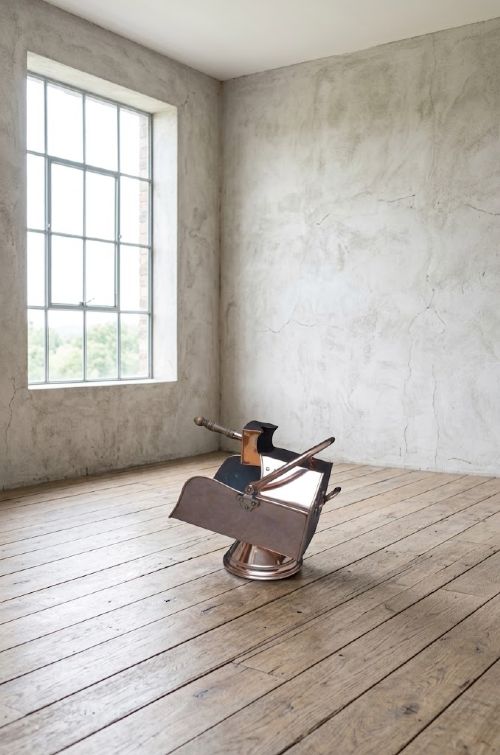


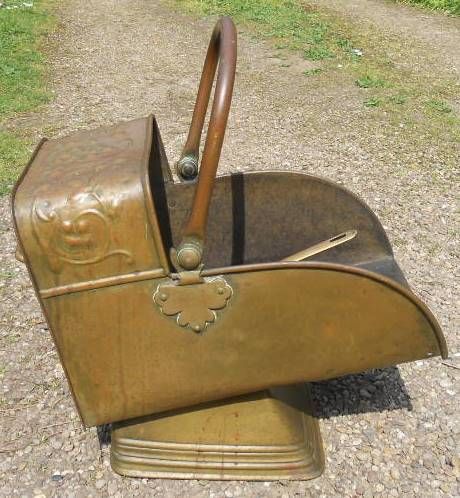


Vintage Coal Bucket Scoop
These vintage coal bucket scoop examples bring hearthside utility into focus, offering heavy metal construction shaped for daily fireside service.
Vintage Coal Bucket Scoop
A vintage coal bucket scoop brings practical fireside metalwork into domestic spaces, drawing on forms developed across the nineteenth century and into the early twentieth century. These items function primarily as coal scuttles, coal helmets, coal hods, and coal boxes designed to hold and transport solid fuel to an open hearth.
The pieces listed here span Victorian, Georgian, Arts and Crafts, and Art Nouveau styles, showing how utilitarian hearth equipment took on decorative qualities. A buyer searching for a vintage coal bucket scoop encounters traditional bucket and helmet forms shaped to sit beside fireplace grates.
Origins stretch from the George III period through the 1800s, 1860, 1880, 1900, and 1910, reflecting long-standing British domestic habits. Surviving examples often retain matching metal shovels intended for handling fuel.
How they were made
Makers utilised heavy sheet metals such as brass and copper, hammering, rolling, and riveting the plates to form robust containers. Cast brass components appear on handles, feet, and hinges to provide rigid support where stress occurs during lifting and tipping.
Vintage Coal Bucket Scoop Retail Price Guide 2026
Typical asking prices for vintage coal bucket scoop among the pieces listed under this phrase on Sellingantiques today, from the lower quarter to the upper quarter. They describe what is for sale here now, not the wider market.
Materials span copper, brass, iron, and wood, combined with sheet and cast techniques.
What varies in quality
Thickness of the sheet metal determines the structural integrity of a coal bucket, with heavier gauge brass and copper resisting dents and distortion from daily use. The presence of original matching shovels elevates a piece, keeping the fireside set complete.
Artisanal execution shows in the crispness of hand-beaten hammering marks and the clean integration of riveted seams. Stylistic details, from Arts and Crafts strapwork to Art Nouveau embossed motifs, distinguish standard utilitarian items from more ambitious workshops.
BENHAM AND FROUD
The Vintage Coal Bucket Scoop Glossary
- Coal scuttle
- A container designed to hold fuel for a fireplace, typically featuring a wide mouth for filling and a smaller spout or opening for pouring. It usually includes a carrying handle and rests on a fixed base or feet.
- Coal helmet
- A specific helmet-shaped scuttle featuring a flared rim that resembles a classical headpiece, directing the flow of fuel cleanly into the grate. This form became popular during the Georgian and Victorian periods.
- Coal hod
- A deep, bucket-like container used for transporting coal, often cylindrical or tapering towards the base. The sturdy construction handles heavy loads of solid fuel.
- Arts and Crafts
- A design movement emphasising visible handcraftsmanship, simple structural honesty, and traditional metalworking techniques. Pieces in this style display honest riveting and surface texture.
- Art Nouveau
- A style defined by organic, flowing lines and botanical motifs applied to household metalwork around the turn of the twentieth century. It brings decorative curves to functional fireside boxes.
Vintage Coal Bucket Scoop: Frequently Asked Questions
What is a coal helmet?
A coal helmet is a specific form of fireside container shaped with a flared rim to facilitate pouring fuel onto the fire. The design balances utility with decorative domestic style.
These pieces were kept beside the hearth for daily tending of coal fires in period homes.
How were brass and copper used?
Makers shaped sheet brass and copper into durable vessels that could withstand regular handling and heavy loads of fuel. Cast brass elements provided sturdy handles and decorative feet.
These metals offered both resilience against heat and a bright appearance beside the fireplace.
Are original shovels common?
Many surviving scuttles and helmets retain their original metal shovels designed to fit alongside the main container. These matching tools complete the fireside set.
Finding a piece with its original shovel preserves the functional integrity of the set.
How do styles differ?
Georgian and Victorian items often feature classical proportions and polished sheet metal, while Arts and Crafts examples display visible hand-beaten textures. Art Nouveau pieces introduce flowing organic motifs.
Each style reflects the prevailing aesthetic preferences of its decade of manufacture.