


Fireplace Coal Container
A fireplace coal container organises hearth fuel with practical metalwork and period character.
Fireplace Coal Container
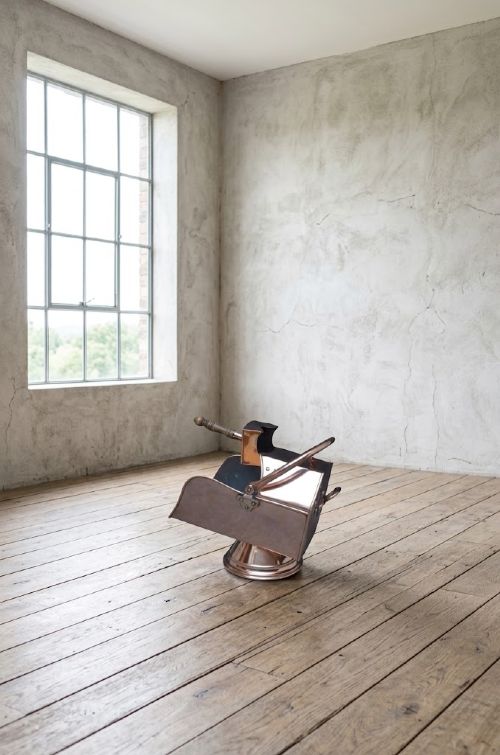
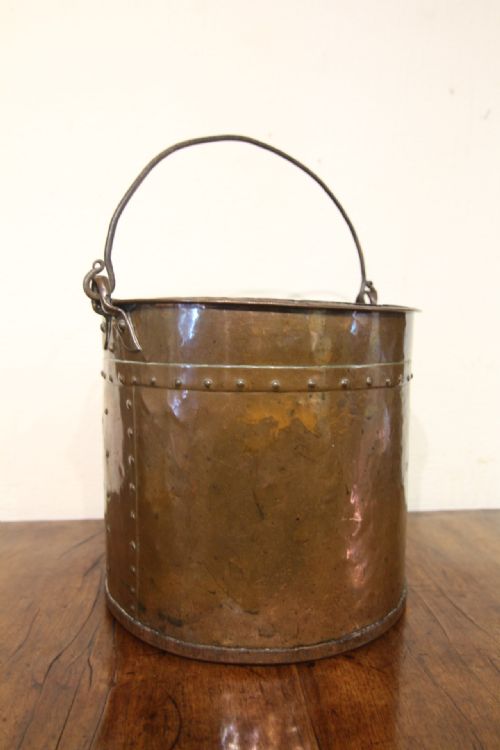
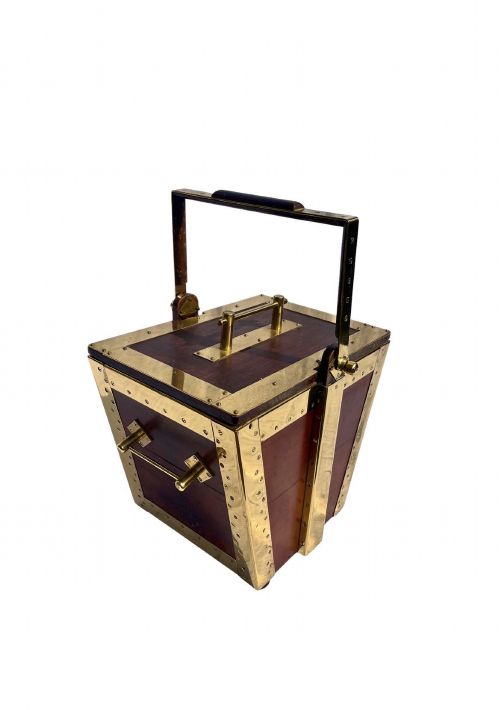
A fireplace coal container takes many forms, including scuttles, buckets, helmets, boxes, and bins designed to hold solid fuel by the hearth. The examples found here span the nineteenth and early twentieth centuries, covering Victorian, Edwardian, and Art Deco eras.
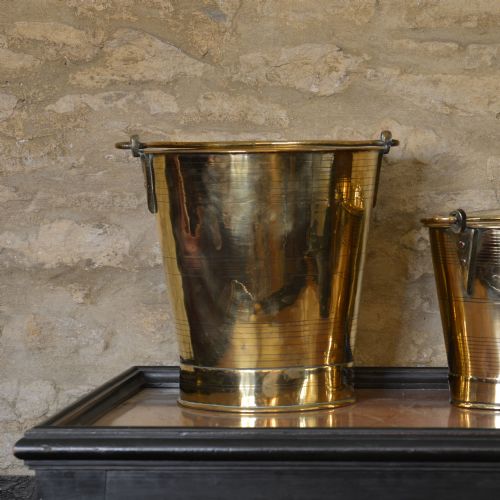
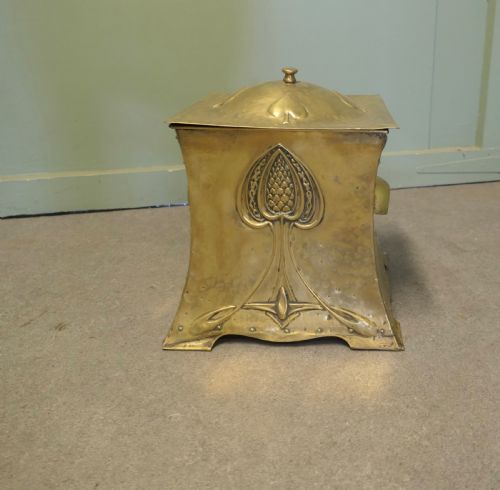
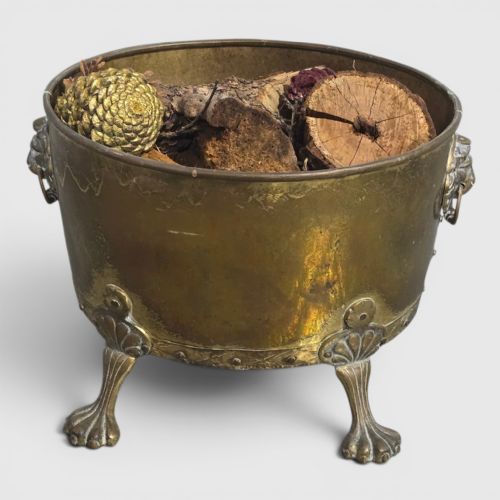
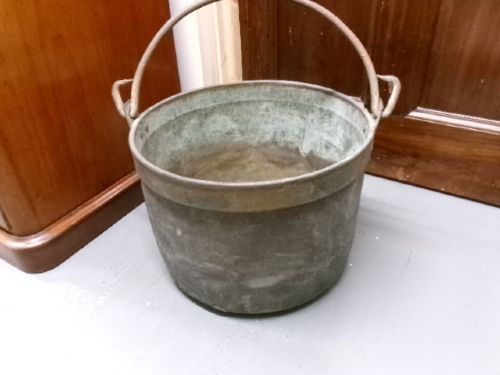
Makers utilised various styles such as Arts and Crafts, Gothic Revival, Art Nouveau, and Regency to decorate these utilitarian objects. Buyers frequently encounter copper and brass buckets with swing handles or wooden boxes fitted with metal liners.
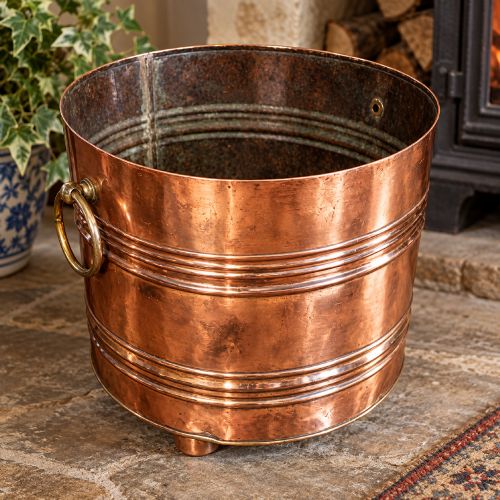
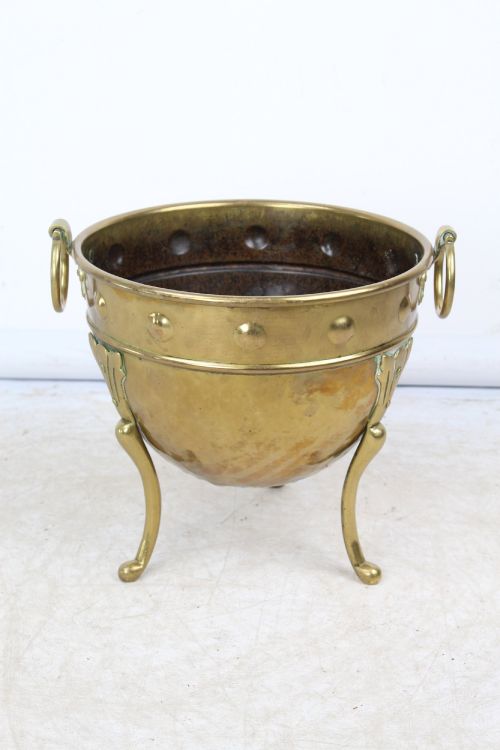
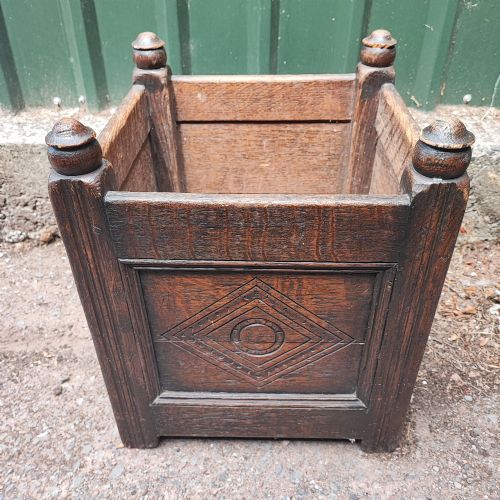
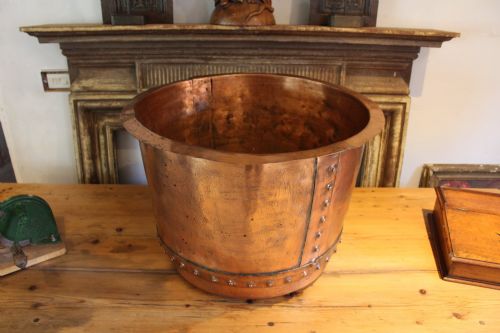
Many pieces double as log bins or planters, reflecting how domestic items adapt over time. The selection ranges from plain English country oak boxes to heavily embossed brass vessels and riveted copper cauldrons.
Materials and Construction
Craftsmen shaped these containers primarily from sheet brass, heavy copper, and solid woods like oak. Rivets join the thick metal plates of utilitarian buckets, while wrought iron provides sturdy drop handles and swing bails.
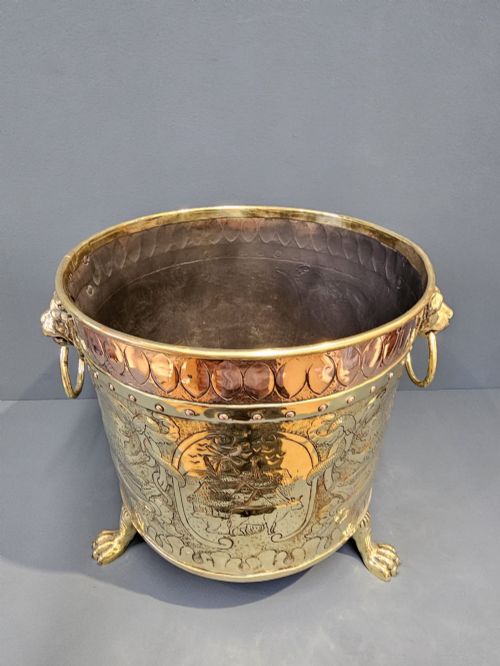
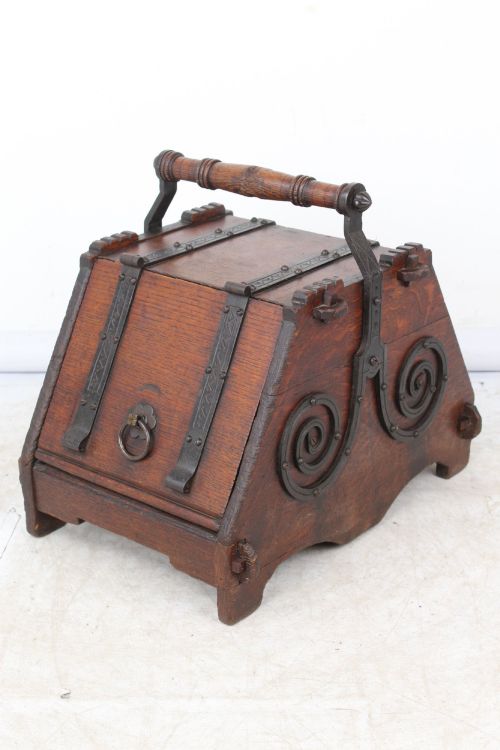
Decoration relied on hand-beating, embossing, and engraved tavern scenes, particularly within the Arts and Crafts and Gothic Revival movements. Wood versions often feature carved panels or inlaid details, paired with internal metal liners to contain dust and debris.
Some copper cauldrons spent their retirement holding oversized houseplants rather than coal.
Design and Finish
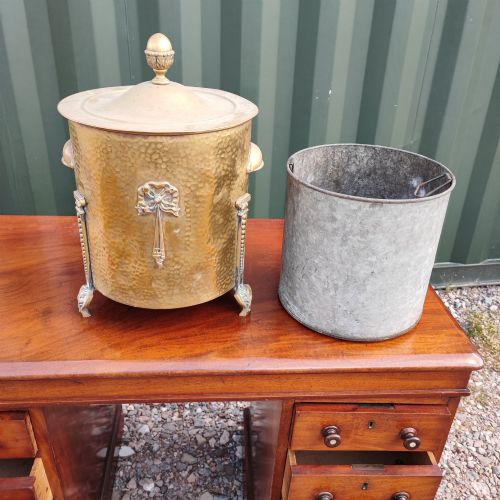
Quality rests in the weight of the metal and the crispness of the hand-beaten or embossed decoration. Superior vessels display clean riveting, balanced swing handles, and retained original components such as interior tin liners and matching shovels.
Design distinction separates standard production items from workshop pieces created by recognised metalworking firms. The inclusion of decorative bands, contrasting brass and copper elements, or intricate period motifs elevates a simple fuel holder into an accomplished decorative object.
Henry Loveridge·Christopher Dresser·Benham and Froud·Petrus Ramus·William Soutter And Sons
The Fireplace Coal Container Glossary
- Coal scuttle
- A domestic vessel designed for carrying coal to the fire, often shaped with a sloped mouth and a hinged handle for pouring.
- Purdonium
- A specific type of enclosed wooden coal box featuring a downward-tilting front door and a built-in shovel compartment.
- Coal helmet
- A metal bucket featuring an elevated back and a flared front rim, named for its visual resemblance to a traditional helmet.
- Liner
- The removable internal metal tray inserted into a coal box or bucket to catch residue and protect the outer structure from moisture.
Fireplace Coal Container: Frequently Asked Questions
What is a purdonium?
A purdonium is a specialised wooden coal box designed to keep fuel out of sight beside the hearth. These enclosed cabinets typically feature a hinged or tilting front panel.
Inside, they house a removable metal liner to catch dust and small debris. Many examples include a dedicated side slot for storing the matching coal shovel.
How do I clean antique brass and copper?
Maintenance depends on the desired appearance of the metal surface over time. Gentle dusting with a dry cloth preserves the aged patina that collectors value.
Avoid harsh chemical dips that strip away historical character. Mild soapy water on a damp cloth removes accumulated fireplace soot safely.
Can these containers hold logs?
Many metal buckets and wooden boxes serve dual purposes for both coal and logs. Sturdy riveted copper bins easily accommodate heavier pieces of firewood.
Lined wooden boxes protect interior timber from rough bark and dirt. Check the dimensions of the opening to ensure logs fit comfortably inside.
How do I date a coal bucket?
Dating relies on material combinations, construction methods, and stylistic cues. Nineteenth-century examples often feature hand-riveted copper plates and heavy wrought iron fittings.
Later Edwardian and Art Deco pieces display smoother machine shaping and specific decorative motifs. Maker stamps on the base also help pinpoint the period.