
Vintage Clothes Drawers
These vintage clothes drawers span centuries of craftsmanship, offering practical storage in mahogany, oak, and pine.
Vintage Clothes Drawers
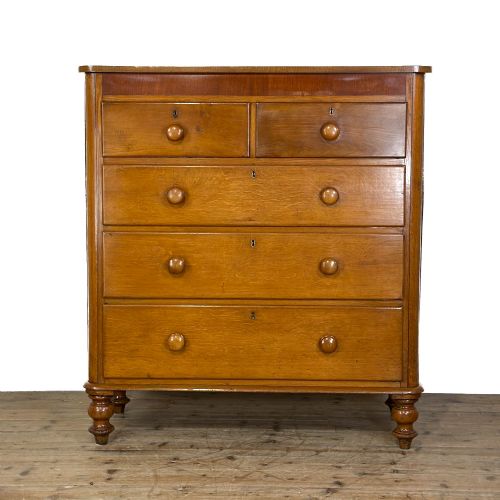
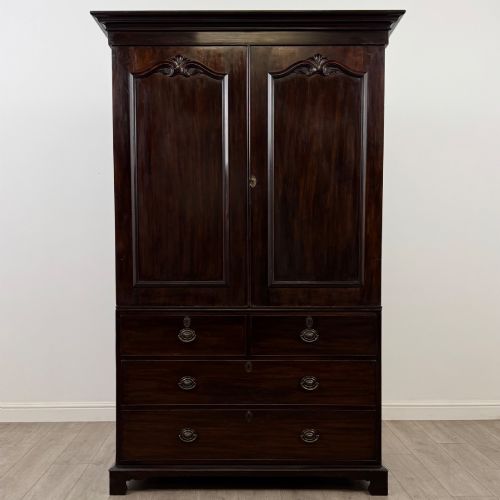
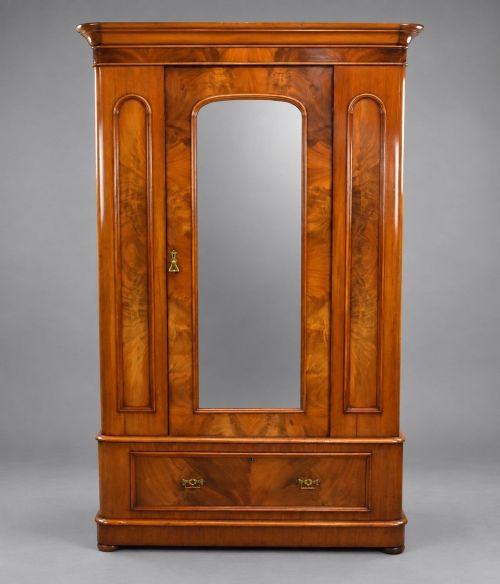
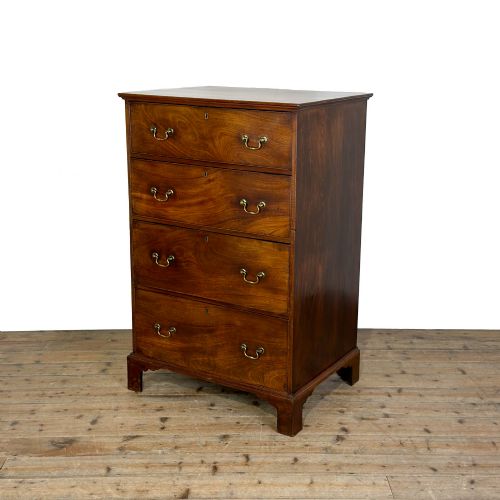
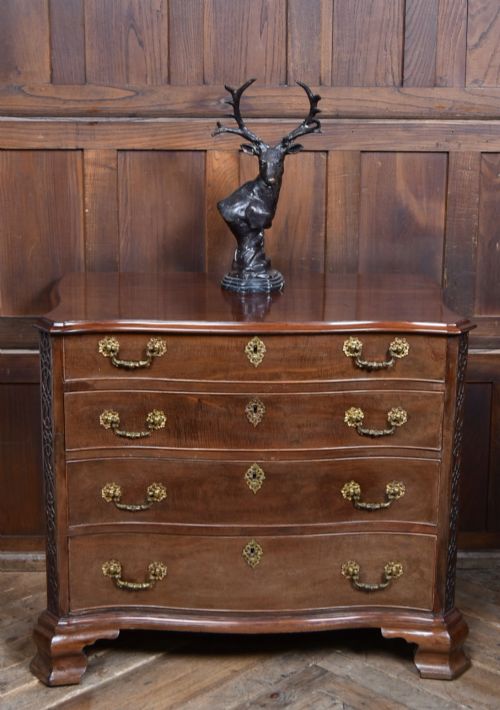
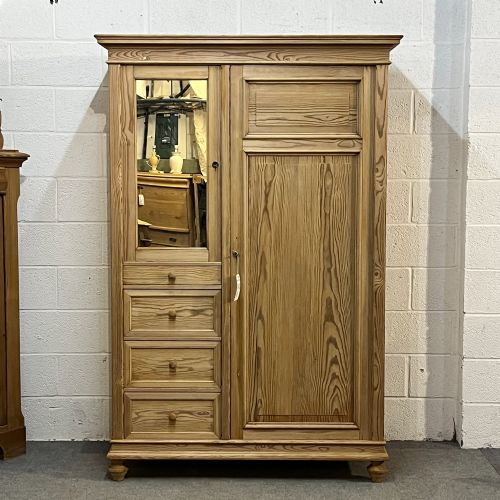
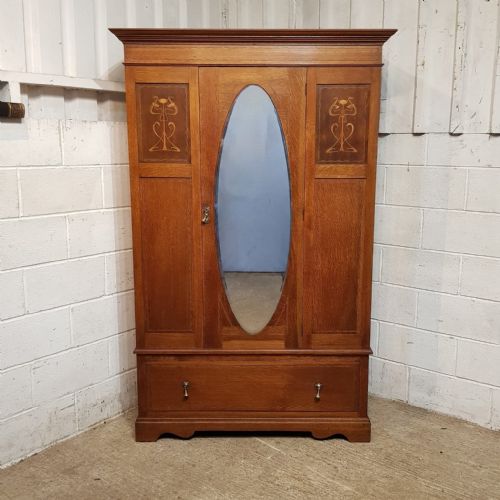
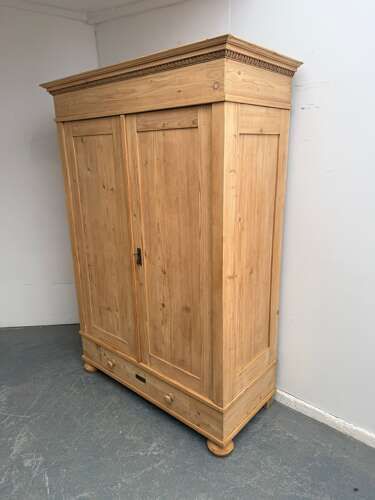
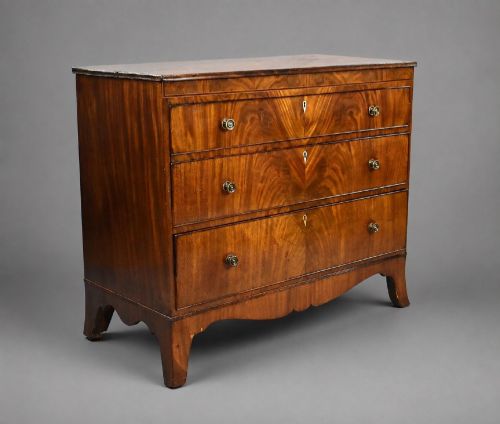
When you search for vintage clothes drawers, you encounter a diverse selection of storage furniture including chests of drawers, linen presses, wardrobes, and tallboys. The most frequent pieces on this page are mahogany and pine chests of drawers and linen presses originating from the Georgian, Victorian, Edwardian, and Regency periods.
These items served vital domestic roles for storing garments, linen, and personal items before fitted bedroom furniture became common. Their forms range from compact single wardrobes to large multi-drawer cabinets built by various workshops and makers.
How they were made
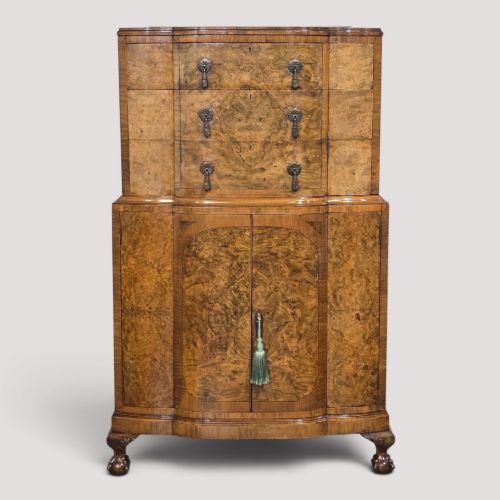
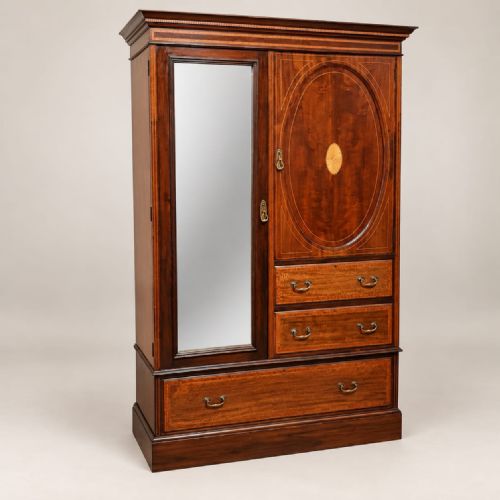
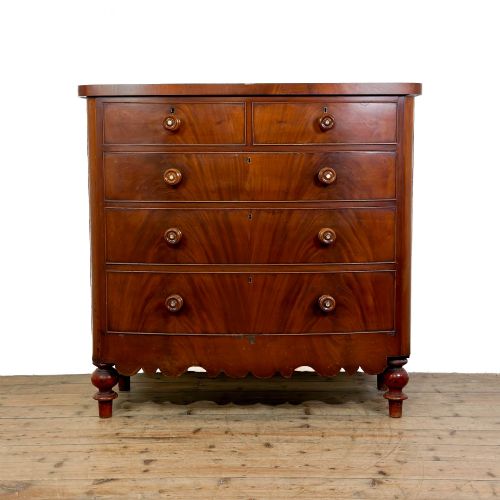
Cabinet makers utilised solid woods like mahogany, oak, and pine, often enhancing surfaces with veneers such as burr walnut, flame mahogany, and satinwood line inlay. Structural integrity relied on traditional joinery techniques, paired with brass handles, escutcheons, and glass panels.
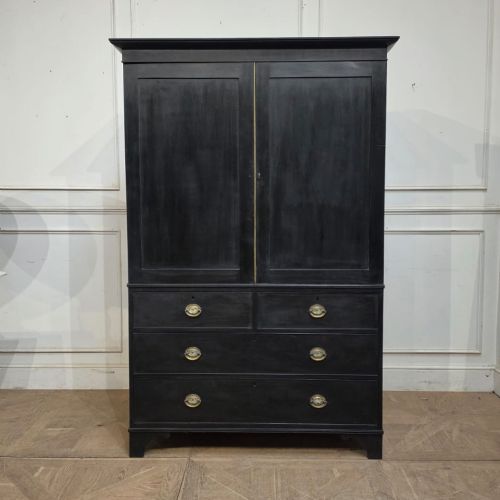
Surfaces received finishes including ebonising, blue paint, wax, or natural polishing to highlight the grain. Details such as blind fretwork cornices and hand-carved elements appear on specific regional and period pieces.
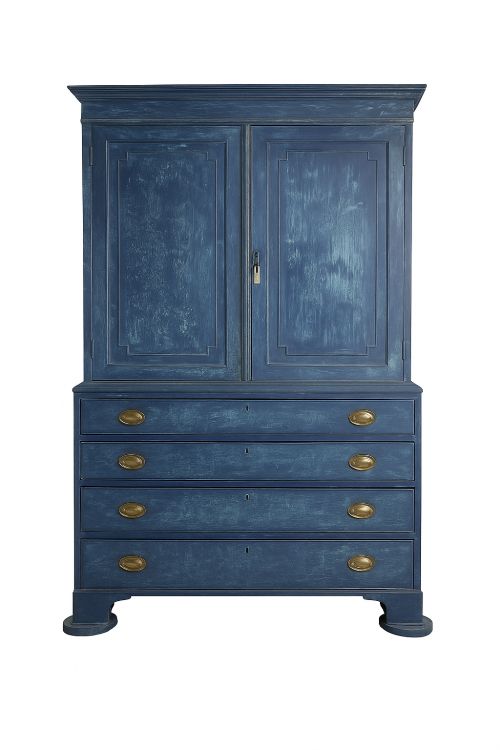
One piece arrives painted in a striking shade of blue, bringing a vivid splash of colour to traditional 19th-century linen storage.
What varies in quality
Quality in these pieces depends heavily on the selection of timber, such as figured flame mahogany or dense oak, and the precision of the cabinet maker's joinery. Superior examples display thoughtful proportions, crisp inlay work, and original hardware.
The choice of secondary woods inside the drawers, the smoothness of the drawer runners, and the retention of original finishes or period glass further distinguish finer pieces from standard utility items.
maples & co·Harris Lebus·Heals
The Vintage Clothes Drawers Glossary
- Linen Press
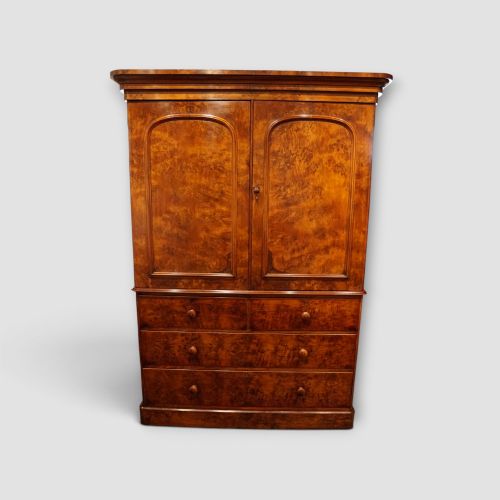
- A tall piece of furniture featuring upper cupboard doors enclosing sliding trays or shelves, above a base section fitted with drawers. They were originally designed to store household linen flat.
- Tallboy
- A tall chest of drawers, often consisting of a smaller chest stacked upon a larger base unit. This form maximises vertical storage space in smaller bedrooms.
- Compactum
- A multi-functional wardrobe combining hanging space, shelving, and internal drawers within a single compact footprint. They gained popularity during the late Victorian and Edwardian eras.
- Blind Fretwork
- Carved ornamental woodwork applied to a flat surface in an openwork pattern without piercing through to the background. It frequently decorates the cornices of Georgian and 19th-century presses.
- Ebonisation
- A chemical or finishing process applied to timber to imitate ebony. This technique darkens woods like mahogany or fruitwood to a deep, uniform black.
Vintage Clothes Drawers: Frequently Asked Questions
What is a linen press?
A linen press is a large storage unit that combines upper cabinet doors with lower drawers. The upper section typically contains sliding trays for folded textiles.
Historically, these pieces held household linen and garments before modern wardrobes became standard bedroom fixtures.
How do I date a chest of drawers?
Dating relies on observing timber choices, construction methods, and stylistic cues. Georgian pieces often feature oak linings and cockbeading, while Victorian examples frequently utilise mahogany or walnut veneers.
Hardware styles, dovetail construction precision, and secondary woods also provide clear chronological indicators.
Are these drawers suitable for daily use?
These cabinets and chests function well for daily clothing storage when drawers slide smoothly and internal spaces are clean. Solid wood construction ensures durability for modern living.
Placing them away from direct heat sources helps maintain the stability of historical timber and joints.
What is a compactum wardrobe?
A compactum is an all-in-one wardrobe design incorporating hanging space, shelving, and internal drawers. They appeared frequently around the turn of the twentieth century.
This form allowed maximum storage efficiency within a single piece of bedroom furniture.