
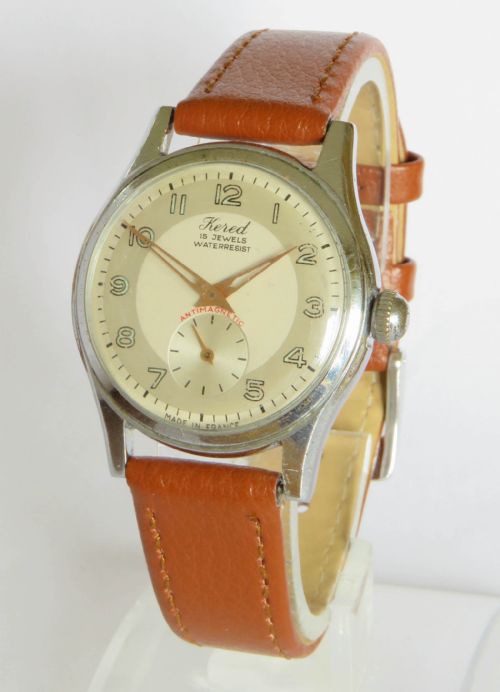


Vintage Chrome Timepiece
A vintage chrome timepiece brings industrial polish and mechanical precision into daily routines through desk clocks, pocket watches, and wristwatches.
Vintage Chrome Timepiece
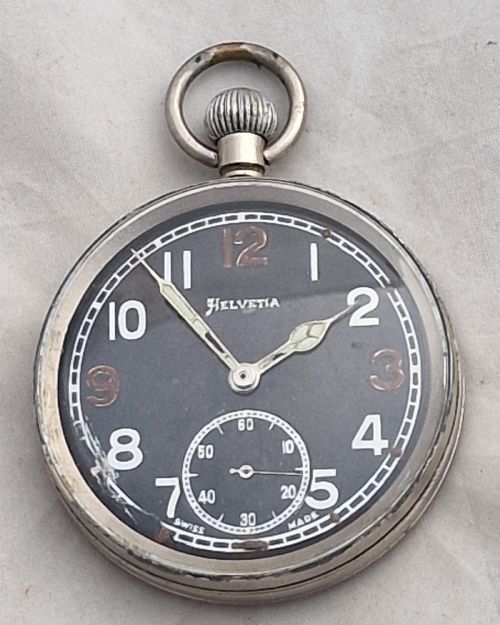
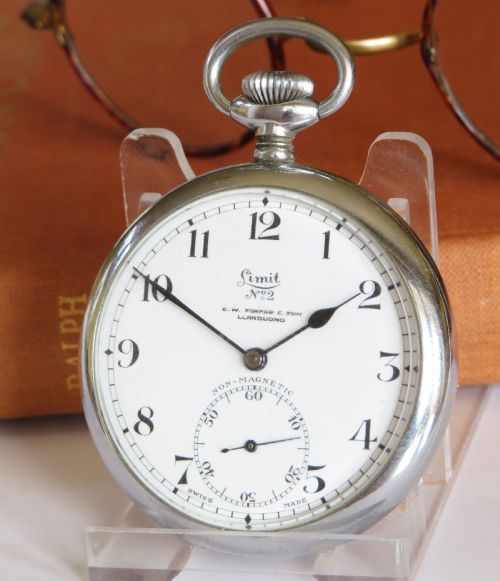
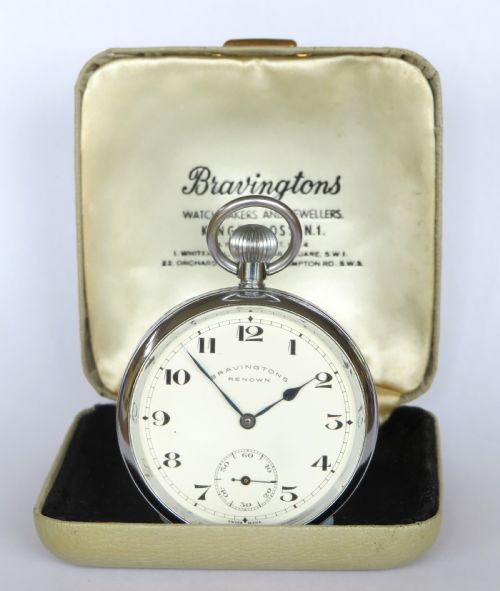
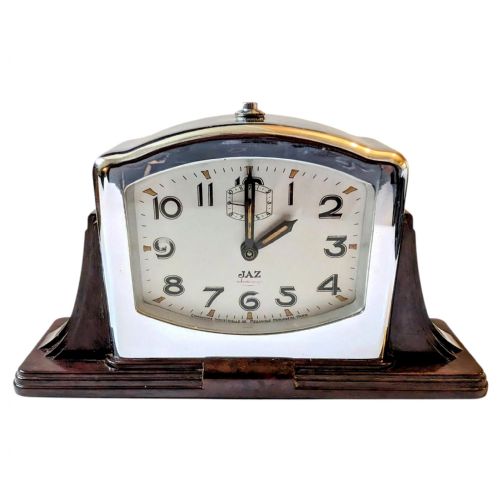
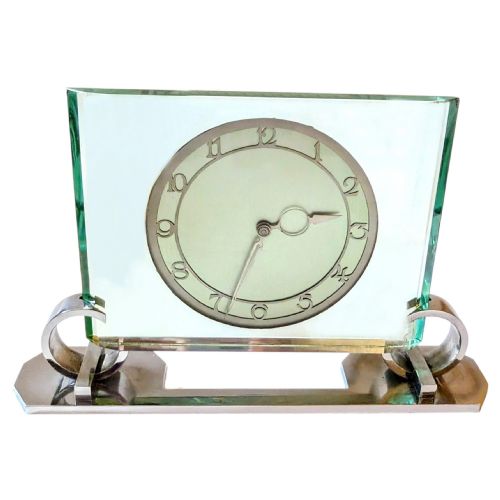
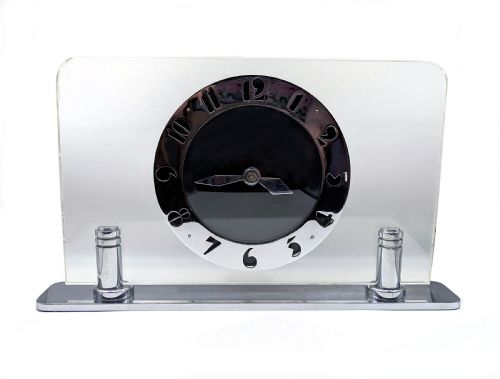
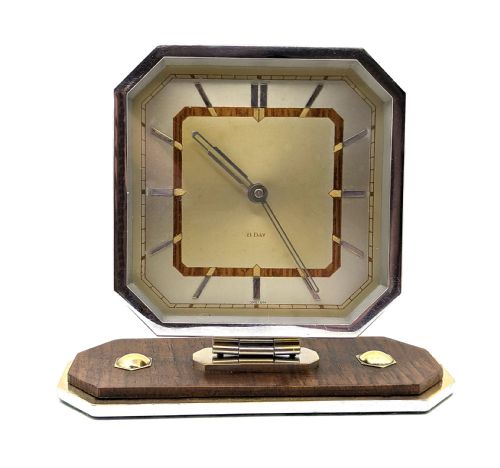
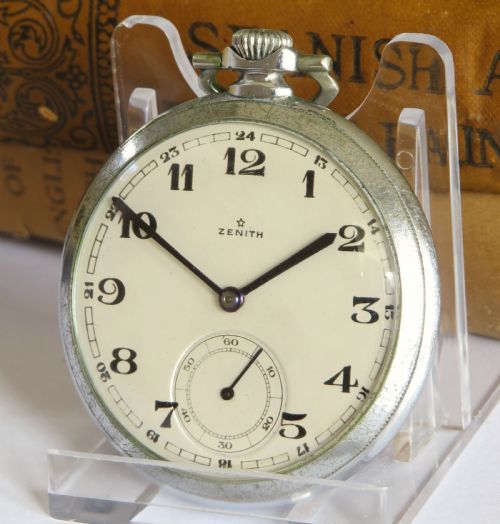
A vintage chrome timepiece spans functional pocket watches, wristwatches, and desk clocks originating predominantly from the 1930s through to the 1950s. The most common manifestations on this page are Art Deco desk clocks and mid-century pocket or wrist watches.
The selection includes specialised military items such as Second World War pocket watches and wristwatches alongside domestic mantel and travel clocks. Makers and retailers range from prominent firms like Smiths Clockmakers to French and English workshops.
How They Were Made
Metal fabrication combines chrome plating over brass or steel bases, frequently paired with glass crystals and dials. Bakelite and various types of marble or wood appear as structural housings for desk and mantel clocks.
Movements rely on mechanical wind-up mechanisms, including eight-day variants, alongside jewelled wristwatch calibres. Subsidiary materials such as leather straps and enamel face details complete the construction.
Vintage Chrome Timepiece Retail Price Guide 2026
Typical asking prices for vintage chrome timepiece among the pieces listed under this phrase on Sellingantiques today, from the lower quarter to the upper quarter. They describe what is for sale here now, not the wider market.
Materials span chrome, glass, metal, leather, enamel, brass, stainless steel, and Bakelite.
What Varies in Quality
Quality rests on the sophistication of the movement, such as eight-day capabilities and jewelled counts, paired with the pedigree of the maker or retailer. Pieces carrying signatures from established houses like Asprey or Mappin & Webb demonstrate superior finishing.
The integrity of the chrome plating and the preservation of original glass, Bakelite, or marble components dictate the visual standard. Design ambition, seen in modernist skyscraper desk clock forms or specialised military commissioning, elevates individual examples.
Jaz, France·Smiths Clockmakers·Mappin & Webb·Harrods of London·Elgin·Blangy Clockmakers·Asprey
The Vintage Chrome Timepiece Glossary
- Chrome
- Electroplated chromium providing a bright, corrosion-resistant metallic finish. This coating defines the sleek aesthetic of twentieth-century domestic metalwork.
- Bakelite
- An early thermosetting phenol formaldehyde resin valued for its durable moulded properties. It frequently frames clock dials in dark or colourful hues.
- Art Deco
- A design style dominant in the 1920s and 1930s characterised by geometric symmetry and stylised forms. Skyscraper silhouettes and streamlined bezels typify timepieces from this period.
- Mantel clock
- A portable clock designed to stand on a fireplace mantelpiece or shelf. These often incorporate architectural marble or wooden cases alongside metal bezels.
- Eight day movement
- A mechanical clock movement designed to run for eight days on a single winding. This complication reduced the frequency required for manual maintenance.
Vintage Chrome Timepiece: Frequently Asked Questions
How do I wind a vintage chrome timepiece?
Mechanical desk clocks and pocket watches require turning the crown or key clockwise until mild resistance is felt. Care should be taken not to over-wind the mainspring.
Eighty-day movements and standard wind-up mechanisms operate on traditional tension systems that sustain operation over their rated duration.
Were these clocks made for travel?
Certain chrome timepieces were specifically engineered as travel clocks, featuring folding leather cases or compact protective housings. Other variants remained stationary on desks or mantelpieces.
Desktop items such as skyscraper clocks prioritised architectural presence over portability.
How do I identify a 1930s design?
Nineteen-thirties timepieces often display Art Deco characteristics such as geometric stepped cases, skyscraper profiles, and modernist numerals. Stylised hands and streamlined bezels further signal this era.
Signatures from makers operating during that decade provide additional chronological markers.