


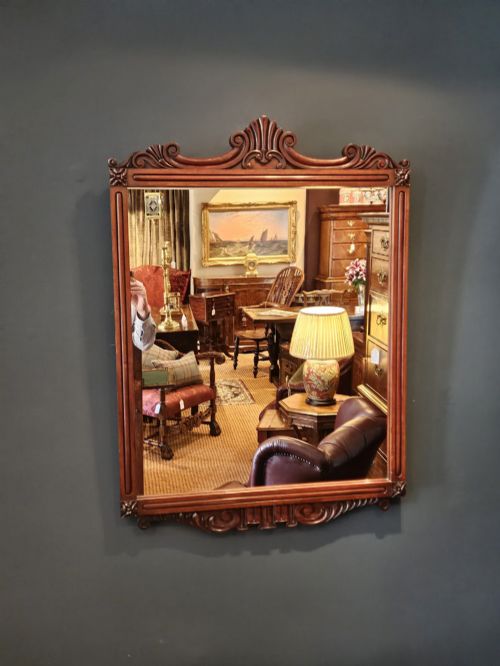

Vintage Chippendale Mirror
A vintage chippendale mirror brings traditional craftsmanship to a room, offering intricate fretwork and rich timber tones that anchor a traditional interior.
Vintage Chippendale Mirror
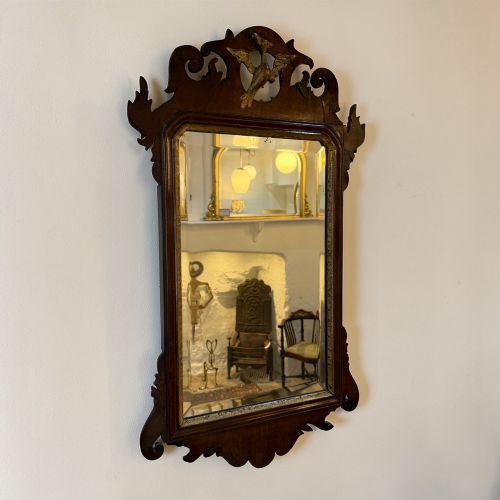
A vintage chippendale mirror represents a tradition of carved wooden frames that draw on eighteenth-century design principles. When searching for a vintage chippendale mirror, buyers encounter both authentic eighteenth-century examples and later revival pieces from the Victorian, Edwardian, and early twentieth-century periods.
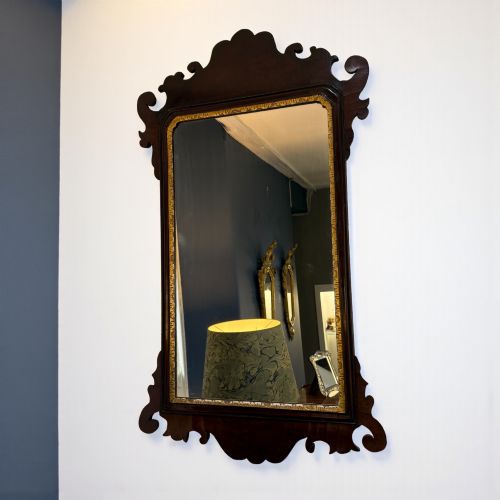
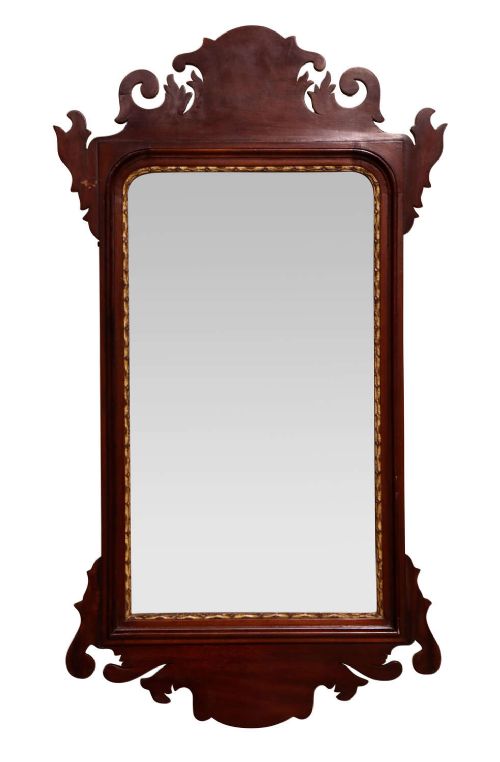
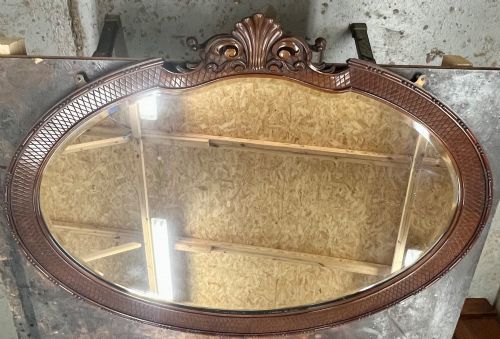
The selection on this page ranges from compact wall mirrors and toilet mirrors to large overmantel mirrors and dressing chests. The version most commonly met here is the mahogany fretwork wall mirror produced during the nineteenth or early twentieth century.
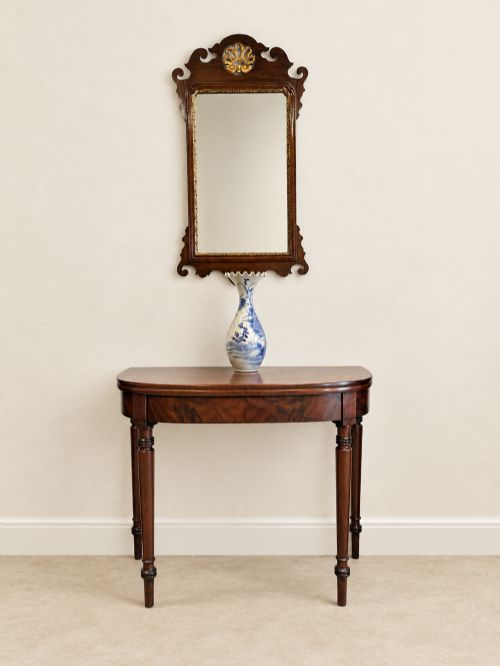
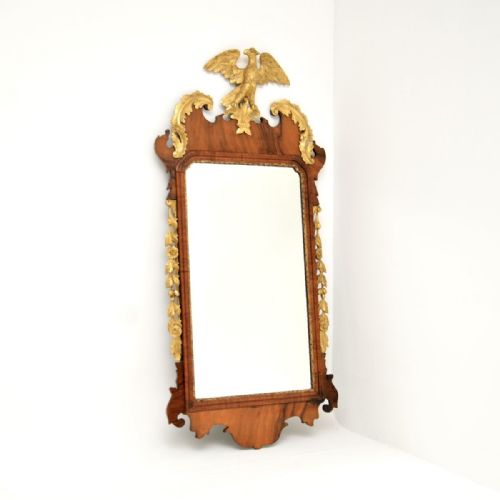
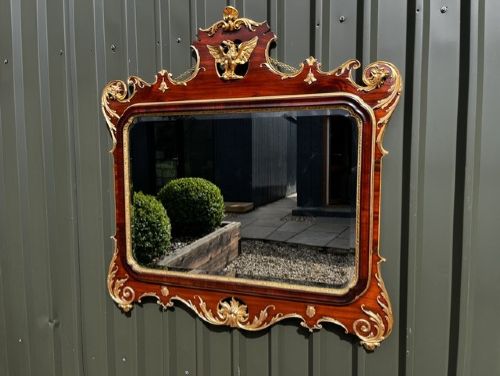
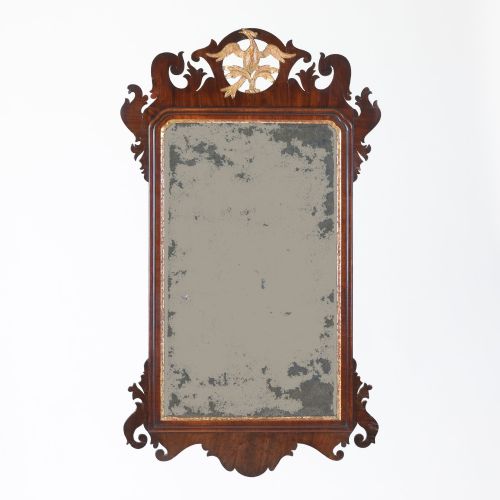
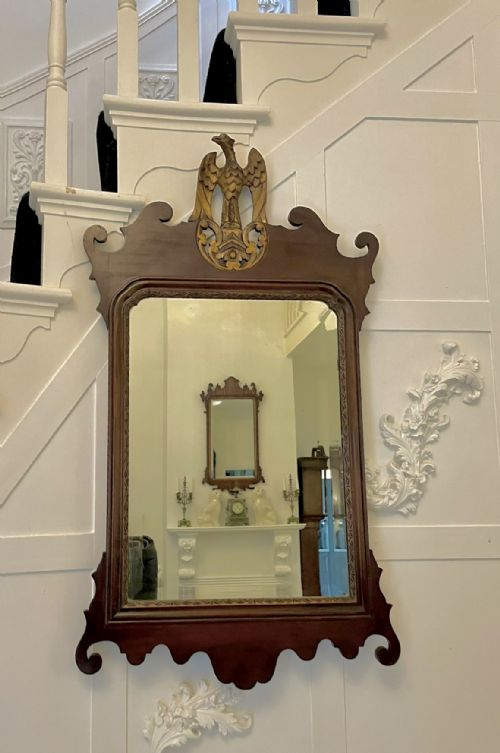
Makers and craftsmen throughout the Georgian period and subsequent revival eras adopted characteristic motifs such as the Ho-Ho bird, scroll ears, and gilded accents. These decorative elements define the visual weight and historical character of each piece.
Materials and construction methods
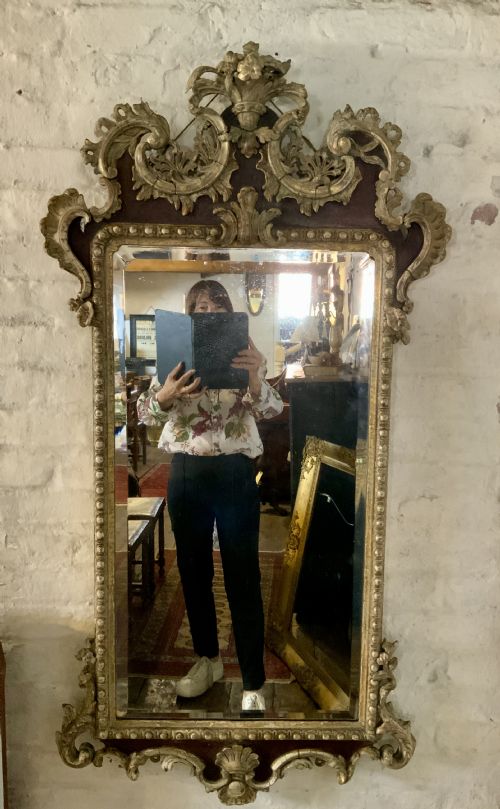
Makers constructed these frames predominantly using dense timbers such as mahogany and walnut, frequently selecting them for their rich grain and ability to hold intricate fret-cut lines. Giltwood, gesso, and gold leaf were applied to highlight carved details, while parcel gilt accents added contrast to the dark wood.
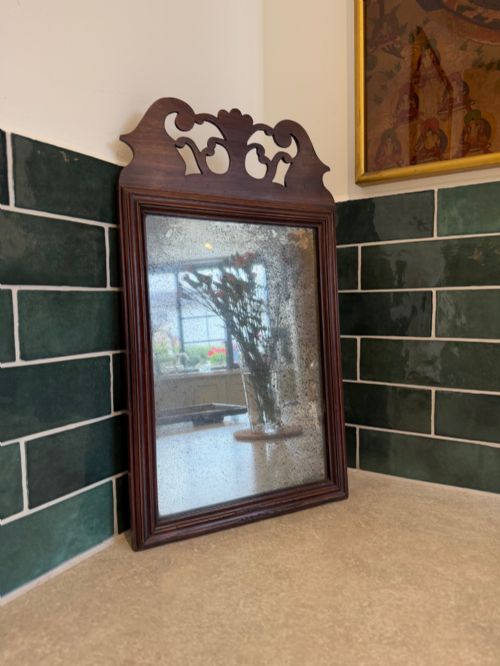
The fretwork panels were typically pierced using fine saws, creating symmetrical scrollwork and geometric patterns along the borders of the frame. Joinery relied on traditional pinned or glued joints at the corners, ensuring the stability of the hanging structure over centuries of use.
Many a Victorian craftsman added a jaunty Ho-Ho bird to the crest, ensuring every reflection comes with its own wooden phoenix.
Distinctions in craftsmanship
Quality in these mirrors rests upon the crispness of the hand-carved fretwork and the depth of the timber's grain. Finer examples display sharp interior corners and delicate scrolling that remain uniform across the entire frame, whereas lesser pieces show blunt edges and simplified outlines.
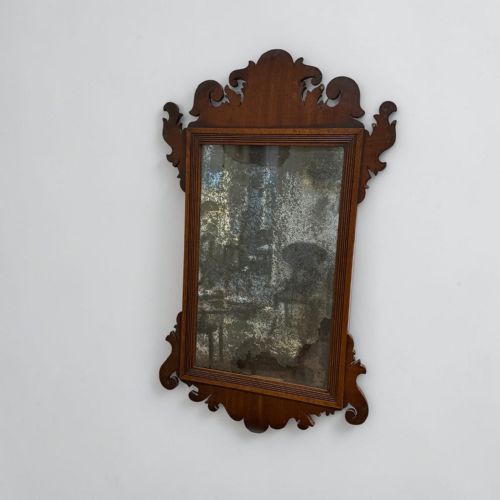
The treatment of the finish and the retention of original glass also determine the standing of a piece. Older mirrors often show subtle distortions in the glass plates and careful application of gold leaf over gesso, distinguishing artisan work from mass-produced revival items.
The Vintage Chippendale Mirror Glossary
- Fretwork
- Ornamental pattern open-work carved or cut through wood, defining the intricate borders seen on many wall mirrors.
- Parcel Gilt
- A technique where portions of a wooden frame are selectively covered in gold leaf while the underlying timber remains visible.
- Gesso
- A plaster-like mixture applied to wood surfaces to provide a smooth base for subsequent gilding.
- Ho-Ho Bird
- A stylized Chinese phoenix motif frequently incorporated into the crests of eighteenth-century and revival mirrors.
- Overmantel
- A large mirror specifically designed to hang above a fireplace mantelpiece.
Vintage Chippendale Mirror: Frequently Asked Questions
Where should I place an overmantel mirror?
An overmantel mirror suits a central position above a fireplace or along the main wall of a reception room.
The large proportions and gilt details reflect natural light into the space, creating a sense of depth and balance.
Are these mirrors made of solid mahogany?
Many examples utilise solid mahogany or walnut for the primary frame construction and fret-cut borders.
Later revival pieces sometimes incorporate veneers over secondary timbers while maintaining the traditional appearance on the surface.
How do I tell an 18th-century mirror from a revival piece?
Eighteenth-century pieces display hand-cut joinery, oxidized timber patination, and older mirror plates with minor imperfections.
Revival pieces from the Victorian or Edwardian eras typically feature cleaner secondary woods and machine-assisted precision in the fretwork.