


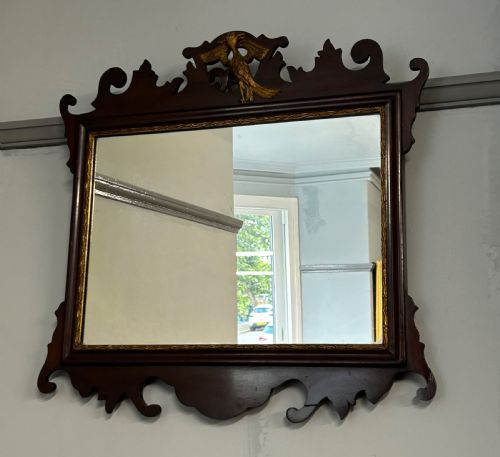


Gilded Bird Wall Mirror
A gilded bird wall mirror brings the distinctive presence of carved crests and gleaming leaf into a room, drawing the eye instantly.
Gilded Bird Wall Mirror
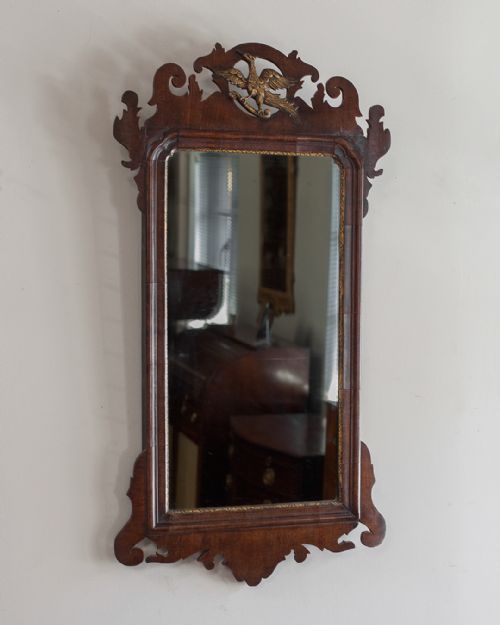
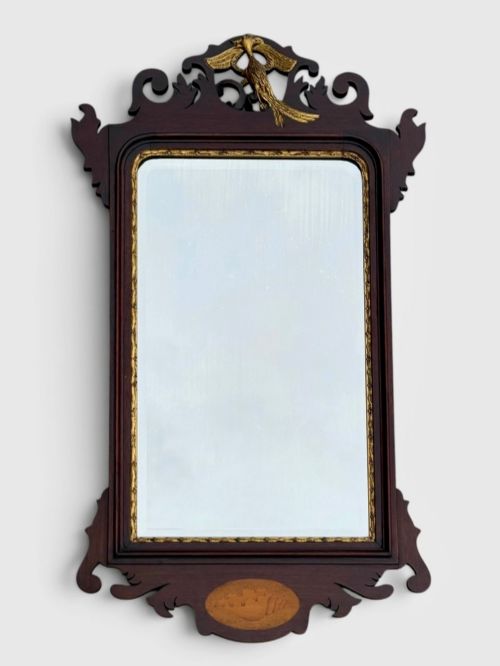
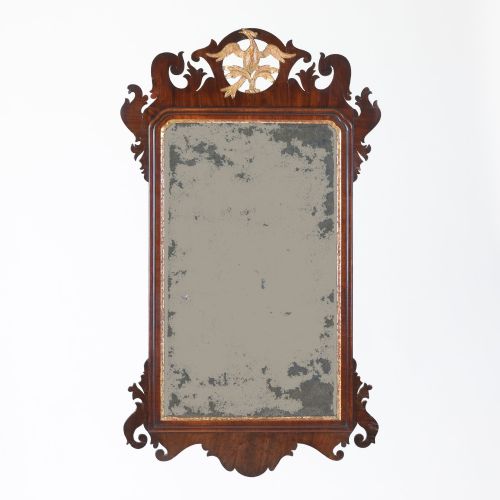
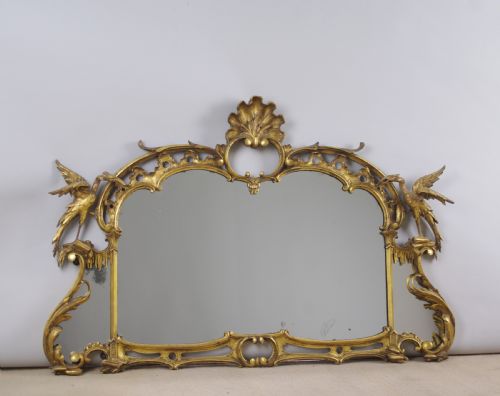
A gilded bird wall mirror centres on the decorative motifs of the eighteenth and nineteenth centuries, frequently incorporating the carved form of the ho-ho bird atop a fret-cut or giltwood frame. Buyers examining this selection encounter various interpretations, from George III mahogany fretwork designs to elaborate nineteenth-century overmantel pieces.
The objects span multiple distinct periods, including Georgian, Regency, and Victorian eras, alongside later revivals of the Chinese Chippendale style. Wall mirrors and larger overmantel formats dominate the selection, often featuring rectangular or tryptic configurations intended for prominent placement in reception rooms and hallways.
Origins and influences range from English cabinetmakers to continental workshops, taking in Irish rococo details and Chinese export aesthetics. The enduring appeal of these mirrors lies in their sculptural crests and the interplay between carved timber, gesso, and reflective glass.
How they were made
Construction relies upon traditional timber frames fashioned from mahogany, birds eye maple, or pine, which provide the structural foundation for intricate surface work. Fret-cut silhouettes are achieved through precise woodworking, while applied ornamentation brings depth to the crests and borders.
Giltwood and gesso application involves preparing a wooden substrate with layers of plaster before applying gold leaf or paint to achieve a lustrous finish. Reverse painting on glass also appears among the techniques utilised to decorate specific panels within the frame.
Listings feature mahogany, gesso, and gold leaf alongside painted glass panels across eighteenth and nineteenth-century periods.
What varies in quality
The distinction between standard examples and exceptional work rests on the crispness of the carving, particularly around the bird crests and foliage where depth and undercut detail demonstrate the carver's hand. Superior pieces maintain harmony in proportion and delicate fretwork without appearing heavy or clumsy.
Surface preservation dictates much of the character, distinguishing untouched original gilding and patinated mahogany from later overpainting or re-gilding that obscures the underlying grain and gesso contours.
The Gilded Bird Wall Mirror Glossary
- Giltwood
- Timber that has been coated with gold leaf over a prepared gesso ground. This finish provides a reflective, warm surface that catches natural light within a room.
- Gesso
- A plaster mixture applied to wood frames to create a smooth surface for gilding or painting. It allows craftsmen to model sharp relief details before applying gold leaf.
- Fret-cut
- A woodwork technique where intricate patterns are pierced through thin timber panels using a fine saw. It defines the pierced borders typical of Chippendale style mirrors.
- Overmantel mirror
- A large horizontal mirror designed to hang above a fireplace mantelpiece. These pieces often incorporate multiple glass plates and elaborate crests.
- Tryptic
- A mirror composed of three distinct glass panels placed side by side within a single frame. This format widens the reflective surface for grander interior spaces.
Gilded Bird Wall Mirror: Frequently Asked Questions
Where should I hang a gilded bird wall mirror?
These mirrors suit prominent positions where their carved crests can be appreciated, such as above a living room fireplace or in a spacious hallway.
Ensure the wall fixings safely support the weight of the timber and gesso frame, keeping the glass at comfortable eye level.
How do I identify a Georgian style mirror?
Georgian style pieces typically feature mahogany fretwork frames, symmetrical scrollwork, and the characteristic carved ho-ho bird perched at the top.
Examining the construction methods on the reverse helps determine whether a piece belongs to the eighteenth century or a later revival period.
What is a ho-ho bird?
The ho-ho bird is a stylized mythical phoenix derived from Chinese export motifs that became popular in European rococo and Chippendale design.
Carvers rendered these creatures with ornate plumage and sweeping tails atop the crests of mirrors and furniture.
How should I clean a antique giltwood frame?
Dust the carved surfaces gently with a soft, dry brush to prevent accumulating dirt in the recessed gesso details.
Avoid liquid cleaners and modern chemicals, which can damage original gold leaf and nineteenth-century surface patination.