
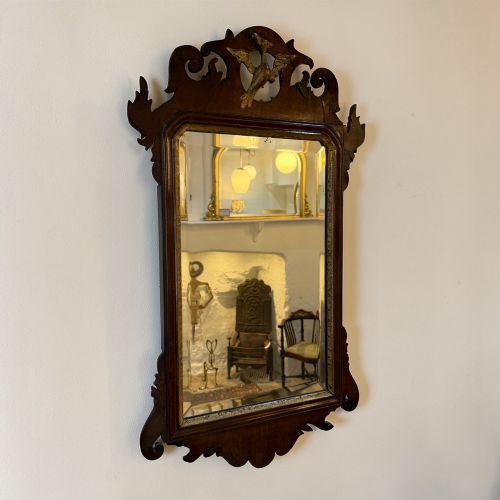
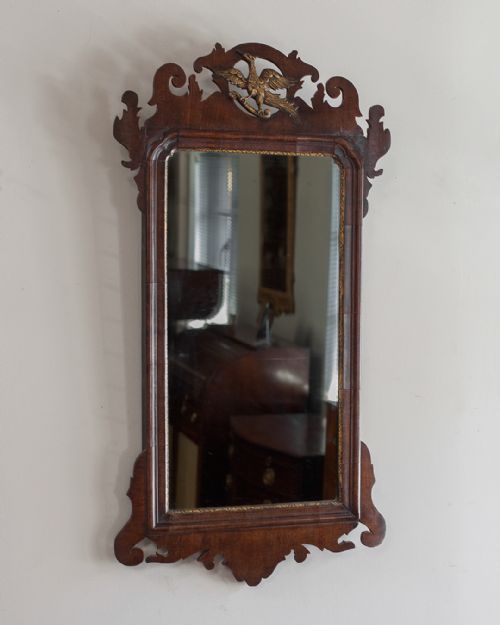
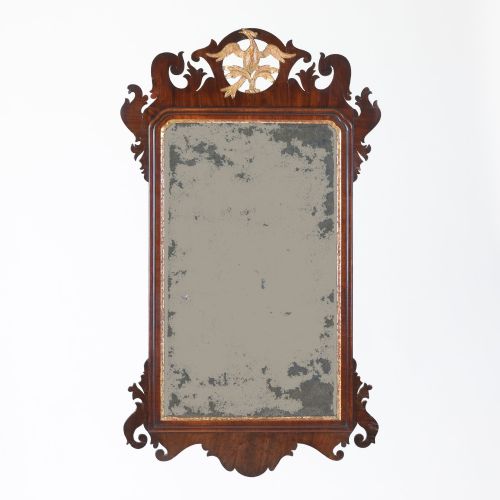
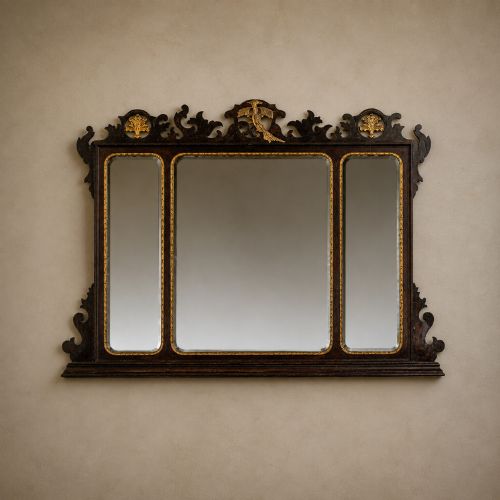






Bird Crest Wall Mirror
A bird crest wall mirror brings architectural proportion and carved whimsy to a room, driven by the enduring appeal of eighteenth-century motifs.
Bird Crest Wall Mirror
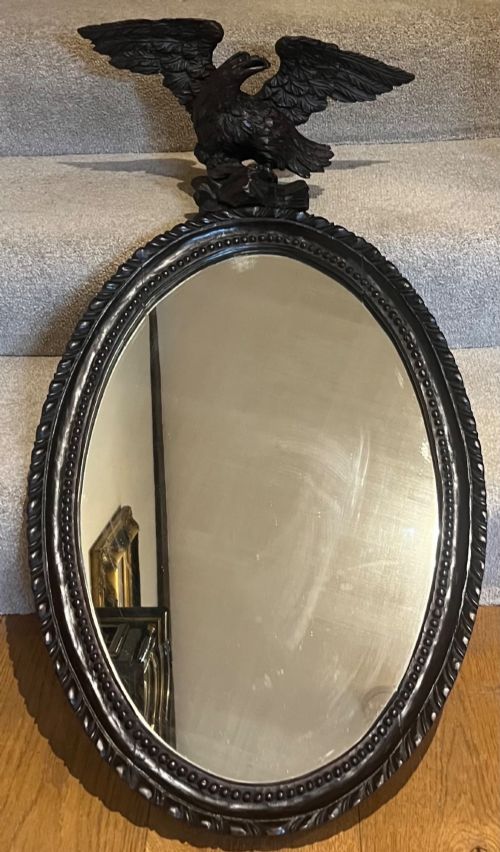
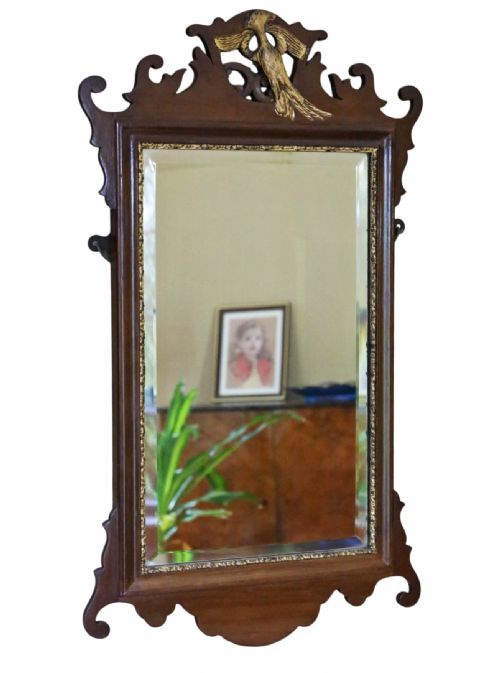
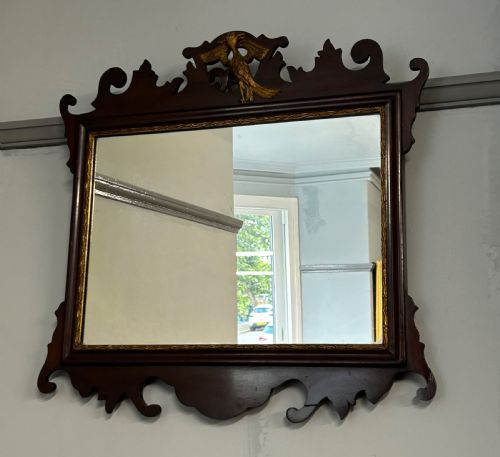
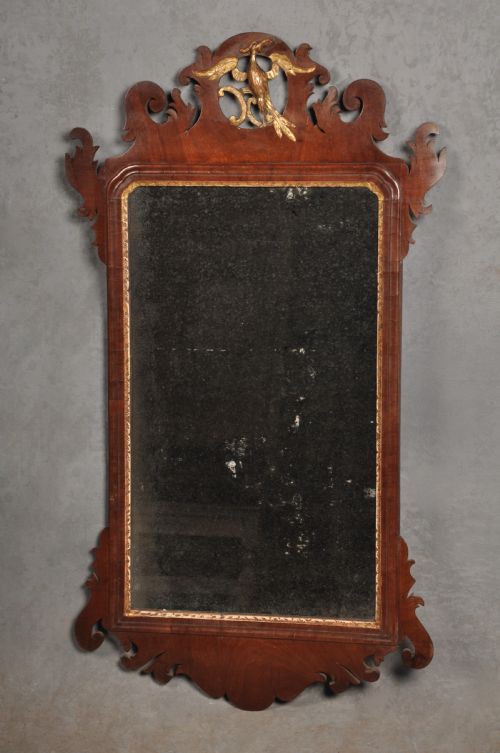
A bird crest wall mirror combines traditional timber frames with iconic avian carvings positioned at the apex, most frequently taking the form of a ho-ho bird or an eagle. When you examine a bird crest wall mirror on this page, you encounter pieces spanning from the eighteenth century through the Victorian era and later revivals.
The prevailing forms range from upright mahogany fretwork frames associated with the Georgian period to grander overmantels and gilded French designs. These mirrors function equally well in entrance halls and principal living spaces, reflecting light while displaying detailed woodwork.
Materials and construction methods
The primary construction relies on timber such as mahogany, yew wood, and general carved wood, frequently shaped into intricate fret-cut silhouettes. Workshops employed joinery techniques suited to intricate scrollwork and delicate cresting details.
Giltwood and gesso surfaces receive layers of gold leaf or paint, creating the reflective and decorative finishes seen on Regency and French models. Glass plates are integrated into these frames, sometimes featuring bevelled edges in later revival pieces.
Ho-ho birds peer down from these mirrors with permanent, slightly bewildered expressions, watching rooms change for centuries.
Evaluating craftsmanship and execution
The depth and crispness of the hand-carving define the distinction between standard production and superior craftsmanship, particularly evident in the rendering of the bird crest and surrounding foliage. Fretwork requires precise sawing and smoothing to achieve balanced symmetry across the frame.
The application of gesso and gold leaf determines the richness of the surface finish, where finer pieces retain harmonious patination and intact gilt layers. Original glass condition and the structural integrity of the underlying timber frame also dictate the overall standard of a piece.
The Bird Crest Wall Mirror Glossary
- Fret-cut
- Woodwork shaped by piercing the timber with a fretsaw to create decorative geometric or organic patterns. This technique defines the silhouette of many Georgian frames.
- Gesso
- A plaster-like mixture applied to wood surfaces to provide a smooth base for gilding or painting. It allows for intricate relief moulding.
- Giltwood
- Timber carved and subsequently covered with gold leaf or metal leaf. This material provides a bright, reflective finish popular in formal rooms.
- Overmantel mirror
- A large mirror designed specifically to hang above a fireplace mantelpiece. These pieces often feature extended horizontal proportions and elaborate cresting.
- Ho-ho bird
- A stylized Chinese phoenix motif adopted by European craftsmen during the eighteenth century. It appears frequently at the top of Chippendale-style mirrors.
Bird Crest Wall Mirror: Frequently Asked Questions
What is a ho-ho bird?
A ho-ho bird is a mythical Chinese phoenix adapted into European rococo and Chinoiserie design during the eighteenth century. It typically appears with sweeping tail feathers perched at the top of carved wooden frames.
This decorative creature became a hallmark of Chippendale-style mirrors and remains a primary indicator of period aesthetic influence.
Where should I hang an overmantel mirror?
An overmantel mirror is traditionally positioned directly above a fireplace mantel to anchor the room's proportions and reflect natural light. Its scale is designed to fill the expansive wall space common in period properties.
Ensure the wall fixings match the substantial weight of these timber and gesso frames before installation.
How do I date a mahogany fret mirror?
Dating involves examining the timber density, the sharpness of the fret-cut edges, and the construction methods used on the reverse of the frame. Eighteenth-century examples often feature older pine secondary woods and hand-beveled glass.
Revival pieces from the Victorian era or later adopt similar George III styles but display different tool marks and fresher patination.
Are gilt gesso frames fragile?
Gilt gesso surfaces consist of a prepared plaster layer over wood that can chip or crack if subjected to knocks or excessive moisture changes. Gentle dusting with a dry cloth is sufficient for maintenance.
Handling these mirrors requires care around the delicate carved extremities and the gilded cresting.