


Vintage Chinoiserie Furniture
Vintage chinoiserie furniture brings together hand-painted lacquer, bamboo, and exotic motifs from the nineteenth and early twentieth centuries.
Vintage Chinoiserie Furniture
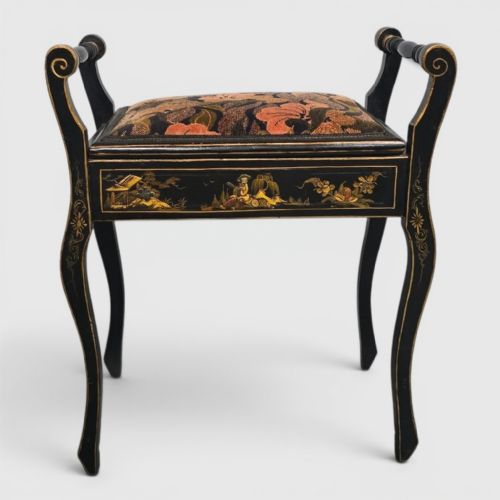
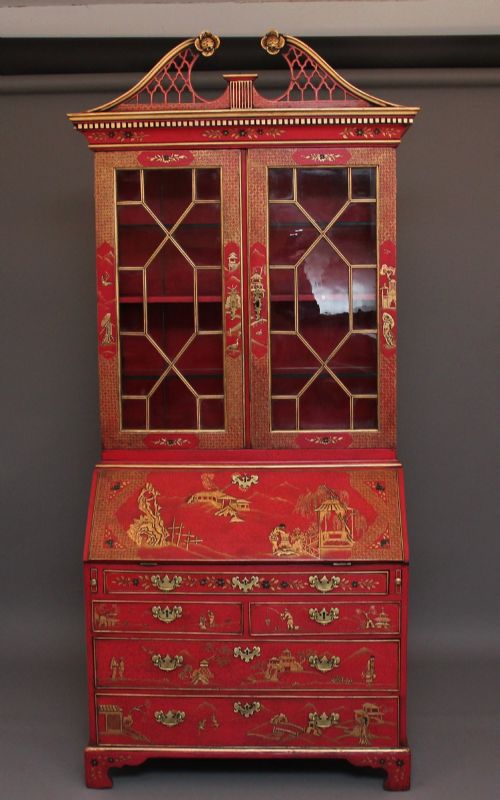
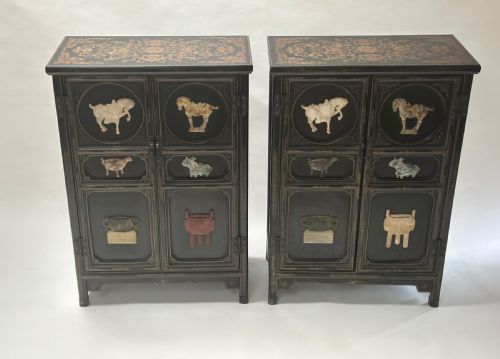
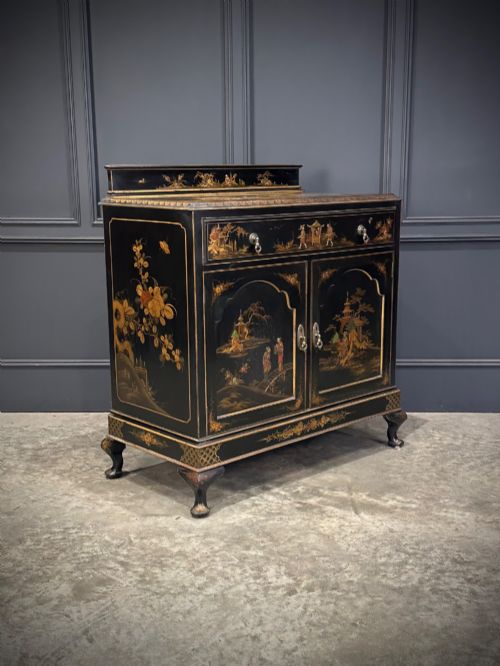
Vintage chinoiserie furniture encompasses a diverse selection of storage pieces, seating, and tables drawn from the nineteenth and early twentieth centuries. Cabinets, chests of drawers, and side tables dominate the selection, alongside plant stands, writing bureaux, and occasional tables.
Makers and designers from the Victorian period through to the 1930s adapted traditional East Asian motifs into European forms. Pieces span styles such as the Aesthetic Movement, Chinoiserie Revival, and Regency, incorporating bamboo alongside lacquered timber.
Materials and Technique
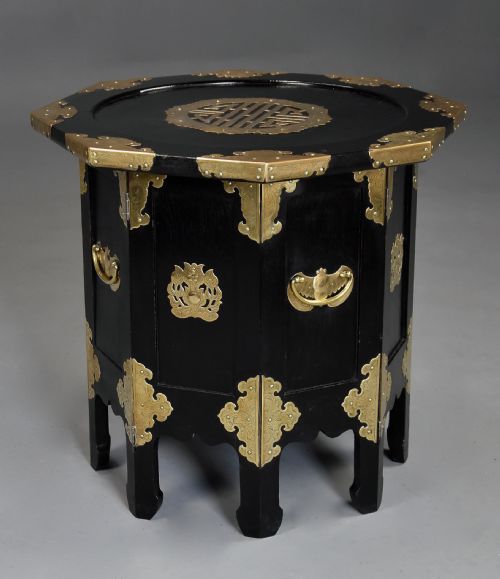
Craftsmen utilised wood, hardwood, and bamboo as structural bases for cabinets, tables, and plant stands. Ebonised finishes and faux bamboo turnings provide structural framing for painted surfaces.
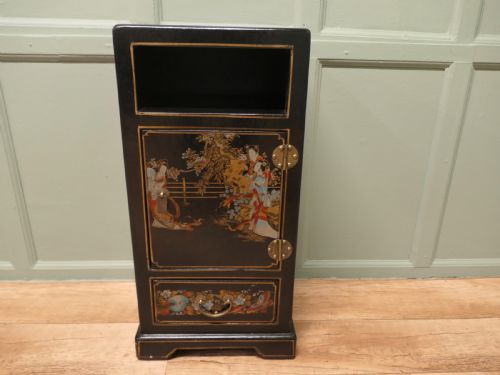
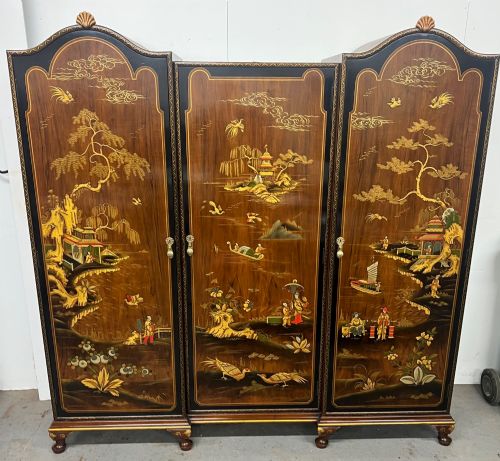
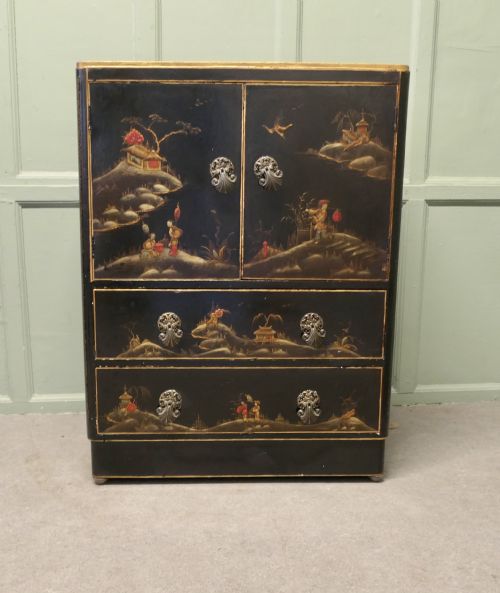
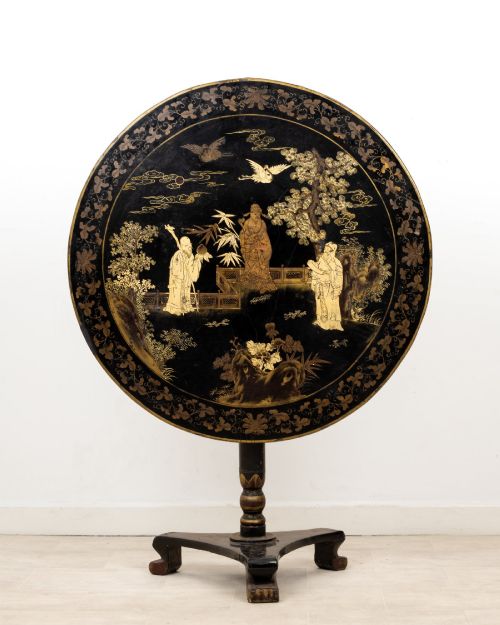
Decoration relies heavily on lacquer, gold leaf, and brass hardware applied to cabinets and tables. Japanned surfaces and hand-painted details depict birds, flowers, and traditional scenes.
Listings feature items from the 1890s, Edwardian period, and 1920s, constructed from lacquer, bamboo, and brass.
Defining Quality
Quality rests in the execution of the hand-painted decoration and the depth of the lacquer finish. Pieces with intricate pictorial scenes and layered gilt work stand apart from simpler painted items.
The choice of structural material also defines the tier of a piece, with solid hardwoods and detailed bamboo framing commanding attention over basic constructions.
Maples and Co·Maison Krieger·Whytock and Reid
The Vintage Chinoiserie Furniture Glossary
- Chinoiserie
- European decorative style imitating Chinese artistic traditions. It appears on cabinets, screens, and tables through painted motifs and lacquer work.
- Japanning
- European imitation of Japanese lacquerwork. This technique uses layered varnish and heat-drying to create a hard, glossy black or cream surface.
- Faux bamboo
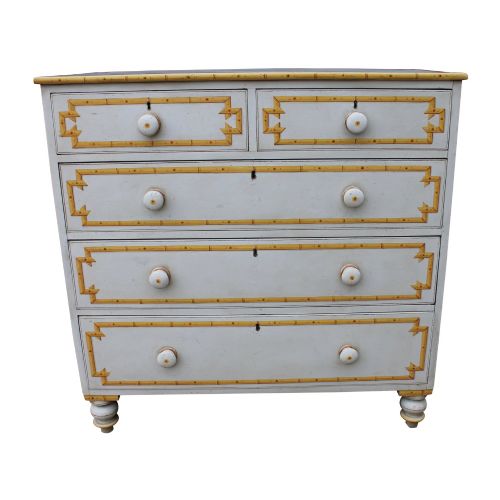
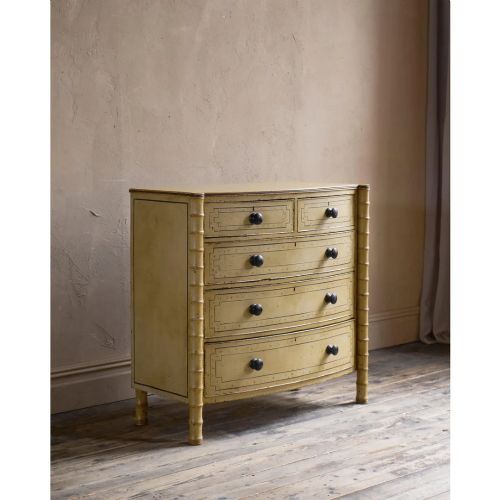
- Wood turned and painted to resemble natural bamboo stalks. It is commonly found on nineteenth-century chests of drawers and umbrella stands.
- Tilt top
- A tabletop hinged to a central pedestal pillar so it can pivot vertically when not in use. This mechanism is typical of occasional tables.
- Lowboy
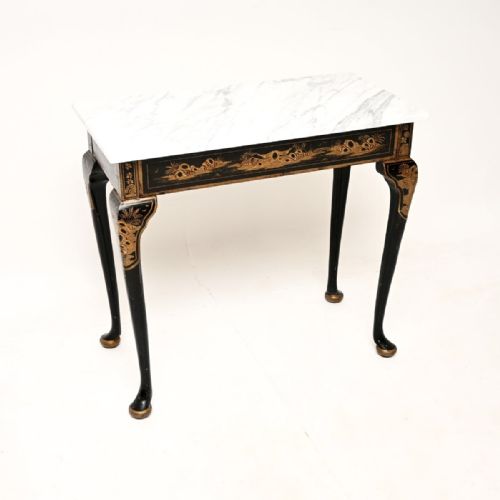
- A small side table or dressing table featuring one or more drawers beneath the surface. These pieces often display oriental painted decoration.
Vintage Chinoiserie Furniture: Frequently Asked Questions
What is vintage chinoiserie furniture?
Vintage chinoiserie furniture consists of nineteenth and early twentieth-century decorative pieces featuring European interpretations of East Asian design. These items combine Western cabinet forms with hand-painted lacquer and gilt motifs.
Common forms include side cabinets, chests of drawers, occasional tables, and plant stands produced across several decades of the Victorian and Edwardian eras.
How do I identify japanned furniture?
Japanned furniture is identified by its glossy layered finish, traditionally in black or pale cream, decorated with raised or flat painted scenes in gold and colours. This technique mimics East Asian lacquer.
Pieces often display oriental figures, landscapes, birds, and floral arrangements across cupboards, chests, and screens from the late nineteenth and early twentieth centuries.
What is faux bamboo furniture?
Faux bamboo furniture is made from timber that has been turned on a lathe and carved to replicate the segmented joints of natural bamboo. It gained popularity during the Victorian period.
Cabinetmakers utilised this technique for chests of drawers, umbrella stands, and occasional tables, often combining the turned wood with painted lacquer surfaces.
How do I style chinoiserie in a room?
Chinoiserie items function well as focal points within a room due to their decorative painted surfaces and contrasting black, cream, or ebonised finishes. A single cabinet or side table introduces pattern and texture.
Pairing these pieces with neutral backgrounds allows the gold leaf, lacquer work, and intricate floral details of the period to stand out without visual clutter.