


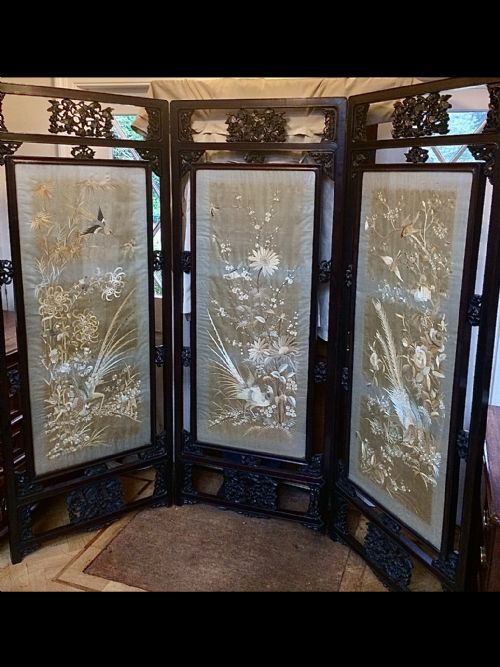


Vintage Chinese Screen
A vintage Chinese screen brings depth and intricate craftsmanship to a room, offering both functional division and decorative presence.
Vintage Chinese Screen
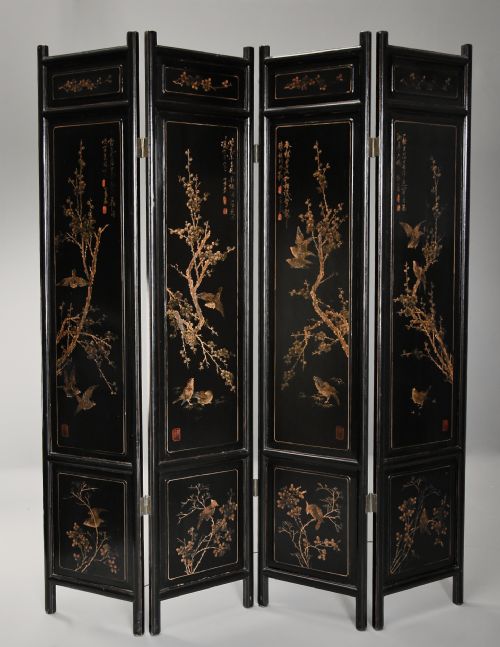
The version most commonly met on this page is the multi-fold lacquer room divider, often featuring four to eight leaves. These larger partitions frequently display dark lacquer finishes adorned with inlay, carving, or painted details.
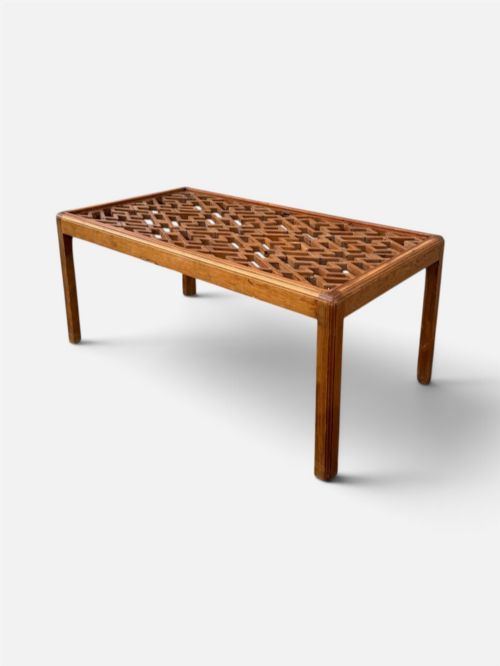
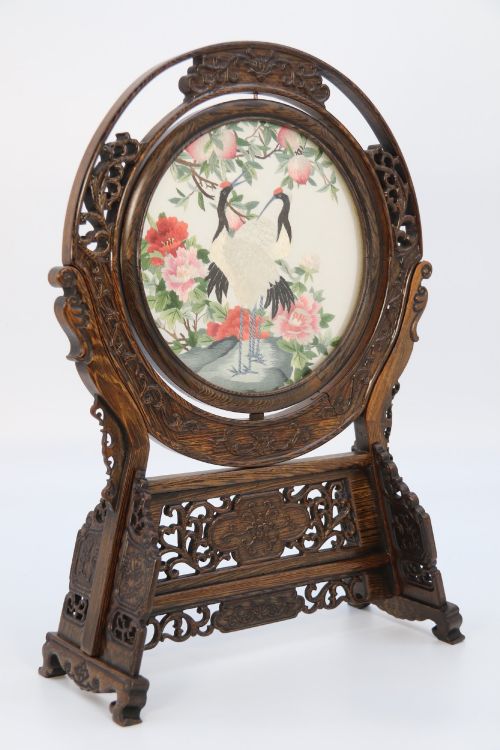
Alongside tall folding screens, buyers encounter smaller table screens mounted on carved stands, wall panels, and coffee tables incorporating antique panels. Styles span traditional Chinese motifs, Qing dynasty influences, and Republic period designs.
Materials and construction methods
Wood provides the structural foundation for these pieces, utilising hardwoods and carved elements that form the core of panels, frames, and stands. Joinery and carving require skilled handwork to shape intricate fretwork and relief designs.
Lacquer is applied in multiple layers to surfaces, creating smooth, durable finishes that frequently receive painting, gilding, or polished sheens. Artisans build up the black or coloured lacquer grounds before adding decorative elements.
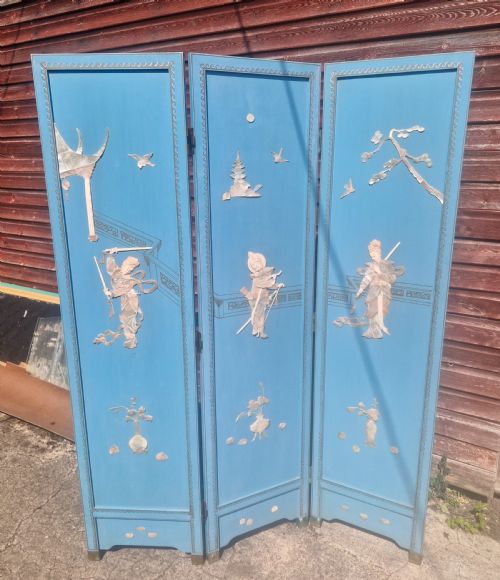
Inlay work incorporates mother of pearl, abalone, hardstone, and foil to build pictorial scenes of birds, foliage, and figures. Silk embroidery appears on specific smaller table screens, stretched within rotating stands.
Several panels double as avian real estate, populated entirely by hardworking mother of pearl birds perched eternally in foilage.
Distinctions in craftsmanship and condition
The depth and precision of hand carving separate standard items from finer works, where relief details show crisp edges and subtle depth. Dragon carvings and floral motifs require careful execution to achieve realistic proportions.
The application of lacquer and the stability of inlay influence the overall finish of a screen. Superior pieces retain secure mother of pearl, abalone, or hardstone mounts without significant losses to the surrounding lacquer surface.
The structural integrity of hinges and frame joints determines how smoothly a folding screen operates. Well-preserved panels maintain alignment across multiple folds and keep their original mounting stands firm.
The Vintage Chinese Screen Glossary
- Lacquer
- A durable finish applied in successive coats to wood surfaces, providing a smooth base for painting and inlay. It creates the dark, glossy ground typical of traditional room dividers.
- Hardstone
- Minerals such as jade or soapstone carved and applied to screen surfaces to form dimensional floral or figural motifs. These elements sit in relief against the lacquered background.
- Chinoiserie
- European artistic styles reflecting Chinese motifs and decorative techniques, often found on pieces produced for Western export markets.
- Fretwork
- Openwork carving forming geometric or linear patterns within wood panels. It appears on screen frames and integrated coffee table tops.
- Table screen
- A smaller decorative panel mounted on a supportive stand for placement on desks or tables rather than the floor. These items frequently feature double-sided silk embroidery.
- Qing Dynasty
- The imperial dynasty ruling China from the mid-seventeenth century until the early twentieth century, whose artistic traditions influence many carved wood panels.
Vintage Chinese Screen: Frequently Asked Questions
How were folding screens used historically?
Folding screens acted as movable partitions within rooms, creating private areas, blocking drafts, or serving as decorative backdrops for seating.
They allowed inhabitants to alter the layout and visual flow of an interior space quickly.
Where should I place a room divider?
A multi-fold divider works well against a blank wall as a large-scale panel or positioned to zone open-plan living areas.
Smaller spaces benefit from four-fold versions, while expansive rooms accommodate six or eight-fold screens.
How do I care for lacquered wood?
Dust surfaces regularly with a soft, dry cloth and keep pieces away from direct sunlight and heat sources to prevent cracking.
Avoid liquid polishes or abrasive cleaners that can damage traditional lacquer finishes.
What is the difference between floor and table screens?
Floor screens are tall, multi-panel dividers designed to stand independently on the ground and separate spaces.
Table screens are miniature versions supported by carved wooden stands for display on pieces of furniture.
Can I use a screen as permanent wall art?
Individual panels and smaller wall plaques are suitable for hanging directly on walls to display carved wood or inlay work.
This approach showcases detailed craftsmanship without requiring floor space for a folding divider.