





Lacquer Folding Screen
These lacquer folding screen examples bring structured division and deep painted surface into a room.
Lacquer Folding Screen
When you search for lacquer folding screen, you encounter multiple hinged panels designed to divide interior spaces or frame a corner. The selection ranges from tall eight-fold room dividers down to smaller three-fold dressing screens and low fire screens.
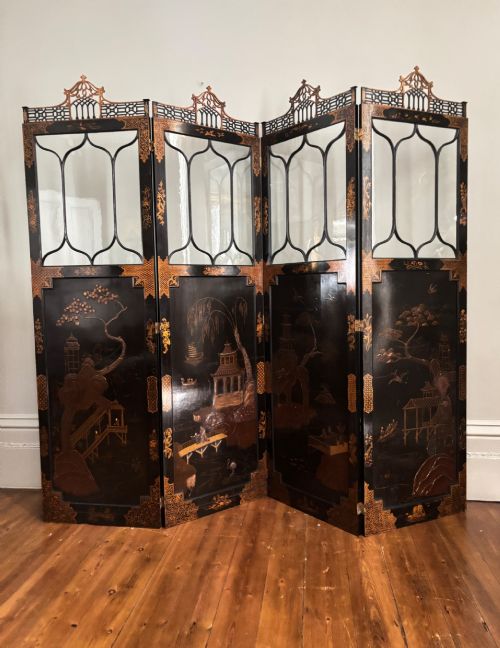
Most pieces you meet date from the nineteenth and early twentieth centuries, spanning Chinese Chinoiserie, Coromandel, and Japanese Meiji or Republic styles. Black lacquered wood forms the dominant foundation, though dark hardwoods and papier mâché appear among the variations.
How they were made
Craftsmen built the folding frames from timber, applying successive coats of lacquer to achieve a smooth, deep ground. Artisans then decorated these surfaces using painting, gilding, and incised carving techniques.
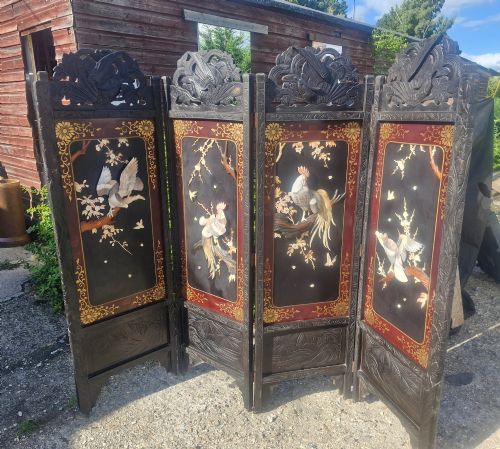
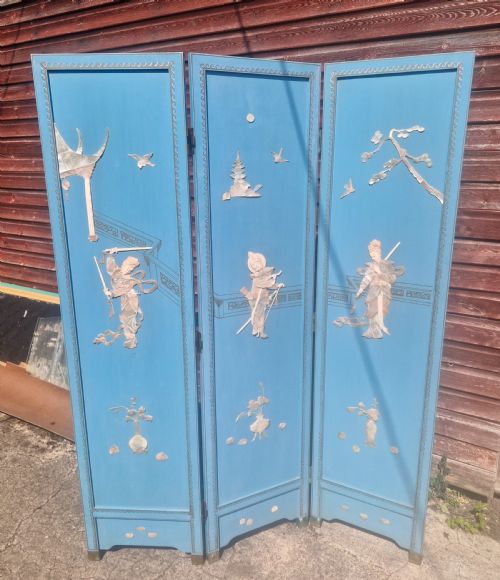
Many panels feature applied decoration rather than paint alone, incorporating carved bone, hardstone, and mother-of-pearl to build up raised figures, birds, and botanical motifs across the leaves.
Several screens incorporate deep carved bone figures that invite close inspection, occasionally depicting tiny travellers wandering through miniature lacquered landscapes.
What varies in quality
The standard of a lacquer folding screen depends upon the depth of the carving and the precision of the surface polish. Finely executed pieces display crisp incised work on Coromandel panels or securely fitted hardstone and bone inlay.
Construction details also dictate execution, particularly the stability of the hinges joining multiple leaves and the structural integrity of the underlying hardwood or lacquered timber.
The Lacquer Folding Screen Glossary
- Lacquer
- A durable resin finish applied in multiple layers to a wooden substrate to create a hard, glossy surface. It protects the timber while providing a smooth canvas for painted or carved decoration.
- Coromandel
- A type of Chinese incised lacquer where the surface is carved away to reveal layers of contrasting colours underneath. The recessed areas are then filled with pigment or gold.
- Chinoiserie
- A European artistic style reflecting Chinese and East Asian motifs, popular in furniture and decorative arts during various historic periods. It employs whimsical pavilions, figures, and landscapes.
- Hardstone
- Dense minerals such as jade, agate, or soapstone carved and applied to furniture surfaces. These elements provide raised relief and varied natural colour.
Lacquer Folding Screen: Frequently Asked Questions
How do I clean a lacquer screen?
Dust the panels regularly with a soft, dry cloth to prevent particle buildup on the sensitive surface. Avoid all chemical solvents, polishes, and excessive water which can damage the aged finish.
Keep the screen away from direct sunlight and strong heat sources to prevent the lacquer from drying out, cracking, or lifting from the wooden substrate.
What is a Coromandel screen?
A Coromandel screen is a heavy Chinese folding room divider made using the incised lacquer technique. Artisans coat a wooden core with numerous layers of dark lacquer before carving into the surface to create pictorial scenes.
The resulting recessed designs are filled with colours or gold leaf. These screens often feature elaborate court scenes, florals, and landscapes across multiple folding leaves.
How were dressing screens used?
Dressing screens historically provided privacy in bedrooms and dressing rooms while inhabitants changed garments or washed. Their smaller panel count made them easy to reposition around personal spaces.
Over time, these pieces transitioned into purely decorative room dividers. Homeowners placed them against walls or across corners to add texture, colour, and architectural interest to an interior.
Can I use a folding screen as a permanent room divider?
These screens function effectively to zone large spaces, create intimate seating areas, or conceal utilitarian corners in a room. Their folding panels allow you to adjust the angle and footprint to suit the floor plan.
Ensure the screen stands on a stable surface and do not extend the panels completely flat, as folding them in a zigzag or stepped formation provides necessary structural support.