
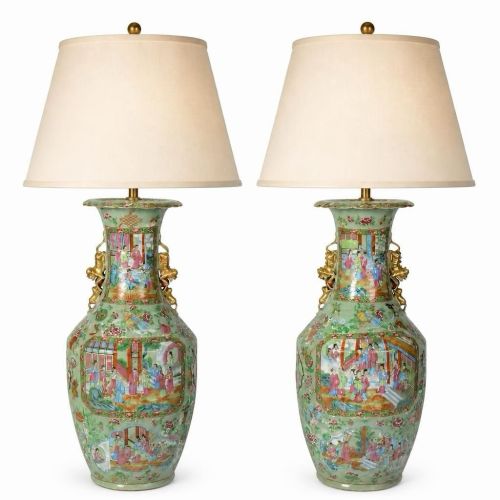
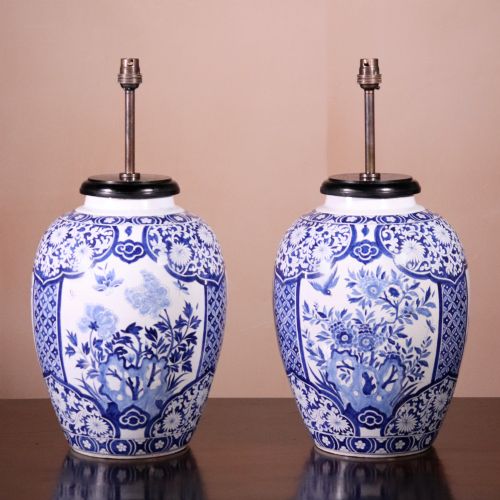


Vintage Chinese Porcelain Lamp
These vintage chinese porcelain lamp choices bring together centuries of ceramic artistry and practical illumination.
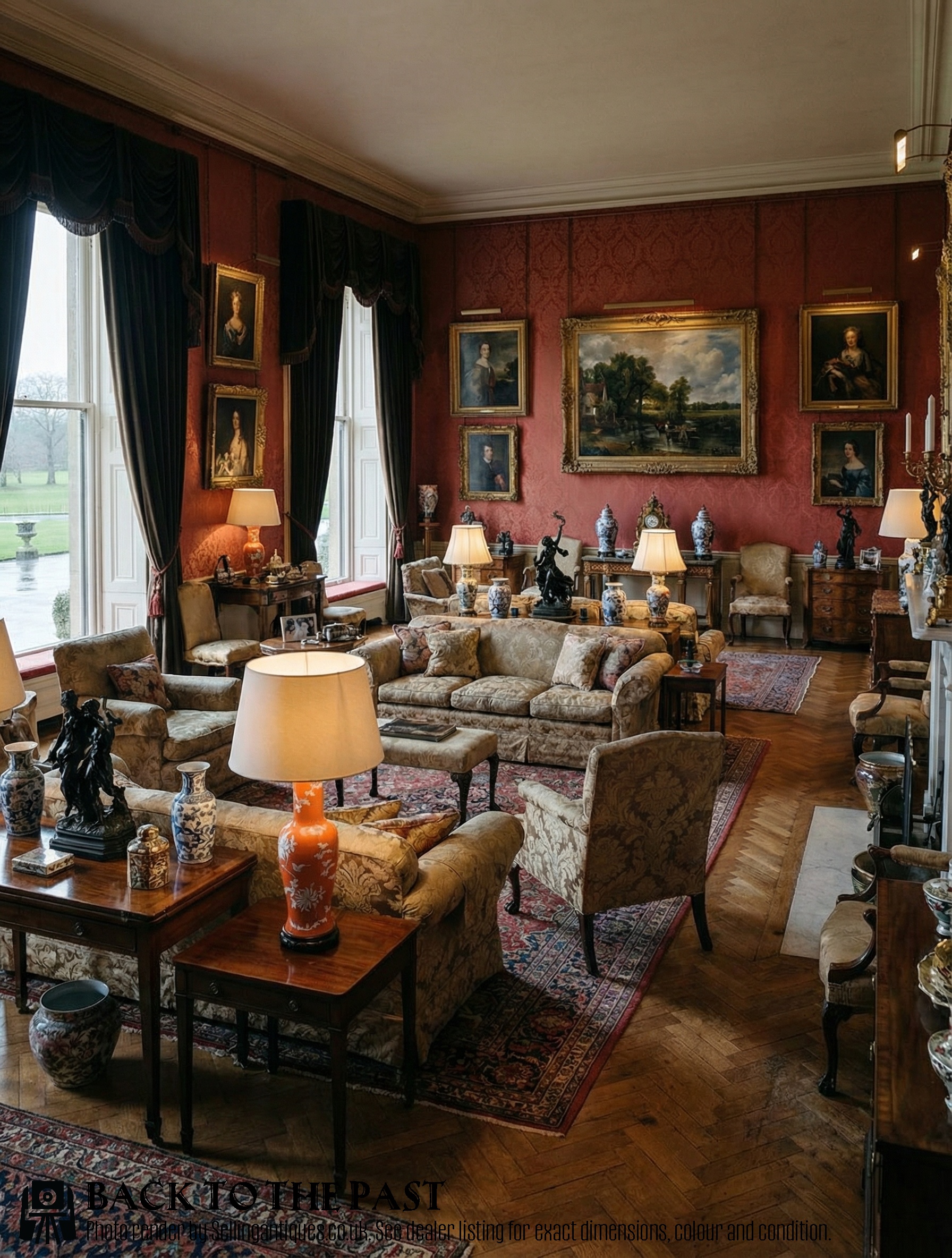
Vintage Chinese Porcelain Lamp
A vintage chinese porcelain lamp repurposes traditional ceramic vessels, primarily ginger jars, baluster vases, and decorative urns, into functional lighting. Buyers searching this phrase encounter pieces transformed from earlier vessels, often bearing classic motifs.
The selections span distinct periods, most notably the nineteenth century and the early twentieth century, incorporating styles such as blue and white, Famille Verte, Famille Rose, and Rose Medallion. Pairs feature frequently alongside individual statement pieces.
Vessels originating from export wares and Qing dynasty traditions form the backbone of these offerings. Many retain traditional forms while adapting to contemporary interior wiring needs.
Materials and construction methods
The primary bodies utilise porcelain, ceramic, and occasionally cloisonné or enamel, shaped into baluster, ginger jar, or figural silhouettes. Artisans applied detailed hand-painted glazes, including crackleware effects and polychrome enamels.
Mounts and fittings commonly incorporate brass, gilt bronze, or wood, providing structural support to the ceramic bodies. Fabric and silk shades often accompany these lamps to complete the composition.
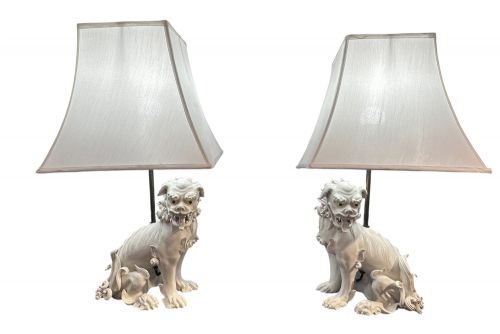
Several fierce Foo Dogs stand guard on nineteenth-century porcelain bases, ready to illuminate the room.
Distinguishing quality in these lamps
Quality rests in the precision of the hand-painted detail and the depth of the porcelain glaze, whether turquoise, sang de boeuf, or flambe. Superior examples display crisp brushwork and well-preserved enamel colours.
The integration of metal mounts, such as ormolu or brass, dictates refinement. Skillful adaptation that preserves the integrity of the original vase separates standard conversions from exceptional works.
Antique French Samson
The Vintage Chinese Porcelain Lamp Glossary
- Famille Rose
- A palette of opaque overglaze enamels dominated by pink, introduced in the Qing dynasty. This palette creates soft floral and figural compositions on porcelain bodies.
- Famille Verte
- A classification of porcelain decoration utilising green as the predominant enamel colour. It developed during the seventeenth century and continued into later periods.
- Baluster
- A vase shape with a rounded body tapering toward a narrow neck and a flared base. This silhouette serves as a common foundation for table lamps.
- Rose Medallion
- A distinct Canton style featuring panels of figures alternating with birds and flowers, richly gilt. It appears frequently on nineteenth-century export porcelain.
- Blanc De Chine
- A white porcelain produced in Dehua, Fujian province, known for its ivory tone. Figures such as Shi Lions frequently utilise this material.
- Crackleware
- A ceramic glaze characterised by a network of fine cracks intentionally formed during cooling. This texture adds visual depth to blue and white vases.
Vintage Chinese Porcelain Lamp: Frequently Asked Questions
How do I date a porcelain lamp?
Dating relies on examining the characteristics of the porcelain body, glaze colours, and painting styles. Nineteenth-century pieces often display hand-painted famille palettes or distinct crackleware finishes.
Hardware mounts and wiring methods also offer clues, though many vessels have undergone conversion to electricity long after their initial creation.
Are these lamps made from old vases?
Most of these pieces originate from earlier ceramic vessels, such as ginger jars, baluster vases, and decorative urns, which were later converted into lamps. This practice preserves historical ceramics while giving them a functional purpose in modern interiors.
Makers often added brass, gilt bronze, or wooden bases and mounts during the conversion process.
What styles are most common?
Blue and white porcelain designs and Famille Verte or Famille Rose enamels dominate the selection. Other notable styles include crackleware, turquoise glaze, and sang de boeuf.
Pairs of vases converted into matching lamps also appear regularly alongside single statement pieces.
How do I choose a lampshade?
Selecting a shade involves balancing the proportions of the ceramic vase and the height of the mounting hardware. Fabric and silk shades complement the traditional textures of the porcelain without overwhelming the hand-painted details.
Consider the room's lighting requirements and the colours present in the glaze when deciding on a shade.