


Vintage Chiffonier Sideboard
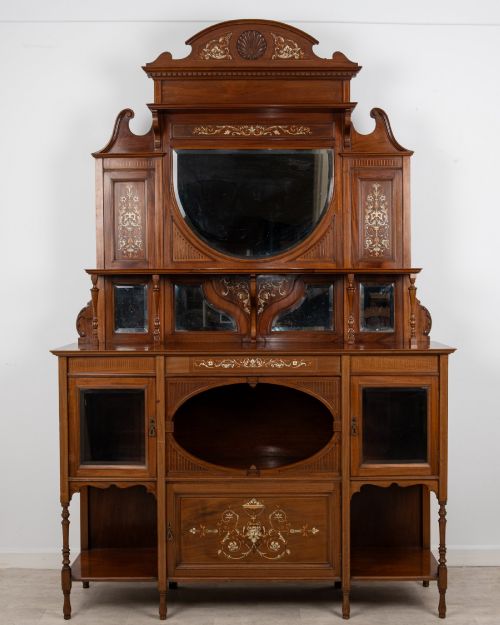
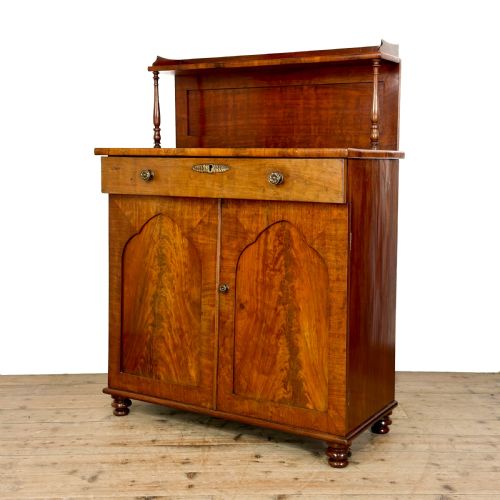
A vintage chiffonier sideboard combines a low cupboard with upper display space, offering practical storage and period character for a dining room.
Vintage Chiffonier Sideboard
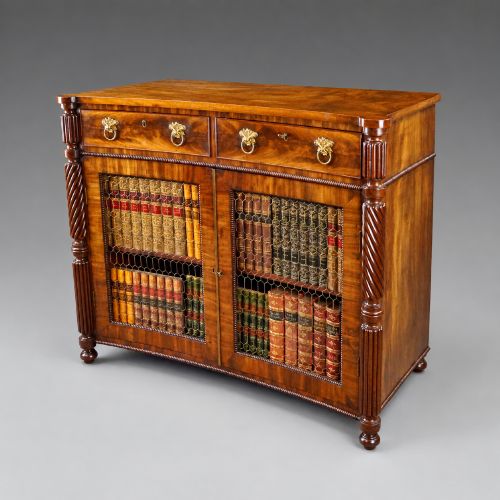
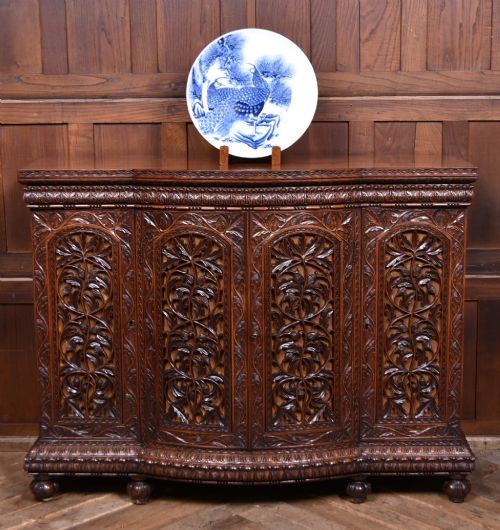
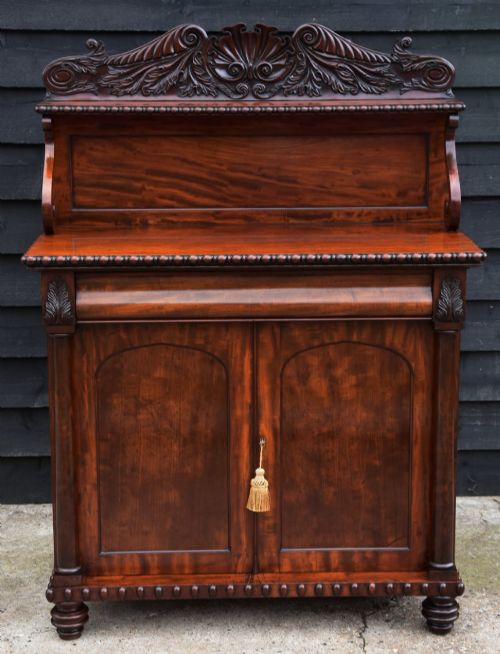
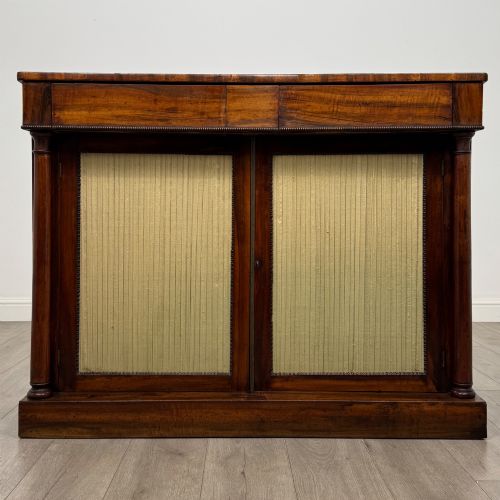
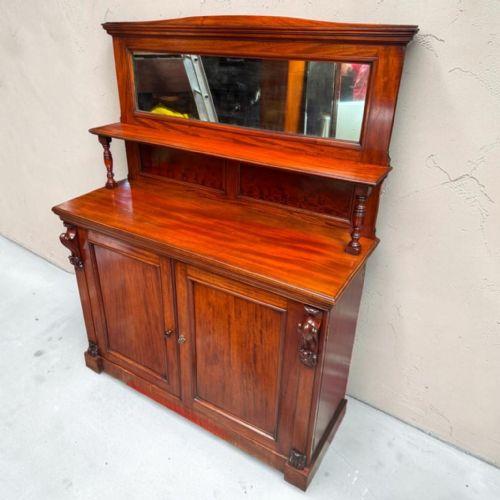
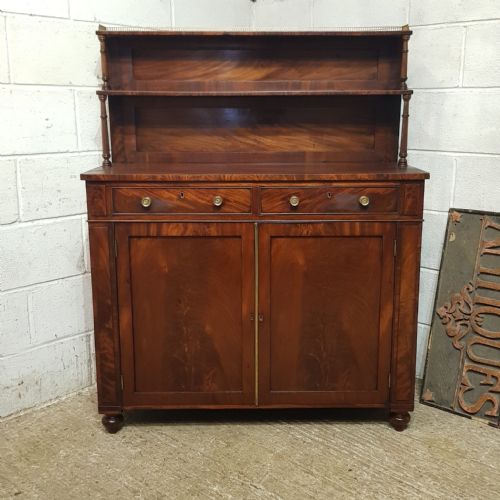
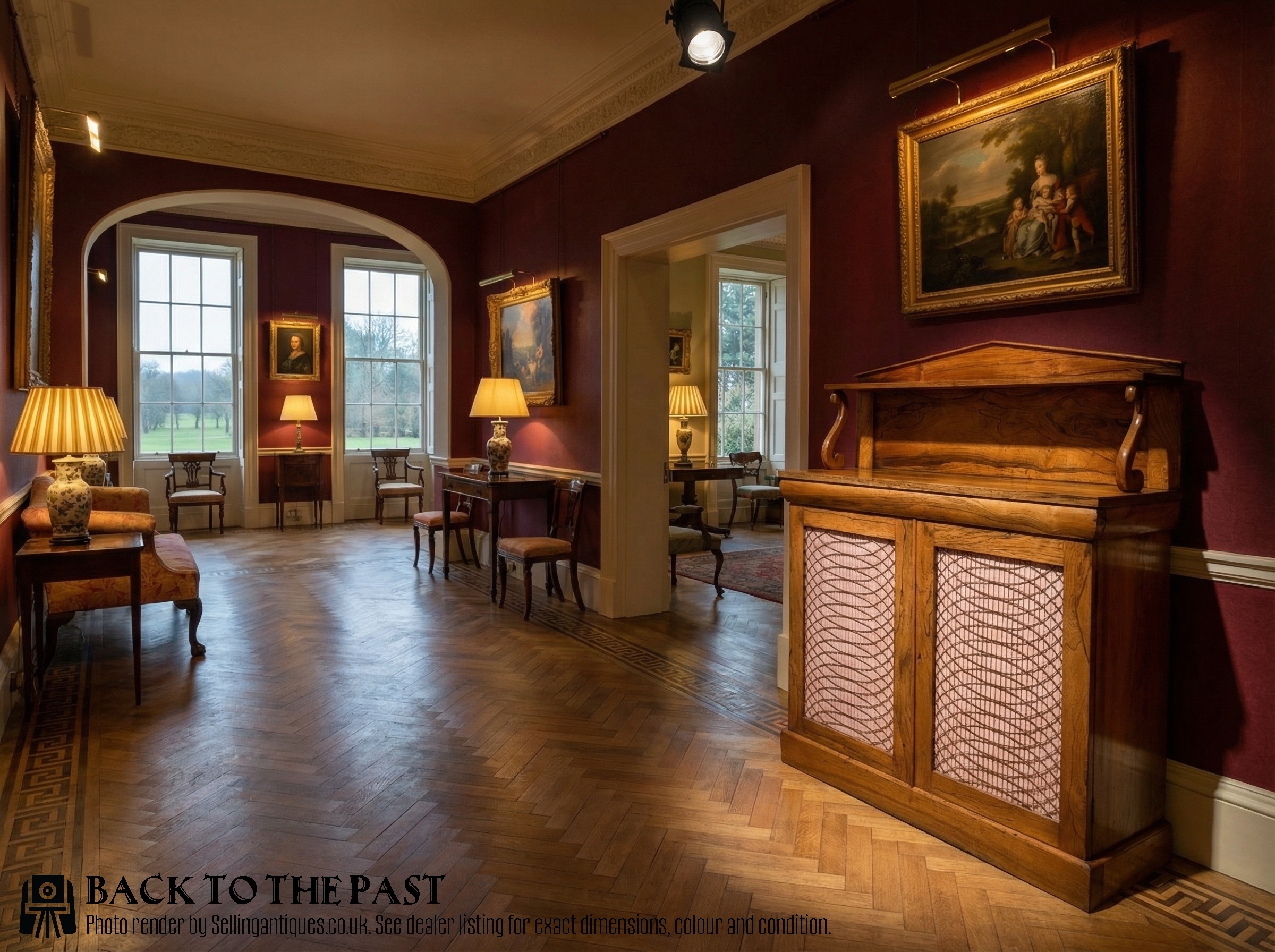
A vintage chiffonier sideboard is a compact serving piece designed for dining spaces, frequently combining enclosed lower cupboards with open shelves or a raised back. The selection spans formal Regency and William IV pieces alongside later Victorian and Edwardian examples.
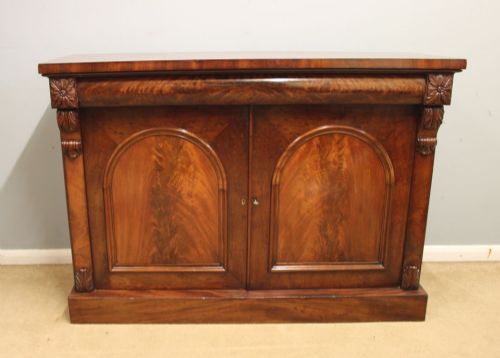
Most entries on this page take the form of mahogany or rosewood side cabinets, often featuring panelled doors or mirrored backs. These variations reflect the changing domestic requirements of the nineteenth and early twentieth centuries, moving from formal Georgian proportions to more elaborate Victorian formats.
Materials and construction
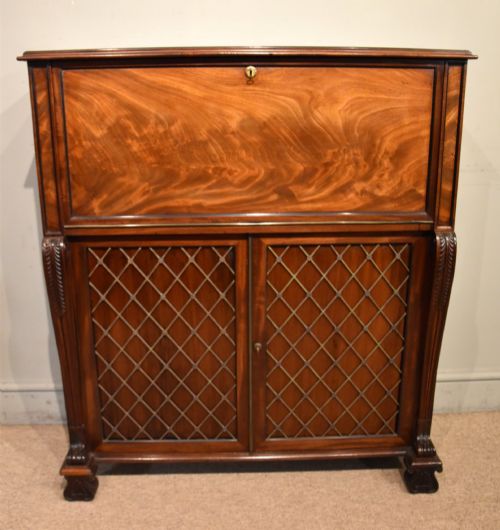
Cabinet makers relied heavily on timber species such as mahogany, rosewood and oak, frequently applying flame mahogany veneer or burr walnut to prominent surfaces. These woods were chosen for their rich grain patterns, which added visual depth to the front elevations.
Metal and glass components complemented the woodwork, with brass inlays, handles and grilles appearing alongside mirror glass inserts in upper frames. Construction techniques involved solid joinery for structural carcases combined with fineveneering on doors and drawer fronts.
The listings demonstrate a strong presence of nineteenth-century pieces, with Regency and Victorian periods forming the majority of timber side cabinets.
Factors determining quality
The standard of a piece rests on the selection of timber veneers and the crispness of any applied brass or carved detail. Higher-grade examples display continuous grain matching across drawer banks and cupboard doors rather than mismatched sections.
Structural integrity and the retention of original brasswork or mirrored glass distinguish finer specimens. Refinements such as secretarial drawers or integrated locking mechanisms indicate a higher tier of workshop production.
Gillows
The Vintage Chiffonier Sideboard Glossary
- Chiffonier
- A low sideboard or cabinet, typically featuring a cupboard base and sometimes a raised shelf or mirror at the back. This form developed during the Regency period as a smaller alternative to the grand dining room sideboard.
- Flame mahogany veneer
- A slicing of mahogany timber showing a distinct flickering, flame-like grain pattern. Cabinet makers applied these thin sheets to primary surfaces to create dramatic visual movement.
- Secretaire
- A desk or drawer fitted with a drop-front writing flap and internal compartments. Examples often conceal small pigeonholes and writing surfaces behind a primary drawer fascia.
- Breakfront
- A cabinet design where the central section projects forward from the flanking wings. This architectural arrangement creates depth and shadow on long storage pieces.
Vintage Chiffonier Sideboard: Frequently Asked Questions
What is a vintage chiffonier sideboard?
A vintage chiffonier sideboard is a low storage unit combining a cupboard base with surface display space, originating primarily in the nineteenth century.
These pieces served as auxiliary dining room furniture for holding silver, linen or bottles.
How do I date a chiffonier?
Dating relies on timber choices, construction methods and stylistic markers such as Regency brass inlay or Victorian mirror backs.
Earlier pieces often use solid mahogany or rosewood, while later Edwardian examples incorporate lighter pine or simpler inlaid motifs.
Were these used in dining rooms?
Chiffoniers functioned primarily as serving tables and storage cabinets in dining rooms and parlours.
The lower cupboards kept tableware out of sight, while the top surface held dishes during meals.
What woods were used?
Makers utilised dense hardwoods including mahogany, rosewood, oak and walnut, frequently enhancing them with decorative veneers.
Secondary woods like pine often appear in drawer linings and internal carcases.