


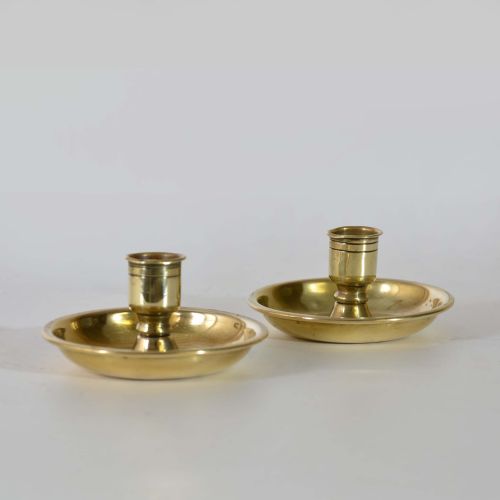


Vintage Chamber Candlestick
A vintage chamber candlestick brings the practical low-slung illumination of earlier centuries into a modern room, offering a portable dish and handle designed to light a path up to bed.
Vintage Chamber Candlestick
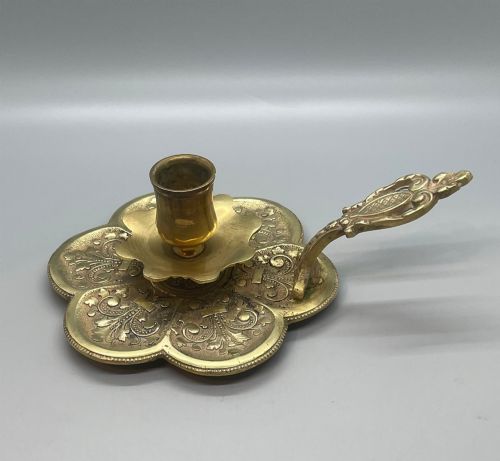
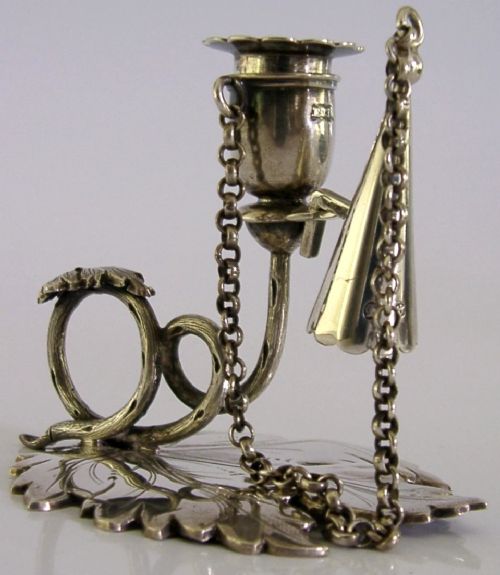
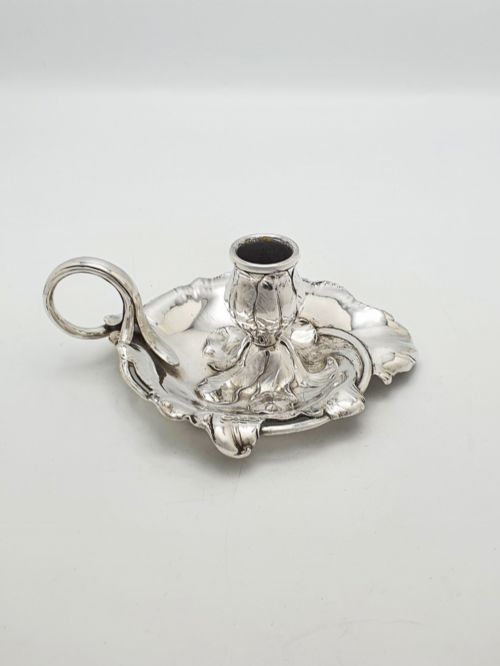
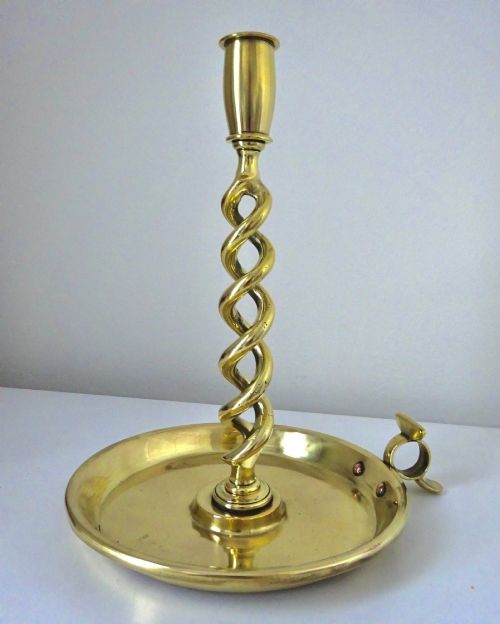
A vintage chamber candlestick comprises a shallow dish base fitted with a handle, a central socket for a candle, and frequently a removable nozzle or snuffer. These low-profile pieces were traditionally carried from room to room to illuminate bedchambers and hallways before the arrival of electric lighting.
The selections available here span several distinct periods, drawing heavily on nineteenth-century designs including Georgian, Regency, and Victorian examples. Buyers frequently encounter solid brass and silver plated variations, alongside occasional glazed stoneware, treen walnut, and Grand Tour marble specimens.
Beyond standard single-socket designs, the category encompasses travellers' models, twin-burner desk lamps, and fitted trays equipped with matching accessories. These functional forms reflect diverse domestic and travel requirements across the Georgian and Victorian eras.
How they were made
Makers utilised casting and plate techniques, working primarily in brass, bronze, and copper bases covered with silver plate or Old Sheffield plating. Metal components were often cast in sections, threaded together, or soldered, resulting in sturdy structures built for regular handling.
Alternative materials employed in construction include turned treen walnut, carved marble, and glazed stoneware. Artisans also incorporated decorative techniques such as cloisonné enamel and micro mosaic work on specific Grand Tour examples.
Brighton buns unscrew like tiny metal cakes, proving that nineteenth-century travellers took their bedside atmosphere very seriously indeed.
What varies in quality
The distinction between ordinary utility pieces and finer examples rests upon the crispness of the casting, the weight of the metal, and the integrity of the plating. Heavier gauge brass and thick silver plate indicate superior manufacture designed to withstand frequent use.
Subtleties in design, such as hand-chased crests, integral snuffers, and balanced handles, elevate specific specimens above standard production items. Materials like matched marble and decorative enamel work introduce artistic merit that separates basic utility from ornamental craftsmanship.
WMF·Royal Doulton
The Vintage Chamber Candlestick Glossary
- Chamberstick
- A portable candle holder featuring a shallow tray base and a side handle, intended for carrying through a house. This form protects the hand from dripping wax.
- Brighton bun
- A compact, portable travelling chamber candlestick shaped like a rounded bun, often in cast brass. These pieces screw together securely for transport.
- Old Sheffield Plated
- A composite material made by fusing a thin sheet of silver to a thicker copper core, common in eighteenth and nineteenth-century metalwork. This technique produces a warm tone distinct from electroplate.
- Grand Tour
- A term describing items acquired by travellers exploring continental Europe during the nineteenth century, often featuring classical motifs or local materials like marble. These souvenirs frequently include decorative desk articles.
- Treen
- Small handmade wooden objects produced by turning on a lathe or carving, such as walnut chamber stick bases. The grain and finish provide tactile appeal for collectors.
Vintage Chamber Candlestick: Frequently Asked Questions
What is the difference between a chamberstick and a standard candlestick?
A chamberstick incorporates a wide saucer base and a loop handle specifically designed for carrying a lit candle from room to room. Standard candlesticks are heavier table pieces lacking a handle or tray.
The wide base of a chamberstick also catches drips of hot wax while being carried along dark corridors.
How do I distinguish silver plate from solid silver?
Examine the piece closely for wear patterns where the underlying brass or copper base metal shows through, which indicates silver plate. Solid silver items typically bear hallmarks indicating purity and maker.
Old Sheffield plate often reveals a thin line of copper along the cut edges.
Were these pieces meant for travel or home use?
Both uses were common, with compact folding designs and travelling Brighton buns specifically engineered for luggage. Larger brass and ceramic versions remained stationary in bedrooms or dressing rooms.
Heavier weighted pieces stayed on bedside tables while lighter models accompanied travellers on coaching inns and journeys.