
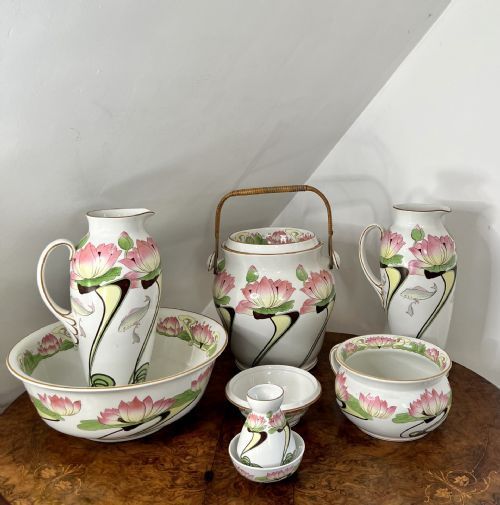

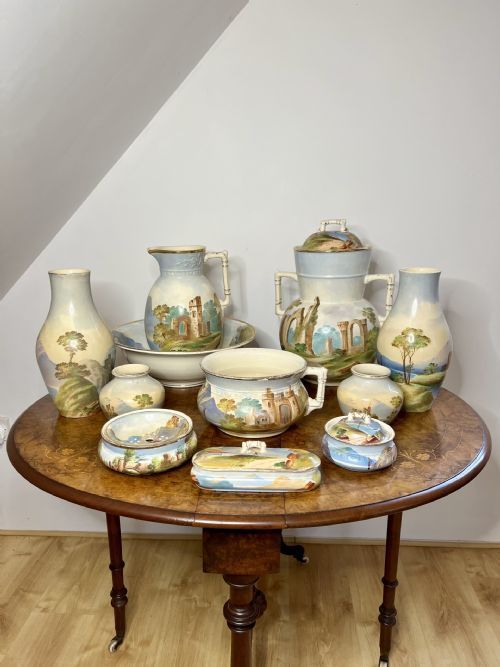


Vintage Ceramic Wash Bowl
A vintage ceramic wash bowl brings solid nineteenth and twentieth century utility into a modern room as a decorative basin.
Vintage Ceramic Wash Bowl
A vintage ceramic wash bowl encompasses heavy earthenware, ironstone and porcelain basins originally made for nineteenth and early twentieth century bedrooms. These pieces frequently arrive paired with matching jugs or as part of larger bathroom and washstand sets.
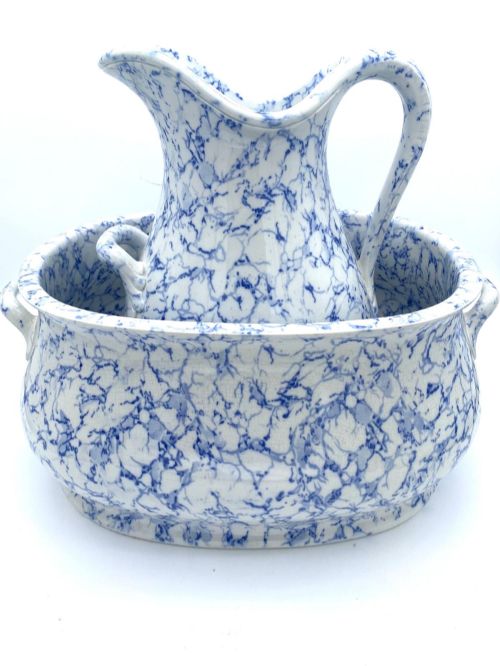
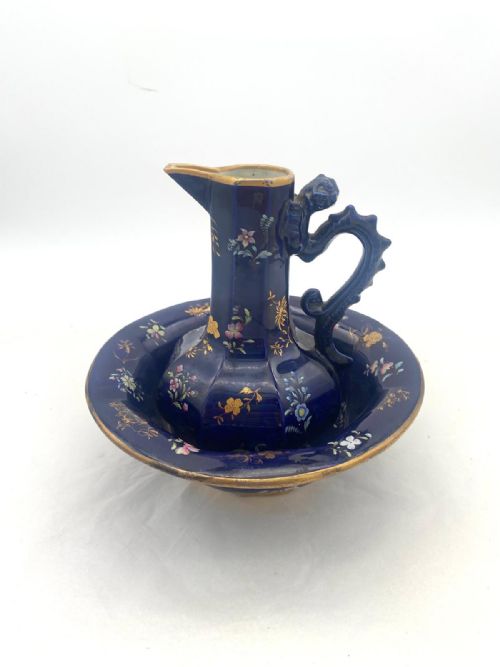
Buyers encounter numerous Edwardian and Victorian examples alongside twentieth century sets spanning the 1910s to the 1930s. Common forms range from simple spongeware basins to elaborate flow blue footbaths and octagonal Masons vessels.
Originating largely from English country potteries and major Staffordshire works, these bowls served practical washing routines before running water became standard in domestic bedchambers. Today they function successfully as planters, jardiniere frames or standalone decorative objects.
Materials and production methods
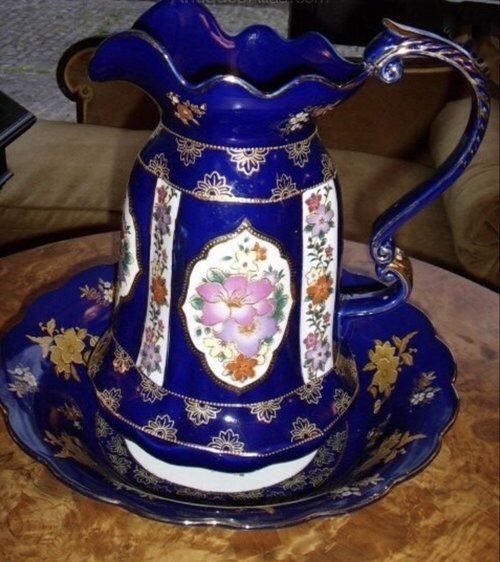
Potters shaped these bowls using durable earthenware, ironstone and porcelain, often finishing the surfaces with thick white or coloured glaze. Certain decorative examples incorporate cobalt blue floral transfers, spongeware patterns or applied gold leaf detailing.
Production methods rely on traditional ceramic firing techniques developed by nineteenth century English potteries and specialised firms. The resulting bodies provide a robust structure designed to withstand daily washing duties.
Listings feature periods spanning from the Regency era and nineteenth century through Victorian, Edwardian and 1930s decades.
Distinctions in craftsmanship and design
Quality separates standard utility ware from pieces produced by notable makers such as Minton, Mason's, Doulton Burslem or Shelley. Superior examples demonstrate crisp transfer printing, balanced form and well-preserved glaze without heavy surface wear.
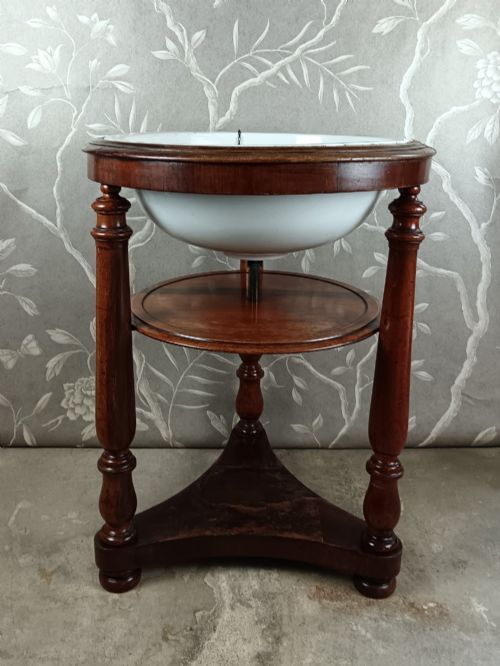
The complexity of the pattern and the inclusion of matching ewers, soap dishes or complete washstand frames elevate certain sets above basic utilitarian basins. Finer bodies exhibit refined potting technique and more intricate decorative styles like Art Nouveau or Victorian Chinoiserie.
Minton·Masons Ironstone·Mann Co·Doulton Burslem·Mark Jones Sons·Shelley
The Vintage Ceramic Wash Bowl Glossary
- Ironstone
- A dense, durable type of earthenware patented in the nineteenth century that resists chipping and provides a sturdy base for heavy tableware and wash sets.
- Flow blue
- A nineteenth century transfer printing technique where cobalt blue ink blurred slightly into the glaze during firing, creating a soft, misty aesthetic.
- Spongeware
- Pottery decorated by dabbing colour onto the ceramic body with a sponge, producing a mottled, speckled pattern.
- Creamware
- A refined, pale yellow-glazed earthenware developed in the eighteenth century and continued through the Victorian era.
- Jardiniere
- An ornamental ceramic pot or stand designed to hold large indoor plants and flowers, often adapting retired wash basins to new uses.
Vintage Ceramic Wash Bowl: Frequently Asked Questions
What were vintage ceramic wash bowls used for?
These bowls served personal hygiene before indoor plumbing, holding water for morning washing alongside a matching pitcher.
Today they adapt easily for decorative display, holding floral arrangements or serving as planters in modern interiors.
How do I distinguish Edwardian wash sets from Victorian ones?
Victorian sets tend to feature heavier earthenware bodies, deeper colours and ornate floral or Chinoiserie decoration.
Edwardian examples often display lighter palettes, simpler floral motifs or cleaner Art Nouveau lines reflecting changing domestic tastes.
Can I use these antique bowls for daily tasks?
While structurally robust, glazed earthenware and ironstone from the nineteenth and early twentieth centuries are best treated with care.
Using them for gentle display or holding dry items preserves the historic glaze and any delicate transfer printed decoration.
What is the difference between ironstone and porcelain wash bowls?
Ironstone is a heavy, semi-vitreous earthenware designed for maximum durability and strength during daily nineteenth century use.
Porcelain offers a finer, whiter and more translucent ceramic body associated with more decorative or upscale sanitary sets.