



Vintage Ceramic Wash Basin
A vintage ceramic wash basin brings the tactile weight of the nineteenth and early twentieth centuries into a modern interior.

Vintage Ceramic Wash Basin
A vintage ceramic wash basin represents the functional vessels of earlier domestic life, ranging from utilitarian washbowls to expansive footbaths and complete jug and basin sets. When exploring a vintage ceramic wash basin, buyers encounter forms that span the Georgian, Regency, Victorian, and Edwardian eras, alongside later twentieth-century examples.
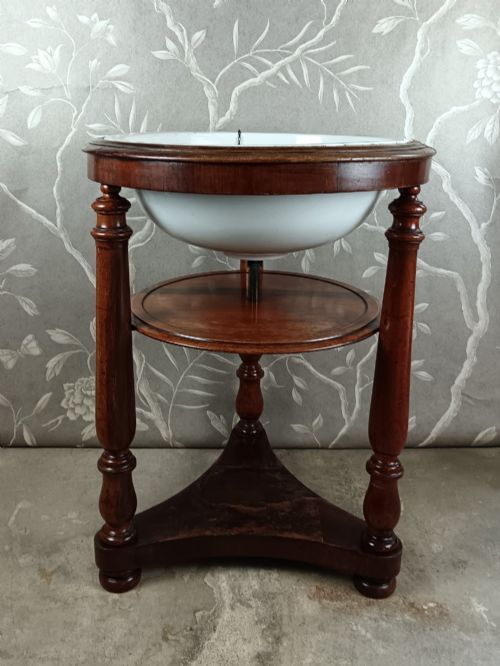
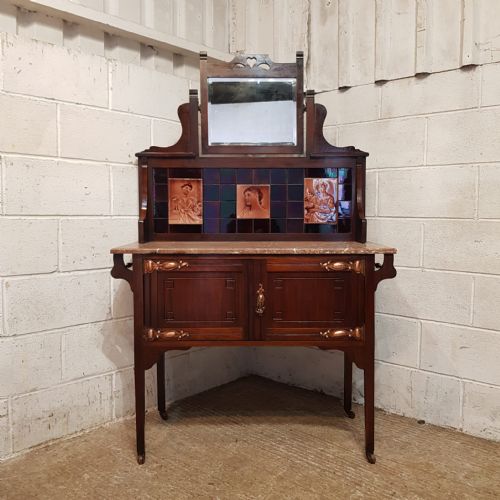
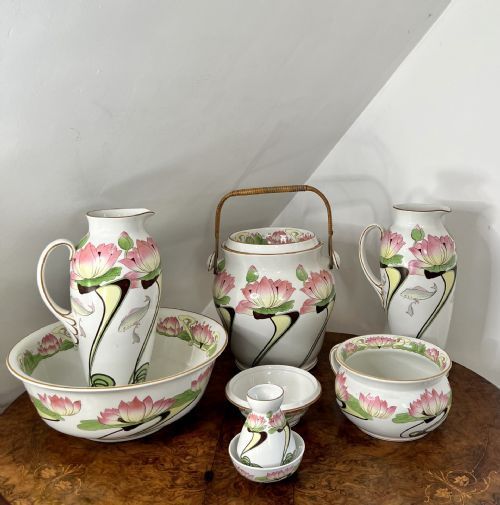
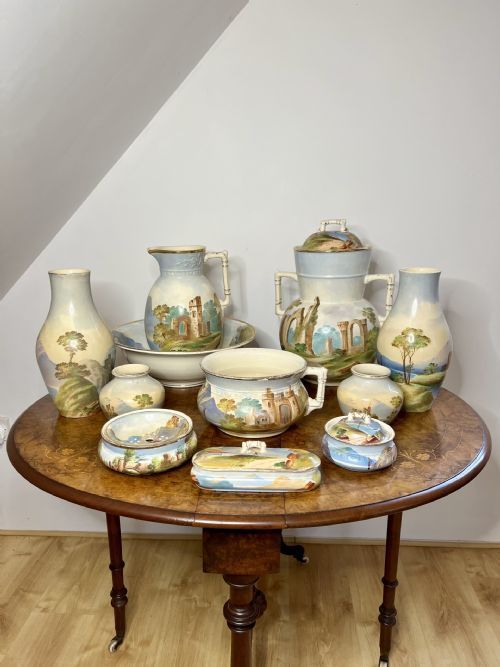
The pieces on this page appear as standalone bowls, elaborate bathroom sets with matching ewers, and fitted furniture including mahogany washstands and bentwood shaving frames. Such items bridge the gap between practical washhouse utility and decorative arts, reflecting the shifting hygiene habits of the nineteenth century.
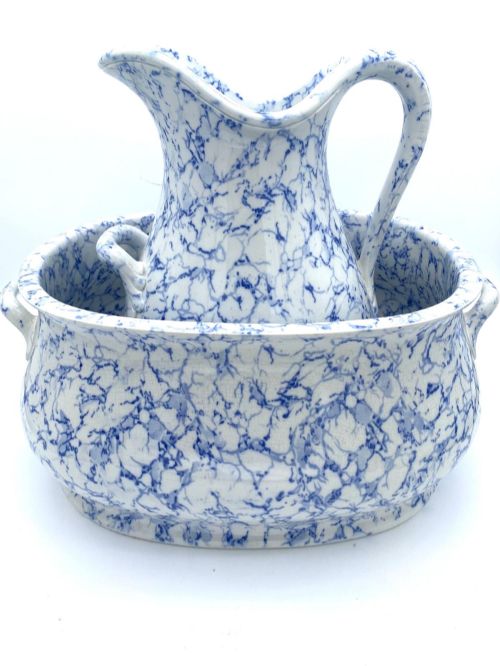
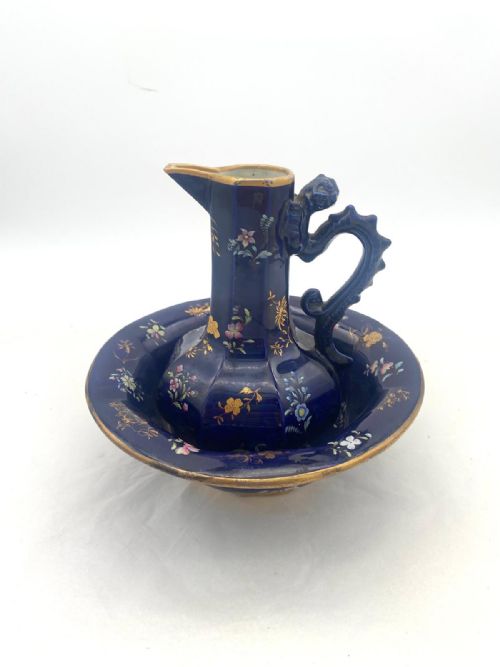
Victorian and Edwardian iterations dominate the selection, often taking the form of blue and white transfer-printed earthenware or flow blue ceramics. Alongside these sit specialised pieces like creamware knee baths and octagonal ironstone jugs designed for grand dressing rooms.
How they were made
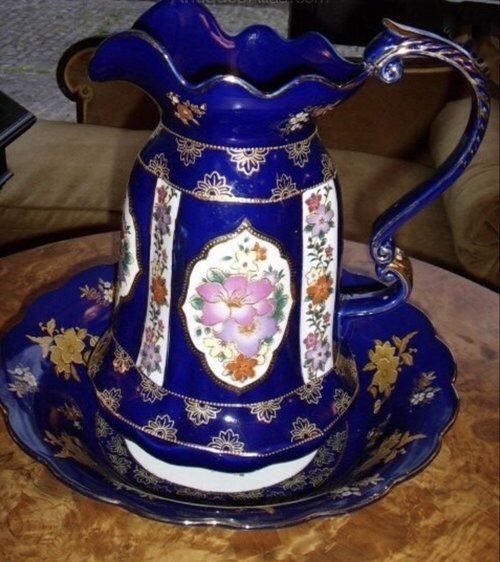
Potters utilised earthenware, creamware, porcelain, and heavy ironstone as the structural bodies for these vessels, shaping them by hand or mould before firing. Glaze was applied to create a smooth, impermeable surface suitable for daily ablutions, frequently enhanced with cobalt blue pigments or transfer-printed motifs.
Makers integrated applied decoration such as gold leaf accents or intricate floral designs directly onto the ceramic body under or over the glaze. Wooden mounts and washstands utilised mahogany and bentwood, providing sturdy frames to support the heavy ceramic basins and ewers during use.
Listings feature periods spanning from the Regency era through to the 1930s, utilising earthenware, ironstone, and mahogany.
What varies in quality
The distinction between standard utility ware and top-tier pieces rests on the crispness of the transfer print, the depth of the glaze, and the artistic ambition of the pattern. Premium examples display careful hand-finishing, rich cobalt saturation, and robust ironstone bodies free from distortion.
The integration of ceramic components with bespoke cabinetry, such as campaign stands or art nouveau woodwork, dictates the upper tier of craftsmanship. Finer sets maintain matching ewers and basins with unblemished surfaces, whereas simpler country pottery emphasises robust practicality over refined ornamentation.
Minton·Masons Ironstone·Mann And Co·Doulton Burslem·Mark Jones And Sons·Shelley
The Vintage Ceramic Wash Basin Glossary
- Earthenware
- A porous pottery fired at lower temperatures, requiring a vitreous glaze to hold water effectively.
- Flow Blue
- A nineteenth-century transfer-printing style where the cobalt pigment blurred slightly into the white glaze during firing.
- Ironstone
- A durable, heavy-bodied ceramic patented in the early nineteenth century to rival true porcelain.
- Transferware
- Ceramics decorated by applying a paper print from an engraved copper plate onto the unfired or biscuit body.
- Footbath
- A deep, oblong vessel originally used for therapeutic foot soaks rather than full bathing.
Vintage Ceramic Wash Basin: Frequently Asked Questions
How were these wash basins originally used?
These basins served as the centrepiece of bedroom hygiene before modern plumbing, paired with a matching jug on a wooden washstand for morning washing.
Servants would fill the ewer with hot water from the kitchen, allowing the user to wash without running pipes to upper floors.
How do I care for an antique ceramic basin?
Treat these pieces as decorative items or handle them with gentle care if used for planting or display, avoiding abrasive cleaners that might harm nineteenth-century glazes.
Sudden temperature changes should be avoided to protect the aged ceramic body and any historic crazing in the finish.
How do I distinguish Victorian from Edwardian sets?
Victorian sets frequently feature heavier ironstone bodies, deep cobalt transfer prints, and rich Chinoiserie or floral motifs.
Edwardian equivalents lean towards lighter creamware, softer floral palettes, and the flowing organic lines typical of the Art Nouveau transition.
Can I use these basins in a modern bathroom?
Many buyers repurpose larger bowls and footbaths as freestanding planters, decorative cachepots, or statement basins atop contemporary vanity units.
Care must be taken with historic drainage holes or unplumbed antique vessels if integrated into modern plumbing systems.