
Vintage Central Asian Textile
A vintage central asian textile brings bold tribal geometry and intricate silk embroidery straight to modern interiors as striking wall art.
Vintage Central Asian Textile
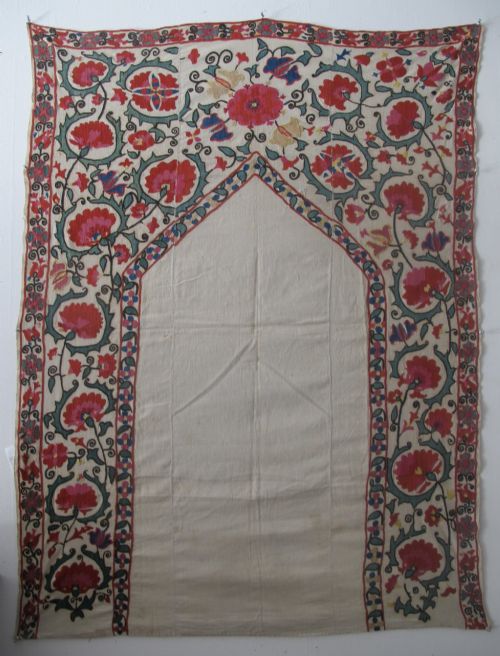
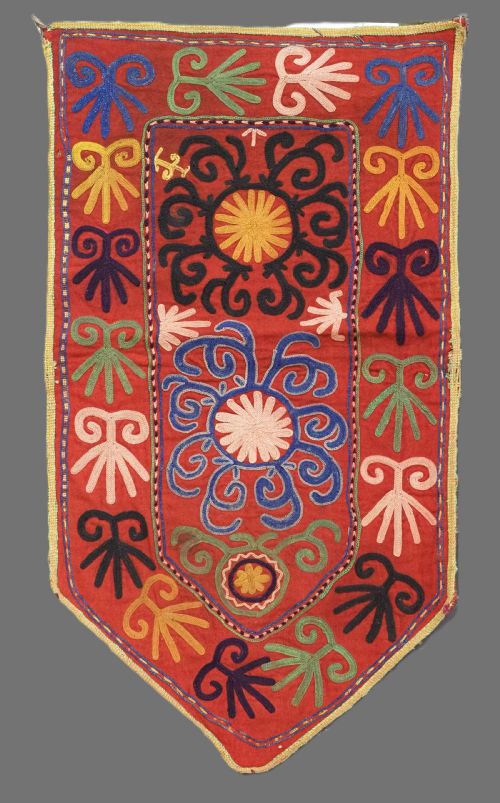
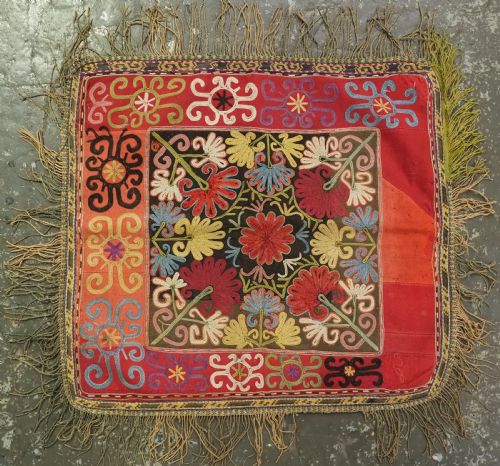
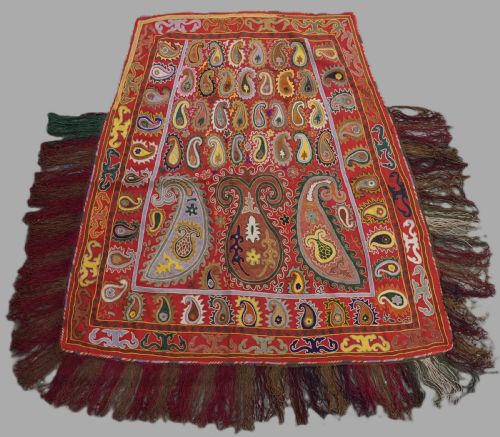
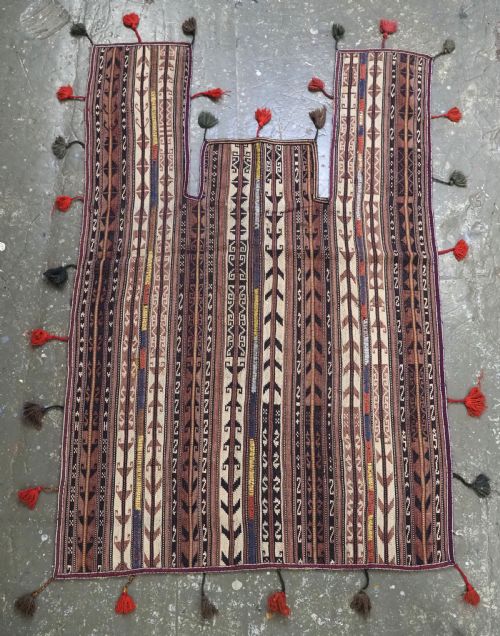
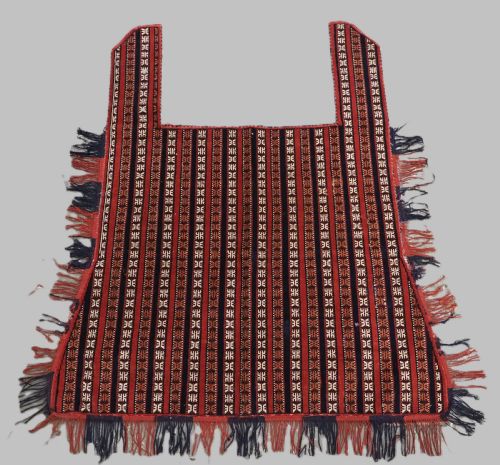
When you search for a vintage central asian textile, you encounter wall hangings, dowry embroideries,asmalyks, and kilim panels originating from tribes and regions across the steppes. These works span from the late nineteenth century into the twentieth century, capturing distinct folk art traditions.
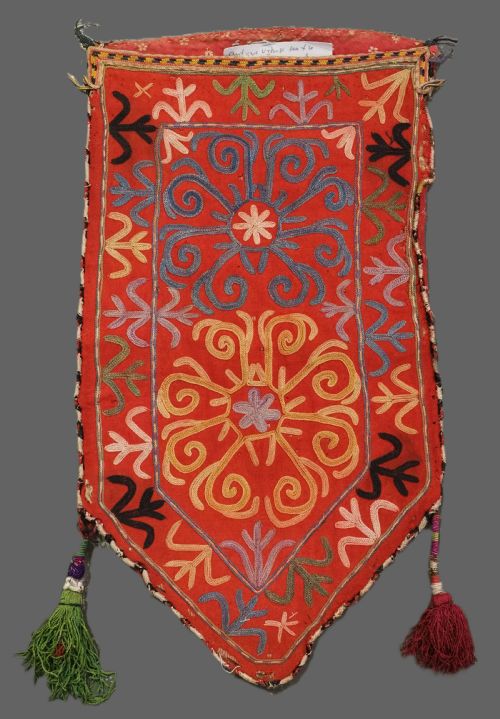
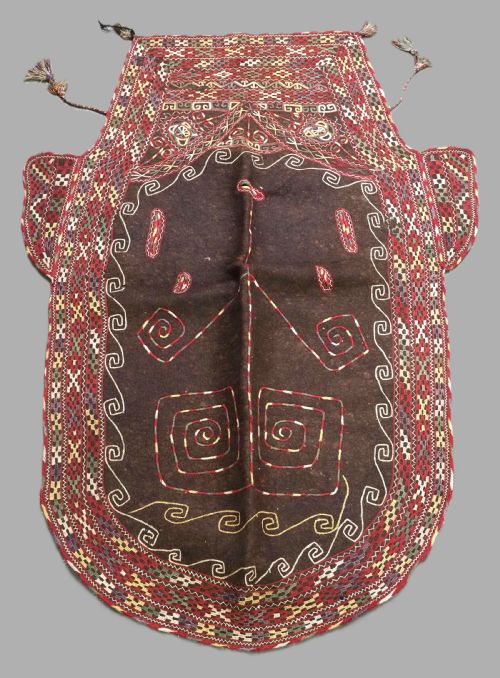
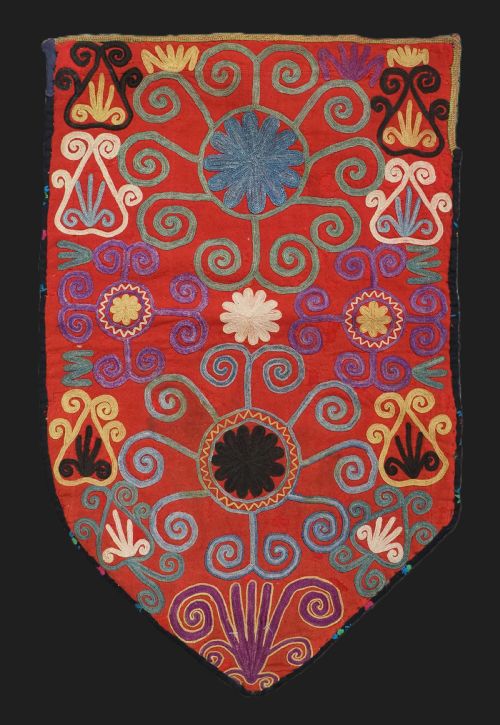
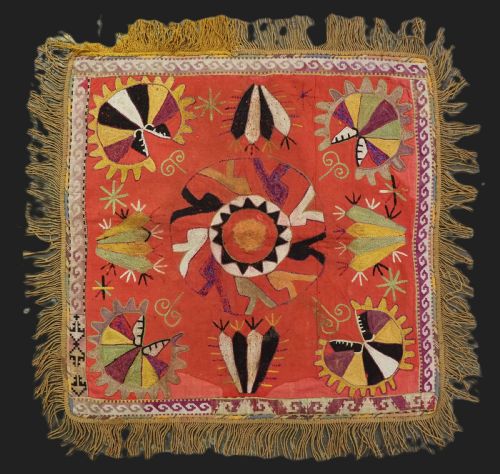
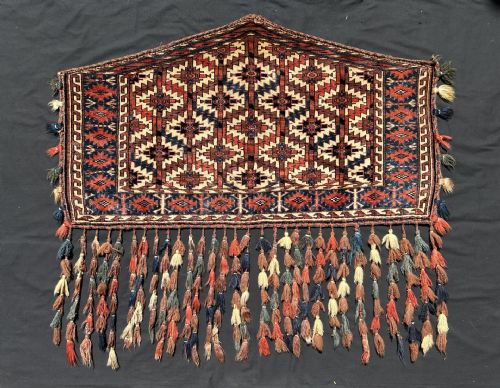
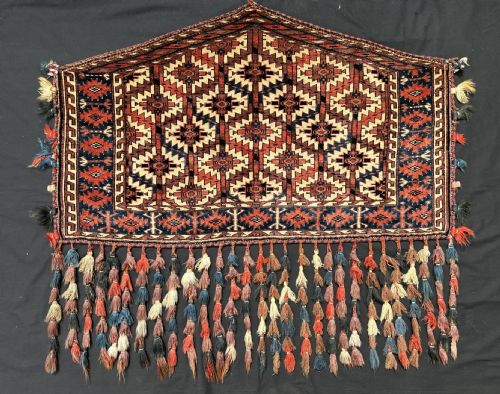
You are most likely to meet pieces linked to the Uzbek Lakai and Yomut Turkmen tribes, alongside Suzani embroideries from Bukhara and Tajik makers. Forms range from double-faced ilgich and wedded asmalyks to covers made in multiple strips and framed Persian Rasht embroidery.
The aesthetic is defined by Central Asian Tribal and Central Asian Folk Art styles, showing deep regional identity through traditional motifs. Each piece serves as a tactile record of nomadic and settled textile arts.
Materials and construction
Construction techniques include flatwoven kilim structures joined in multiple strips, fine rug weaving, and dense surface embroidery applied to heavy felt grounds. Double-faced stitching ensures visibility from multiple angles on specific tribal hanging pieces.
Vintage Central Asian Textile Retail Price Guide 2026
Typical asking prices for vintage central asian textile among the pieces listed under this phrase on Sellingantiques today, from the lower quarter to the upper quarter. They describe what is for sale here now, not the wider market.
Current listings feature periods spanning from eighteen seventy to nineteen thirty, utilising wool, silk, cotton, and wool felt.
Distinctions in craftsmanship
The upper tier of these works is distinguished by exceptionally tight weave counts, precise needlework density, and the harmonious balance of natural dye palettes. Superior examples maintain structural integrity across complex embroidered surfaces and fragile foundational grounds.
Lesser pieces often show looser thread tension, simplified motifs, or uneven fading that disrupts the visual rhythm of the traditional design. The distinction lies in the mastery of the maker and the preservation of the ground material over decades of use.
The Vintage Central Asian Textile Glossary
- Suzani
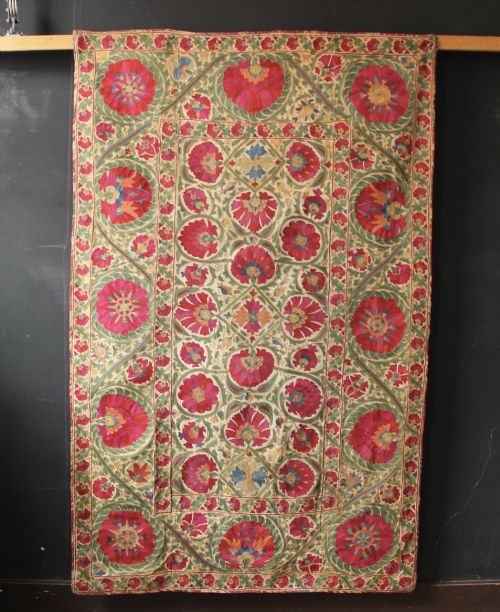
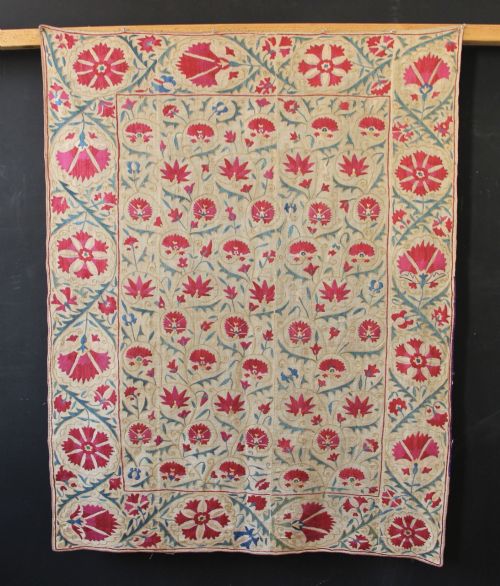
- A traditional embroidered tribal textile from Central Asia, usually worked in silk on a cotton or wool ground. These large wall hangings often feature bold floral and geometric patterns.
- Asmalyk
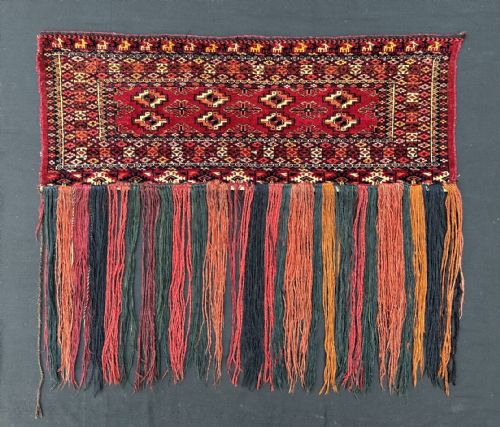
- A pentagonal trapeze-shaped camel trapping produced by Yomut Turkmen tribes. They were used during wedding processions before being hung inside the yurt.
- Ilgich
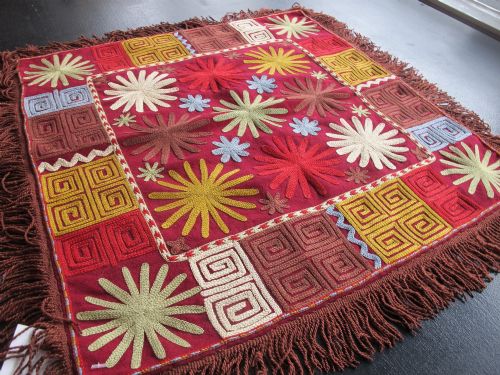
- A specific type of Central Asian hanging or dowry embroidery associated with the Lakai tribe. They display energetic geometric applique and surface stitching.
- Chuval
- A large nomadic storage bag face woven by Turkmen tribes. These are frequently mounted and appreciated today as striking wall art.
- Kilim
- A flatwoven textile lacking a pile, produced in panels or strips. These covers combine structural utility with bold geometric rhythm.
Vintage Central Asian Textile: Frequently Asked Questions
How were these textiles used originally?
Many items served practical and ceremonial roles within nomadic households and settled communities, functioning as dowry pieces, wall hangings, tent decorations, or storage bags.
Items like asmalyks decorated wedding transport camels before transitioning to interior displays, while suzanis warmed living spaces and marked important life events.
How do I hang a textile on the wall?
Mounting requires careful support to distribute the weight evenly across fragile antique fabrics without causing localized tension or tearing. Professional conservation framing or non-invasive Velcro mounting strips sewn to a cotton backing sleeve are common methods.
Keep pieces away from direct sunlight to protect natural dyed silk and wool fibres from fading.
How can I tell tribal groups apart?
Distinctions rely on characteristic colour palettes, structural techniques, and specific geometric or floral motifs unique to each region or tribe. Yomut Turkmen work often displays deep reds and precise latch-hook güls, while Lakai pieces showcase energetic embroidered applique.
Examining the ground material, such as red wool felt versus cotton fabric, also helps point toward specific origins.