


Vintage Carved Writing Slope
These vintage carved writing slope pieces bring portable history to your desk, offering solid timber construction and intricate detail.
Vintage Carved Writing Slope
When you search for a vintage carved writing slope, you encounter portable boxes and larger bureaux designed for correspondence. The pieces range from solid ebony writing boxes to oak writing slopes and fitted stationery boxes.
You are most likely to meet Edwardian and Victorian examples on this page, alongside earlier oak and walnut forms. The selection includes Anglo-Indian items carved from wood and bone alongside traditional British desks.
How they were made
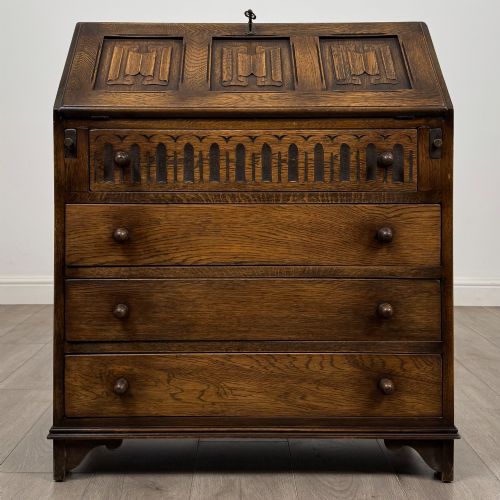
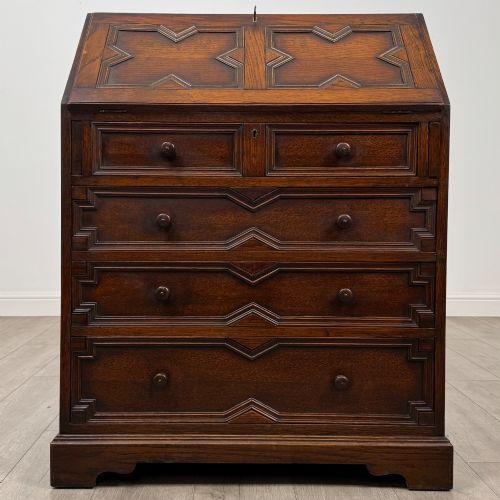
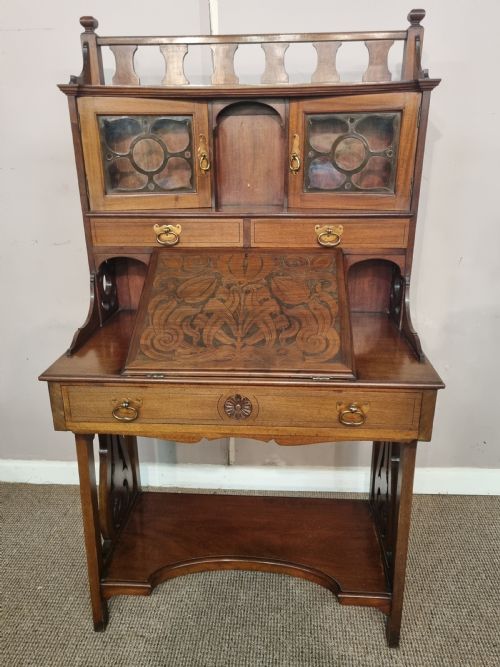
Maker workshops utilised dense timbers such as oak, mahogany, walnut, and ebony to build these slopes. Craftsmen employed hand-carving techniques to decorate the exterior surfaces with linenfold patterns, floral motifs, and geometric details.
Internal compartments often incorporate fitted glass, brass hardware, and leather writing surfaces. Specialised materials such as bone and antler also appear on Anglo-Indian variants to create striking contrast.
Some nineteenth-century Anglo-Indian boxes incorporated hidden compartments for secret letters, proving that penmanship once demanded espionage-level security.
What varies in quality
The standard of carving distinguishes standard production pieces from finer examples. Deep, crisp relief work executed by skilled hands holds attention far better than shallow, hasty incisions.
Material selection and interior configuration dictate the upper tier of the range. Solid exotic timbers and well-preserved internal stationery fittings elevate a piece above simpler domestic boxes.
The Vintage Carved Writing Slope Glossary
- Writing slope
- A portable box with a slanted lid designed for holding writing paper and providing an angled surface for letters. It typically opens to reveal inkwells and secret compartments.
- Bureau
- A desk featuring a hinged sloping flap that drops down to form a writing surface above a bank of drawers. Edwardian and Georgian examples frequently utilise this form.
- Stationery box
- A tabletop cabinet designed to hold envelopes, paper, and writing implements upright. These boxes often feature carved wooden facades and fitted glass interiors.
- Linenfold
- A style of relief carving used on wooden panels to imitate folded linen fabric. It appears frequently on early oak furniture.
- Davenport
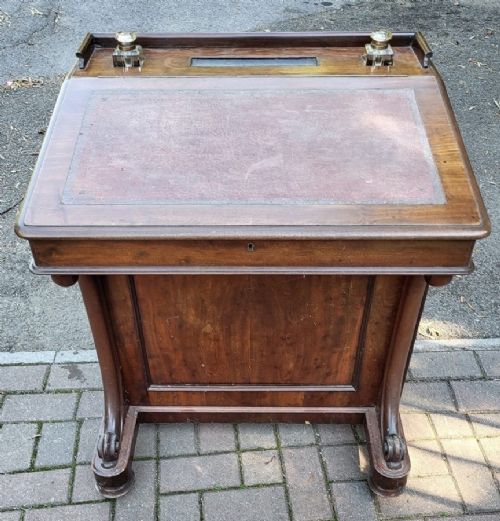
- A compact pedestal desk popular during the Victorian era featuring a sloped writing surface and side drawers. It combines a small footprint with functional storage.
Vintage Carved Writing Slope: Frequently Asked Questions
What is a writing slope used for?
A writing slope provides a portable desk surface designed for handwriting letters and storing stationery supplies securely inside.
Historically, the angled lid offered an ergonomic position for quill or pen work before standard flat desks became common in every household.
How do I date a wooden bureau?
Dating relies on examining the timber species, construction methods, and hardware style. Oak and walnut predominate in earlier centuries, while Edwardian pieces often display distinct revival ornamentation.
Secondary woods inside drawers and the presence of machine-sawn components versus hand-cut joinery provide further clues to the exact manufacturing period.
How do I care for antique wood?
Maintain antique wooden surfaces by keeping them away from direct heat sources and fluctuating humidity levels. Regular dusting with a soft cloth prevents particle buildup.
Apply a microcrystalline wax sparingly when the timber appears dry, avoiding modern silicone polishes that can damage the historic finish.