
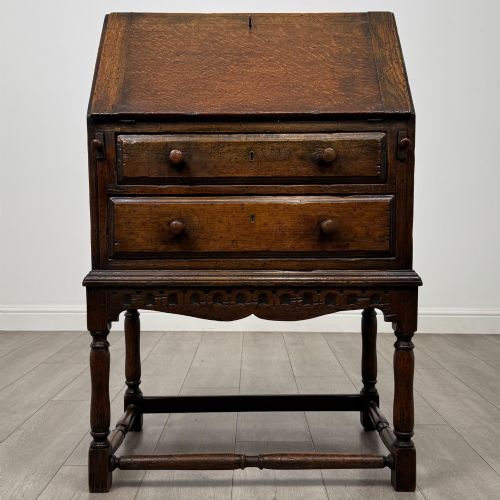

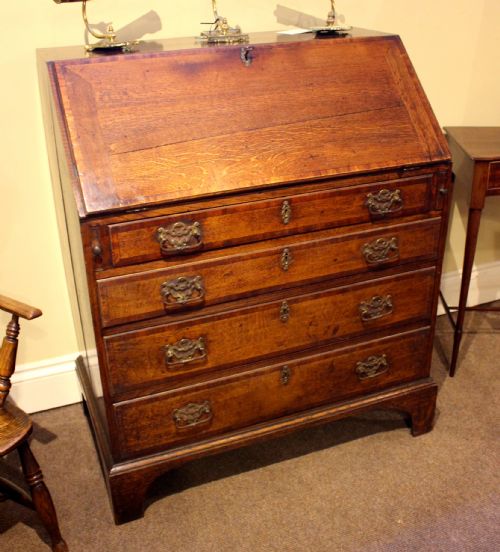


Traditional Oak Drop Front Desk
A traditional oak drop front desk is a compact writing cabinet that conceals a fitted interior behind a sloping writing flap.
Traditional Oak Drop Front Desk
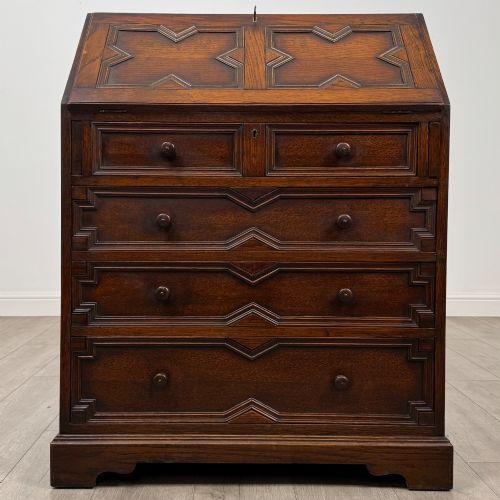
A traditional oak drop front desk appears in various forms ranging from vernacular seventeenth century pieces to Edwardian revivals and nineteen twenties writing bureaux. Buyers encounter solid oak construction frequently alongside occasional oak veneered configurations and elaborate bureau bookcases.
The material palette spans centuries of cabinet making, incorporating solid timber, brass hardware, and occasional wood inlay work. Early pieces show simple regional construction while later twentieth century interpretations adopt Jacobean Revival and Tudor Revival styling.
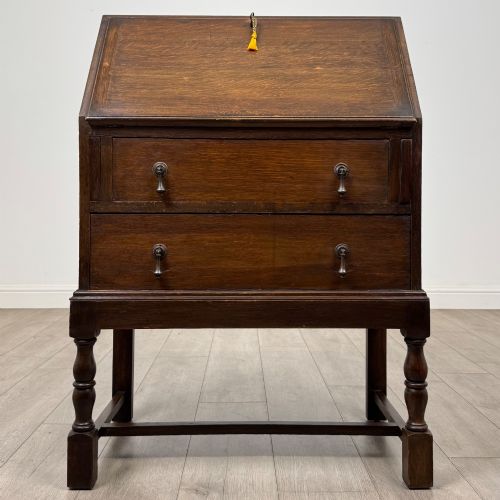
Forms include standard writing desks with moving interiors and taller bureau bookcases that combine upper display shelving with a fall front writing compartment. The sloping lid folds down to create a horizontal writing surface while supporting the internal pigeon holes and small drawers.
Materials and construction methods
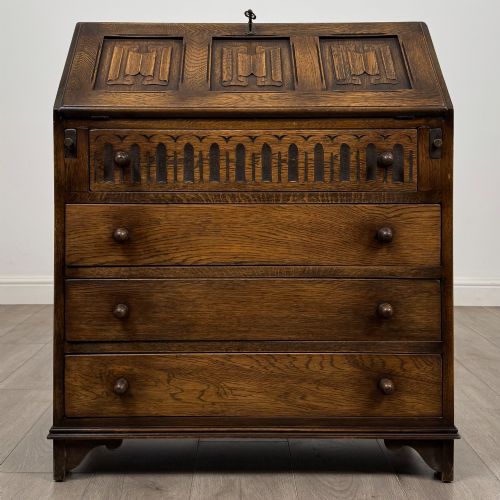
Cabinet makers utilised solid oak and oak veneer over secondary timbers, shaping panels and framing using traditional joinery techniques. Surfaces often display carved ornamentation such as linenfold motifs alongside turned wooden elements.
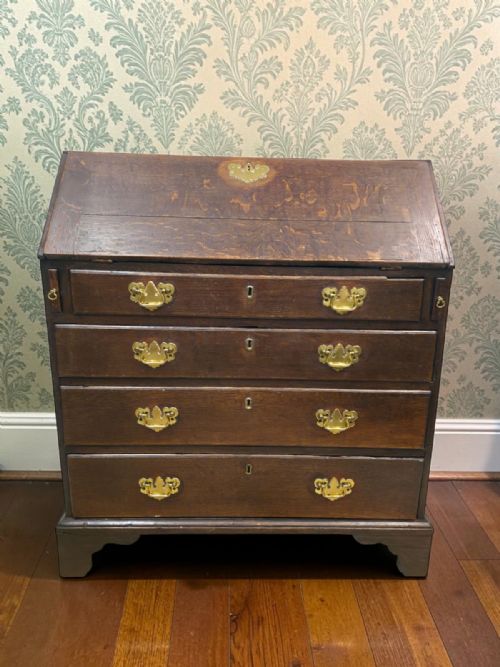
Hardware typically consists of brass handles, escutcheons, and hinges that secure the fall front flap and internal drawers. Metal components vary from simple cast brass plates on early pieces to stamped fittings on later twentieth century examples.
Certain desks conceal moving interior compartments that release secret hidden drawers when unlocked by an unsuspecting writer.
Distinguishing quality across periods
Superior execution shows in the thickness of the solid timber, the precision of the internal stationery drawers, and the integrity of the fall front hinges. Finer examples maintain smooth operation of the moving interior compartments without binding or sagging.
Decorative carving depth and timber selection separate standard production from exceptional pieces. Earlier centuries display hand carved detailing while revival periods utilise mechanical moulding and applied ornament.
The Traditional Oak Drop Front Desk Glossary
- Fall front
- The hinged sloping panel that drops forward to form a writing surface and conceals the interior compartments. This flap supports the primary writing action.
- Bureau bookcase
- A combination furniture form featuring a lower writing desk section surmounted by enclosed shelving for books. These taller units maximise vertical storage space.
- Linenfold
- A carved wooden panel motif imitating folded cloth, commonly found on twentieth century revival furniture. This decorative carving originates in the Tudor period.
- Veneer
- A thin layer of superior oak applied over a secondary wood base to provide decorative grain patterns. This technique allows visually rich surfaces while maintaining structural stability.
Traditional Oak Drop Front Desk: Frequently Asked Questions
What is a drop front desk?
A drop front desk is a writing cabinet with a sloping lid that lowers to create a horizontal writing surface. Inside, small drawers and pigeon holes organise stationery.
These pieces combine enclosed storage with a compact workspace suitable for domestic interiors.
How do I date an oak bureau?
Dating relies on construction methods, timber characteristics, and decorative styles like Jacobean Revival or linenfold carving. Seventeenth and eighteenth century pieces display vernacular hand tool marks.
Twentieth century examples from the nineteen twenties and thirties often incorporate machine finishing and standardised hardware.
Where were these desks used?
These desks served as private writing spaces in parlours, studies, and bedrooms for correspondence and record keeping. The lockable fall front kept personal documents secure.
Their compact footprint made them practical for domestic rooms where space was limited.
What does bureau bookcase mean?
A bureau bookcase combines a lower drop front writing desk with an upper shelving unit enclosed by glass or wooden doors. This dual purpose form houses both a working area and a library.
Such pieces provide substantial vertical storage whilst retaining a writing surface below.