


Vintage Carved Writing Cabinet
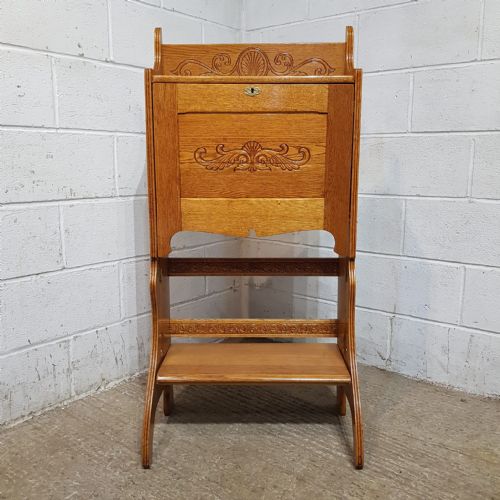
A vintage carved writing cabinet brings together dedicated desk space and fitted storage, shaped by the revival styles of past centuries.
Vintage Carved Writing Cabinet
A vintage carved writing cabinet encompasses desks, bureaux, and secretaire bookcases designed for domestic correspondence and document storage. These pieces emerge predominantly from the Victorian, Edwardian, and early twentieth-century periods, reflecting shifting tastes in home organisation.
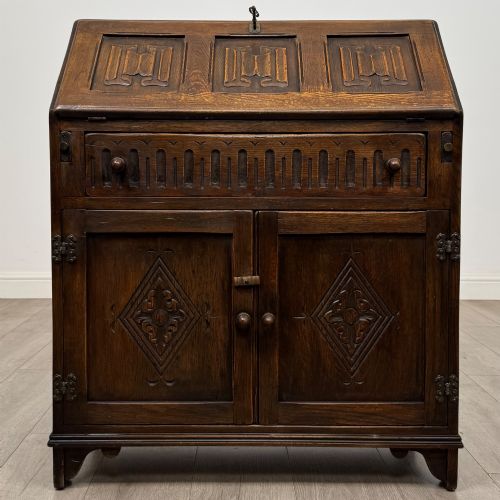
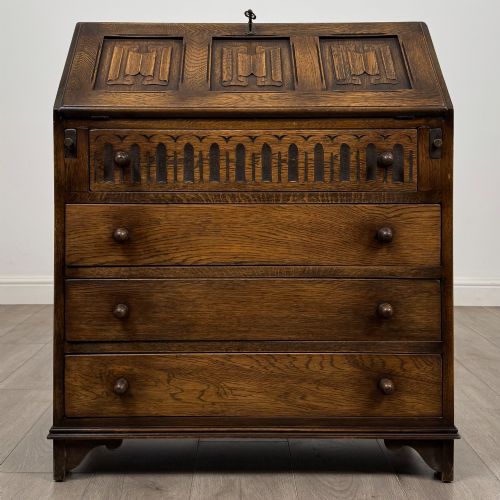
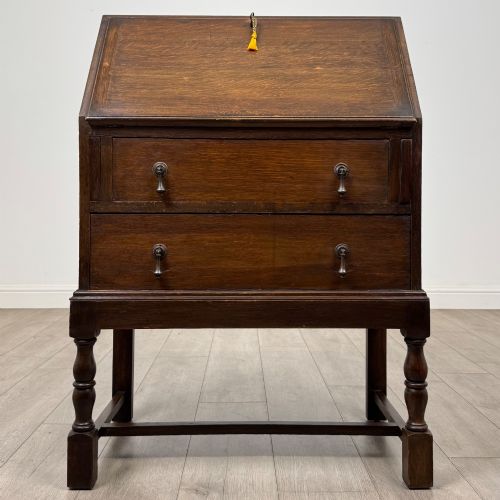
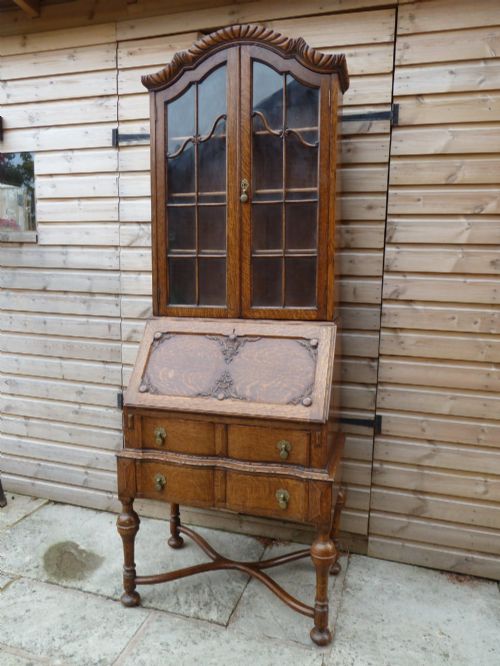
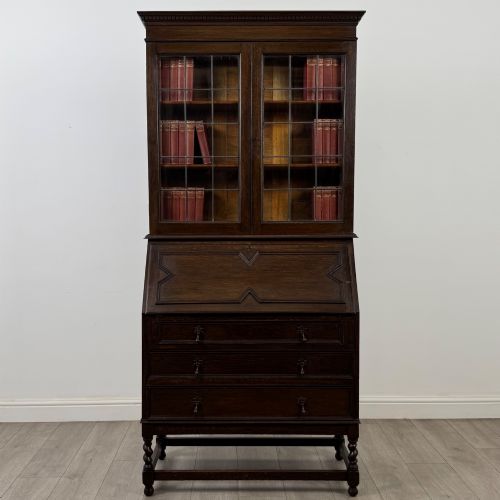
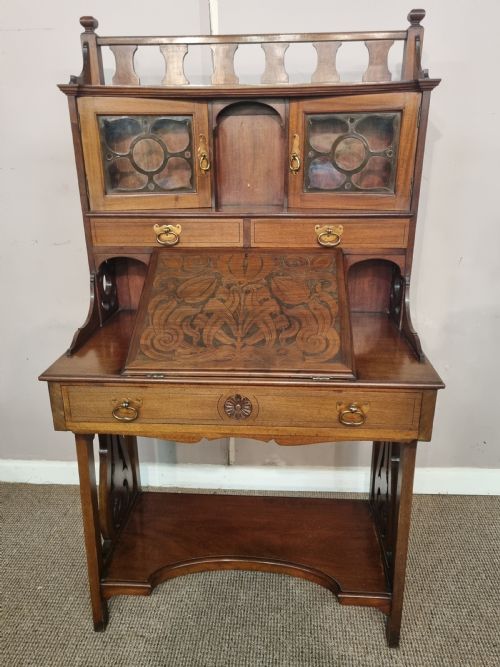
The most common formats on this page are oak bureaux and bureau bookcases displaying linenfold or Jacobean revival carving. Alongside these sit mahogany and walnut writing desks, often incorporating glazed upper sections or fitted interior compartments.
Regional variations span from English oak pieces to Anglo-Indian hardwood and padauk examples, demonstrating diverse craftsmanship. Buyers encounter forms ranging from compact writing cabinets to large bureau bookcases with integrated shelving.
Materials and Construction
Construction relies heavily on solid oak, mahogany, and walnut, often enhanced with burr walnut veneers or pine carcasses. Artisans utilised traditional joinery methods to build stable housing for drop-front writing surfaces and complex interior drawers.
Carving techniques define the decorative character of these cabinets, featuring linenfold panels, geometric mouldings, and deep relief work typical of revival styles. Brass fittings, leather inserts, and glass doors complete the construction of the upper and lower sections.
Listings feature periods spanning the eighteenth, nineteenth, and twentieth centuries, executed in oak, mahogany, walnut, elm, and pine.
Assessing Quality
Quality rests upon the selection of timber and the precision of the carving, where deep, crisp hand-carving distinguishes superior examples from mechanical work. The internal configuration of the writing cabinet, including secret compartments and well-fitted small drawers, signals higher standards of cabinet-making.
Structural integrity depends on the stability of the timber and the smooth operation of drop-front hinges and drawer runners. Original brass hardware, uncompromised veneers, and well-preserved glass panels further elevate the standing of a piece.
Robert Mouseman Thompson·Liberty & Co
The Vintage Carved Writing Cabinet Glossary
- Bureau
- A desk featuring a sloping hinged lid that opens to reveal a fitted interior of pigeonholes and small drawers. This form allows correspondence to be concealed when not in use.
- Secretaire
- A piece of furniture containing a drawer or compartment with a drop-down front that serves as a writing surface. It often mimics the appearance of a standard chest of drawers or sideboard.
- Linenfold
- A style of relief carving used on wooden panels to imitate folded fabric or linen. It is frequently encountered on twentieth-century oak furniture.
- Padauk
- A heavy tropical hardwood valued for its strength and reddish hue, utilised in Anglo-Indian cabinet-making. It takes a fine finish and supports intricate carving.
- Ormolu
- Gilt bronze mounts applied to furniture for decorative effect, most commonly seen on Victorian pieces. These metal ornaments accent corners, locks, and feet.
Vintage Carved Writing Cabinet: Frequently Asked Questions
What is a vintage carved writing cabinet?
A vintage carved writing cabinet is a piece of furniture combining a functional writing surface with enclosed storage, decorated with carved wooden details. These items typically feature drop-front desks or bureau compartments.
They emerged from periods when designated writing furniture was essential for household correspondence and record keeping. The carved ornamentation often reflects revival movements inspired by earlier centuries.
How were these cabinets used?
These cabinets served as personal workstations for writing letters, managing household accounts, and storing important documents. The fitted interiors provided pigeonholes for stationery and small drawers for inkwells and seals.
The enclosed design allowed owners to lock away confidential papers and close the desktop to keep rooms tidy. Upper bookcase sections were utilised to display libraries and family volumes.
How do I live with a writing cabinet?
Integrating a writing cabinet into a modern room requires balancing its traditional presence with contemporary seating. The drop-front surface provides a functional desk space for laptop use or traditional writing.
Ensure placement avoids direct heat sources to protect timber veneers and solid wood panels. Regular polishing maintains the finish of oak, mahogany, and walnut surfaces.
How can I tell periods apart?
Differentiating periods relies on observing wood choices, hardware styles, and the nature of the decorative carving. Victorian and Edwardian pieces often display heavier proportions and revival motifs like linenfold or Jacobean scrolling.
Twentieth-century examples may incorporate lighter oak construction or arts and crafts influence. Examining drawer linings, backboards, and joinery methods helps confirm the era of manufacture.