
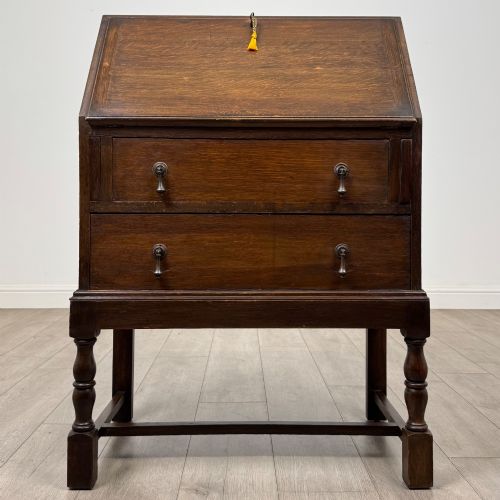
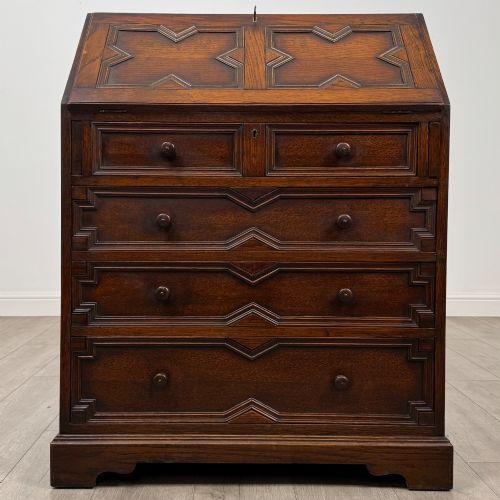
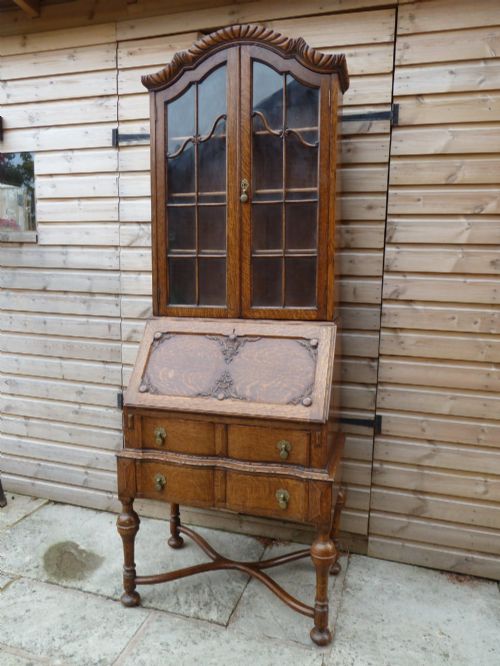
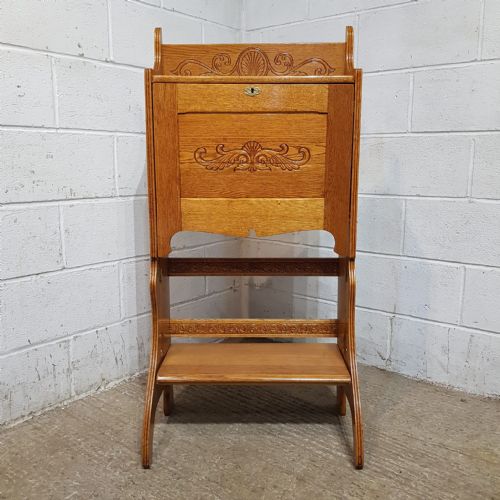


Carved Oak Slant Desk
A carved oak slant desk brings solid timber and folding writing surfaces into a room, offering practical storage alongside historic character.
Carved Oak Slant Desk
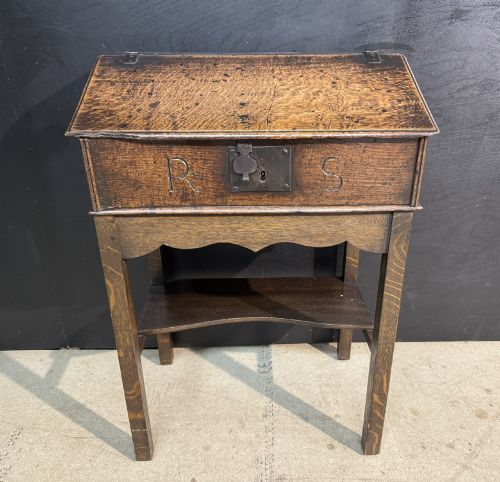
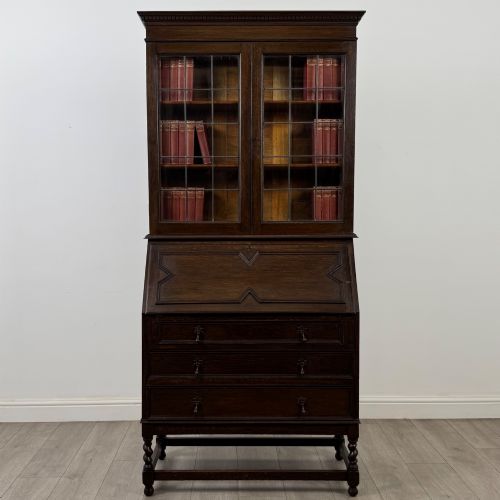
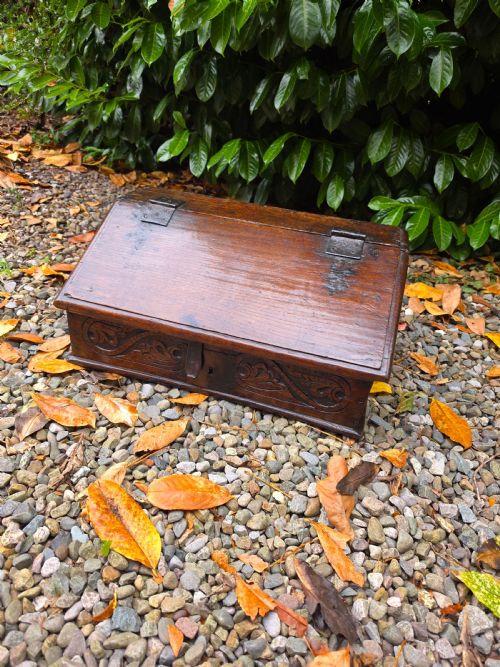
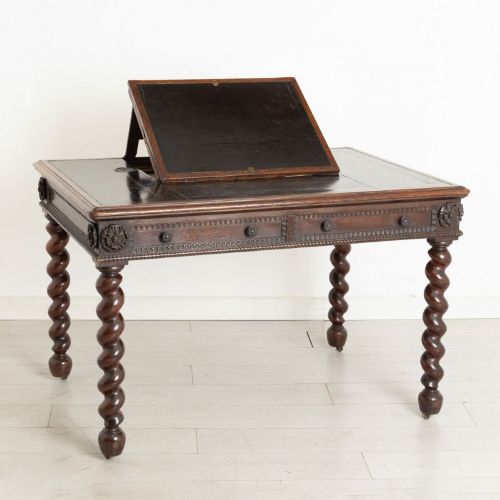
A carved oak slant desk encompasses various writing furniture forms, including bureau bookcases, davenports, slant front bible boxes, and table desks. These pieces originate from multiple periods spanning the seventeenth century through to the Edwardian era and the nineteen-twenties.
Buyers are likely to encounter Edwardian and nineteen-twenties revivals alongside earlier seventeenth, eighteenth, and nineteenth-century examples. The selection ranges from compact vernacular writing boxes to large bureau bookcases fitted with multiple drawers and interior compartments.
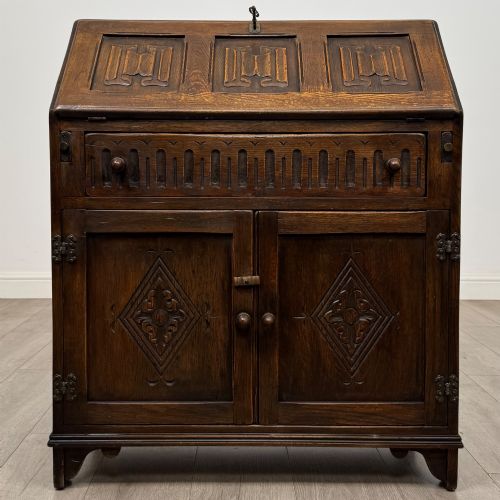
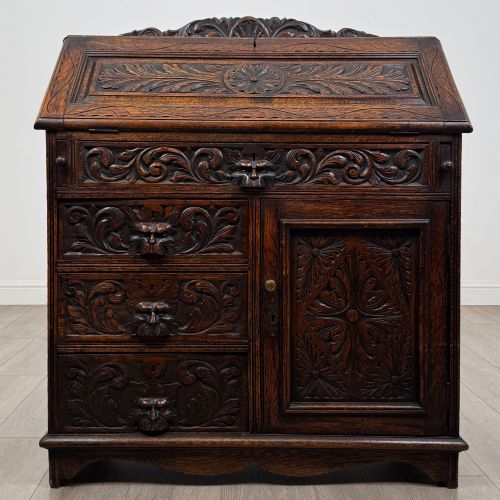
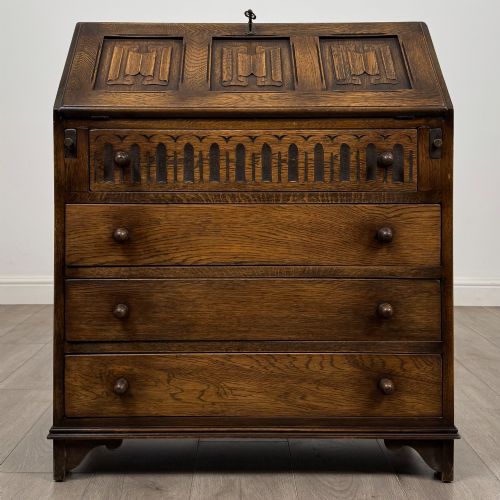
Stylistic influences reflect Jacobean, Tudor, Georgian, and Arts and Crafts traditions. Many surfaces display carved detail such as linenfold panels or green man motifs executed in solid oak.
Materials and Construction
Construction relies primarily on solid oak, frequently complemented by pollard oak or burr oak veneers on specific surfaces. Cabinet makers utilised traditional joinery methods to build robust carcases designed for daily writing use.
Hardware elements incorporate brass and iron for handles, hinges, and escutcheons. Interior writing slopes commonly feature inserted leather surfaces alongside fitted pigeonholes and small drawers.
Carved ornamentation defines the exterior appearance, utilising chip carving and relief work to create linenfold patterns, strapwork, and figural details.
Listings feature oak furniture spanning the seventeenth century to the nineteen-thirties, incorporating brass hardware, leather inserts, and pollard oak veneers.
Execution and Interior Detail
Quality separates through the crispness of the timber carving and the complexity of the internal arrangement. Pieces with fitted secret compartments, moving interiors, and well-figured burr or pollard oak panels demonstrate superior cabinet work.
The integrity of the structural joinery and the selection of timber grain dictate the standing of an individual desk. Superior examples maintain original brass hardware, leather writing inserts, and untouched patination across the oak surfaces.
Liberty and Co
The Carved Oak Slant Desk Glossary
- Bureau
- A writing desk featuring a sloping hinged lid that drops to form a writing surface above a set of drawers. This form provides concealed storage for papers and stationery.
- Bible Box
- A small wooden box with a slanted lid, originally built to hold sacred texts or writing equipment. These portable items sit upon tables or desks.
- Davenport
- A compact pedestal desk with a sloping writing top and drawers accessed from the side. The design emerged during the nineteenth century to save space.
- Linenfold
- A style of wood carving that imitates folded linen cloth. This motif appears frequently on panels of seventeenth-century and revival furniture.
- Green Man
- A sculptural architectural ornament depicting a human face carved with leaves, vines, or branches. This motif surfaces on Victorian carved oak desks.
Carved Oak Slant Desk: Frequently Asked Questions
How do I use a slant desk?
The sloping lid drops down to create a flat surface for writing letters or placing a laptop. Interior compartments provide organised storage for stationery and small items.
Beneath the writing flap, drawers or cabinets hold larger papers and documents. Keeping the wood conditioned helps protect the writing surface from daily wear.
How do I date an oak slant desk?
Dating relies on examining construction techniques, hardware, and decorative styles. Seventeenth-century pieces display vernacular joinery and hand-carved panels, while nineteenth-century revivals often utilise machine-sawn timber and different internal configurations.
Period characteristics such as linenfold carving point to Edwardian revivals, whereas seventeenth-century examples show distinct hand-planed boards and vernacular framing. Examining the secondary woods inside drawers provides further evidence of age.
Where should I place a desk box?
Desk boxes sit securely on top of sturdy tables, sideboards, or dedicated stands. Their portable nature allows them to move easily between rooms depending on where you prefer to write.
Positioning the box away from direct heat sources prevents the oak timber from drying out or splitting. Placing the piece near natural window light helps illuminate the interior compartments.