




Jacobean Oak Slope Box
These jacobean oak slope box pieces are sturdy timber containers built for writing and keeping books, prized for their rich grain and historic utility.
Jacobean Oak Slope Box
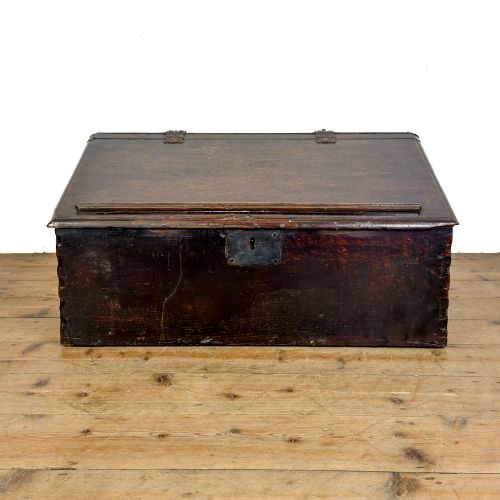
When you search for a jacobean oak slope box, you encounter robust timber receptacles primarily built during the seventeenth century for reading, writing, and storing vital papers or volumes. These items appear under various regional and functional descriptions including desk boxes, Bible boxes, slant front boxes, and writing desks.
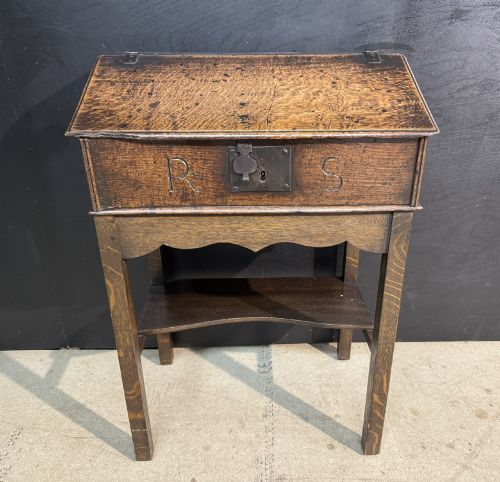
The versions most frequently met on this page span the seventeenth and eighteenth centuries, with specific examples originating from English and Welsh workshops. They take the form of compact tabletop boxes or occasionally stand-mounted bureaus, designed to sit securely upon a table and provide an angled surface for the scribe.
Construction and materials
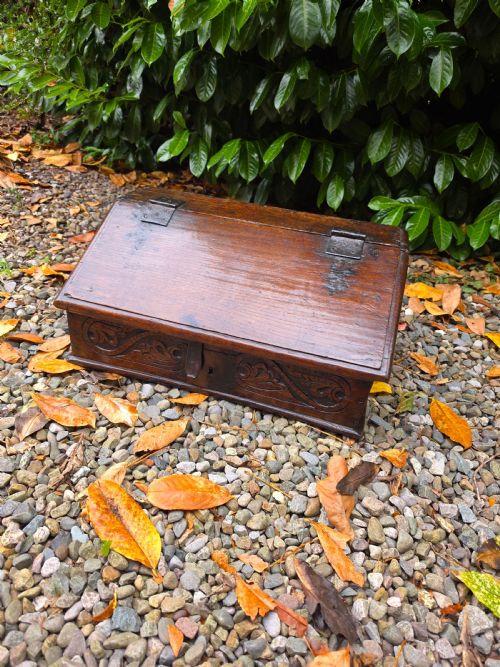
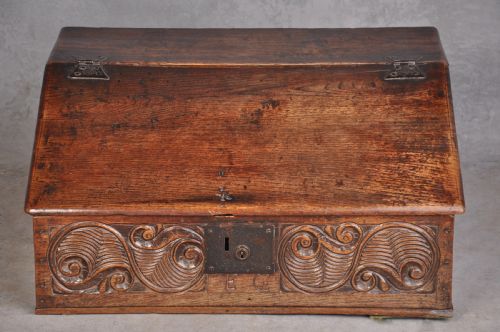
Every jacobean oak slope box relies on solid oak boards, selected for durability and joined using traditional carpentry methods appropriate to the seventeenth century. Iron and brass hardware such as hinges, latches, and lock plates provide structural reinforcement and secure closure for the lid.
Surface decoration on these pieces typically involves hand carving or panel moulding, reflecting the prevailing styles of the period. Makers utilised simple hand tools to shape the timber, leaving subtle tool marks that confirm the age and manual construction of each box.
Some boxes retain secret compartments hidden beneath the till, designed for keeping private coins and letters.
Assessing quality
The distinction between standard examples and superior pieces rests largely on the integrity of the timber and the crispness of any carved enrichment. Boxes retaining their original stands, hinges, and locks command greater interest from those who study early English furniture.
Proportion and patination also determine the standing of an item. A well-preserved surface tone developed through centuries of handling elevates a box far above one with excessive modern intervention or unsympathetic timber replacement.
The Jacobean Oak Slope Box Glossary
- Slope box
- A container featuring an angled lid designed to support writing or reading materials. This slant allowed the writer to work comfortably while seated.
- Bible box
- A heavy wooden chest traditionally sized to hold a family Bible and other devotional texts. Many were later adapted or used interchangeably as general writing desks.
- Patina
- The lustrous surface sheen developed on oak furniture through age, light exposure, and regular handling. It serves as a key indicator of genuine historical age.
- Ecclesiastical
- Pertaining to the church, often used to describe boxes associated with clergy or parish use, such as verger's boxes. These pieces sometimes feature distinct religious carving.
- Circa
- A Latin term meaning around, used by dealers to indicate an approximate date of manufacture based on style and construction evidence.
Jacobean Oak Slope Box: Frequently Asked Questions
What is a jacobean oak slope box?
It is a heavy wooden desk box featuring an inclined lid, built during the seventeenth century to hold writing materials and sacred texts.
These pieces provided a portable writing surface before dedicated writing desks became common in domestic interiors.
How were these boxes used?
They served as portable desks placed upon tables, where owners could write letters, keep accounts, or store family Bibles securely.
The sloping lid offered a comfortable angle for handwriting while keeping the interior contents hidden and locked away.
How do I date a seventeenth century box?
Dating relies on examining the construction joints, timber species, ironwork, and decorative carving styles typical of the period.
Comparing the board thickness and tool marks against known examples helps establish the likely decade of manufacture.
Did these boxes sit on stands?
Most examples were designed as tabletop units intended to be moved between rooms or placed upon existing furniture.
However, a small number were made or later placed on original floor stands to function as standing desks or small bureaus.
How do I care for antique oak?
Maintain stable room humidity and apply occasional applications of beeswax to nourish the dry timber without building up heavy residues.
Avoid placing antique oak in direct sunlight or near heat sources to prevent the historic wood from splitting.