





Vintage Carved Wall Clock
A vintage carved wall clock brings timekeeping into the architecture of a room with rich texture and material depth.
Vintage Carved Wall Clock
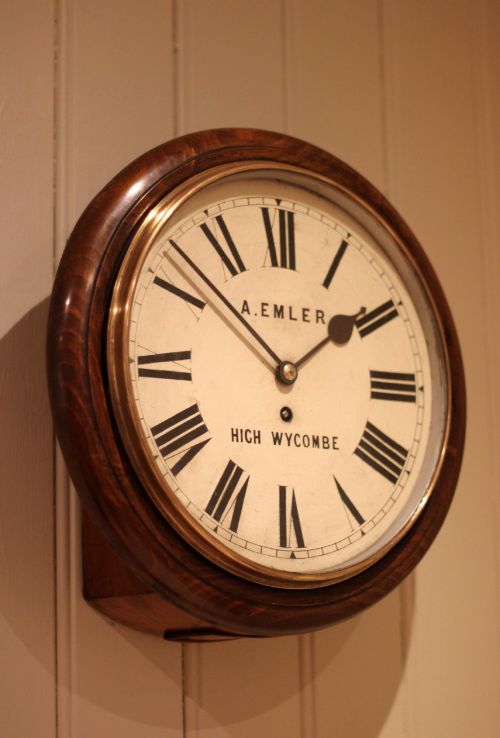
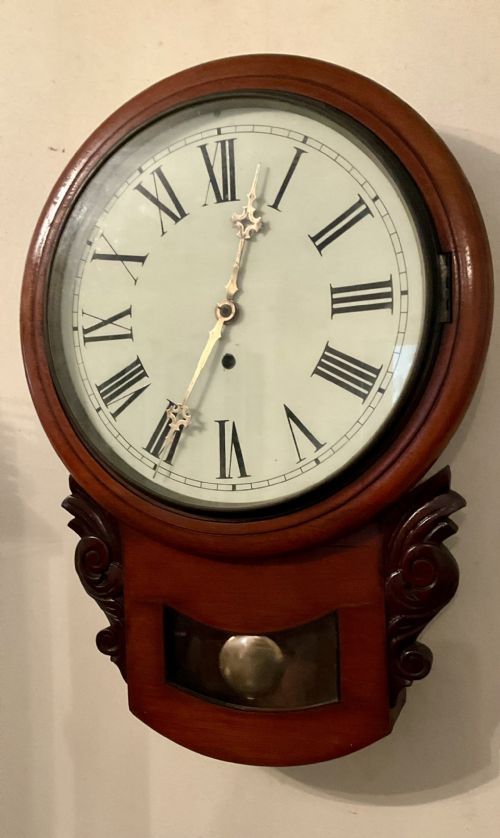
When searching for a vintage carved wall clock, you encounter timepieces shaped by functional necessity and regional craft traditions, ranging from heavy timber drop dials to Swiss and German forest carvings. These objects span periods from the Georgian era through the Victorian epoch and into mid-century modernism, utilising wall space as a primary display surface.
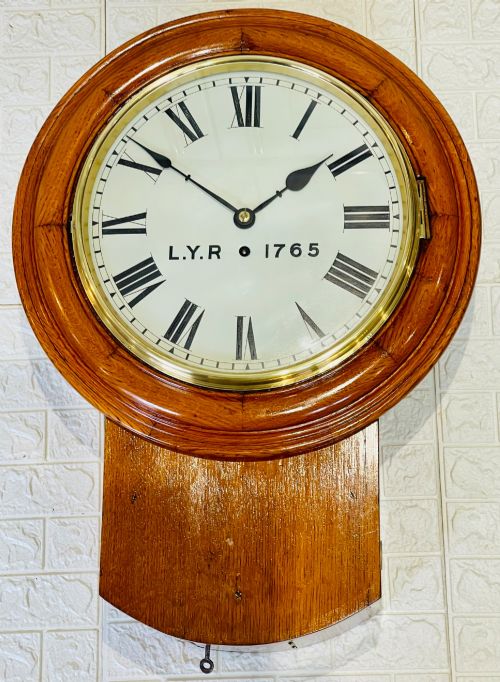
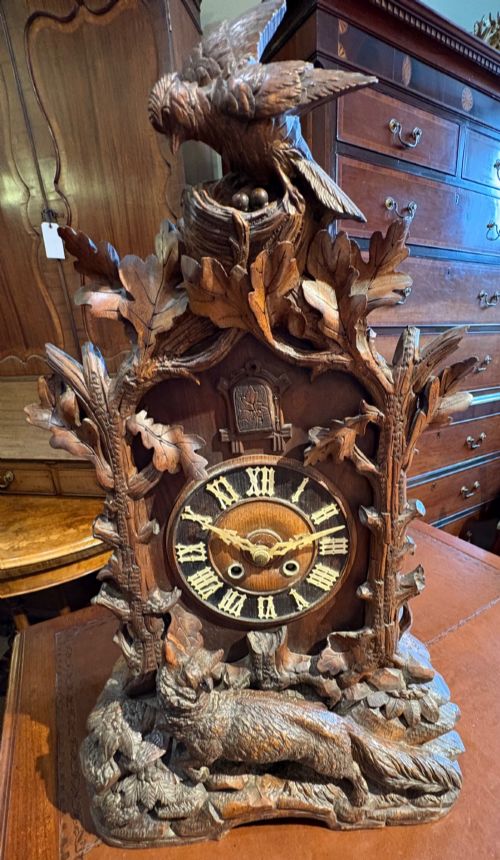
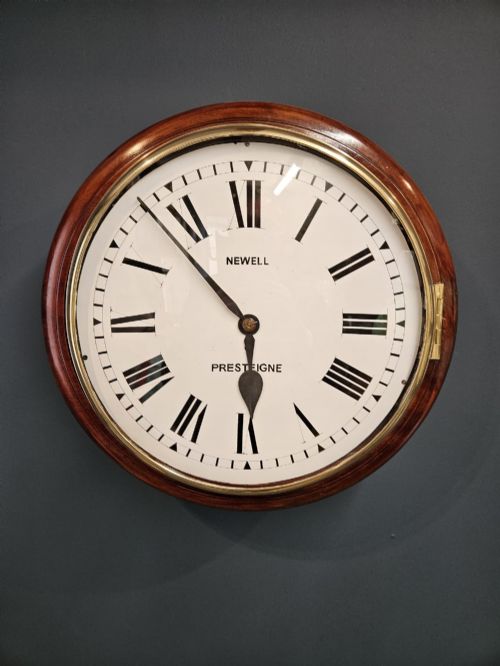
The version most commonly met on this page is the walnut or oak drop dial clock, alongside Black Forest timber pieces featuring detailed fauna and botanical motifs. Dial formats vary from standard Roman numerals on painted faces to skeletonised brass movements and ceramic thermometer combinations.
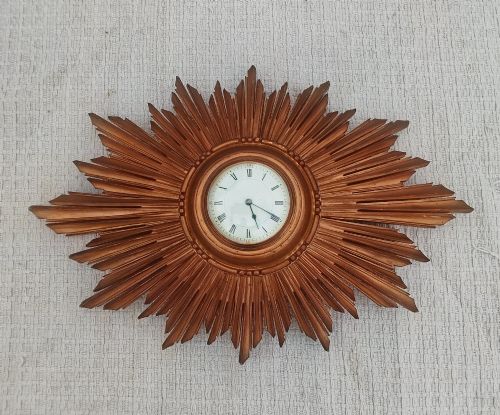
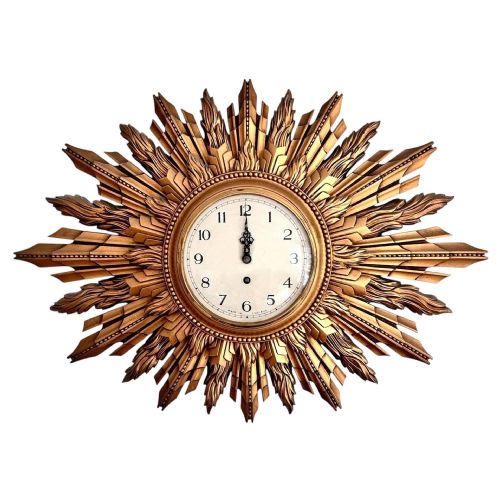
Origins stretch across English railway stations, French workshops, German provinces, and Dutch domestic interiors. The housing ranges from simple beech and mahogany surrounds to elaborate giltwood starburst frames and heavily carved architectural crests.
How they were made
Makers shaped these housings from dense hardwoods like mahogany, walnut, rosewood, and oak, often incorporating carved details directly into the solid timber or applying giltwood layers. Movements rely on brass gear trains, fusee chains or cords, and pendulum regulation, while aneroid barometers utilise sealed metal chambers to measure atmospheric pressure.
Glass protects the painted or enamel dials, fitted within hinged brass bezels or heavy timber doors. Dial faces combine hand-painted numerals with iron or brass hands, enclosed alongside mercury thermometers or carved wooden automaton mechanisms.
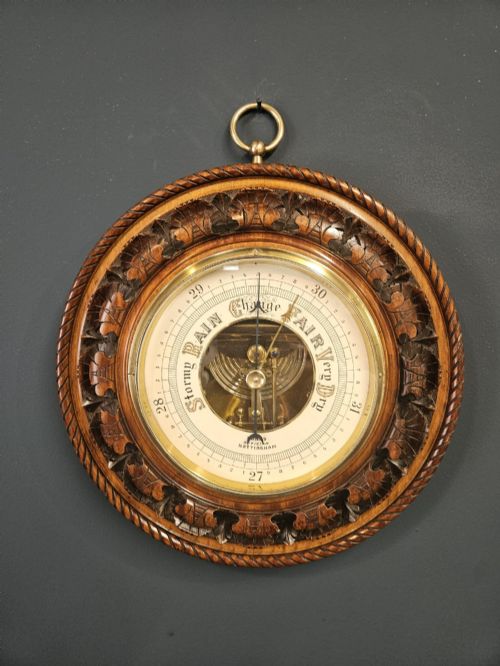
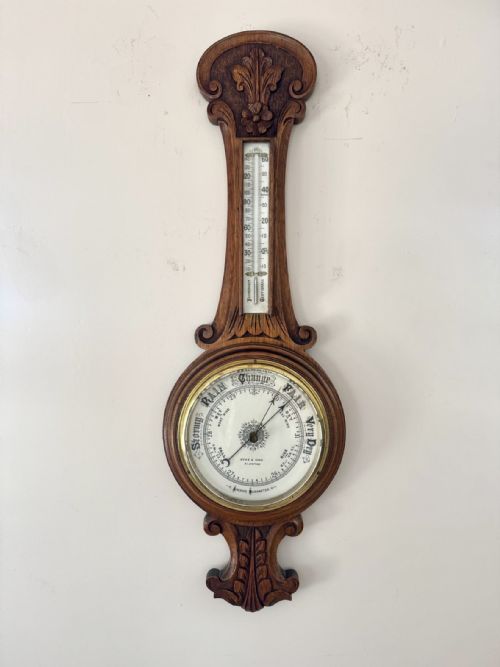
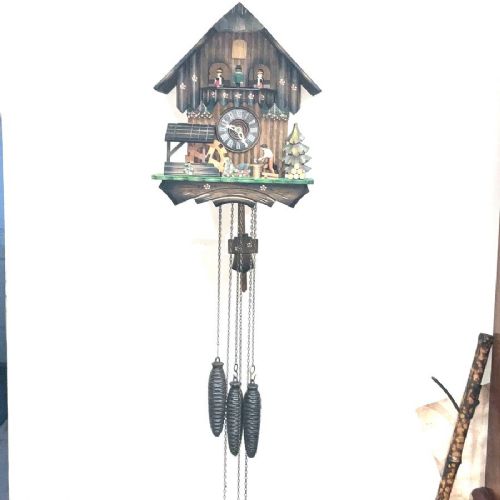
The selection includes drop dial timepieces, aneroid barometers, star burst designs, and traditional mechanical cuckoo clocks.
What varies in quality
The distinction between tiers of production lies in the depth and crispness of the hand-carved ornamentation, particularly on Black Forest models and Victorian crests, where shallow machine routing differs entirely from undercut botanical relief. Timber selection dictates the structural integrity, moving from utilitarian beech and pine to figured burr walnut and dense rosewood veneers.
Movement sophistication also separates standard timepieces from high-grade examples, visible in twin-fusee setups, bell-striking trains, and skeletonised brass plates that expose the mechanical action. Dial execution, from simple paper-faced iron to heavy brass castings with individually pinned numerals, marks the level of craftsmanship invested by the maker.
Hyde and Sons Sleaford·Joseph Mansfield·Connell of London·Johann Baptist Beha·Smiths England
The Vintage Carved Wall Clock Glossary
- Fusee
- A conical pulley used in spring-driven clocks to maintain even tension on the gear train as the mainspring unwinds. This mechanism ensures consistent timekeeping across the duration of the wind.
- Drop dial
- A wall clock featuring a circular dial at the top and an extended wooden case below to accommodate the swing of the pendulum. This format dominated offices, railways, and domestic parlours.
- Aneroid barometer
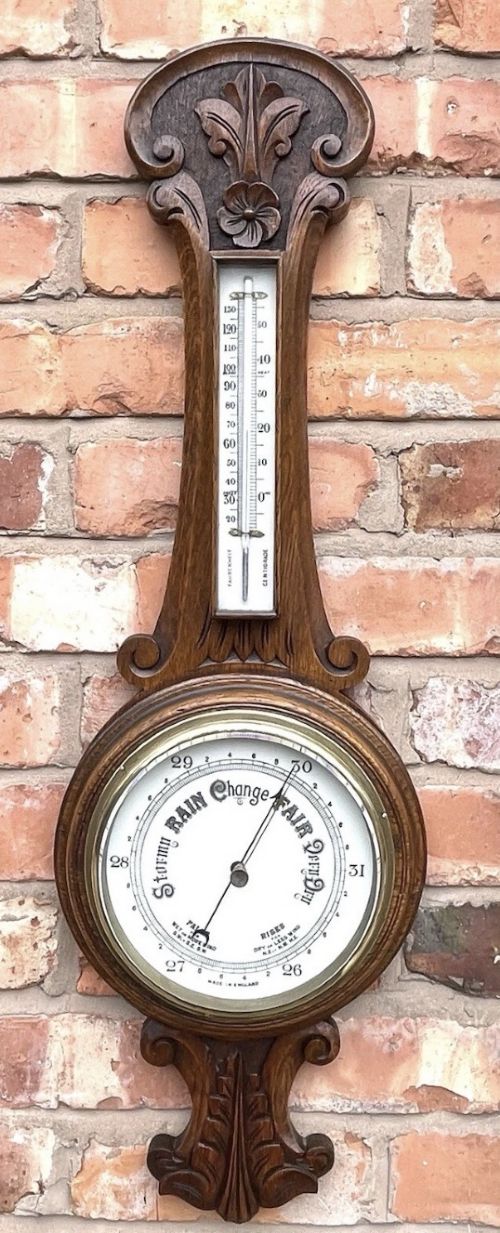
- An instrument that measures atmospheric pressure using an expanding and contracting sealed metal capsule rather than liquid mercury. These units frequently accompany clocks in carved wooden banjo frames.
- Star burst
- A decorative clock frame radiating outward from the central dial in jagged or geometric wooden or gilt rays. This design gained prominence during the art deco period.
- Vienna wall clock
- A precision weight-driven regulator clock housed in an elongated timber case with glass side panels. These pieces originated in Austrian workshops and emphasise mechanical visibility.
Vintage Carved Wall Clock: Frequently Asked Questions
How do fusee movements work?
A fusee movement uses a conical drum linked to the mainspring by a fine chain or cord. As the spring loses tension, the chain moves to a wider part of the cone, maintaining steady power.
This clever geometric design prevents the clock from losing speed as the power winds down.
Where were drop dial clocks used?
Drop dial clocks served primarily in public spaces, railway stations, and institutional offices where clear visibility and reliable timekeeping mattered. Their long lower cases accommodated the pendulum swing while keeping the mechanism secure against the wall.
Later Victorian households adopted smaller domestic versions for hallways and kitchens.
How do I care for a mechanical wall clock?
Keep the clock away from direct sunlight, heat sources, and damp exterior walls to protect the wood and internal brass components. Hang the piece securely from a strong wall fixing that supports the full weight of the case.
Ensure the clock hangs completely plumb so the pendulum swings with an even beat.
What is a Black Forest clock?
A Black Forest clock originates from the forested mountain region of Germany, renowned for hand-carved wooden cases featuring leaves, birds, and hunting motifs. These pieces often include mechanical cuckoo calls or automated figures activated on the hour.
Carvers worked with native softwoods and linden wood to build intricate architectural hoods.