
Vintage Carved Open Armchairs
These vintage carved open armchairs bring architectural presence to a room, offering comfortable seating with exposed wooden frames.
Vintage Carved Open Armchairs
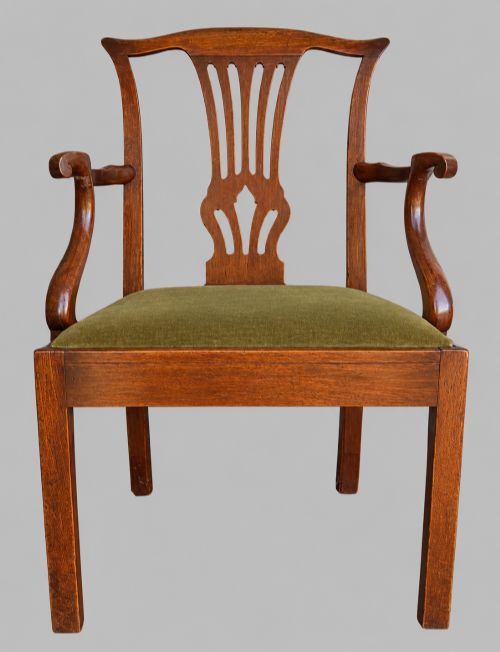
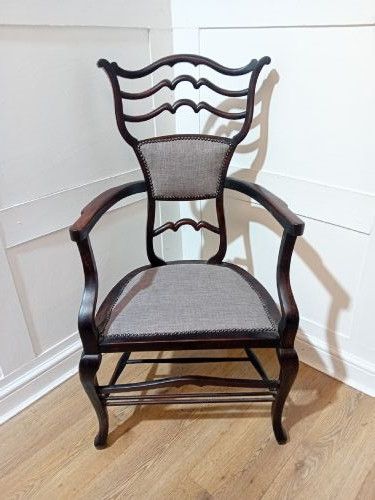
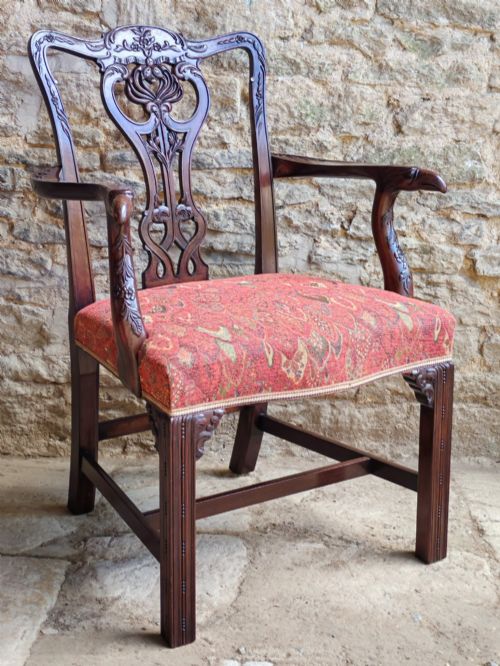
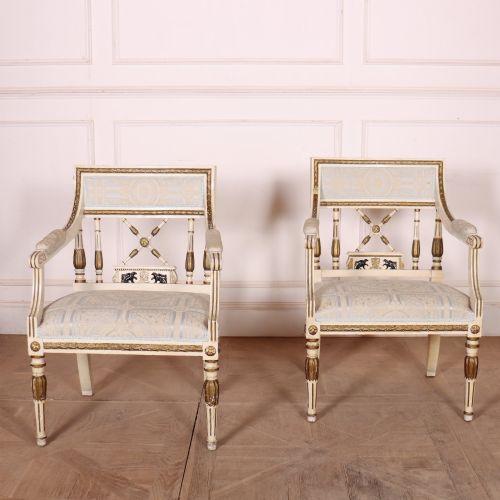
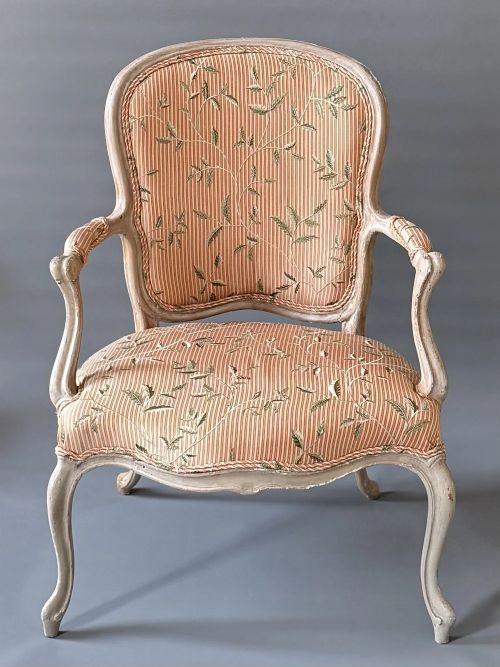
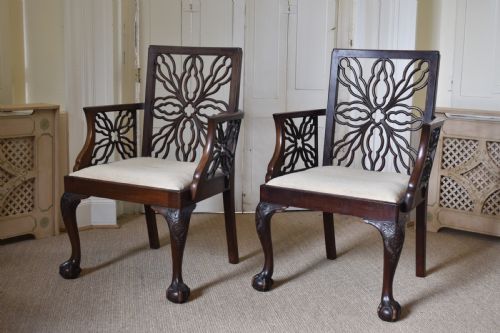
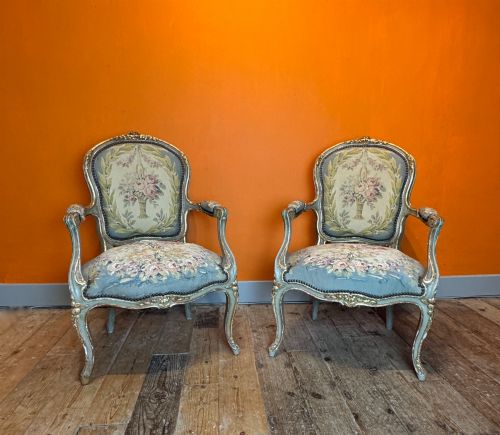
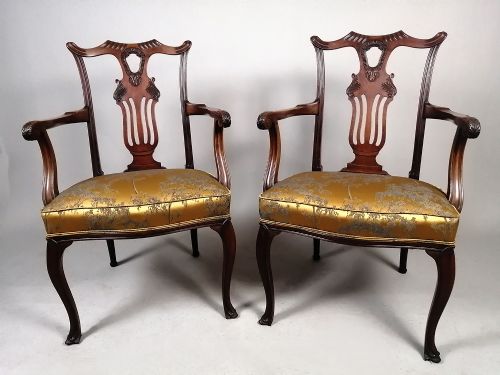
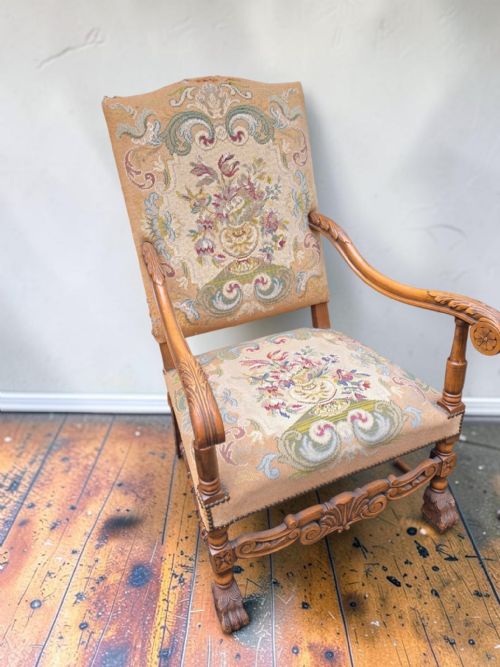
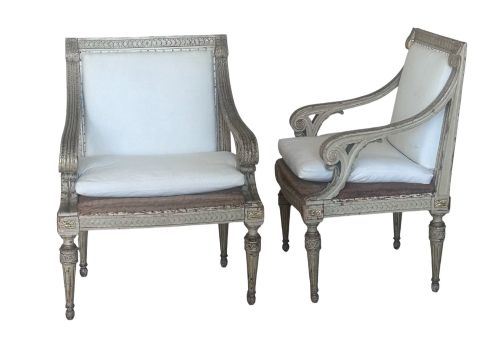
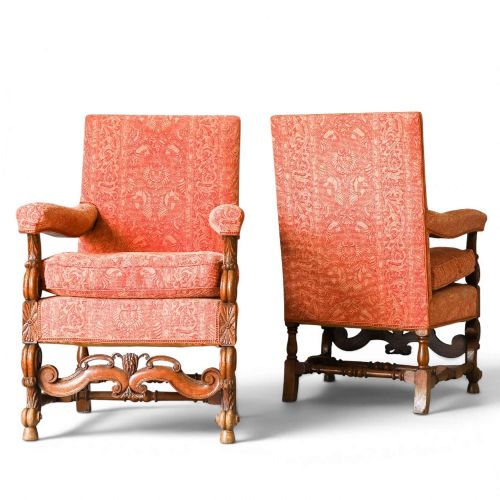
Vintage carved open armchairs encompass seating frames shaped from timber with visible carved details and unpadded sides. The examples appearing in listings range across the eighteenth, nineteenth, and twentieth centuries, taking forms such as elbow chairs, library chairs, and fauteuils. Originating from English, French, Swedish, and Anglo-Indian workshops, these seats serve as both functional furniture and decorative statements.
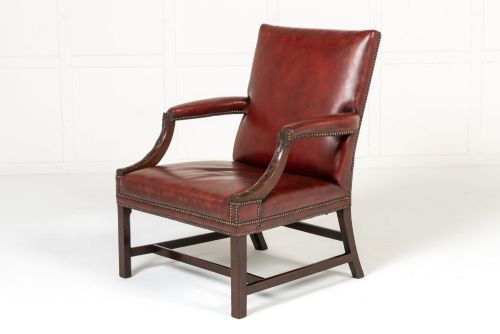
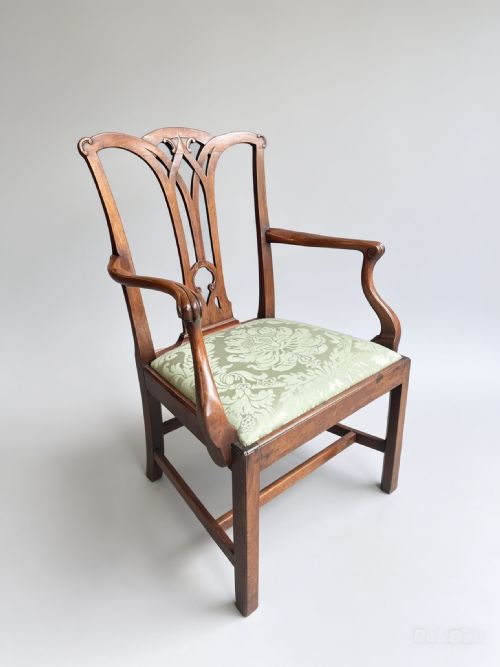
Buyers seeking vintage carved open armchairs encounter distinct stylistic revivals alongside period pieces. English Chippendale and Hepplewhite designs appear alongside French Louis styles, including Louis XVI and Regence interpretations. Frames span dining chair proportions down to large library and Gainsborough armchair scales.
Materials and construction methods
Makers shaped these chairs from hardwoods such as mahogany, walnut, oak, beech, and rosewood, applying hand-carving to the wooden frames. Structural integrity relied on traditional joinery methods to support the open arm design and weight bearing joints.
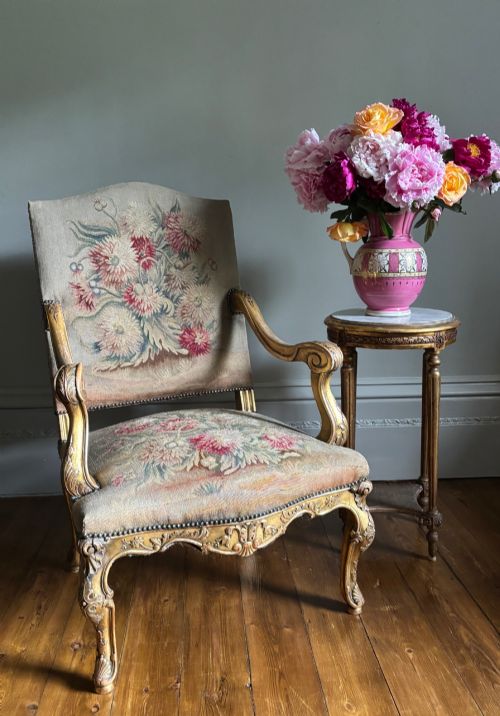
Surface finishes include original paint, parcel gilding, giltwood, and polished timber surfaces. Upholstery methods incorporate tapestry, needlepoint panels, fabric, velvet, and hand-dyed leather secured to the seat and back.
Some nineteenth century reading chairs feature hidden swivel mechanisms beneath the seat to help scholars reach adjacent bookshelves.
Distinguishing quality in carved seating
Quality rests upon the crispness and depth of the wood carving executed on the frame. Sharp detailing in foliage, scrolls, or blind fretwork indicates skilled hand execution rather than mechanical shaping.
The choice of timber and the proportion of the frame dictate the structural refinement. Well-balanced proportions ensure the open arms and legs support the design harmoniously without appearing clumsy.
Howard and Sons
The Vintage Carved Open Armchairs Glossary
- Fauteuil
- An open-framed armchair with upholstered back and seat originating in France. These chairs feature exposed wooden arms and carved frames.
- Gainsborough chair
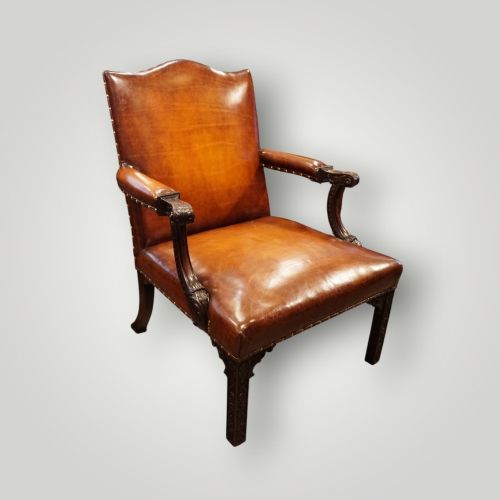
- A wide, high-backed armchair with upholstered arms and mahogany frame dating from the eighteenth century. They were designed specifically for writing desks and libraries.
- Elbow chair
- An alternative term for an armchair, often used in historical inventories to describe seating with open wooden arms. They frequently served as desk or dining table end chairs.
- Parcel gilt
- A finishing technique where portions of a wooden frame receive a gold leaf application while other areas show painted or polished wood. This highlights specific carved details on the chair.
- Needlepoint
- Canvas work embroidery utilised for upholstery panels on seats and backs. This stitched textile finish appears frequently on nineteenth century French frames.
Vintage Carved Open Armchairs: Frequently Asked Questions
How do I identify a French fauteuil?
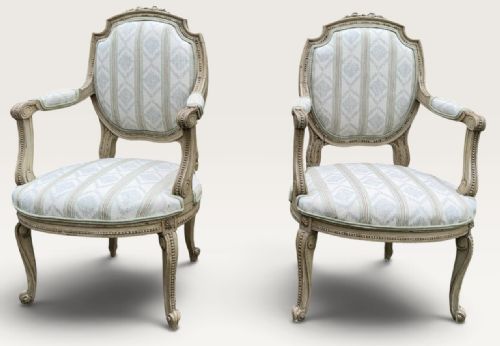
French fauteuils feature exposed wooden frames with upholstered backs and seats, typically displaying carved floral motifs or moulding along the crest rail and armrests. The arm supports often curve downwards to meet the seat rail in a continuous line.
Distinguishing regional characteristics include the cabriole leg on earlier models and the straighter, fluted legs associated with later eighteenth century neoclassical revivals.
Where should I place an open armchair?
These chairs suit placement in studies, drawing rooms, or bedrooms where their decorative wooden frames remain visible from multiple angles. Because the arms are open, they occupy less visual space than fully upholstered club chairs.
Pairing them with a writing desk or positioning them beside a fireplace creates a functional seating arrangement that highlights the carved details.
How do I date a mahogany armchair?
Dating relies on examining the construction methods, timber patination, and stylistic motifs carved into the wood. Eighteenth century pieces often exhibit dense mahogany with hand-cut joinery, while revival pieces from the nineteenth and twentieth centuries utilise machine-assisted techniques.
Comparing the stretcher arrangement and leg style against known period forms helps narrow down the decade of manufacture.
What is the difference between an elbow chair and a carver?
An elbow chair refers generally to any seating chair fitted with armrests, historically used at the head of a dining table or at a desk. Carver is a term often applied interchangeably to describe the same open-armed chair format.
Both terms distinguish these armless dining chair companions by their supporting side arms.