

Vintage Carved Dining Chairs
These vintage carved dining chairs bring solid timber frames and intricate hand-carved details to the table, offering sturdy character for daily meals.
Vintage Carved Dining Chairs
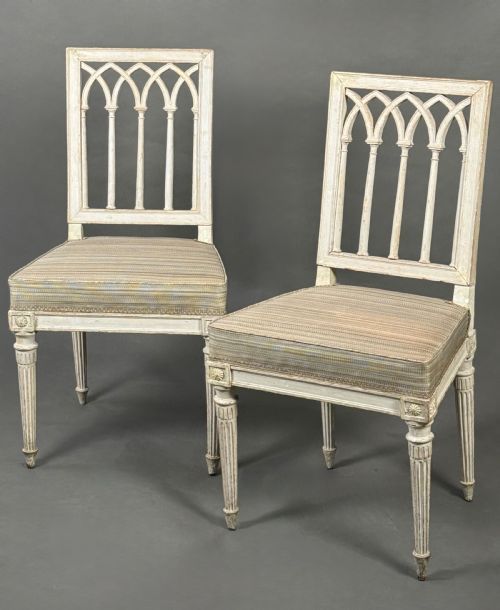
When you search for vintage carved dining chairs, you encounter seating constructed from sturdy timbers intended to anchor a dining room. These pieces range from single side chairs to large matched sets spanning a dozen seats.
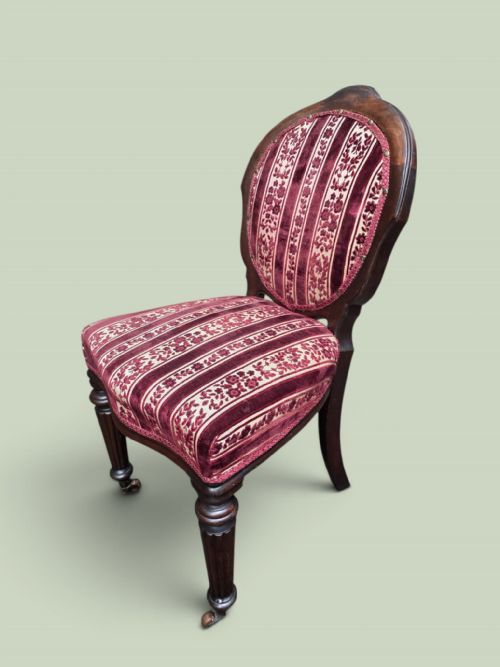
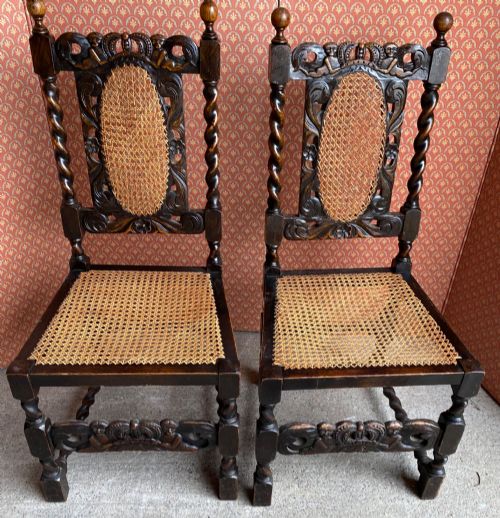
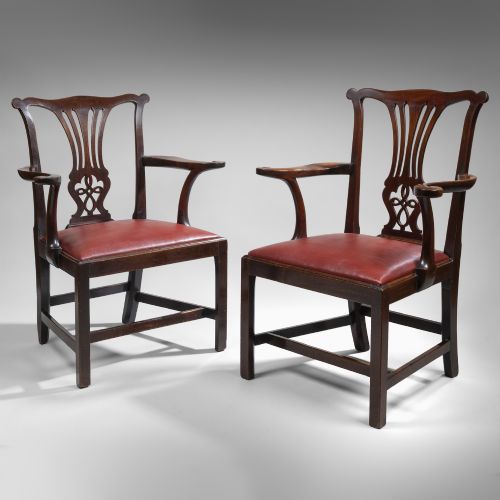
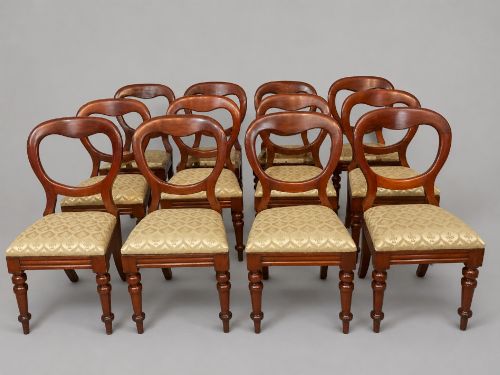
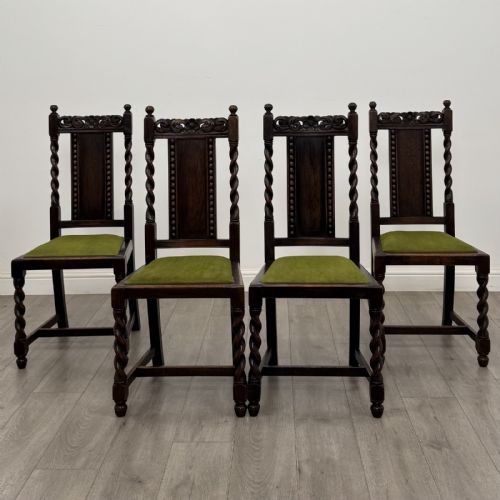
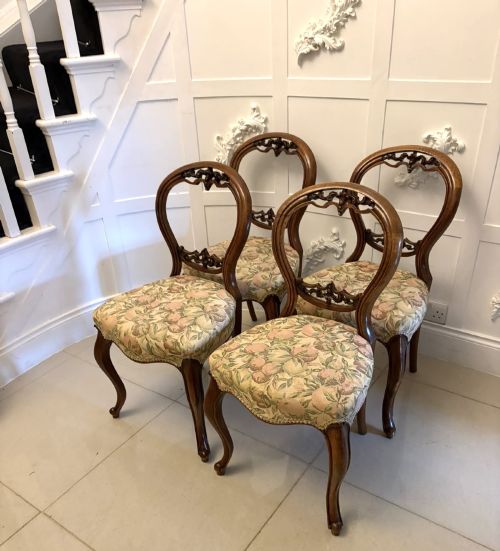
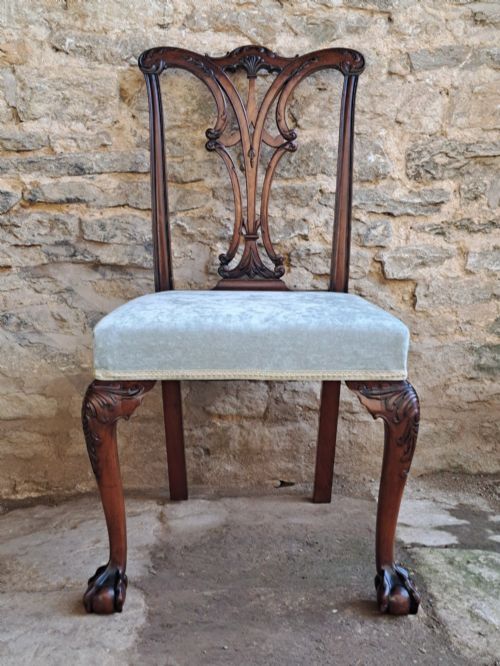
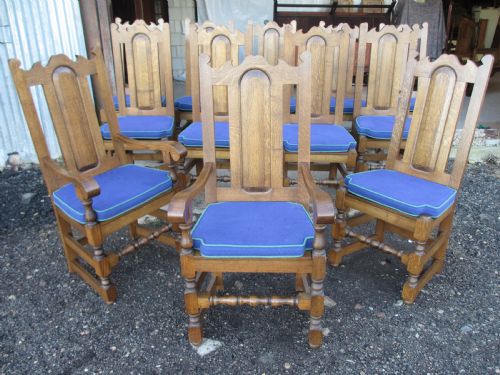
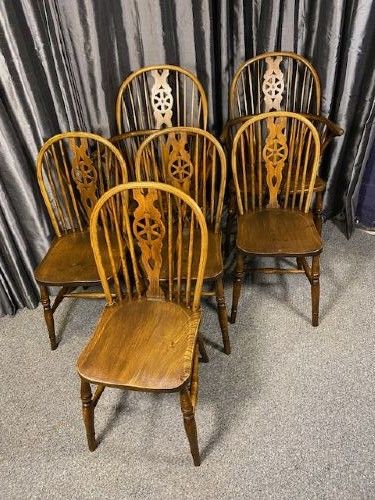
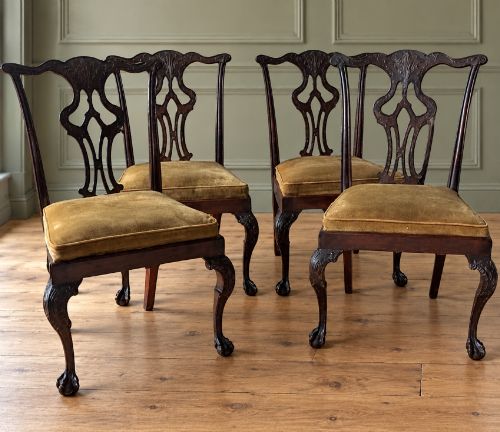
The most common examples on this page date from the Victorian era and the early twentieth century, drawing heavily on earlier Chippendale and Jacobean styles. You find forms including balloon backs, wheel backs, carvers, and high-backed oak dining chairs.
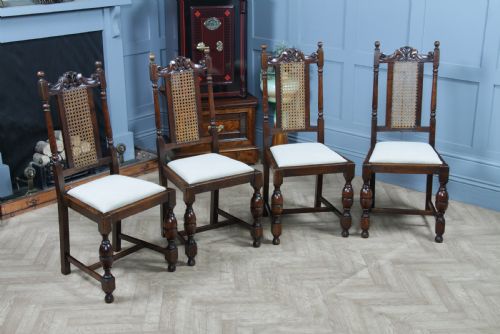
Materials span dense hardwoods like mahogany and oak, alongside elm, beech, walnut, and rosewood. Many incorporate upholstered pads, cane panels, or fabric coverings.
How they were made
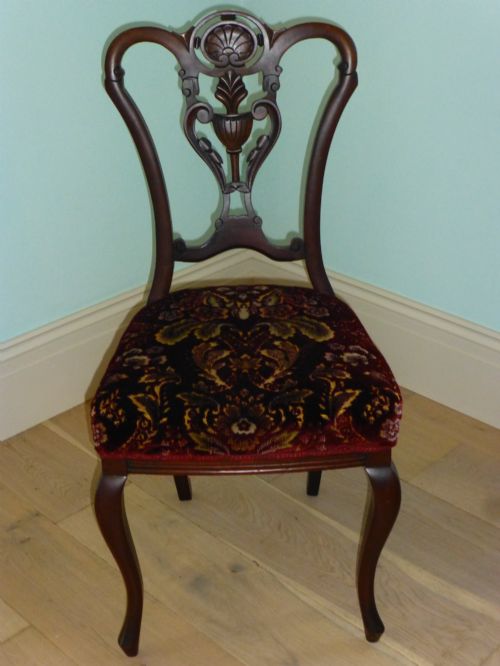
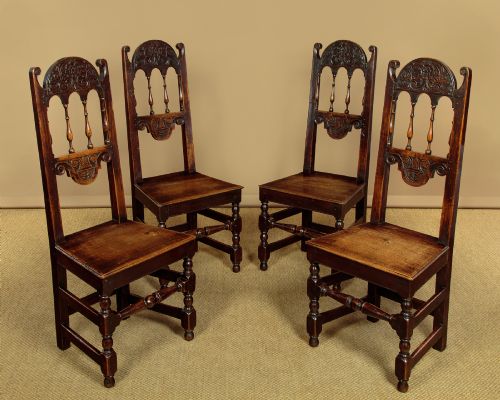
Cabinetmakers shaped primary structural frames from solid hardwoods such as mahogany, oak, walnut, and elm using traditional joinery. Elements like barley twists, splats, and crest rails received detailed hand-carving directly into the timber.
Seat pads and backs frequently involved textile integration, utilising materials like velvet, chintz, and standard upholstery fabrics stretched over stuffing. Caning appeared on lighter framed panels, while turned components provided structural support for legs and stretchers.
Vintage Carved Dining Chairs Retail Price Guide 2026
Typical asking prices for vintage carved dining chairs among the pieces listed under this phrase on Sellingantiques today, from the lower quarter to the upper quarter. They describe what is for sale here now, not the wider market.
Listings feature woods spanning mahogany, oak, walnut, rosewood, elm, beech, and maple across multiple centuries.
What varies in quality
The distinction between standard seating and superior examples rests on the crispness of the timber carving and the density of the chosen wood. Heavier Cuban mahogany or burr walnut frames with deeply articulated decoration command higher regard than plain variants.
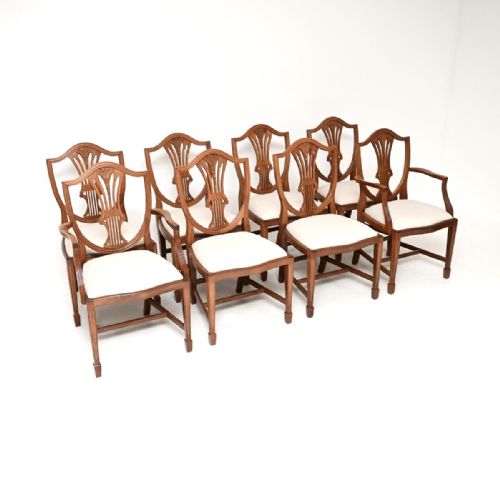
Consistency across a set heavily influences overall standard, particularly when dealing with large groupings of eight to twelve chairs. Uniformity in timber grain, finish, and upholstery details separates cohesive dining sets from assembled collections.
Maple and Co
The Vintage Carved Dining Chairs Glossary
- Carver
- An armchair designed specifically for the head of a dining table, featuring supportive armrests. These typically accompany matching side chairs in a set.
- Balloon back
- A rounded, curved chair back resembling the shape of a hot air balloon, popular during the Victorian period. This design provides ergonomic support for the sitter.
- Barley twist
- A woodworking technique where timber is turned into a spiral resembling a twisted rope. This ornamental detail frequently appears on Jacobean style chair legs and stretchers.
- Splat
- The vertical wooden strip down the centre of a chair back, often shaped and carved in Chippendale or Hepplewhite designs. It provides lumbar support and aesthetic interest.
- Wheel back
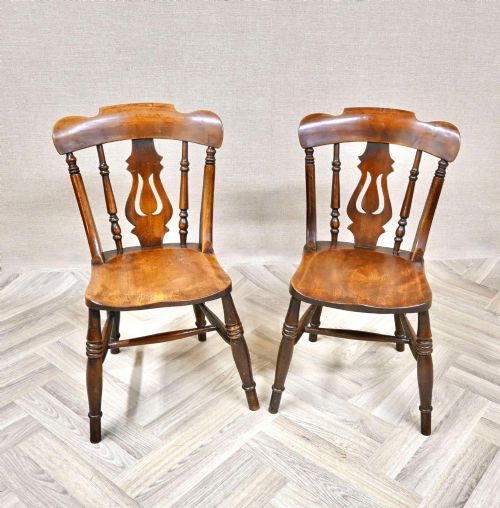
- A chair back featuring wooden spokes radiating from a central carved wheel motif, common in traditional Windsor designs. This style originates from English country workshop traditions.
Vintage Carved Dining Chairs: Frequently Asked Questions
How do I care for antique wooden chairs?
Maintain timber frames by dusting regularly with a soft cloth and applying appropriate wax polish sparingly to nourish the grain. Protect upholstery from direct sunlight to prevent fabric fading.
Avoid placing these chairs near direct heat sources, which can dry out the timber and cause joints to loosen over time.
Are these chairs suitable for daily use?
Most solid hardwood chairs from these periods were built for robust daily service around a family table. Regular checking of leg joints and stretchers ensures they remain stable.
Heavier carvers and sturdy oak frames handle everyday sitting well, provided the joinery is sound and undamaged.
How do I identify a matched dining set?
Examine the timber grain, colour, and carving details closely across all pieces to check for uniform craftsmanship. Consistent wear patterns and matching upholstery styles indicate chairs that have remained together.
Larger sets of eight or twelve often show slight variations if assembled later, so inspecting every individual chair is essential.
What is the difference between a side chair and a carver?
Side chairs lack armrests and have a narrower profile designed to tuck neatly beneath a dining table. They make up the majority of seats in a standard dining set.
Carvers feature integrated armrests and occupy the ends of the table, offering a more substantial presence and greater seating comfort.