


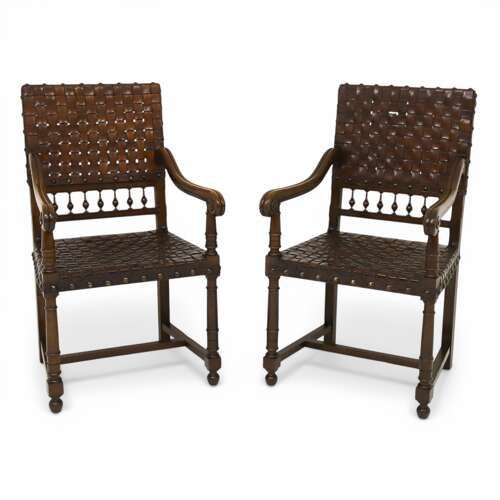


Restoration Style Oak Chairs
Restoration style oak chairs bring robust timber frames and rich period revival character into domestic spaces.
Restoration Style Oak Chairs
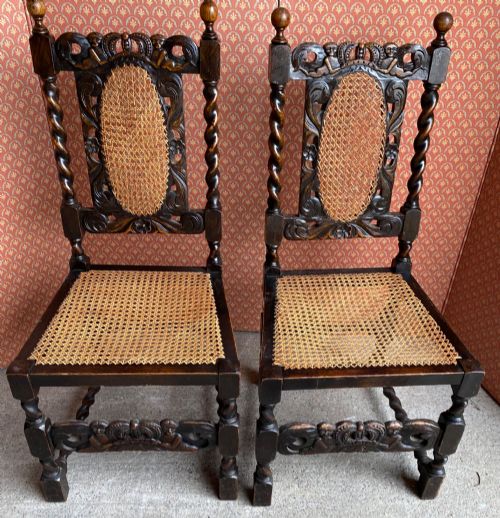
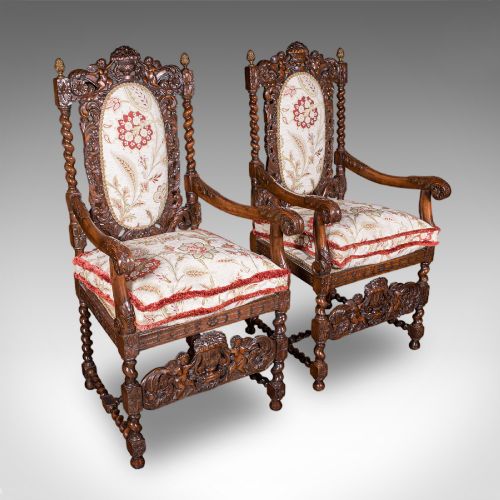
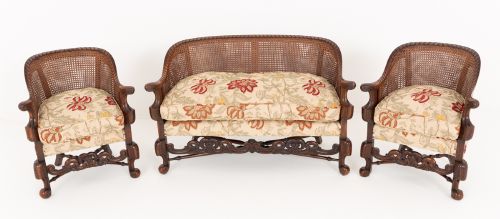
Restoration style oak chairs encompass a variety of seating forms, including pairs of hall chairs, elbow armchairs, wing backs, and full seating suites. These pieces draw heavily on seventeenth-century designs, emerging through nineteenth-century revivals spanning the Victorian and Edwardian periods.
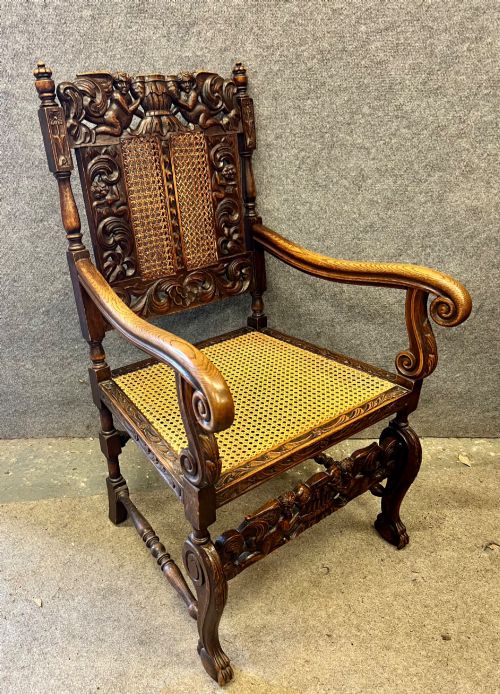
The inventory shows substantial forms like throne chairs and chair back settees alongside matching dining sets and farmhouse chairs. Buyers frequently encounter armchairs and side chairs defined by heavy timber construction and elaborate decorative carving.
Originating largely from British workshops of the 1800s and early 1900s, these revivals capture the ornate flourishes of the Carolean and Jacobean eras. They serve as functional seating that doubles as statement furniture in traditional interiors.
How they were made
Makers relied primarily on solid oak for the structural frames, utilising the dense grain to support deep relief carving. This timber was frequently paired with woven cane, leather, textile, or fabric panels for seats and backrests.
Construction techniques involved traditional joinery enhanced by applied mouldings and turned woodwork. Metal elements such as brass occasionally appeared in hardware, while intricate weaving methods produced durable cane and leather seating surfaces.
Restoration Style Oak Chairs Retail Price Guide 2026
Typical asking prices for restoration style oak chairs among the pieces listed under this phrase on Sellingantiques today, from the lower quarter to the upper quarter. They describe what is for sale here now, not the wider market.
Listings feature oak as the exclusive primary wood, combined with cane, leather, and textile upholstery across Victorian and Edwardian revival periods.
What varies in quality
The depth and crispness of the hand-carving dictate much of the visual distinction across these pieces. Examples featuring sharply chiselled foliage and scrolls stand apart from softer, more mechanically produced interpretations.
The integrity of the structural timber and the tightness of the woven cane or leather inserts determine the physical longevity of each chair. Finer specimens maintain rigid joinery and high-grade upholstery materials that endure decades of use.
The Restoration Style Oak Chairs Glossary
- Carolean Style
- A design aesthetic reflecting the reign of Charles II, characterised by rich carving, scrolling foliage, and crowned motifs. This style heavily influences nineteenth-century revival seating.
- Bergere Suite
- A matched set of upholstered seating featuring enclosed cane or fabric sides. These suites offer substantial presence in a room.
- Elbow Seat
- An armchair design featuring low, supportive armrests attached to the main frame. It provides a compact alternative to full-sized wing backs.
- Woven Cane
- A flexible seating material created by interlacing processed rattan strips. It appears frequently on the backrests and seats of revival chairs.
- Throne Chair
- An imposing, high-backed armchair designed with grand proportions and prominent ornamentation. Such pieces typically serve as focal points in large halls.
Restoration Style Oak Chairs: Frequently Asked Questions
Are these chairs comfortable for daily use?
Many models provide upright support suited for dining or hallway placement, whilst upholstered versions offer softer seating. Their solid timber frames ensure stability during everyday sitting.
Buyers often select specific forms like armchairs or wing backs for relaxed lounging. The addition of fabric or leather padding enhances long-term comfort in living areas.
How do I identify the period of a revival chair?
Distinguishing the nineteenth-century revival date from seventeenth-century originals relies on tool marks, wood ageing, and construction consistency. Most pieces on this page date from the Victorian and Edwardian eras.
Examining the underside and joints reveals machine-sawn timber or older hand-working methods. Stylistic cues also help separate authentic revival periods from modern reproductions.
Where should I place a settee or hall chair?
Hall chairs work well in entryways or corridors due to their upright profiles and decorative backrests. Settees and larger armchairs suit living rooms or studies as statement pieces.
Matching sets can anchor a dining table or furnish a traditional parlour. Proper placement highlights the intricate carved oak details without overcrowding the room.
What materials are typical for these frames?
Solid oak forms the primary structural material across nearly all pieces in this category. It provides the heavy weight and durability required for elaborate seventeenth-century revival designs.
Complementary materials include woven cane, leather, and various textiles used for inserts. Brass hardware occasionally secures moving parts or decorative elements.