

Vintage Carved Console Table
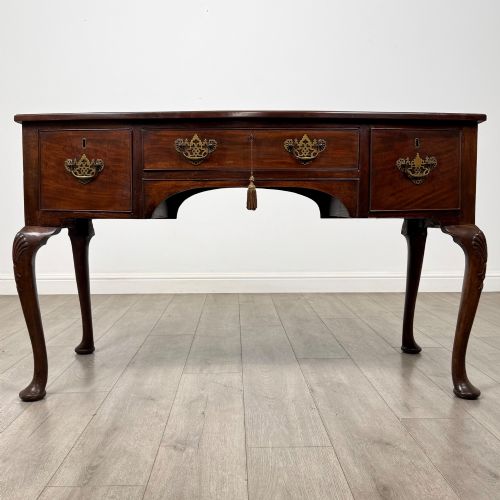
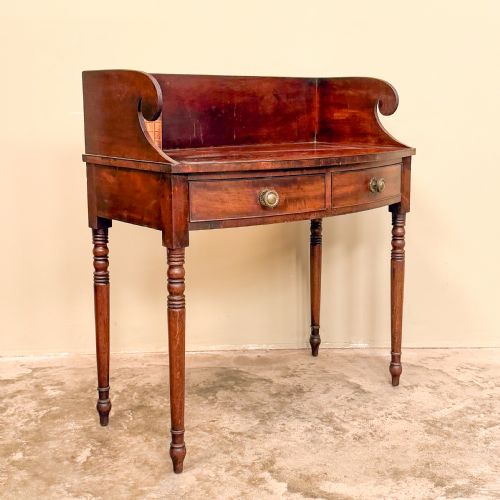
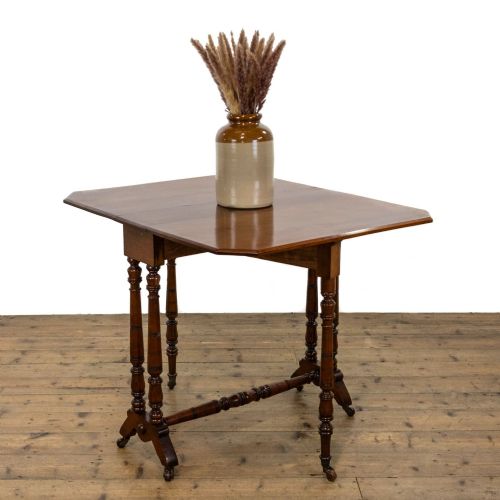
A vintage carved console table brings architectural presence to a hallway or drawing room, offering a surface for display supported by detailed woodwork.
Vintage Carved Console Table
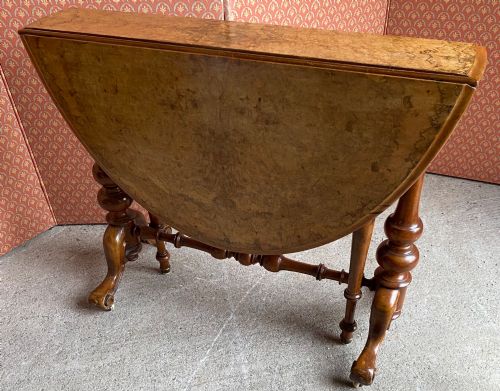
A vintage carved console table unites narrow proportions with ornamental detail, designed to stand flat against a wall in hallways, reception rooms, and narrower circulation spaces. These pieces span the Edwardian period, the 1920s, and the 1930s, alongside earlier Victorian and 19th-century examples that inform the revival styles.
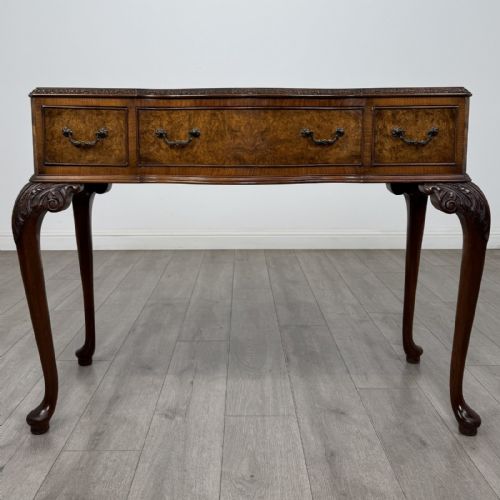
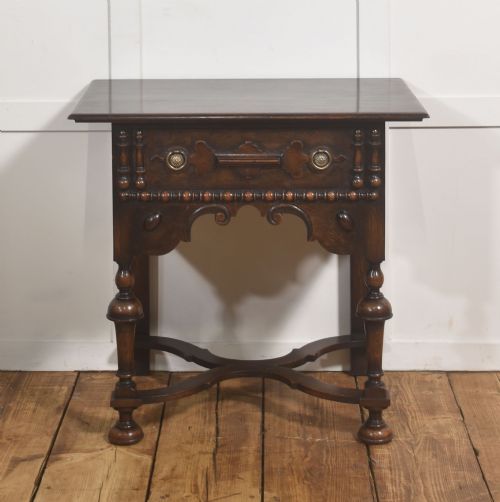
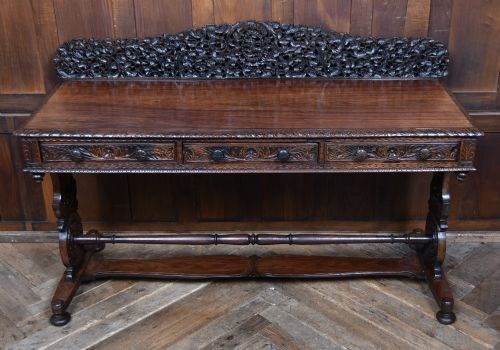
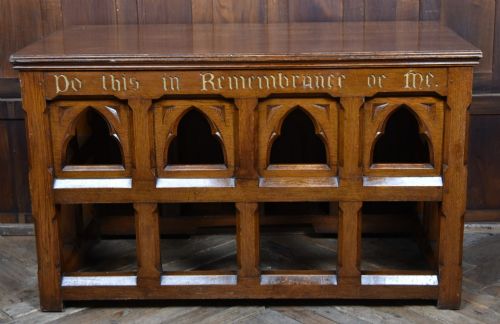
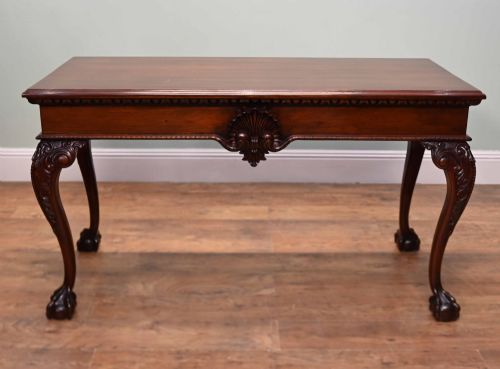
The form frequently overlaps with side tables, serving tables, and writing desks, reflecting how multipurpose furniture was treated in period interiors. Oak and walnut dominate the construction, often ornamented with revivalist carving drawing on Jacobean, Queen Anne, and Georgian vocabularies.
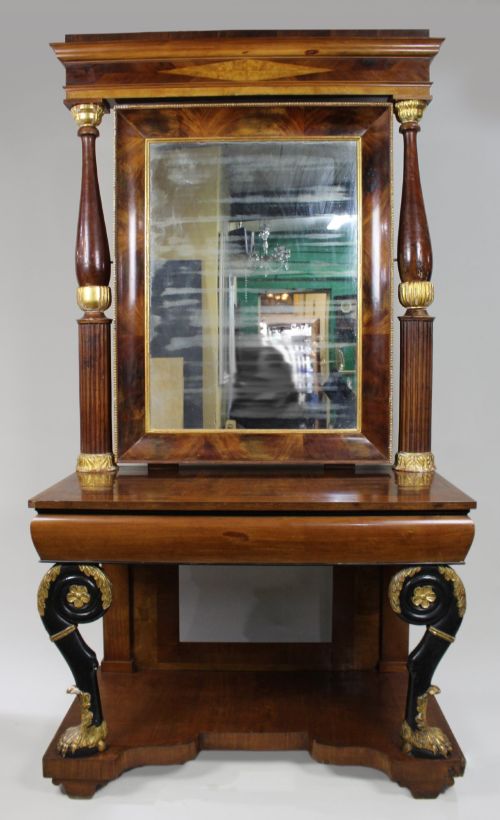
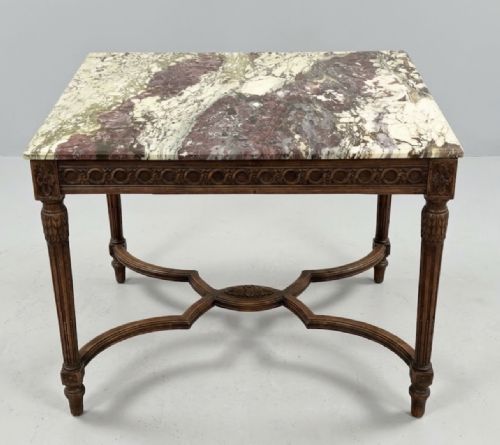
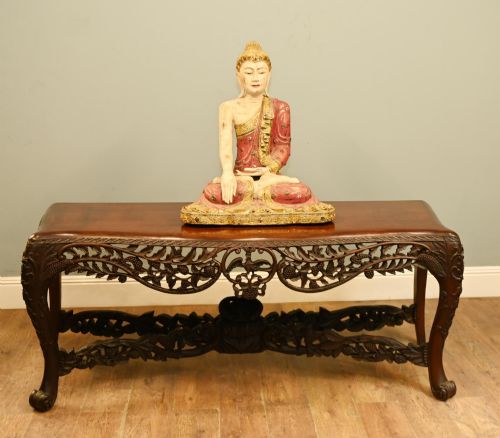
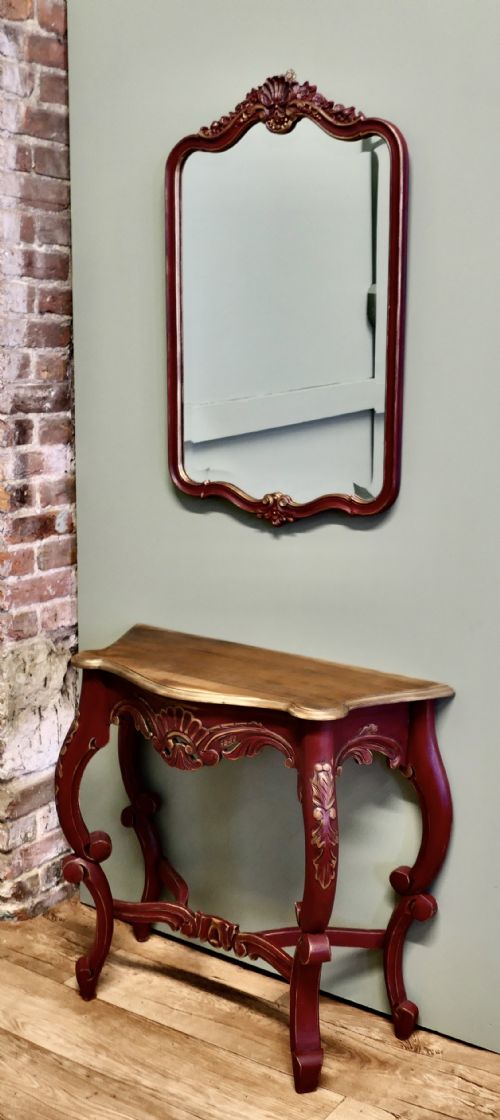
French and Italian influences appear through marble-topped and polychrome pieces, showing that continental cabinet-making traditions reached British homes alongside domestic output. Buyers meet light oak country house pieces as readily as figured walnut designs with shaped aprons and carved cabriole legs.
Materials and Construction
Makers relied on hardwoods such as oak, mahogany, and walnut, selecting burr and figured veneers to create patterned surfaces on table tops and friezes. Solid timber formed the structural frames, legs, and carved mouldings, while secondary softwoods were utilised for drawer linings and internal framing.
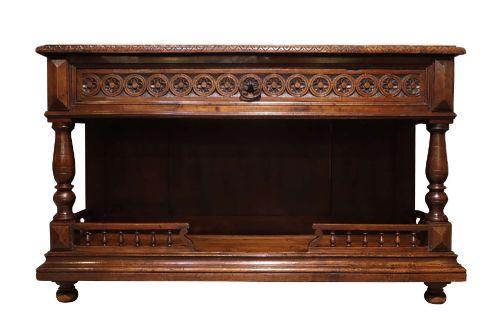
Carving was executed by hand directly into the solid timber components, particularly on knees, aprons, and stretcher rails, employing techniques like chip carving, linenfold, and classical acanthus scrolls. Insets of white marble and onyx feature on select continental and domestic pieces, fitted directly into rebated wooden frames.
Surface finishes range from polished french polish to hand-waxed patinas and painted antique white finishes, protecting the timber while highlighting the grain structure and carved relief.
Listings span oak, walnut, and mahogany, reflecting the dominance of British hardwoods in Edwardian and interwar console table production.
Craft and Proportion
Quality rests in the crispness of the hand-carving and the choice of timber veneer, where book-matched burr walnut or figured mahogany creates balanced visual symmetry across the top. Lesser examples rely on stamped mechanical decoration or plain, unfigured boards with minimal shaping.
Structural integrity reveals itself in the joinery of the frame and legs, where tight joints prevent the wobble common in narrow tables subjected to daily loading. Finer pieces maintain clean lines and correct proportions that suit the shallow depth required of a console table.
Amleto Bertoni·Beresford and Hicks
The Vintage Carved Console Table Glossary
- Console table
- A table designed to stand against a wall, traditionally fixed with brackets or supported by front legs.
- Burr walnut
- Timber taken from a growth on a walnut tree, yielding complex, swirling grain patterns highly valued for veneering.
- Jacobean Revival
- A 19th and 20th-century style copying the heavy turned supports and geometric panels of 17th-century English furniture.
- Marble top
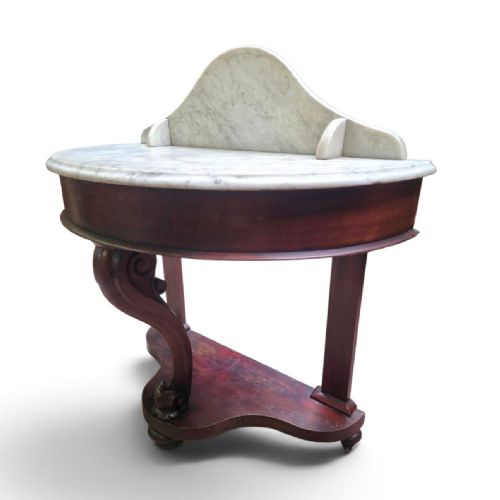
- A polished stone slab fitted to the upper surface of a table, offering a cool, durable finish resistant to liquids.
- Frieze
- The horizontal band situated directly beneath the top surface of a table, frequently housing one or more drawers.
Vintage Carved Console Table: Frequently Asked Questions
Where do you put a console table?
These narrow tables sit flat against a wall in hallways, entrance passages, and living rooms where floor space is limited. They provide a practical surface for lamps, correspondence, and decorative objects without blocking movement through the room.
Because of their shallow depth, they also function effectively behind sofas or as serving surfaces in dining spaces.
How do I date a carved console table?
Dating relies on combining the wood species, carving style, and construction methods visible in the frame and drawer linings. Edwardian and 1920s pieces often incorporate revival motifs like Queen Anne cabriole legs or Jacobean geometric moulding.
Secondary woods, fixing screws, and the type of finish applied to the timber help distinguish older 19th-century workshop production from later twentieth-century manufacturing.
What is the difference between a console and a side table?
A console table is specifically designed to be placed against a wall, sometimes featuring finished work only on the front and sides with flat rear edges. Side tables are built to stand independently and can often be walked around or positioned away from walls.
In practice, vintage terminology frequently overlaps, and many pieces described as side tables perform the exact function of a console.
Are marble top console tables fragile?
The marble slabs on these tables are heavy and self-securing within the wooden frame, requiring care during relocation rather than normal daily use. The stone offers a durable, heat-resistant surface well-suited for heavy items and floral displays.
Maintenance involves regular dusting and avoiding acidic substances that can etch polished stone surfaces over time.