


Vintage Carved Candle Holders
Vintage carved candle holders bring warmth and texture into a room, spanning periods from the seventeenth century to the twentieth.
Vintage Carved Candle Holders
When you search for vintage carved candle holders, you encounter a diverse range of objects designed to hold lights, from table candlesticks to wall sconces and grand torcheres. The selections available span centuries, incorporating forms that served practical illumination before electricity became common.
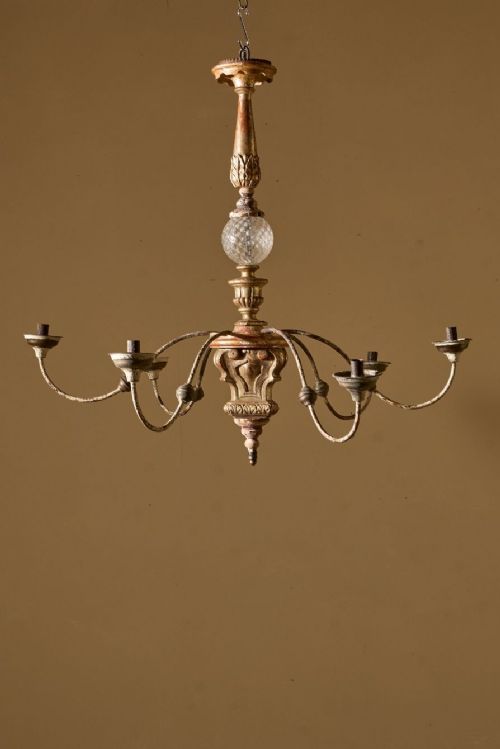
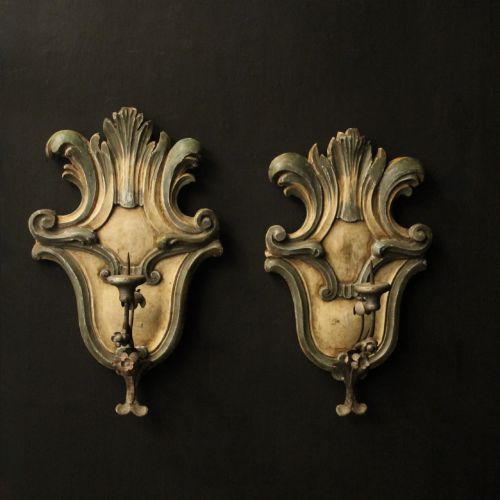
The objects on this page predominantly showcase wooden construction, including oak, walnut, lignum vitae, and giltwood. These pieces often reflect historical revivals and regional traditions, ranging from English oak barley twists to ornate Italian giltwood and French decorative wall lights.
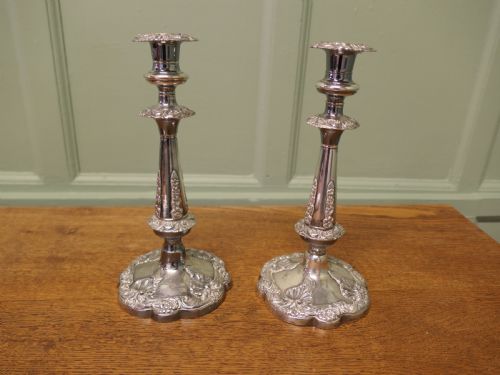
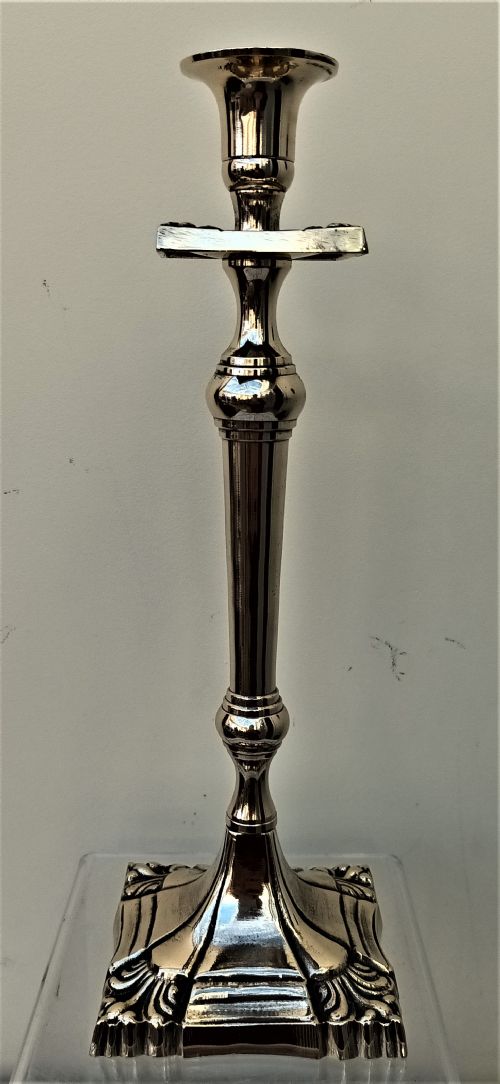
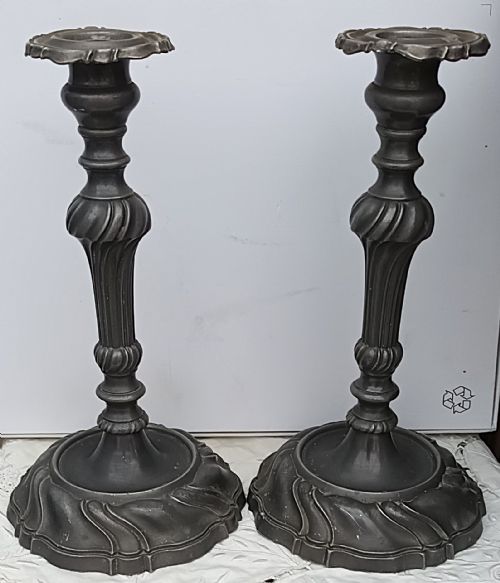
Buyers frequently find pairs designed for symmetry on mantelpieces or side tables, alongside individual pricket sticks and larger floor-standing items. The selection demonstrates how makers across the seventeenth, eighteenth, nineteenth, and early twentieth centuries applied sculptural skill to functional household items.
How they were made
The physical construction relies heavily on traditional woodworking techniques, utilising turned and hand-carved solid timbers such as oak, mahogany, and dense hardwoods like lignum vitae. Craftsmen shaped these materials on lathes to create barley twist shafts or carved them into figurative forms such as angels and folk art subjects.
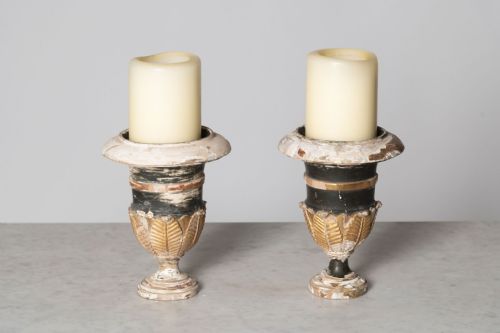
Surface decoration frequently involves gesso and gold leaf applied over wood, creating giltwood finishes that catch the ambient light of the room. Other examples incorporate metal elements, combining carved wooden bases with brass drip pans or prickets to secure the candles safely during use.
Periods represented range from the seventeenth century through the Victorian era up to nineteen twenty.
What varies in quality
Quality in these items rests primarily on the depth and crispness of the carving, distinguishing master craftsmanship from simpler production. Pieces featuring detailed figural work or sophisticated architectural turnings demonstrate a higher degree of artisan skill than plain utility items.
The integrity of the surface finish also determines the standing of a piece, whether it is original gilding showing honest ageing or later repaint. The harmony between the wooden body and fitted metal components, such as brass sconce tops or prickets, indicates the original care taken in assembly.
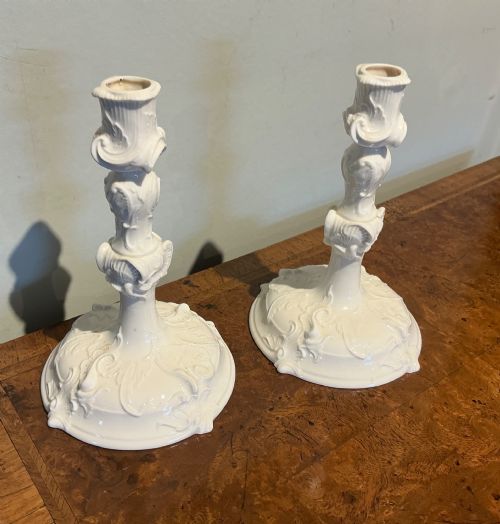
Nymphenburg
The Vintage Carved Candle Holders Glossary
- Pricket
- A sharp metal spike designed to hold a candle securely from the bottom. This method of mounting predates the socket-style holder commonly used today.
- Torchere
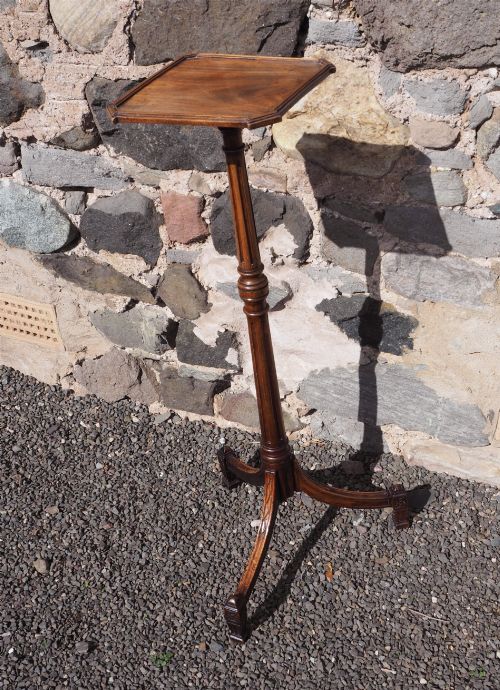
- A tall decorative stand or candlestick designed to elevate a light source or plant. These pieces often feature elaborate carving and substantial height.
- Treen
- Small handmade wooden household objects created by turners. This category includes domestic items shaped on a lathe from dense hardwoods.
- Giltwood
- Timber that has been coated with a thin layer of gold leaf over a prepared gesso ground. This technique provides a luminous decorative surface.
- Barley twist
- A spiral turning resembling a twisted rope, popular in furniture and candlestick design during the seventeenth century and later revived.
- Girandole
- An ornamental bracket candlestick featuring a mirror or reflective backplate to amplify the illumination. These wall-mounted pieces often display ornate frames.
Vintage Carved Candle Holders: Frequently Asked Questions
How do I use vintage candle holders safely?
Ensure the candle fits securely in the socket or upon the pricket before lighting. Place the holder on a stable, heat-resistant surface away from drafts.
Monitor the burn time closely to prevent flames from reaching wooden components or decorative surfaces. Extinguish the light before the wax burns down to the holder itself.
Were these holders meant for tables or walls?
The selection includes items designed for various placements throughout a domestic interior. Table candlesticks and chambersticks served movable lighting needs, while sconces and girandoles attached directly to walls.
Floor-standing torcheres occupied corners or flanking positions in principal rooms. Each form dictates how the object interacted with domestic space and architectural lighting schemes.
How can I tell the age of a piece?
Examine the tool marks left by the maker, as hand-carved surfaces and early lathe turnings differ from later mass-produced items. The choice of timber and the composition of underlying gesso layers also offer clues to the period.
Consider the style cues, such as Baroque proportions or Folk Art execution, which align with specific historical eras. Hardware like handmade screws or integrated brass fittings further assists in dating the object.