
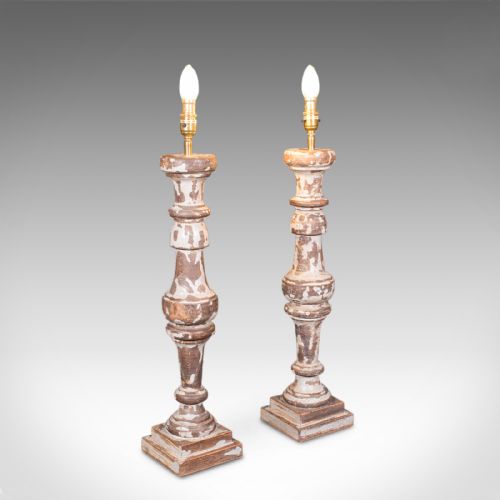


Pair Wood Candlesticks
When you select pair wood candlesticks, you choose domestic lighting and altar sculpture shaped across centuries from native and exotic timbers.
Pair Wood Candlesticks
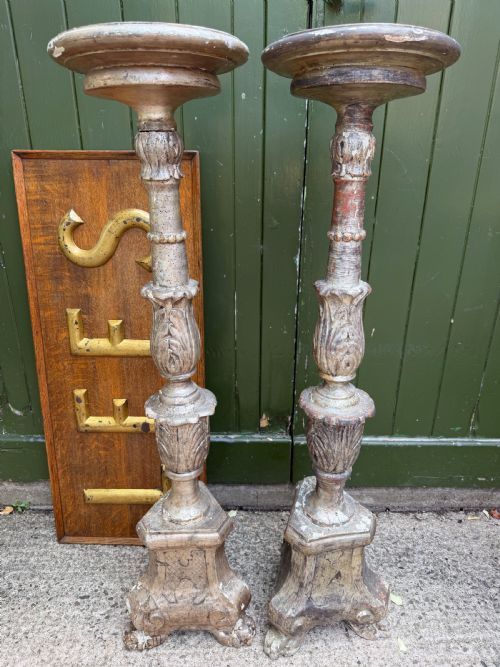
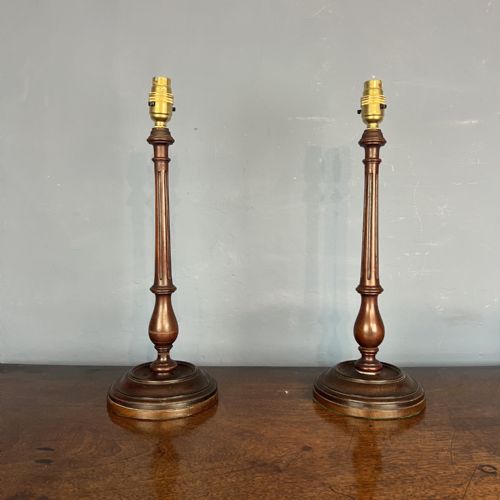
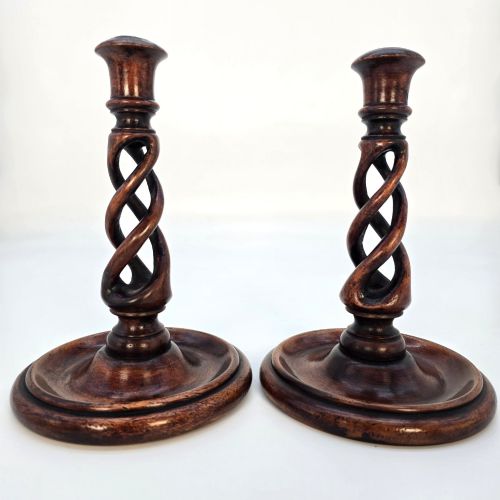
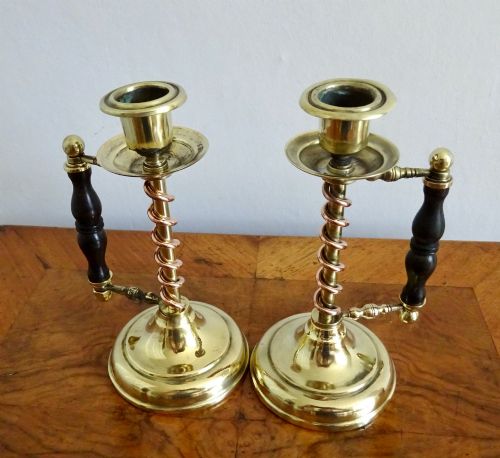
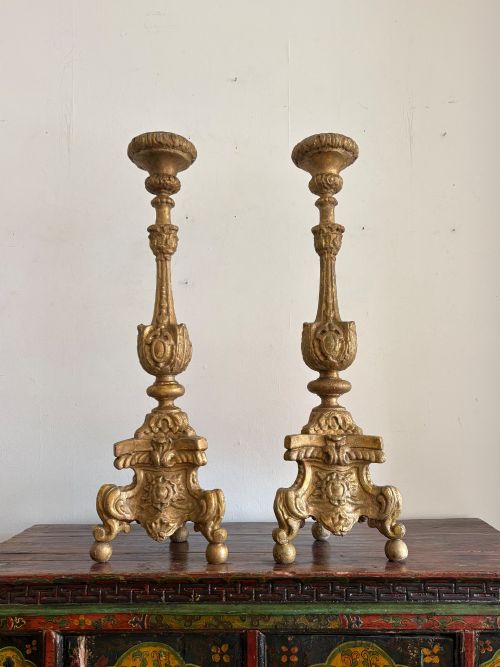
Pair wood candlesticks encompass everything from small domestic treen taper holders to tall Italian Baroque altar pieces and Edwardian barley twist table lamps.
The most common examples on this page date from the nineteenth and early twentieth centuries, featuring turned oak, mahogany, or fruitwood, often paired with brass sconces.
Origins range from English country workshops to continental ateliers, utilising forms such as spiral columns, bobbin turnings, and carved figures.
How they were made
Turned timber items rely on the lathe to create barley twist, bobbin, and column profiles from dense woods like lignum vitae, walnut, and oak.
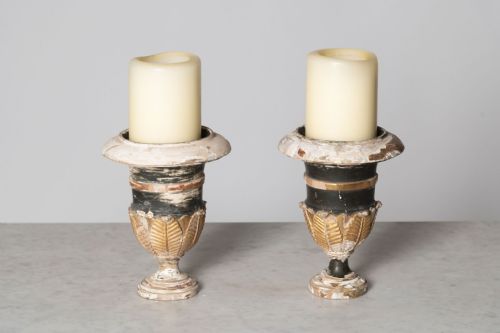
Carved and gilded variants employ gesso layers over timber bases, sometimes finished with silvered mecca or original paint.
Many domestic and travelling examples incorporate brass drip pans, nozzles, or weighted iron bases to ensure stability.
Listings feature woods spanning oak, mahogany, walnut, fruitwood, yew, olive wood, satinwood, and lignum vitae.
What varies in quality
The distinction between ordinary and superior pieces rests on the crispness of the hand-carving and the balance of the turned proportions.
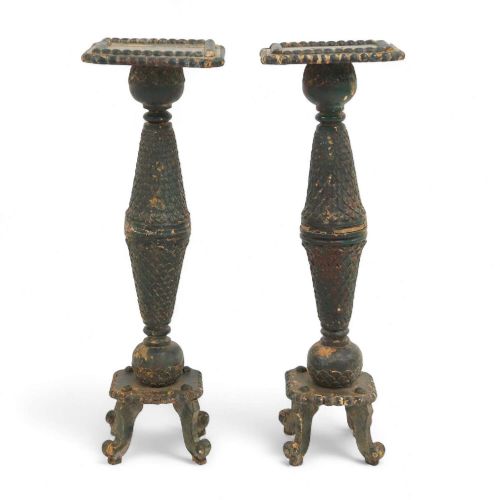
Original surface treatments, such as untouched paint, patinated giltwood, or aged fruitwood grain, elevate the character of a pair.
Integrity of construction, including matched timber pairing and authentic period brass components, separates workshop standards.
Erhard and Sons·Horace Woodward and Co·Holtzapffel
The Pair Wood Candlesticks Glossary
- Treen
- Small handmade wooden domestic objects. These items display the natural grain and wear of daily domestic use.
- Pricket
- A spike on a candlestick that holds the candle in place. This form is common on larger church and altar pieces.
- Brighton bun
- A small pocket travelling candlestick that unscrews to store the candle inside. They were popular for night use in bedrooms.
- Giltwood
- Wood that has been coated with gold leaf or a gold-coloured finish. This technique was favoured for church and formal salon furnishings.
- Barley twist
- A spiral turning resembling a column of barley sugar. It became widespread in English furniture and lighting during the seventeenth and early twentieth centuries.
Pair Wood Candlesticks: Frequently Asked Questions
How were these used originally?
These items provided domestic illumination in hallways and reception rooms before electricity became common. Larger altar versions held tall candles for church services.
Travellers also carried compact versions like Brighton buns for lighting dark coaching inns and bedrooms.
How do I style them at home?
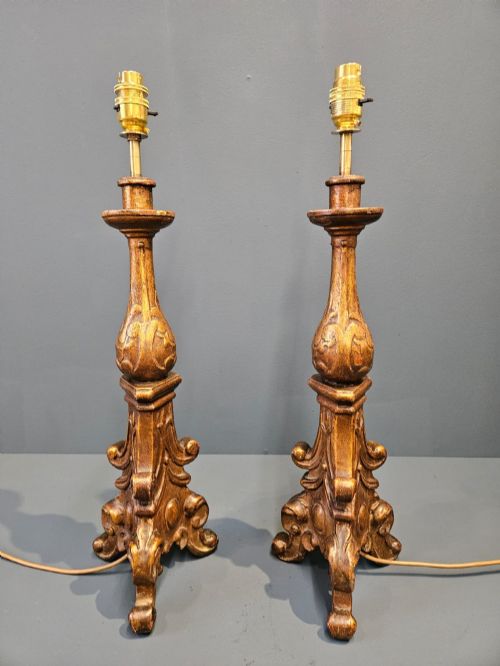
Pair wood candlesticks work well on mantelpieces, sideboards, or console tables to add vertical emphasis and warm texture. Many have been wired as table lamps while retaining their turned timber columns.
Mixing different timber tones and periods creates a collected interior rather than a matched suite.
Are these wired for electricity?
Some pieces on this page retain their original function for wax candles, while others have been converted into table lamps or standard lamps. Conversions often utilise brass fittings mounted into the original top sockets.
Check individual descriptions to see whether a pair is wired or retains its candle-holding format.
How do I date an item?
Dating relies on timber choice, turning style, and surface finish, such as the dense grain of early fruitwood or the bright paint of folk art pieces. Nineteenth-century examples often feature machine-assisted turnings and brass additions.
Comparison with documented archive pieces helps narrow the decade of manufacture.