


Vintage Caned Bergere
A vintage caned bergere combines enclosed cane panels with timber frames for deep seating.
Vintage Caned Bergere
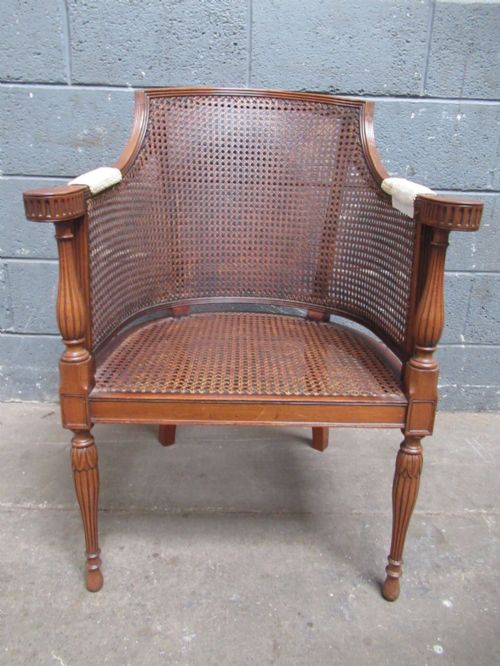
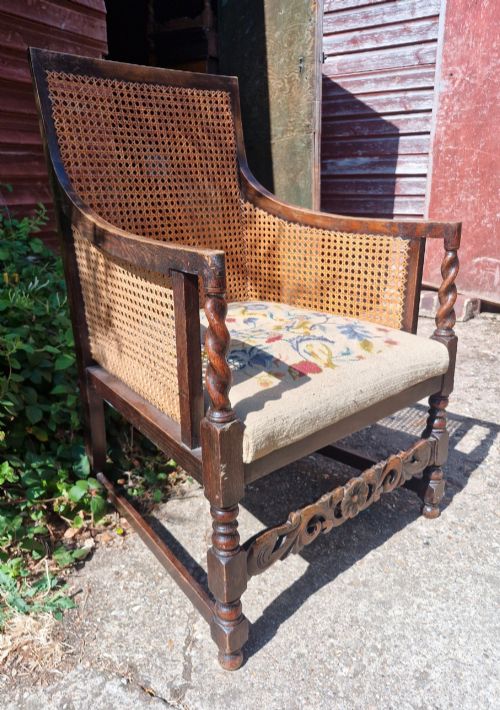
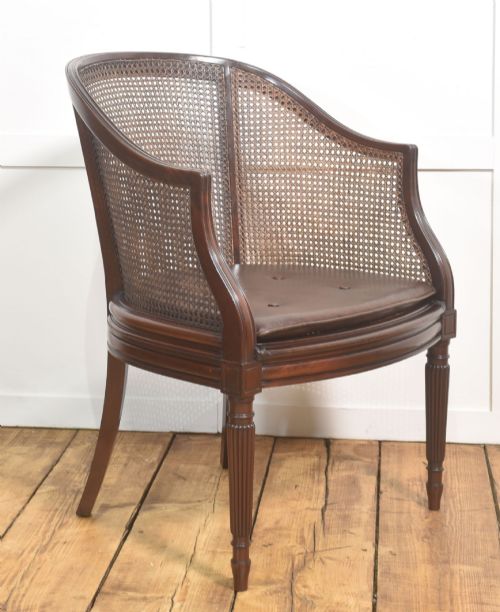
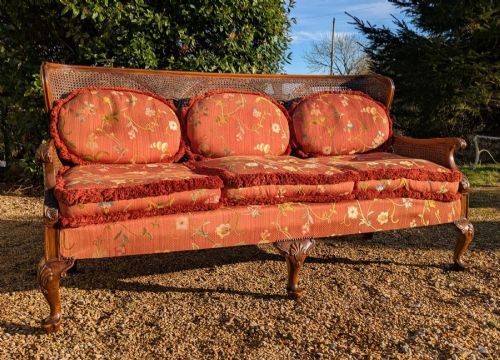
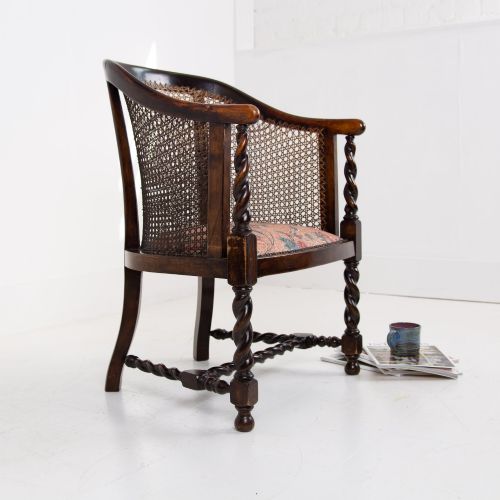
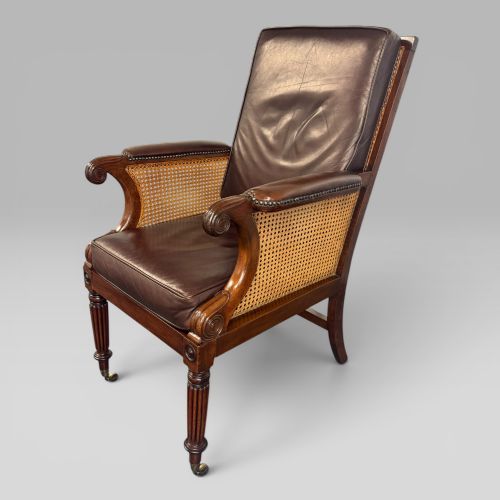
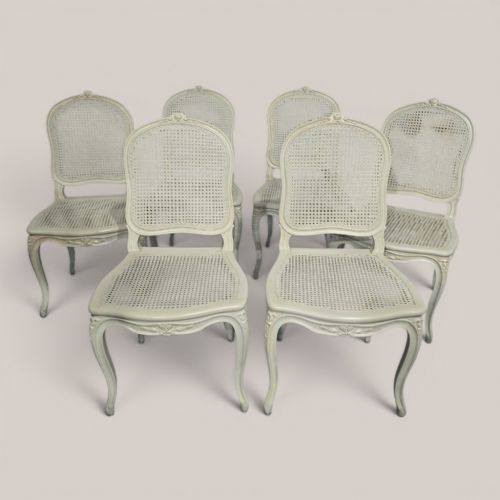
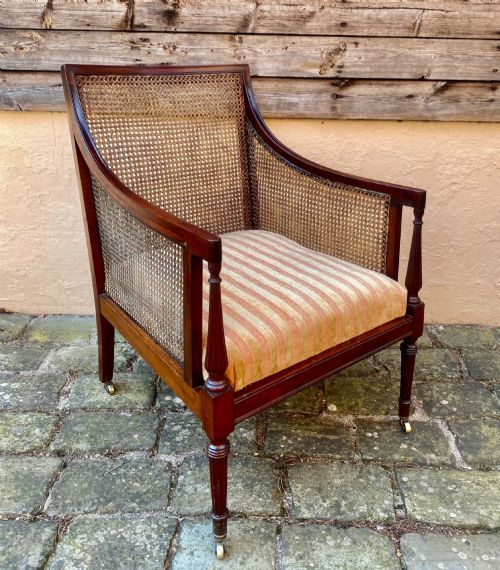
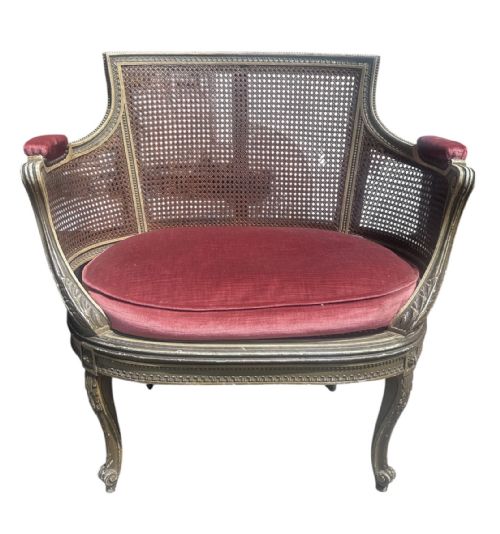
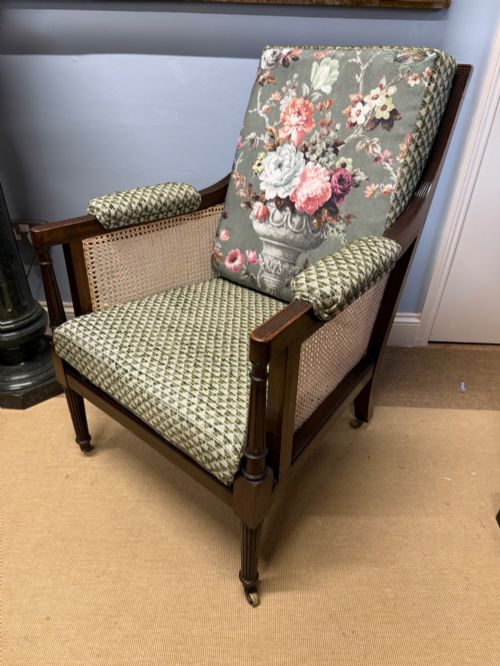
A vintage caned bergere is an upholstered armchair, sofa, or daybed featuring woven cane back and side panels integrated into a wooden frame. The forms on this page span the nineteenth century through the 1930s, encompassing library armchairs, tub chairs, dining chairs, and settees originating from English and French traditions.
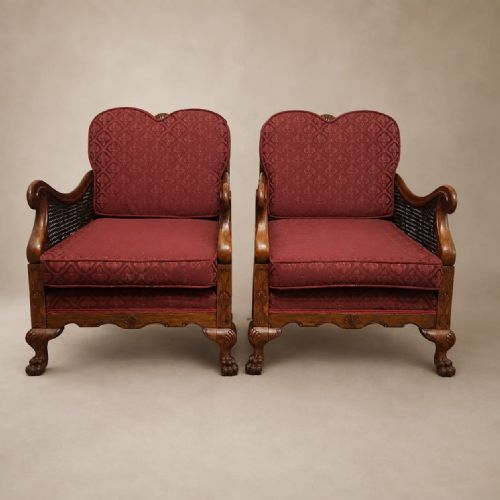
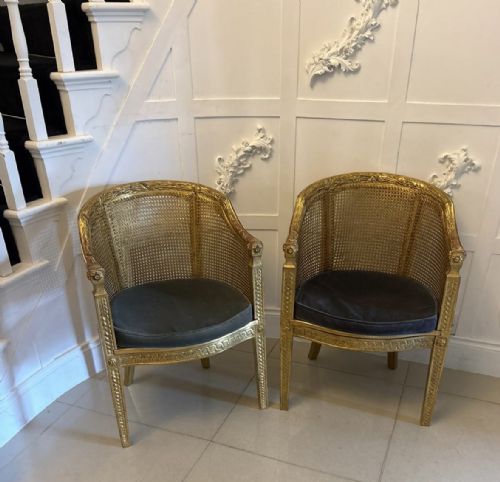
Mahogany and oak dominate the timber frames, alongside walnut, rosewood, ebony, and giltwood. Most examples incorporate loose squab cushions upholstered in leather, velvet, or various fabrics to provide comfort against the tight cane framing.
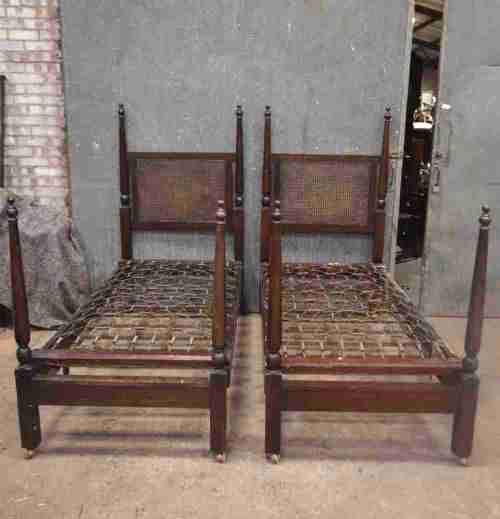
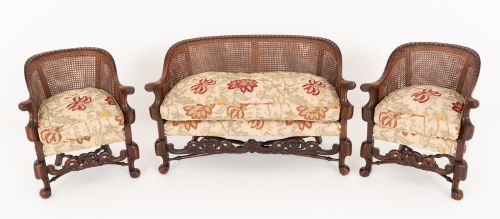
The buyer meets diverse stylistic interpretations, from Regency and William IV library seats to Edwardian tub chairs and French Louis XV or Louis XVI revival pieces. Occasional variations include children's high chairs, single beds, and suites.
Materials and construction methods
Frames are constructed from dense hardwoods like mahogany, oak, walnut, and rosewood, carved or turned to follow the prevailing taste of the period. Joinery relies on traditional mortise and tenon techniques to support the structural load of the seat.
Cane panels are hand-woven through drilled holes in the wooden frame using split rattan, creating a tight mesh that offers both flexibility and resilience. Cushions utilise feather or traditional stuffing contained within leather, velvet, or textile coverings.
One unexpected survivor on this page is a Victorian children's high chair built with full cane panels for a very small aristocrat.
Distinguishing levels of quality
Quality rests upon the crispness of the timber carving and the precision of the cane weaving. Finer pieces display complex joinery, dense hardwoods such as mahogany or rosewood, and well-proportioned curves that balance comfort with architectural form.
The integrity of the cane work and the originality of the frame finish determine the standing of an individual piece. Faded patination on older timbers and neat, even tension across the cane panels elevate the piece above heavier, less refined iterations.
The Vintage Caned Bergere Glossary
- Bergere
- An enclosed upholstered armchair featuring solid wooden sides filled with cane work. This French form typically includes a loose seat cushion.
- Cane
- Woven material strips derived from the rattan palm. It forms the supportive web panels characteristic of these seats.
- Tub chair
- An armchair with a continuous curved back and arms forming a rounded enclosure. This shape appears frequently in mahogany and oak.
- Squab
- A loose, thick cushion placed upon the seat base for comfort. These are frequently covered in leather, velvet, or fabric.
- Giltwood
- Timber coated with a thin layer of gold leaf or gold paint. It appears on French revival armchairs from the nineteenth century.
Vintage Caned Bergere: Frequently Asked Questions
What is a bergere chair?
A bergere is an enclosed upholstered seat featuring woven cane panels set into a wooden frame. It originated in France and provides a deeper, lower seat than standard dining chairs.
Most examples include a loose down or feather cushion for comfort against the rigid cane back and sides.
How do I care for cane panels?
Cane requires moderate humidity to prevent the natural rattan fibres from becoming brittle and snapping. Dust the panels gently with a soft brush and avoid placing the chair near direct heat sources.
If the cane sags, wiping the reverse with a damp sponge and allowing it to dry slowly can help tighten the weave.
Are these chairs comfortable for daily use?
These seats are designed for relaxing, reading, or parlour use. The angled back and upholstered squab cushion offer substantial support.
Library armchairs and sofas from the nineteenth and early twentieth centuries suit modern living spaces when paired with appropriate cushions.
How do I identify the period of a bergere?
Dating relies on timber selection, carving styles, and structural proportions. Regency and William IV pieces feature heavier mahogany or rosewood frames, while Edwardian examples often utilise lighter mahogany tub shapes.
French pieces frequently display Louis XV or Louis XVI revival curves, painted finishes, or giltwood.