




Vintage Campaign Desk
A vintage campaign desk brings military-grade portability into domestic rooms through clever folding mechanisms and robust timbers.
Vintage Campaign Desk
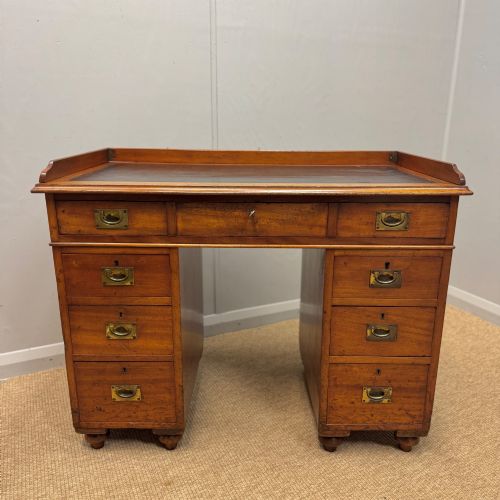
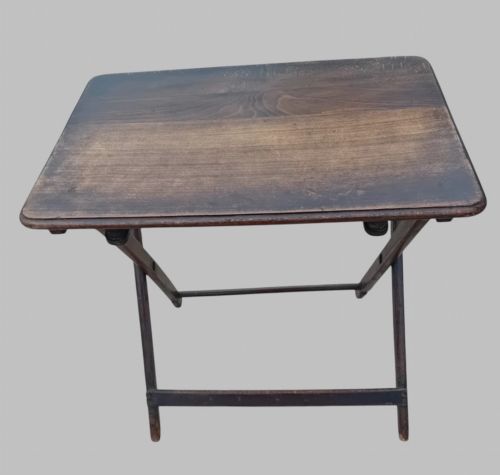
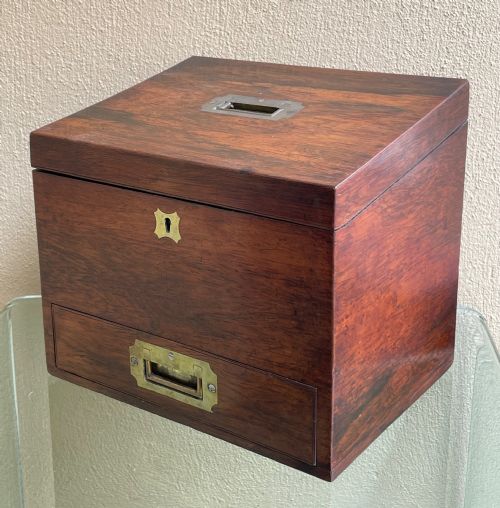
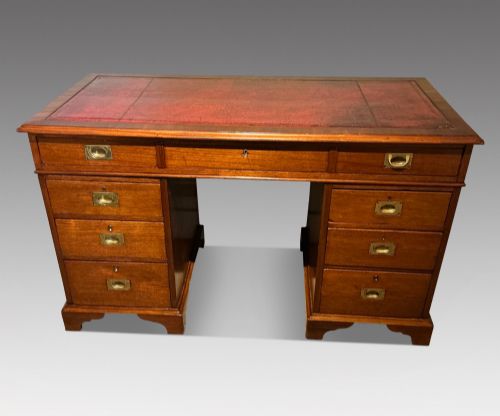
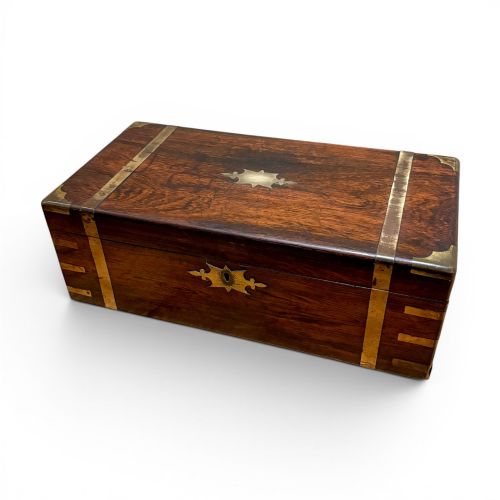
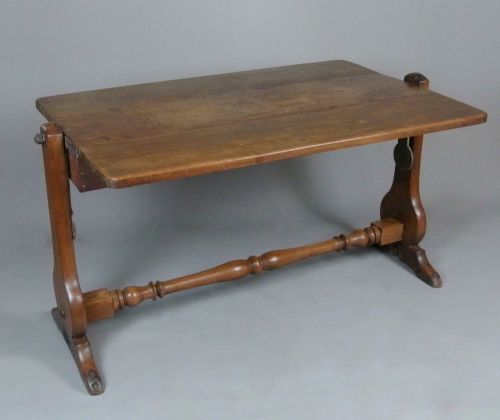
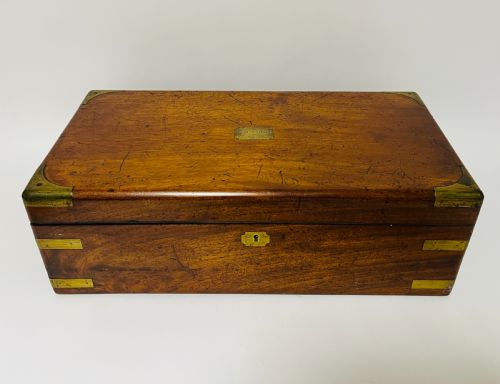
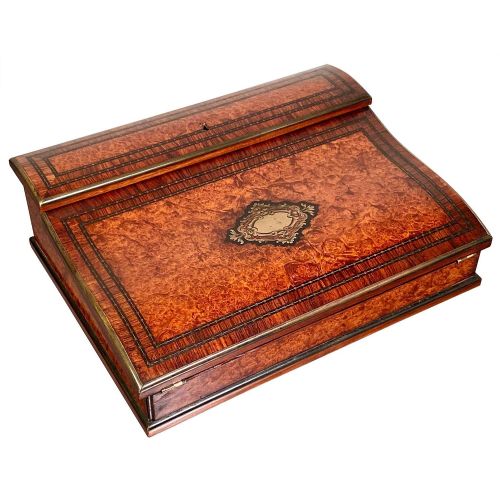
A vintage campaign desk encompasses everything from compact fold-out writing slopes and correspondence boxes to large pedestal desks and modular chests designed for travel. The pieces appearing most frequently range from mid-Victorian mahogany and rosewood writing boxes fitted with brass corners to Georgian teak ship's tables and Edwardian folding tables.
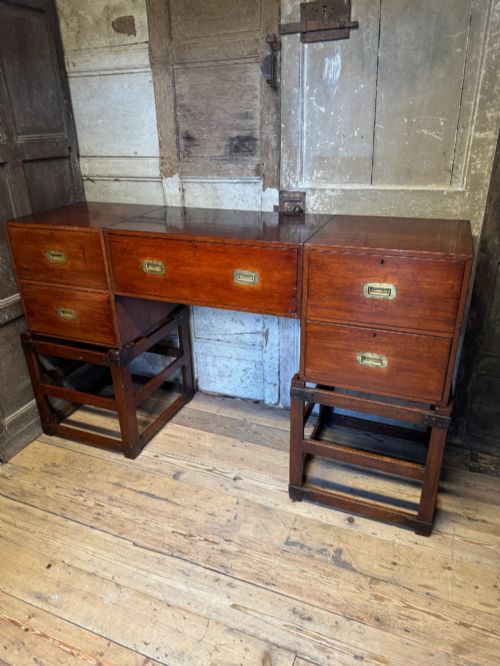
Buyers encounter numerous variations including Anglo-Indian and Ceylonese furniture alongside standard British military equipment. Smaller lap desks and writing slopes sit on ordinary tables while larger two-piece secretaire chests and pedestal desks stand directly on the floor.
Materials and construction methods
Carpenters selected dense timbers such as mahogany, teak, rosewood and pollard oak to withstand frequent dismantling and transport. Solid woods and choice veneers were paired with recessed brass handles and corner brackets to protect vulnerable edges from impact.
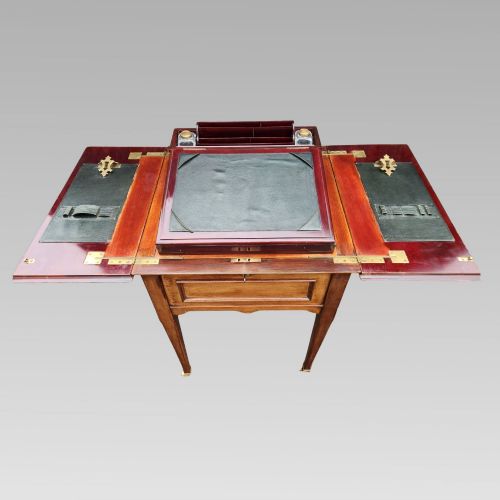
Makers integrated ingenious folding frames, sliding panels and secret drawers within compact footprints. Dovetail joints and brass bindings ensured structural rigidity without adding excessive weight to pieces intended for military campaigns.
The documented periods stretch from the eighteenth century through the Edwardian era and into twentieth-century military supply.
Judging build quality and finish
Quality rests in the precision of the brass hardware, the snugness of flush joints after decades of movement, and the integrity of internal mechanisms like secret drawers and fold-out writing surfaces. Superior items retain original working locks, keys and fitted leather inserts.
The choice of timber grain and the crispness of carved details distinguish standard utilitarian pieces from luxury bespoke orders commissioned by officers. Original patination on secondary woods indicates how faithfully a piece has been maintained.
William Austin
The Vintage Campaign Desk Glossary
- Writing slope
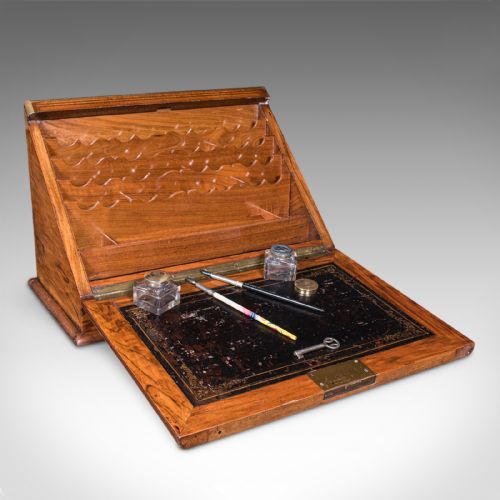
- A portable box with a hinged lid that opens to form an angled writing surface lined with leather or velvet. These boxes often contain inkwell compartments and secret storage wells beneath the stationery dividers.
- Secretaire chest
- A chest of drawers featuring a fitted pull-out writing drawer with a drop front. This clever design conceals small pigeonholes and letter compartments behind dummy drawer fronts.
- Brass bound
- Furniture edged and cornered with brass strapping to absorb shocks during transit. This method simultaneously reinforces the timber joints and defines the utilitarian aesthetic.
- Campaign style
- Portable domestic furniture engineered for military officers on the move. Key characteristics include sectional construction, recessed hardware, and folding supports.
- Pedestal desk
- A heavy freestanding desk supported by two banks of drawers. Campaign versions typically split into separate modular sections for ease of carriage.
Vintage Campaign Desk: Frequently Asked Questions
How were campaign desks used?
Officers and diplomats utilised these portable desks in temporary quarters, tents, and aboard ships to manage correspondence and maintain official records. The clever compartments kept ink, pens, and paper secure during rough transit.
Once pitched in a new location, the desk unfolded quickly to provide an immediate workspace. Many designs doubled as dining tables or storage chests when closed.
How do I care for leather writing surfaces?
Leather inserts require minimal moisture and should be dusted regularly with a dry cloth. Avoid placing direct heat sources near the desk to prevent the leather from drying and cracking.
Conditioning balms formulated for antique leather help maintain suppleness without staining the surrounding wood. Test any product on a hidden corner first.
How do I distinguish 19th-century pieces?
Examine the internal construction, timber choice, and the type of brass fittings used on the carcass. Nineteenth-century examples often feature hand-cut dovetails and mature hardwoods like mahogany or rosewood.
Maker's marks, stamps, or original brass hardware can offer clues to the precise decade of manufacture. Differences in screw types and secondary woods also help narrow down the production period.
Can I use a campaign desk daily?
These pieces were engineered for hard field use and adapt readily to contemporary study or office environments. Their compact proportions suit smaller rooms where traditional furniture might overwhelm the floor space.
Careful placement away from direct sunlight protects vulnerable rosewood and mahogany finishes. Using coasters and blotting paper safeguards historic writing surfaces during everyday tasks.