


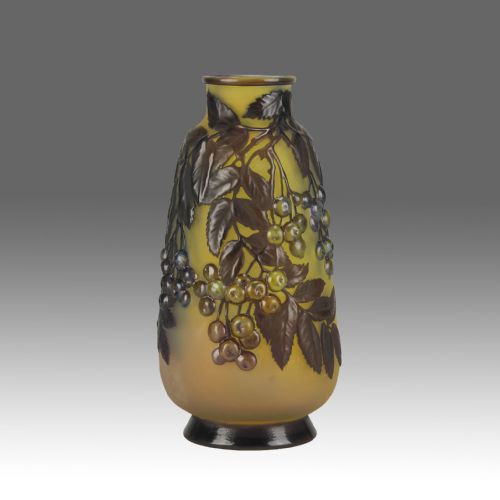


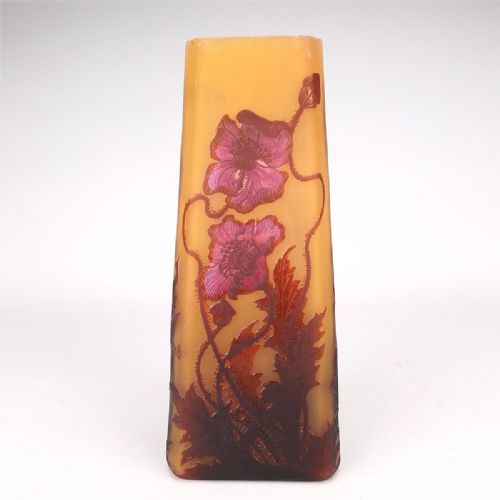


Vintage Cameo Vase
A vintage cameo vase brings layered glass and botanical motifs into a room, offering the distinct texture of carved vessels from the early twentieth century.
Vintage Cameo Vase
A vintage cameo vase is a decorative vessel fashioned from layered glass, where outer layers are cut back to reveal contrasting colours beneath. Buyers searching this phrase will find pieces primarily originating from the early twentieth century, spanning the Victorian period up to the nineteen-twenties.
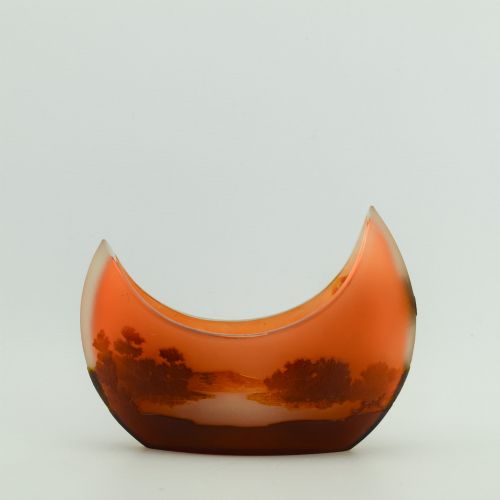
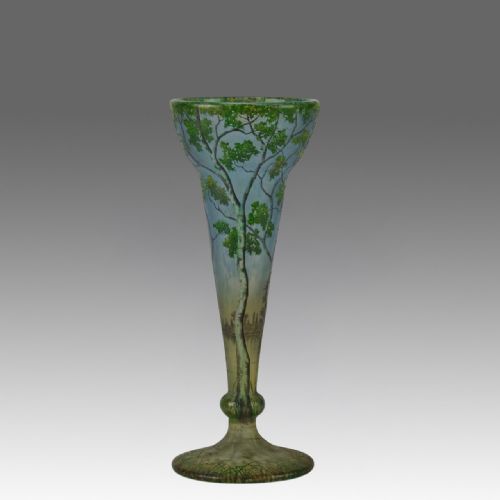
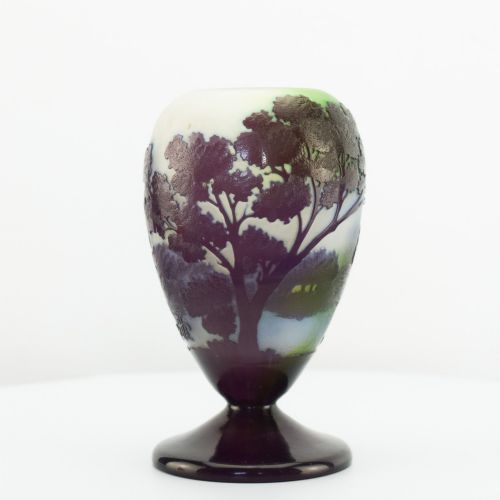
The forms on this page include landscape scenes, footed vessels, and crescent shapes adorned with motifs such as cornflowers, honeysuckle, oak leaves, and aquatic themes. These objects reflect the dominant design movements of their time, predominantly capturing the organic curves of Art Nouveau and the cleaner geometry of Art Deco.
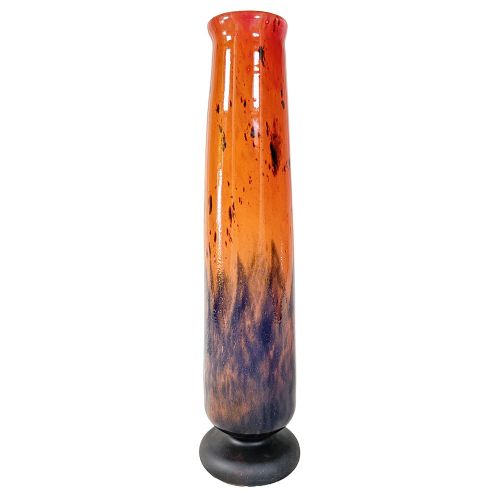
Most examples you encounter here are blown glass vessels enhanced with acid-etched or cameo techniques to create tactile relief. They range from cabinet miniatures to large decorative statements created by notable French and English glassworks.
How they were made
Makers produced a vintage cameo vase by fusing multiple layers of coloured glass together while molten, often incorporating powdered glass or enamel highlights. This multi-layered blank allowed artisans to carve or etch away the surface to contrasting depths.
Acid-etching played a major role in the production process, utilising chemical baths to eat away unwanted glass and define the intricate botanical or landscape designs. Final details were frequently refined by hand with wheels or engravers to sharpen the edges of the motifs.
Vintage Cameo Vase Retail Price Guide 2026
Typical asking prices for vintage cameo vase among the pieces listed under this phrase on Sellingantiques today, from the lower quarter to the upper quarter. They describe what is for sale here now, not the wider market.
Listings feature periods from the Victorian era through to nineteen twenty, alongside Art Nouveau and Art Deco styles.
What varies in quality
Quality in a vintage cameo vase rests upon the depth of the carving and the precision of the glass layering. Pieces with deeper relief and multiple contrasting strata show greater technical ambition than shallowly etched examples.
The complexity of the design also distinguishes finer works, particularly where naturalistic subjects like landscapes or botanical forms integrate seamlessly with the underlying vessel shape. Furthermore, the crispness of the acid-cutting and the subtlety of the colour combinations separate standard production items from masterworks.
Gallé·Daum·Daum Frères·Emile Galle·Thomas Webb and Sons·Legras·Le Verre Francais·Schneider
The Vintage Cameo Vase Glossary
- Cameo glass
- Glass vessels made with two or more distinct layers of colour, allowing designs to be carved in relief. This technique requires precise control during both the blowing and cutting stages.
- Acid-etched glass
- Glass decorated by applying acid to eat away portions of the surface. It provides a consistent alternative to hand-carving and creates matte textures.
- Frosted glass
- Glass treated to achieve a non-glossy, translucent finish. This texture often forms the background of carved vessels to accentuate the polished design.
- Blown glass
- Glass shaped by inflating molten metal on the end of a blowpipe. It forms the essential structural base for nearly all cameo vessels.
- Enamelled glass
- Glass decorated with melted glass powders or paints fired onto the surface. This adds supplementary colour and detail to the carved layers.
Vintage Cameo Vase: Frequently Asked Questions
What is a cameo vase?
A cameo vase is a decorative glass vessel made with multiple coloured layers where the outer strata are carved or etched away to form a raised design.
These pieces typically feature botanical or landscape motifs and date from the late nineteenth and early twentieth centuries.
How do I date a cameo glass vase?
Dating relies on stylistic markers such as Art Nouveau floral curves or Art Deco geometric forms, alongside signatures and factory marks on the base or body.
Most pieces span the Victorian era through the nineteen-twenties, reflecting the working periods of the major glasshouses.
Where were these glass vases made?
The majority of the pieces on this page originated in France, produced by celebrated workshops and glassworks operating during the early twentieth century.
English makers such as Thomas Webb and Sons also contributed notable cameo glass vessels during the Victorian period.
How should I display cameo glass?
Place your vase in a position where natural light can pass through the layered glass to highlight the carved details and colour contrasts.
Keeping the vessel away from direct, harsh sunlight protects the enamel and surface finishes while ensuring the relief work remains prominent.