

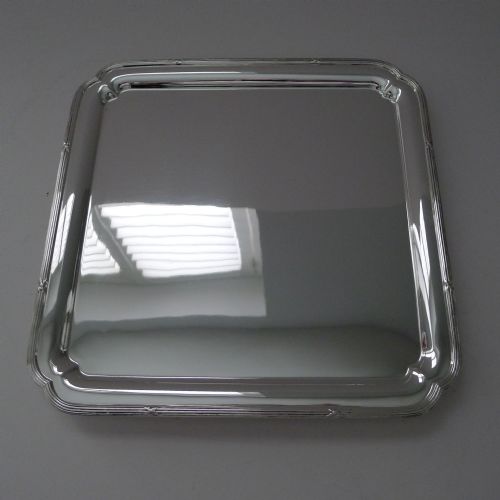
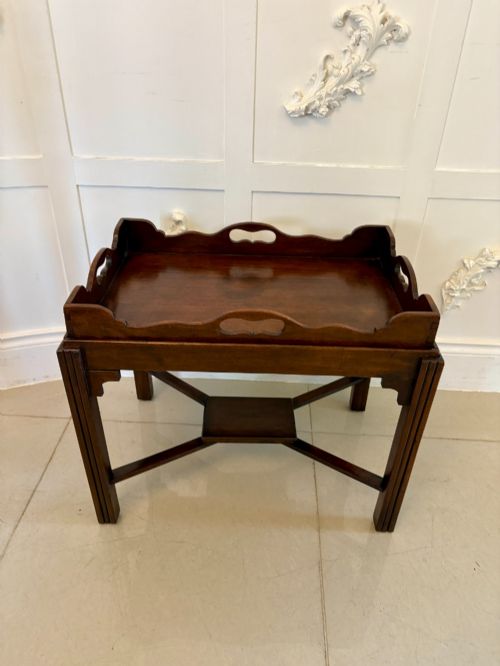
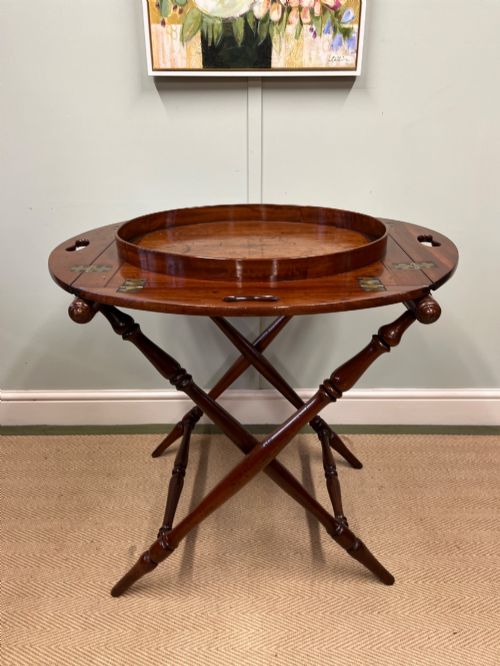
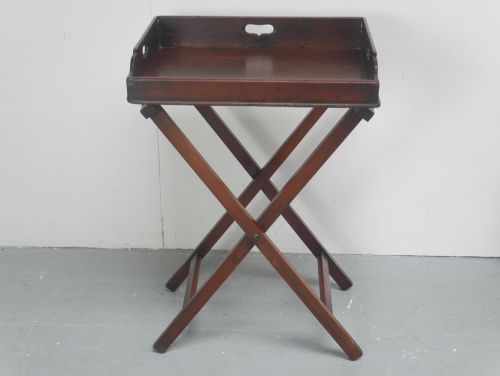


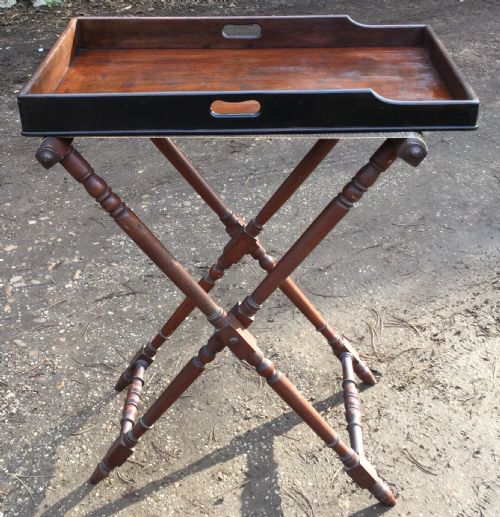


Vintage Butler Serving Table
A vintage butler serving table offers portable utility and classic timber character, combining a removable serving surface with a folding or fixed stand.
Vintage Butler Serving Table
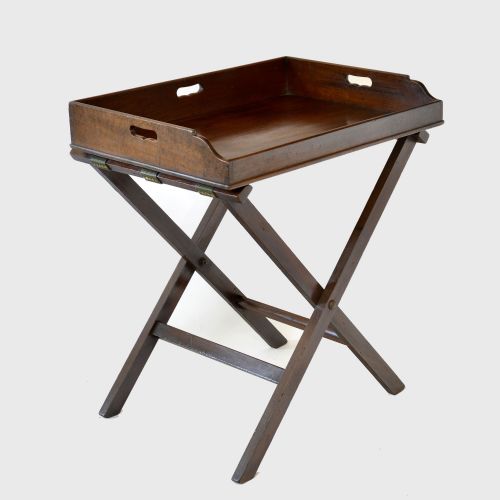
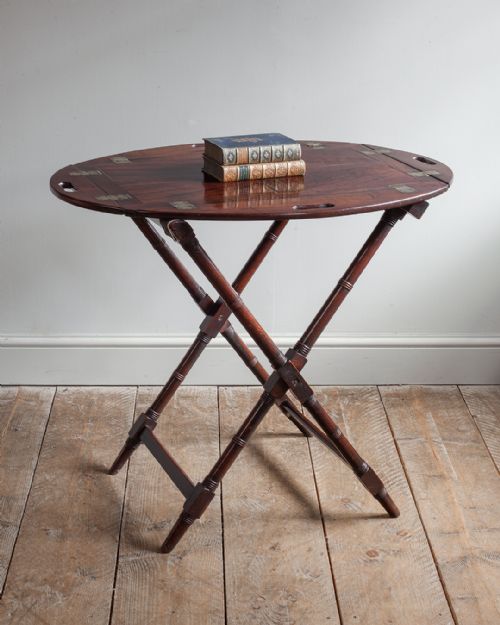
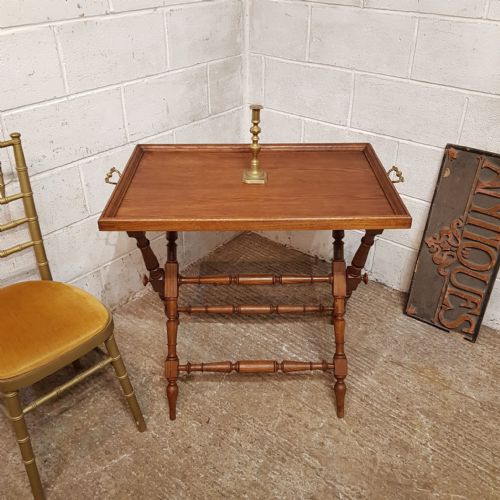
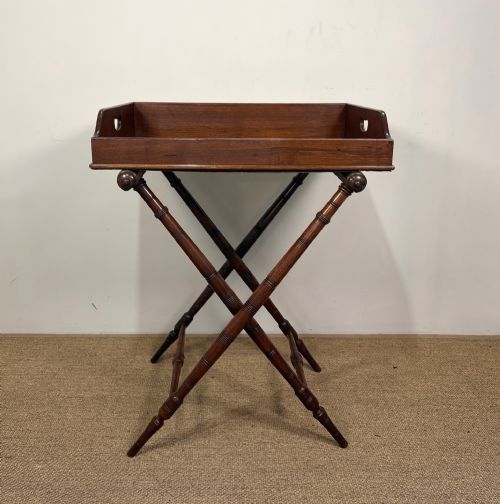
A vintage butler serving table typically comprises a deep rectangular or oval tray resting on a separate folding or rigid stand. These pieces serve multiple domestic functions as side tables, coffee tables, or drinks trays depending on how the surface is deployed.
Most examples encountered on this page date from the nineteenth century through the interwar period, spanning Victorian, Edwardian, and Georgian revival styles. Common forms range from simple oak folding stands to elaborate mahogany tray tables and tiered dumb waiter buffets.
The combination of a portable tray and a supporting stand originates from formal dining traditions where staff moved provisions between rooms. Today, buyers select them for their practical surface area and historical presence in domestic interiors.
How they were made
Cabinet makers constructed these tables primarily in mahogany and oak, frequently utilising burr walnut veneer or light oak for specific regional or period interpretations. Timber selection dictated the weight and formal appearance of the piece, with dense hardwoods chosen for durability.
Stands were engineered with folding X-frame supports or fixed legs secured by wooden tenons and brass hinges. Metal mounts, brass carrying handles, and occasional cotton webbing provided structural reinforcement and functional articulation for moving the heavy trays.
Surface decoration involved restrained carving, inlaid banding, or galleried rims designed to keep glassware secure during transit. French polishing or wax finishes protected the wood while highlighting the natural grain patterns of the primary timbers.
Vintage Butler Serving Table Retail Price Guide 2026
Typical asking prices for vintage butler serving table among the pieces listed under this phrase on Sellingantiques today, from the lower quarter to the upper quarter. They describe what is for sale here now, not the wider market.
Listings feature items constructed from mahogany, oak, walnut, burr walnut veneer, brass, glass, and cotton webbing.
What varies in quality
The distinction between standard utility items and superior examples lies in the choice of timber and the precision of the joinery. Finer pieces display carefully selected mahogany or burr walnut veneers alongside crisp, hand-cut dovetails and solid brass hardware.
Originality of components also dictates standing: pieces retaining their matching period stands, original brass handles, and untruncated galleries hold greater integrity than those assembled from mismatched parts over time.
Gillows
The Vintage Butler Serving Table Glossary
- Butler's tray
- A portable wooden tray featuring raised sides, often with hinged flaps that drop down for serving. It lifts entirely off its base for transport.
- Stand
- The supporting frame, frequently designed to fold flat, that elevates the tray to table height. These range from simple X-frames to turned leg tables.
- Gallery
- A raised wooden or metal rim fitted around the perimeter of a tray to prevent items from sliding off during movement. They can be pierced or solid.
- Dumb waiter
- A multi-tiered serving table or etagere used for holding dishes and drinks without requiring permanent attendants. Examples often feature rotating or stacked circular trays.
- Inlay
- Decorative motifs formed by fitting contrasting strips of wood or shell into carved recesses within the primary timber surface. This technique highlights Edwardian and Georgian revival items.
Vintage Butler Serving Table: Frequently Asked Questions
How were butler serving tables originally used?
Domestic staff utilised these pieces to transport food, tea, and beverages from kitchens to drawing rooms before placing the tray onto its folding stand for service. The removable top allowed servants to clear rooms efficiently without carrying heavy furniture.
Over time, the form transitioned from a purely utilitarian servant's tool into a flexible piece of entertaining furniture used by households for hosting guests.
Are the trays permanently attached to the stands?
Most traditional butler trays lift completely free from their supporting stands to allow independent carrying of food and drink. The stands themselves are frequently designed to fold flat for compact storage when not in use.
Certain larger console or trolley variants feature fixed surfaces or multiple tiers, but the classic form relies on the separation of tray and base.
How can I tell a Victorian tray from an earlier one?
Victorian examples often display heavier oak construction, machine-sawn elements, or darker finishes, alongside robust brass hinges and handles. Eighteenth-century and Georgian pieces generally exhibit finer hand-cut joinery, lighter Cuban mahogany timbers, and more restrained proportions.
Revival pieces from the Edwardian and interwar periods mimic these earlier traits but often utilise lighter oak or distinct modern hardware beneath traditional styling.
Can I use a vintage butler table as a coffee table?
The low profile and substantial surface area of tray tables on stands make them well-suited for placement in front of a sofa. Their rims also prevent items from sliding off, functioning effectively in modern living spaces.
Buyers frequently pair nineteenth-century folding stands with deep trays to create practical low tables with distinct historical character.