



Hinged Sides Tray
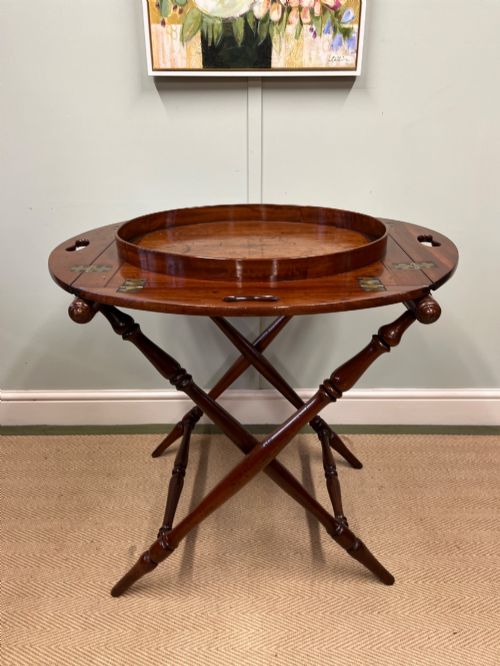
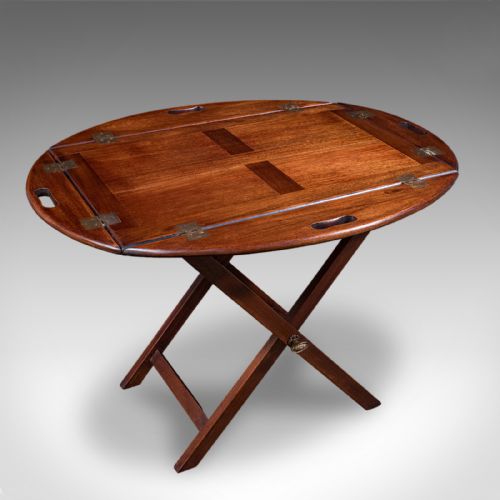
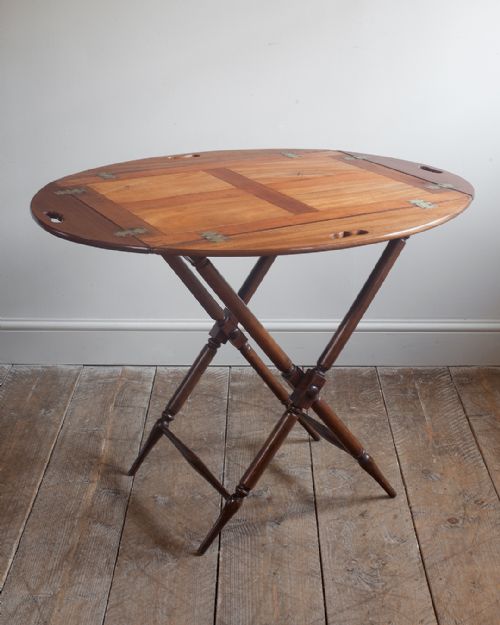
These hinged sides tray pieces combine sturdy timber surfaces with practical folding edges, offering a flexible serving surface that easily converts into a compact table.
Hinged Sides Tray
A hinged sides tray functions primarily as a portable serving vessel and frequently appears mounted upon a collapsible stand to form a table. Buyers searching for a hinged sides tray will encounter examples spanning the eighteenth, nineteenth and twentieth centuries, including Georgian, Victorian, Edwardian and revival interpretations.
The dominant material format on this page is mahogany, often shaped into an oval or rectangular tray top complete with hinged flaps that lock upright for carrying or drop down for serving. Many pieces are paired with folding stands originating from periods such as the Regency and Edwardian eras, bridging the gap between utilitarian servingware and occasional furniture.
Beyond the standard serving trays, the inventory includes dedicated coffee tables and tray tables adapted for modern living spaces while retaining their traditional folding mechanisms. These items reflect a heritage of domestic service where portability and space-saving design were paramount.
How they were made
Makers constructed the primary surfaces of these trays using solid mahogany, selecting timber with rich grain patterns suitable for fine domestic interiors. Brass hinges were fitted to the drop flaps to ensure smooth movement when folding the sides up or down.
Supporting structures often relied on folding wooden stands or canvas webbing to provide stability without adding excessive weight. Joinery techniques from the Georgian and Victorian periods prioritized durability, ensuring the hinged joints could withstand repeated lifting and lowering.
Hinged Sides Tray Retail Price Guide 2026
Typical asking prices for hinged sides tray among the pieces listed under this phrase on Sellingantiques today, from the lower quarter to the upper quarter. They describe what is for sale here now, not the wider market.
Listings feature mahogany and oak timbers, alongside brass hardware and canvas webbing across various periods.
What varies in quality
The caliber of a hinged sides tray rests upon the quality of the timber selection and the precision of the brass hardware used for the folding mechanisms. Finer examples display carefully figured mahogany surfaces and hand-forged or well-cast brass hinges that integrate flush with the wood.
Proportion and the harmonious pairing of tray to stand also define superior pieces, distinguishing bespoke Georgian work from later revival production. The crispness of the edge mouldings and the integrity of the folding joints indicate the level of craftsmanship invested in the object.
The Hinged Sides Tray Glossary
- Drop-flap
- A hinged section of a tray edge that can be raised to contain items or lowered for serving access. This design allows the piece to switch between a walled carrier and a flat surface.
- Folding stand
- A collapsible wooden frame designed to support a tray at table height. It allows the entire assembly to be stored flat when not in use.
- Canvas webbing
- Strong woven fabric strips utilised in some stands to support the tray base or hinge mechanism. It provides flexible yet sturdy reinforcement.
- George III period
- The era spanning the mid to late eighteenth and early nineteenth century, associated with refined cabinet making in mahogany. Pieces from this time often feature elegant oval shapes and subtle mouldings.
Hinged Sides Tray: Frequently Asked Questions
What is a hinged sides tray used for?
Originally designed for domestic servants to carry food and drink from the kitchen to the dining room, these trays allowed items to be transported securely with the sides raised.
Once in the room, the flaps could be lowered to serve guests or placed upon a folding stand to create an instant occasional table.
How do I care for a mahogany tray?
Protect the timber surface from direct heat and moisture by using coasters and mats beneath glasses and dishes. Regular dusting with a soft cloth maintains the natural lustre of the wood without building up heavy chemical residues.
Period brass hinges benefit from gentle cleaning to prevent tarnish, avoiding abrasive polishes that might touch the surrounding wood.
Are these trays fixed to their stands?
Most traditional trays rest securely on top of their folding stands without permanent mechanical fixings, allowing the tray to be lifted off independently. This dual-purpose design meant the stand could be folded away and the tray stored separately when space was required.
Checking the fit between the tray base and the support frame helps ensure stable placement during daily use.
How do I distinguish older trays from revivals?
Examine the timber patination, the construction of the corners, and the style of the brass hardware for clues regarding age. Eighteenth and nineteenth-century pieces typically display hand-cut joinery and signs of historical wear, whereas revival pieces from the twentieth century often exhibit uniform machine finishing.