

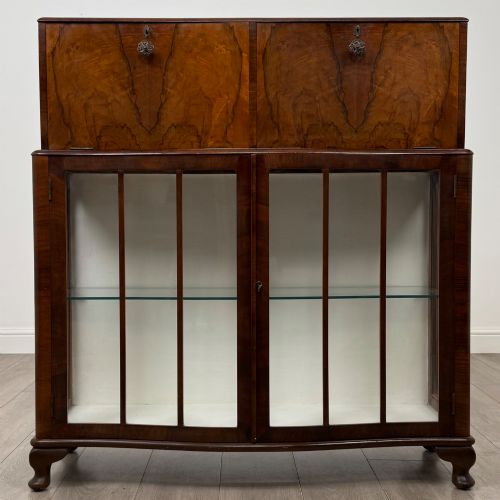
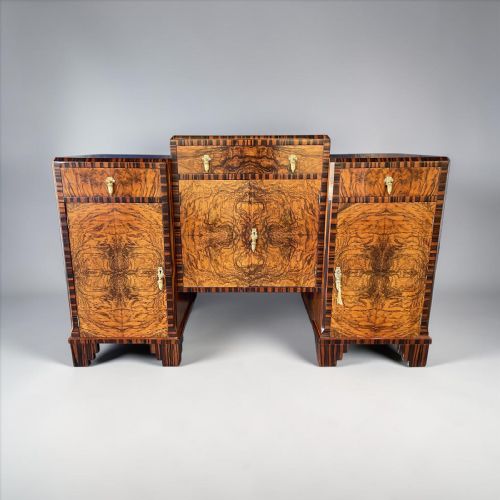
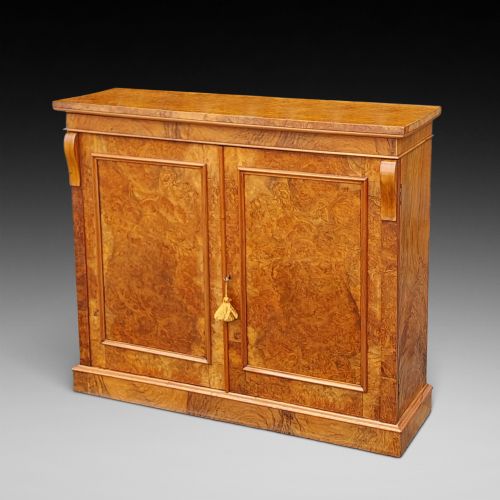
Vintage Burr Walnut Sideboard
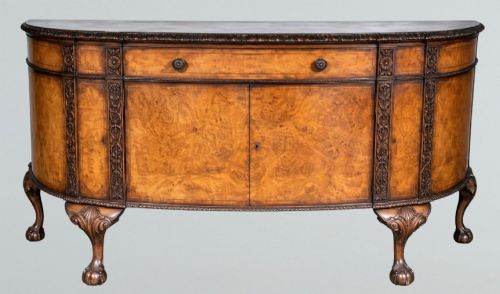
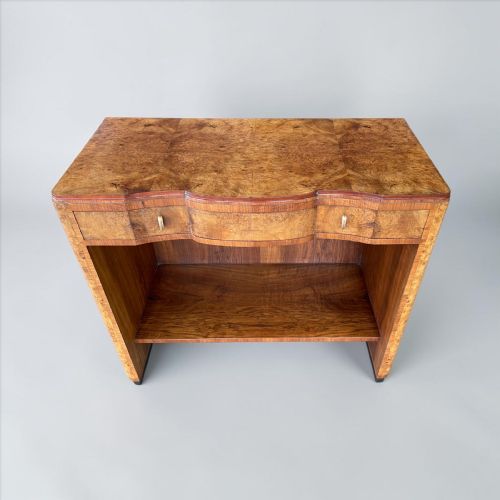
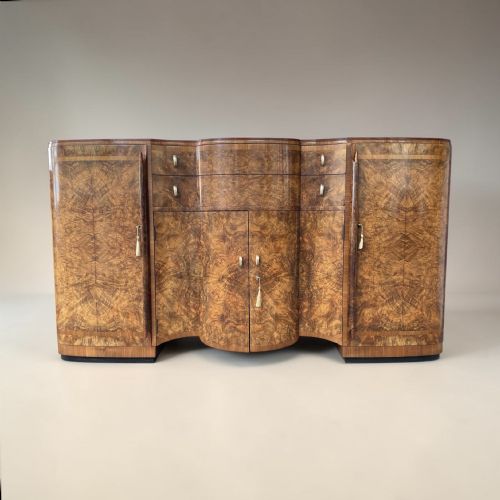
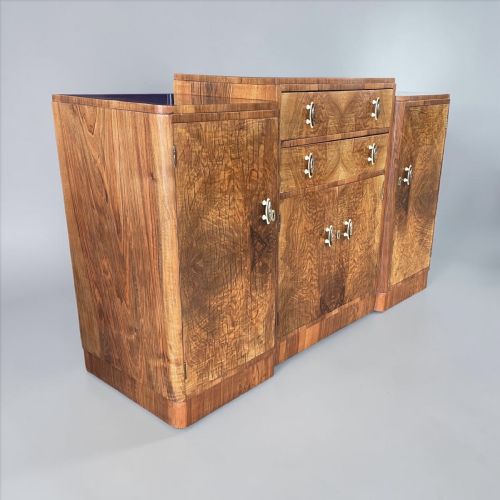
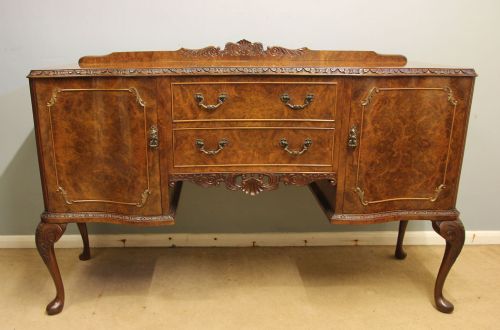
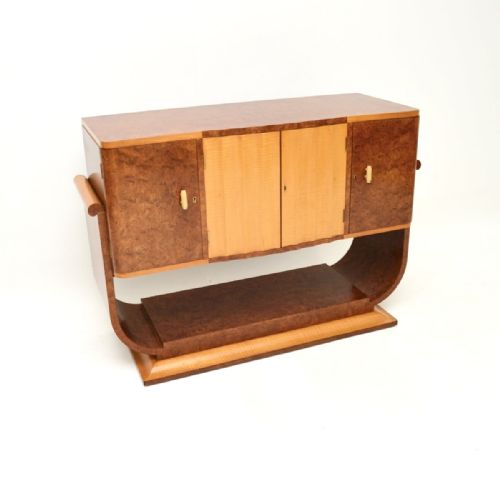
A vintage burr walnut sideboard brings rich, swirling grain patterns and deep amber tones to a dining room or hallway.
Vintage Burr Walnut Sideboard
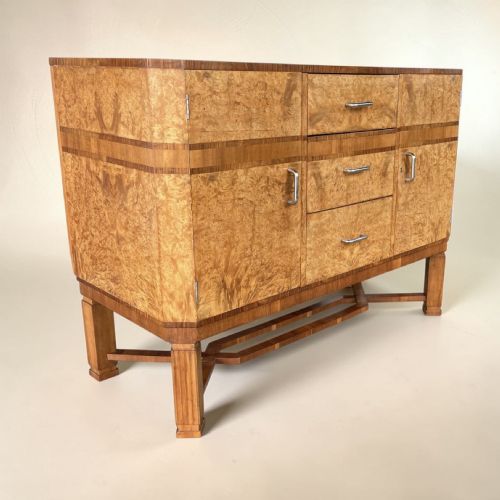
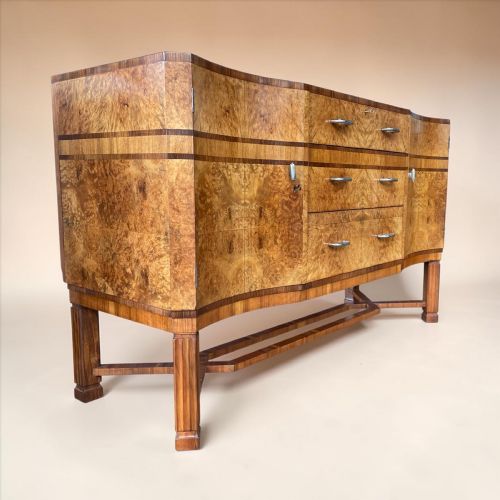
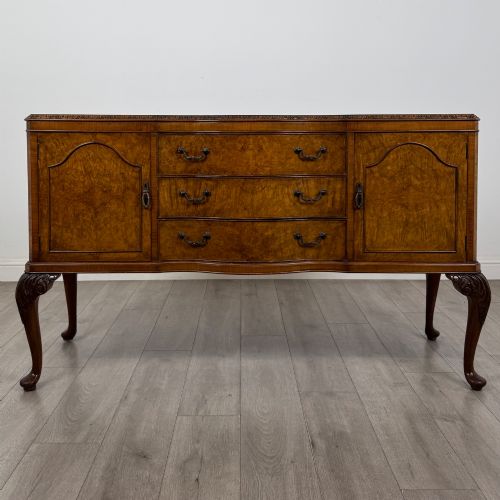
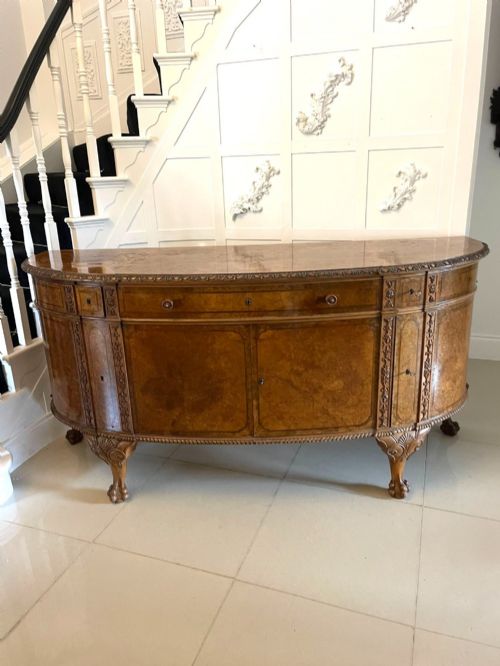
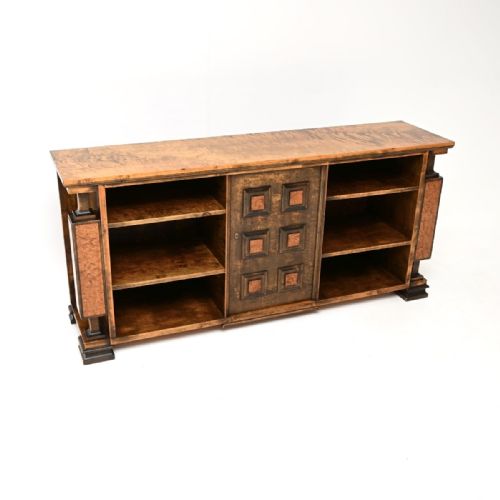
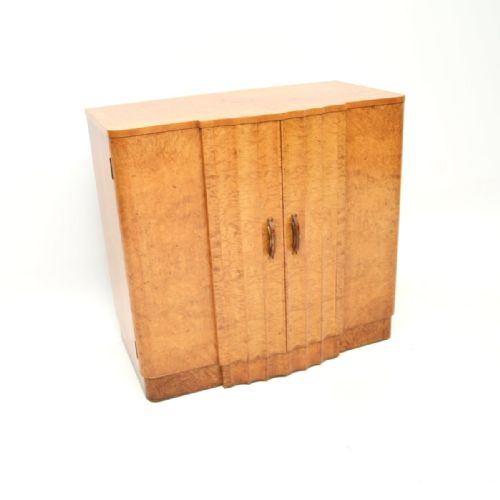
A vintage burr walnut sideboard offers generous storage paired with striking decorative wood veneers, ranging from streamlined Art Deco geometric designs to traditional revival styles. Buyers seeking a vintage burr walnut sideboard will frequently encounter 1930s pieces displaying bold figuring alongside Edwardian and Victorian examples.
The selection encompasses server tables, credenzas, and cocktail cabinets alongside standard sideboards, often constructed with multiple drawers and fitted interior compartments. Many pieces incorporate complementary timbers such as sycamore or oak alongside the primary walnut veneer.
Origins stretch from British workshops to French and Italian makers, reflecting distinct regional design preferences from the eighteenth century through to the interwar period. The overarching constant remains the use of highly figured burr walnut timber as the primary visual focus.
How they were made
Cabinet makers applied thin slices of burr walnut veneer over solid secondary timbers like oak and pine, arranging the grain patterns symmetrically to create dramatic geometric displays. Brass hardware, glass doors, and secondary elements in sycamore or satin birch were frequently incorporated to complement the dark, figured primary wood.
Construction techniques evolved from nineteenth-century hand-carved details and mirror-backed frames to the clean, sweeping curves and waterfall edges characteristic of 1930s Art Deco design. Joinery relied on traditional carcase construction, ensuring stability for heavy timber frames and large storage compartments.
Several 1930s cocktail cabinets retain their original internal electrical fittings for illuminating glassware during evening gatherings.
What varies in quality
The richness and symmetry of the burr walnut figuring dictate the visual impact of each piece, with expertly matched grain patterns setting superior examples apart from standard production. Master workshops employed meticulous book-matching across drawer fronts and cabinet doors to achieve a continuous, flowing design.
The integrity of the underlying veneer work and the refinement of secondary materials, such as inlaid sycamore or custom brass fittings, separate standard utility items from exhibition pieces. Maker attribution also plays a role, with documented pieces from notable interwar firms demonstrating exceptional joinery and finish.
Maurice Adams·Harry and Lou Epstein·Hille·Hamptons of Pall Mall London
The Vintage Burr Walnut Sideboard Glossary
- Burr Walnut
- A specialised wood cut from the abnormal growth of a walnut tree, yielding intricate, swirling grain patterns highly prized in fine cabinet making.
- Credenza
- A low cabinet or sideboard, frequently featuring glass doors or mirror backs, traditionally used for serving food and displaying silver.
- Cocktail Cabinet
- A specialised drinks storage unit often fitted with internal lighting, mirrored surfaces, and glass shelves, popular during the Art Deco period.
- Serpentine Front
- A furniture front characterised by a curving contour that swells outward in the centre and recedes toward the edges.
Vintage Burr Walnut Sideboard: Frequently Asked Questions
What is burr walnut?
Burr walnut is a specialised timber derived from the irregular growths on walnut trees, prized by cabinet makers for its dense, swirling grain patterns.
This unique wood is sliced into thin veneers and applied to furniture surfaces to create striking decorative effects.
How do I date a sideboard?
Dating relies on stylistic markers, construction methods, and materials, ranging from Victorian carved details to 1930s Art Deco geometric forms.
Comparing the hardware, secondary timbers, and overall silhouette against known period designs helps establish the correct era.
Are these pieces solid walnut?
Most examples use fine burr walnut veneers applied over sturdy secondary timbers such as oak, pine, or mahogany for structural stability.
This technique allowed makers to display dramatic grain patterns across large surfaces while maintaining a durable carcase.
Where should I place a sideboard?
These cabinets suit dining rooms, living areas, and spacious hallways where they function as serving surfaces, drinks cabinets, or general storage.
Keeping them away from direct sunlight and excessive heat protects the delicate walnut veneers from drying out.