
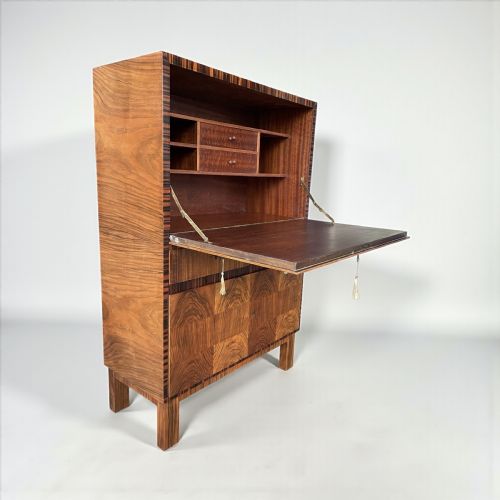


Art Deco Fitted Cabinet
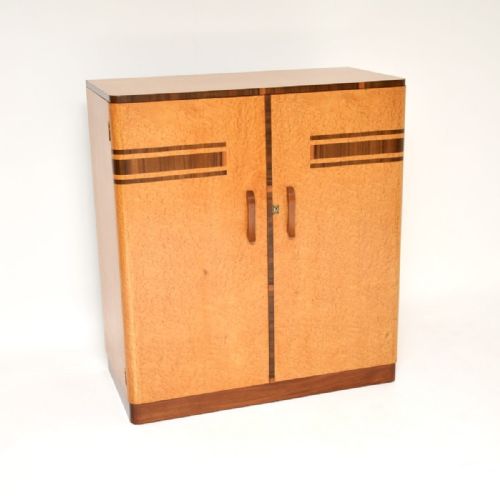
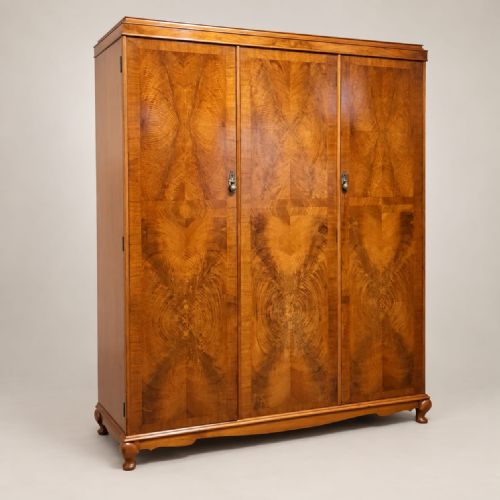
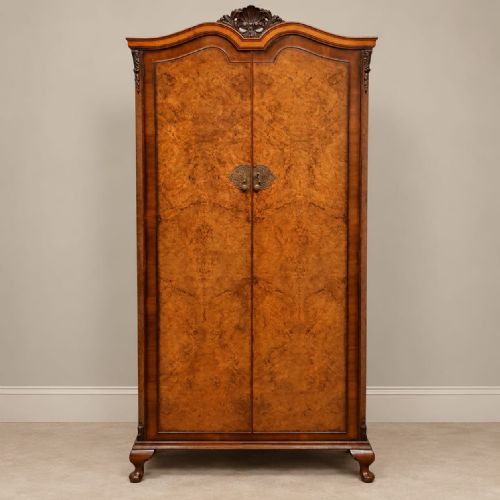
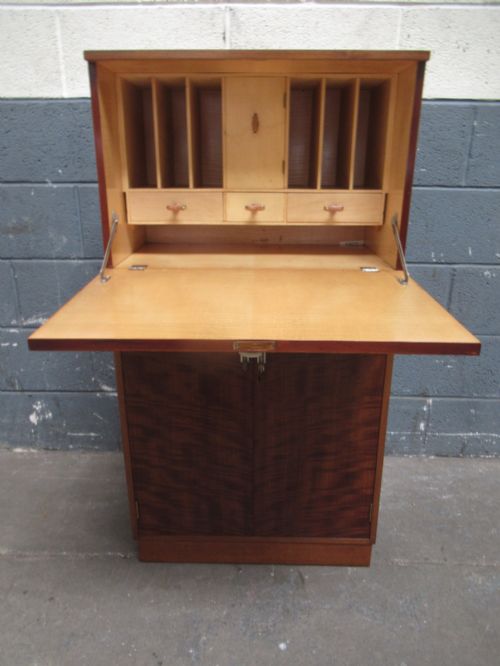
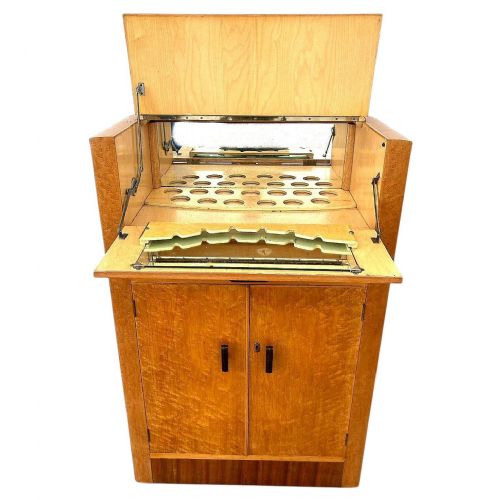
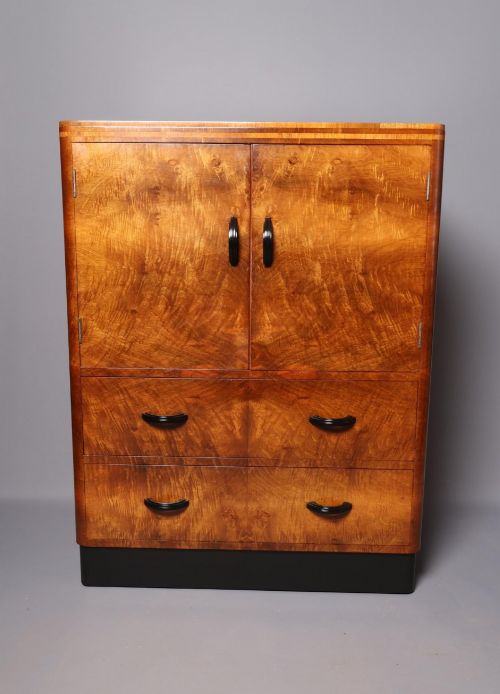
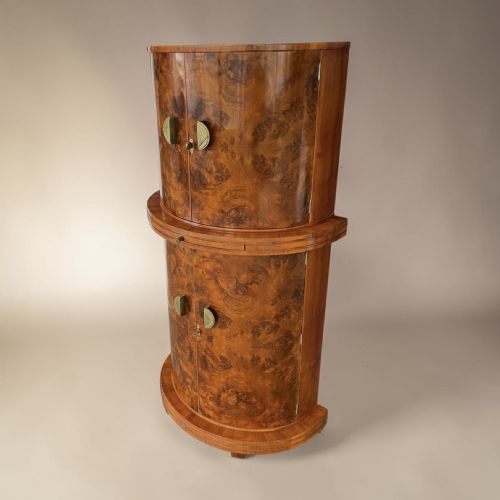
An art deco fitted cabinet organises storage with clever internal compartments, often meeting collectors in burr walnut.
Art Deco Fitted Cabinet
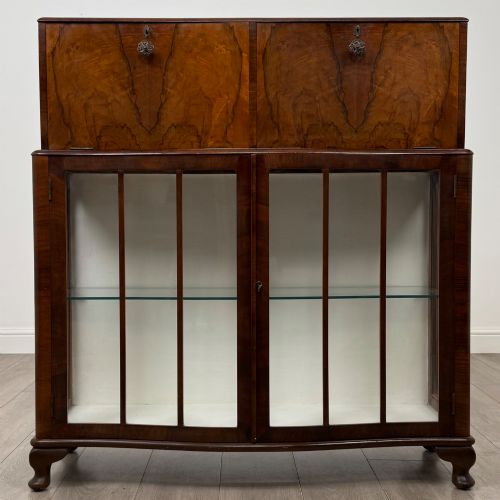
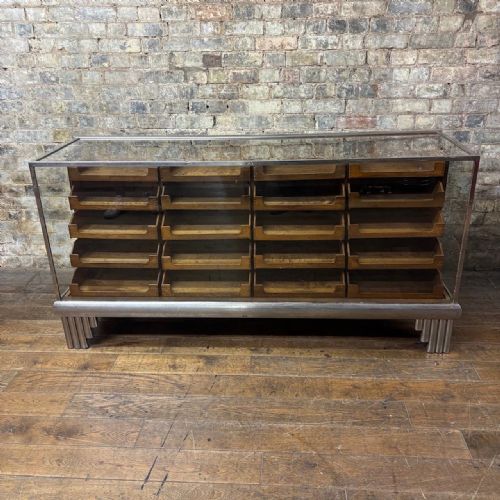
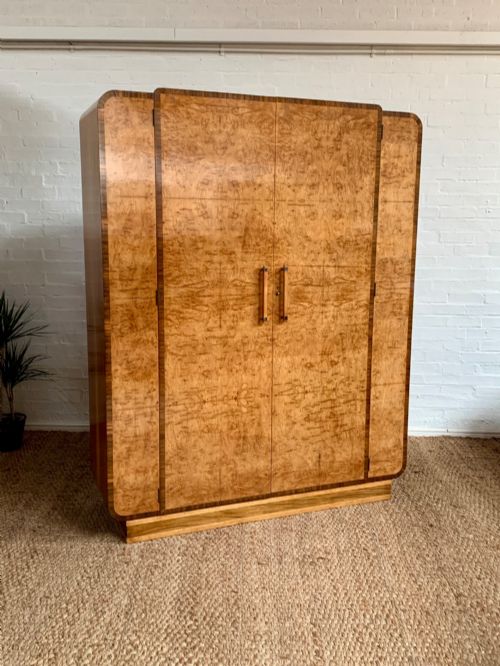
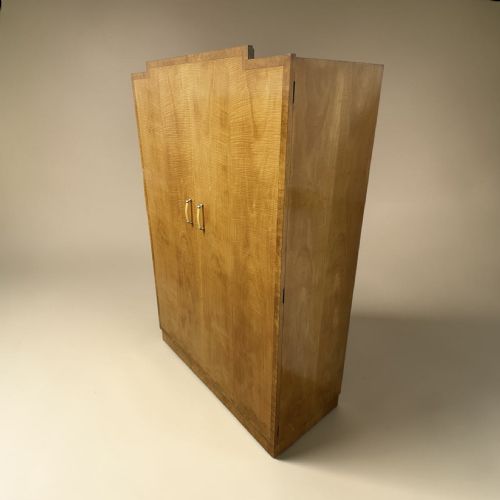
An art deco fitted cabinet encompasses storage forms from cocktail units and compactums to wardrobes and haberdashery counters. These pieces emerge chiefly from the 1930s interwar period, alongside examples dated to 1920, 1910, 1940, and the Edwardian era.
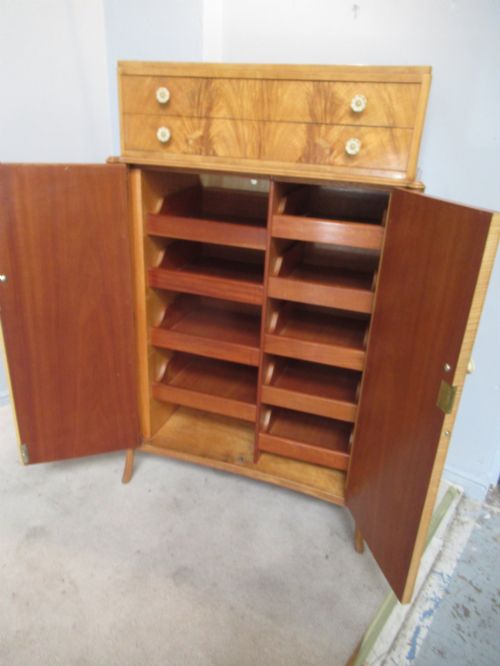
The selection on this page centres on fitted interiors designed for specific functions, such as drinks storage with glass shelves or clothing compartments with hangers and drawers. Burr walnut, plain walnut, oak, and bird's-eye maple dominate the structural forms.
Judging the range
Quality rests upon the selection and bookmatching of veneer figures across the front doors and drawers, where symmetrical grain alignment elevates the visual impact. The complexity of the fitted interior, including pull-out trays, glass shelving, and integrated lighting compartments, also distinguishes finer examples.
Construction methods determine durability, visible in the tightness of joints, the weight of the timber used for carcasses, and the quality of original metal mounts in brass or chrome.
Listings feature items spanning five periods: 1910, 1920, Edwardian, 1930, and 1940.
Dudley & Co·Epstein·Harry and Lou Epstein·Waring and Gillow
The Art Deco Fitted Cabinet Glossary
- Compactum
- A multi-functional wardrobe combining hanging space with internal drawers, shelves, and compartments. This form provides comprehensive storage within a single footprint.
- Haberdashery counter
- A shop display unit featuring multiple shallow glass-fronted drawers or compartments. These counters were originally utilised for sorting and selling small textiles.
- Burr walnut
- A wood veneer taken from the gnarled growths on walnut trees, prized for its swirling, decorative grain patterns. It forms the primary surface finish for many luxury cabinets.
- Bird's-eye maple
- A figured timber showing small, circular disruptions in the grain resembling tiny eyes. Cabinet makers employed this light maple for interior linings and contrasting panels.
Art Deco Fitted Cabinet: Frequently Asked Questions
What is an art deco fitted cabinet?
An art deco fitted cabinet is a storage piece from the 1920s or 1930s featuring internal shelving, racks, or drawers designed for specific uses like holding drinks or clothing.
These pieces rely on geometric styling and rich wood veneers such as burr walnut.
What woods were used?
The primary woods recorded are walnut, burr walnut, oak, maple, and bird's-eye maple. Secondary timbers like mahogany also appear in specific wardrobe and desk designs.
These woods were chosen for their grain patterns and suitability for veneering.
How do I care for burr walnut furniture?
Burr walnut surfaces require protection from direct sunlight and excessive moisture to prevent veneer lifting and fading. Regular dusting with a soft, dry cloth preserves the polished finish.
Avoid placing these cabinets near direct heat sources.