
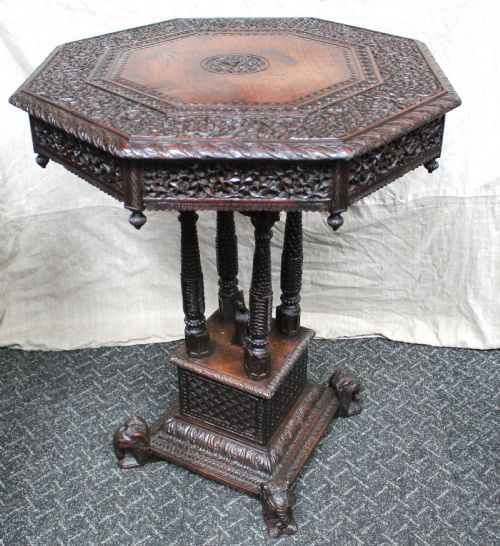
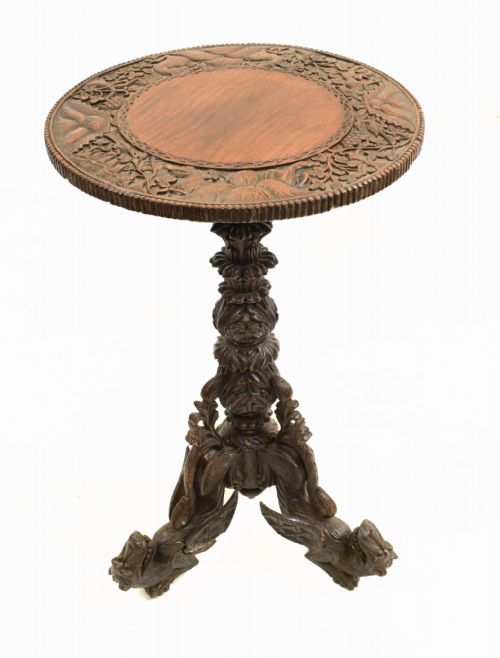
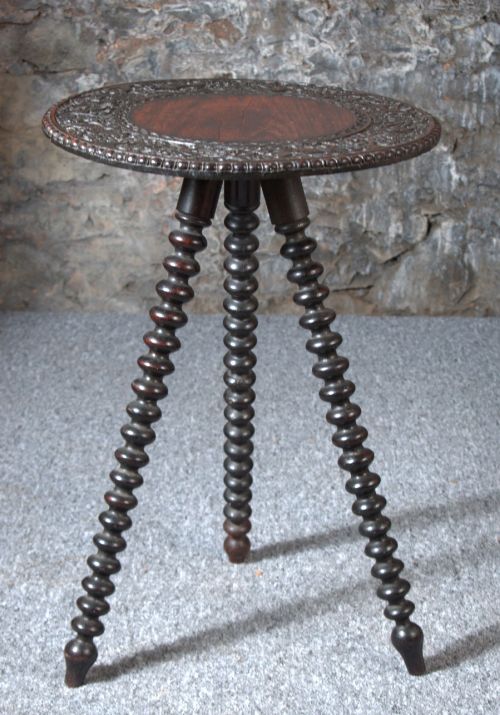


Vintage Burmese Wood Table
A vintage burmese wood table brings rich tropical timber and deep hand-carving straight into a room.
Vintage Burmese Wood Table
When you search for a vintage burmese wood table, you are looking at nineteenth-century occasional furniture, side tables, and coffee tables originating from Burma and Myanmar. These works often arrive through Anglo-Burmese, Anglo-Indian, and colonial trade channels, showing intricate regional craftsmanship.
The versions you are most likely to meet on this page span the 1850s to the 1920s, including carved padouk side tables, three-tier buffets, lacquered surfaces, and forms supported by carved elephant legs. Alongside conventional tables, the selection occasionally includes related items like carved table gongs.
How they were made
Makers utilised dense tropical timbers such as teak, padouk wood, and assorted hardwoods, which provided a stable foundation for deep relief carving. These materials withstand decades of handling while retaining sharp botanical and figural details across the tabletop and legs.
Surface treatments range from polished natural grain to pigmented lacquered wood, sometimes accented with bone inlay. Artisans relied on hand-chiselled joinery and sculptural shaping to build multi-tiered buffets and sturdy side tables without modern industrial machinery.
Listings feature periods spanning the nineteenth century up to 1920, utilising teak, padouk wood, bone, and lacquered wood.
What varies in quality
The distinction between standard examples and the finest work lies in the depth and crispness of the carving. Superior tables display confident, undercut relief work where figures and foliage stand clear from the background timber.
Material selection also dictates standing, with dense padouk and richly finished lacquered wood commanding attention over plain utilitarian timber. The structural complexity of three-tier buffets and figural supports like elephant legs further separates exceptional pieces from simpler forms.
The Vintage Burmese Wood Table Glossary
- Padouk
- A heavy, durable tropical hardwood with a reddish hue used extensively for carved colonial furniture. It holds fine detail remarkably well.
- Anglo-Burmese
- A design style combining traditional Burmese carving techniques with British furniture forms popular during the nineteenth century. These pieces bridge two distinct aesthetic traditions.
- Lacquered wood
- Timber coated with successive layers of natural resin or pigment to create a smooth, sealed decorative finish. This technique protects the underlying wood from humidity.
- Side table
- A small functional table designed to stand against a wall or beside seating. They serve as compact display surfaces for lamps and decorative objects.
Vintage Burmese Wood Table: Frequently Asked Questions
What woods are typical for these tables?
These tables are predominantly constructed from dense tropical timbers such as teak and padouk wood, alongside general hardwoods.
Artisans selected these materials for their natural strength and ability to hold deep, intricate hand-carved details.
Where were these tables made?
They originate from Burma, often reflecting Anglo-Burmese and colonial design influences produced for export and local European residents.
The workshops combined local carving traditions with British furniture requirements of the time.
How do I live with a carved wood table?
Keep the timber away from direct heat sources and sudden humidity changes to protect the dense hardwoods and intricate carvings.
Regular dusting with a soft cloth maintains the polished grain and pigmented lacquered surfaces safely.