
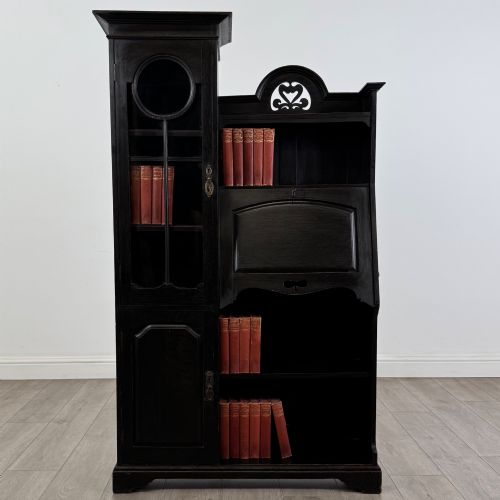
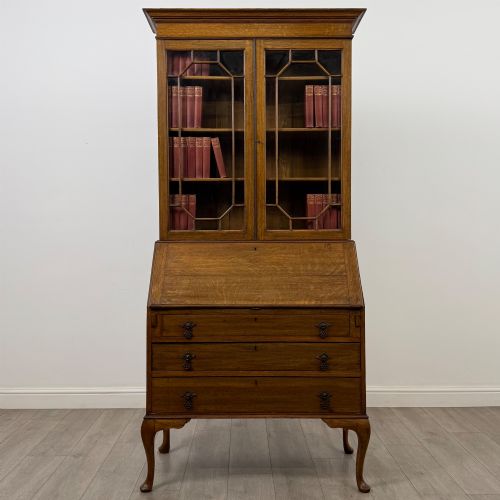


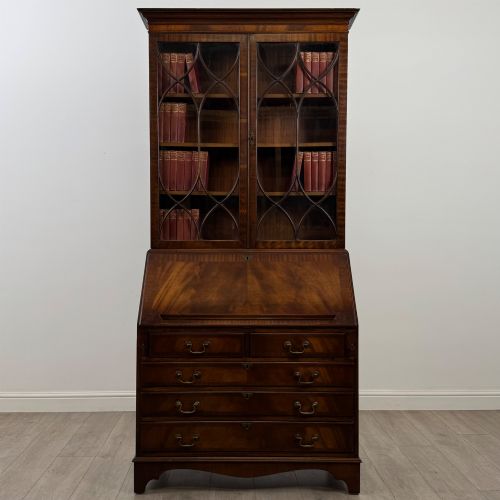
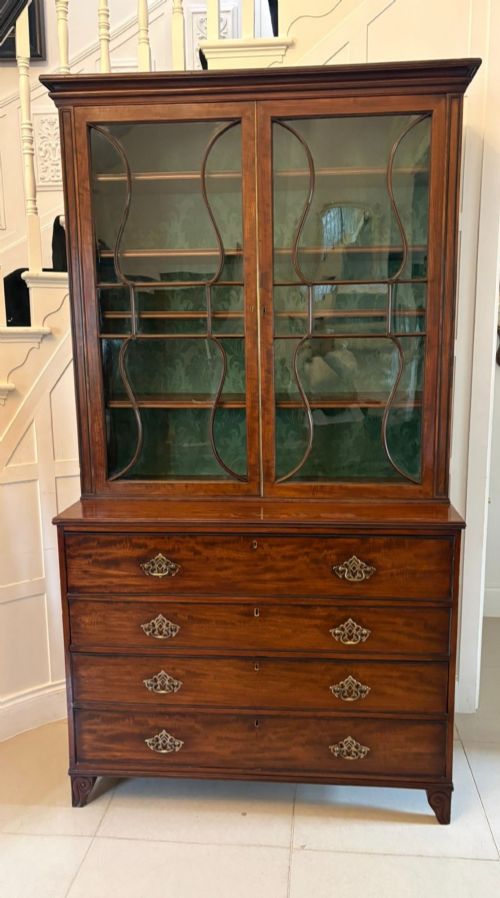
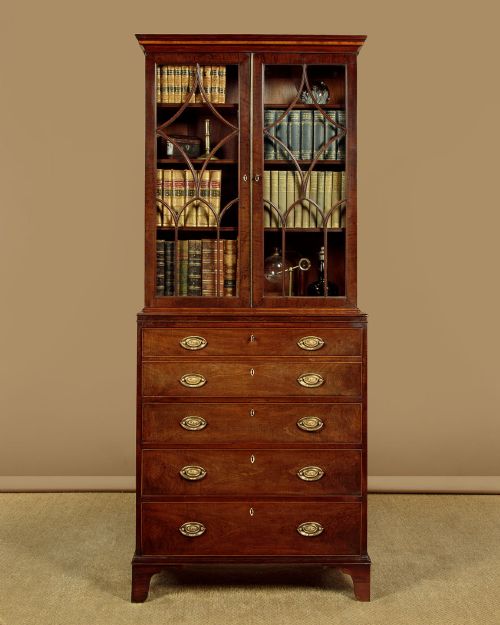
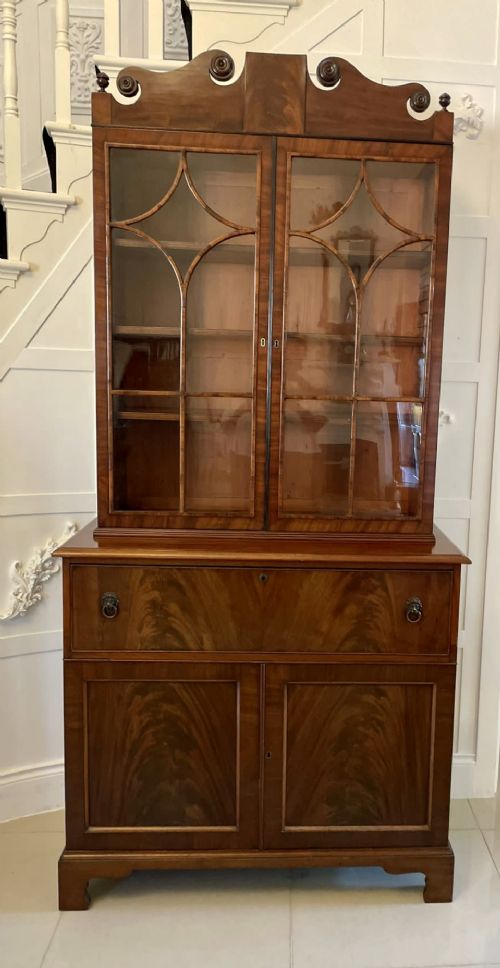
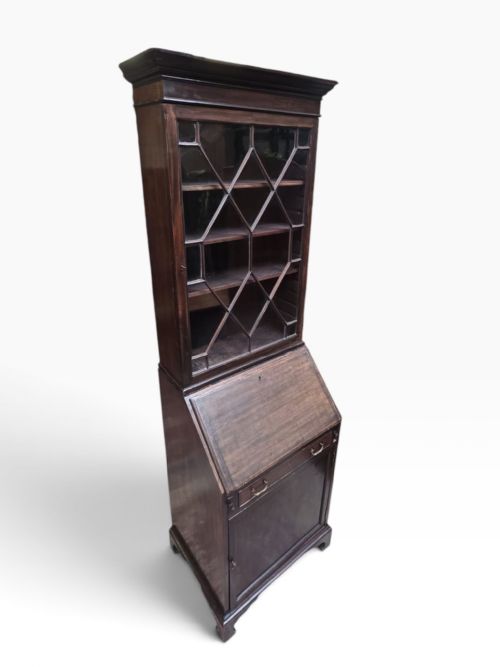
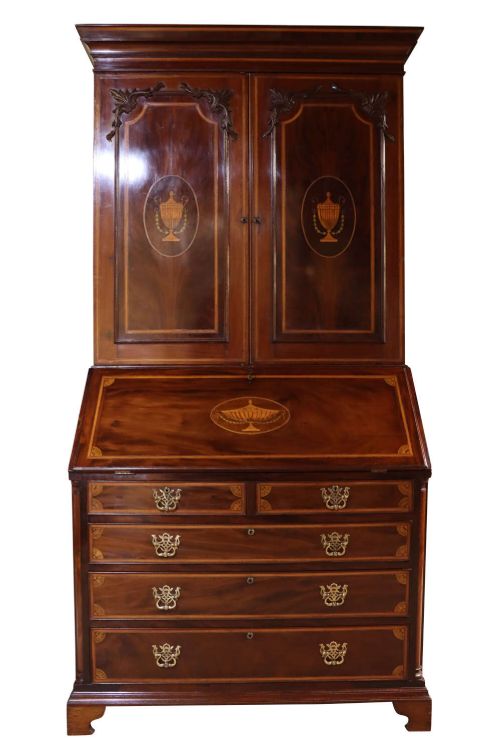
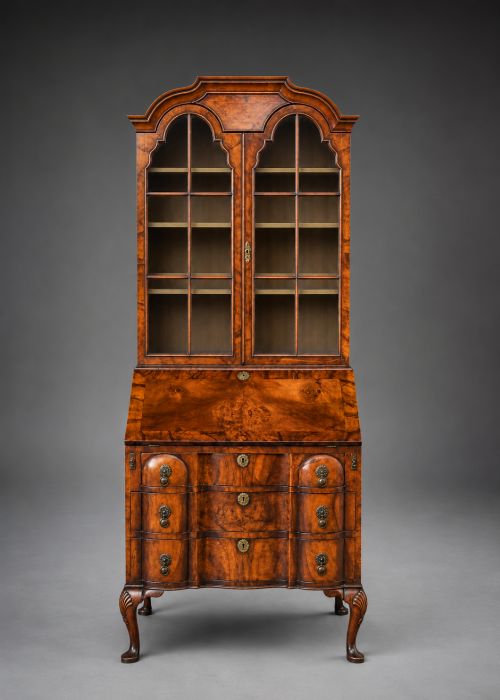
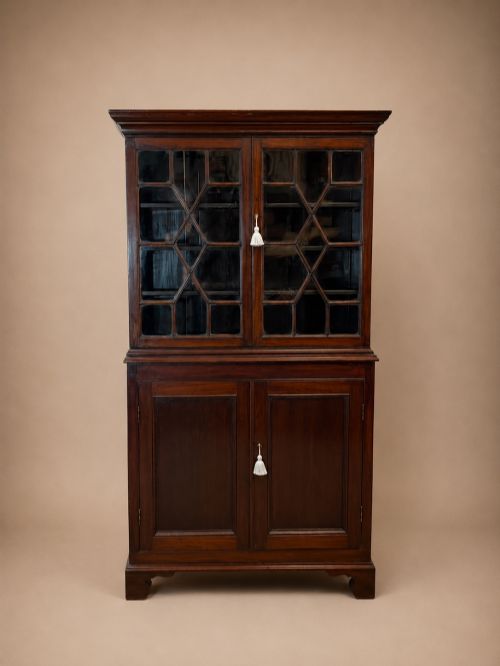
Vintage Bureau Bookcase
A vintage bureau bookcase combines a writing desk with a glazed upper cabinet, providing both workspace and display.
Vintage Bureau Bookcase
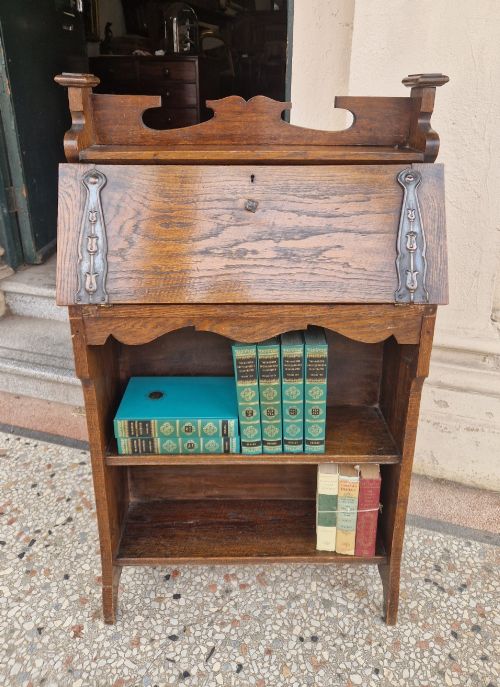
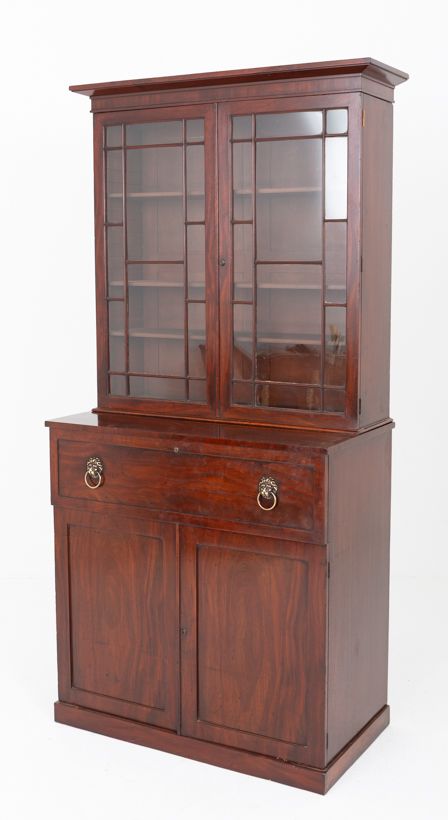
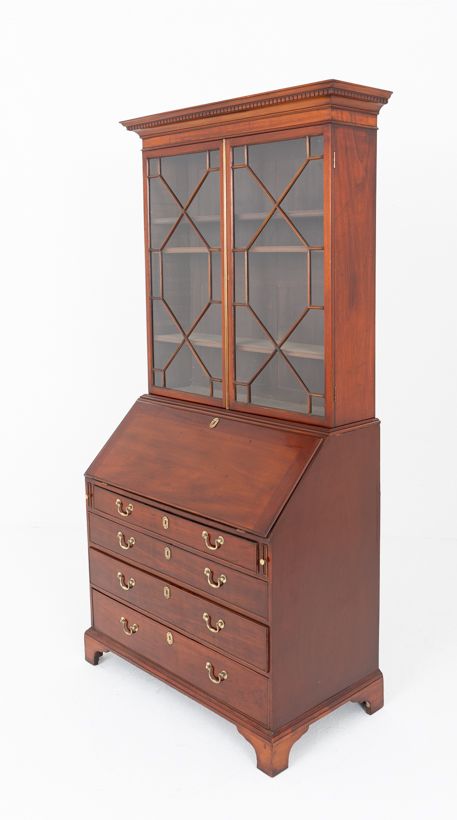
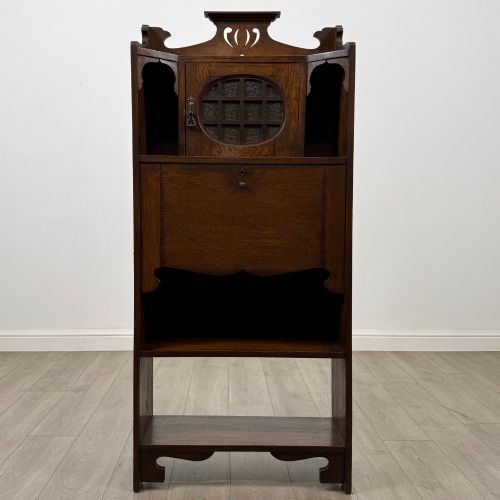
A vintage bureau bookcase unites a hinged writing flap with upper shelving behind glass doors, designed to store books while offering a writing surface. The form spans several centuries, drawing on Georgian, Regency, Edwardian, and Arts and Crafts traditions.
Buyers on this page most frequently encounter Edwardian and twentieth-century examples in oak or mahogany, alongside earlier Georgian and Regency pieces. These items serve multiple functions within a room, keeping papers concealed behind the fall-front while displaying volumes above.
How they were made
Cabinet makers built these pieces using solid timbers and decorative veneers such as mahogany, oak, walnut, satinwood, and yew wood. Brass hardware secures the fittings, while lead often holds the glass panes within the upper doors.
Construction techniques include dovetailed drawer boxes and fitted internal compartments for papers behind the fall-front. Glazing bars divide the upper doors into geometric patterns, supporting the glass that protects the library within.
Some Edwardian students managed their studies with compact oak writing cabinets featuring built-in book rests.
What varies in quality
The refinement of the timber figure and the crispness of inlaid details distinguish standard utility pieces from exceptional examples. Figured mahogany, burr elm, and select walnut command attention for their rich grain patterns.
Internal complexity also sets pieces apart, particularly the arrangement of small drawers, pigeonholes, and secret compartments hidden within the fitted desk interior. The proportion of the upper bookcase to the lower bureau determines the visual balance of the whole cabinet.
Gillows of Lancaster·F.H. Marshall And Co Glasgow
The Vintage Bureau Bookcase Glossary
- Secretaire
- A desk or cabinet featuring a pull-out drawer with a hinged front that drops down to form a writing surface. This mechanism conceals pigeonholes and small drawers inside.
- Fall-front
- A writing flap hinged at the bottom edge that pulls down to a horizontal position for writing. It closes vertically to conceal the desk interior.
- Astragal
- Moulding profiles used to divide glass panes within a cabinet door. These wooden strips create distinct geometric glazing patterns.
- Fitted interior
- The arrangement of miniature drawers, pigeonholes, and compartments built inside the bureau section. It organises writing materials and correspondence.
- Glazed
- Fitted with glass panels in the upper doors to view books or collections. This protects the contents from dust while keeping them visible.
Vintage Bureau Bookcase: Frequently Asked Questions
What is a bureau bookcase?
A bureau bookcase is a dual-purpose item featuring a lower section with a drop-front writing desk and an upper cabinet enclosed by glass doors. The combination allows books to be stored above while correspondence and writing take place at the desk level.
These cabinets developed to save space in domestic interiors by merging a library bookcase with a portable desk into a single vertical piece of furniture.
How do I use a bureau bookcase?
The fall-front or secretaire drawer pulls down to create a flat writing surface supported by sliding arms or hinges. Inside, small compartments hold stationery and letters while the upper shelves accommodate books.
Living with the piece involves keeping everyday items organised within the internal drawers and utilising the glass-fronted shelves for display. The drop-front closes securely to hide paperwork when not in use.
How do I tell Georgian from Edwardian pieces?
Georgian bureau bookcases, dating from the eighteenth and early nineteenth centuries, typically feature dense solid mahogany, hand-cut dovetails, and understated proportions. Their astragal glazing bars are finely carved.
Edwardian examples, made around nineteen hundred, often employ lighter satinwood inlays, boxwood stringing, or are constructed in oak reflecting revival styles. Their internal fittings often incorporate machine-cut elements rather than entirely hand-shaped components.
What woods were used for these bookcases?
Mahogany and oak remain the most frequent primary timbers, utilised for their structural strength and durability. Walnut, yew wood, and burr elm also appear on select cabinets.
Inlays incorporate contrasting satinwood and decorative stringing to accentuate drawer fronts and cornices. Brass hardware provides functional pulls and escutcheons across all periods.