




Vintage Brass Wall Barometer
These vintage brass wall barometer pieces bring practical meteorological history into domestic spaces with polished metal cases and silvered dials.
Vintage Brass Wall Barometer
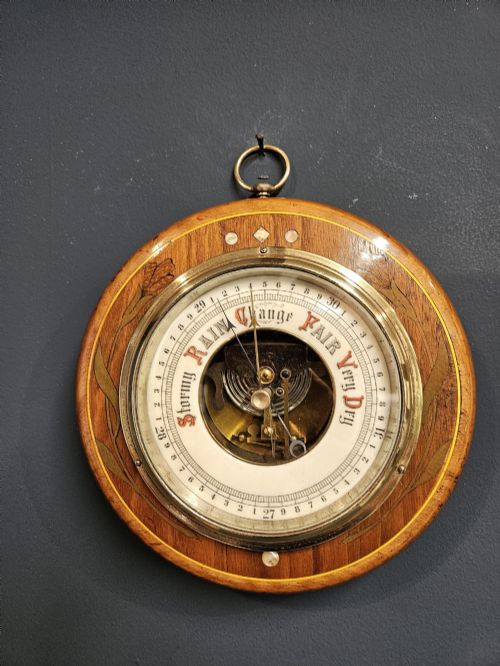
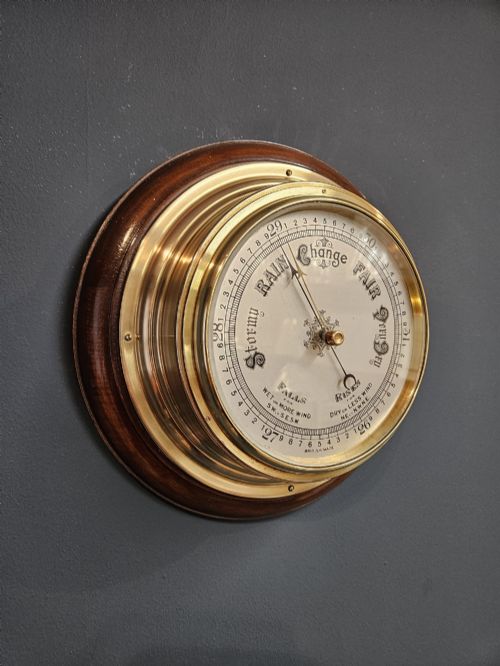
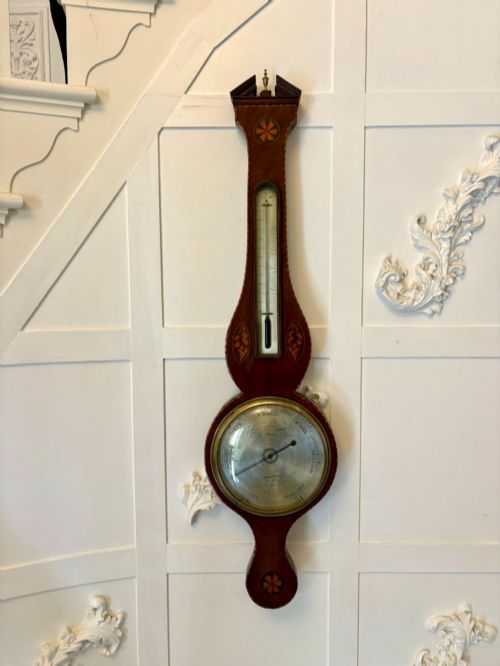
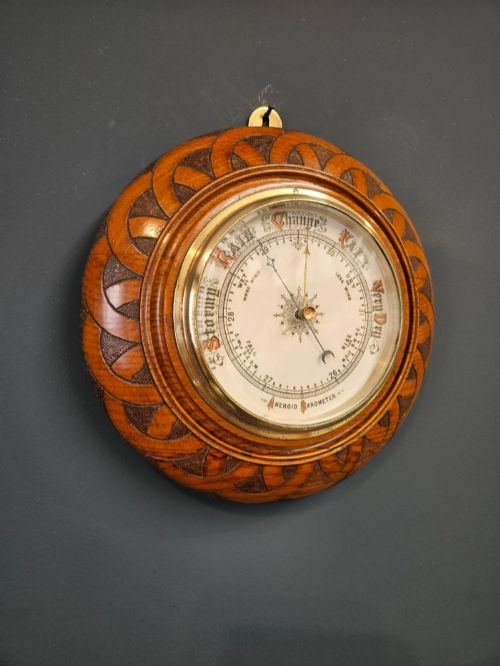
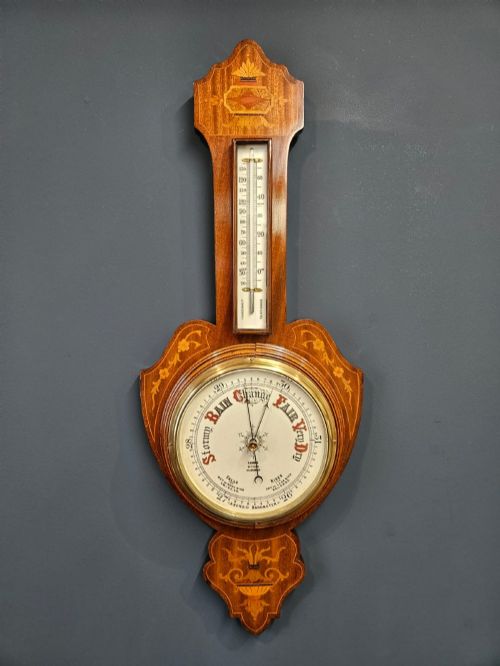
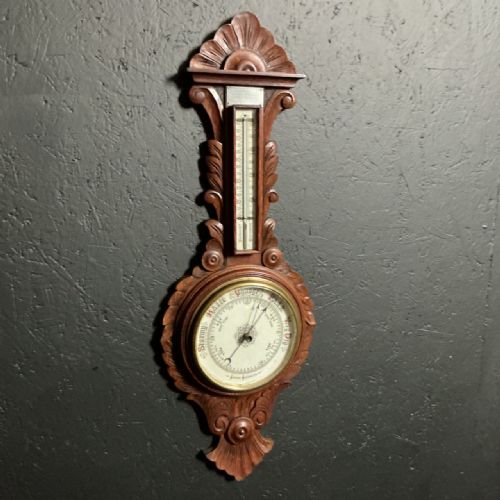
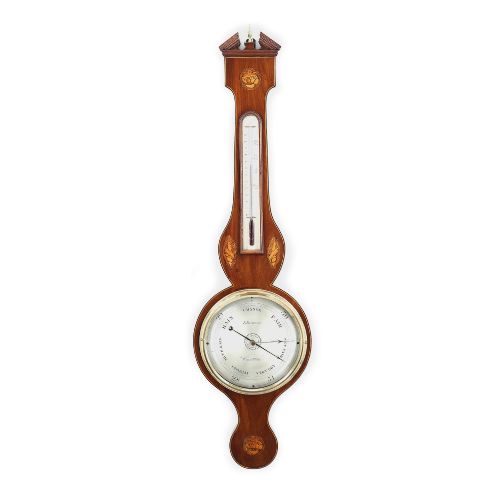
A vintage brass wall barometer unites atmospheric measurement with domestic decoration across several centuries of British and continental design. Buyers encounter varied formats ranging from substantial George III stick barometers and Banjo barometers to Victorian marine bulkhead instruments and Edwardian oak or walnut wall pieces.
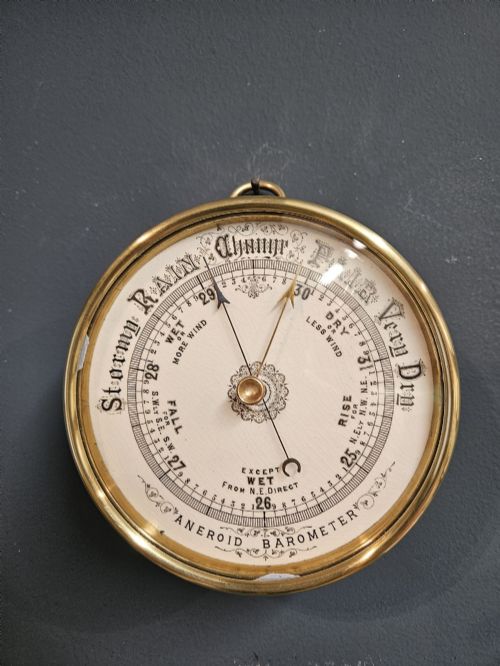
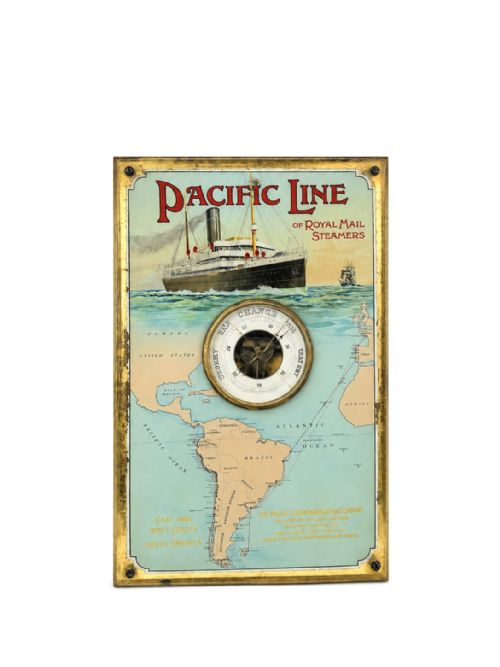
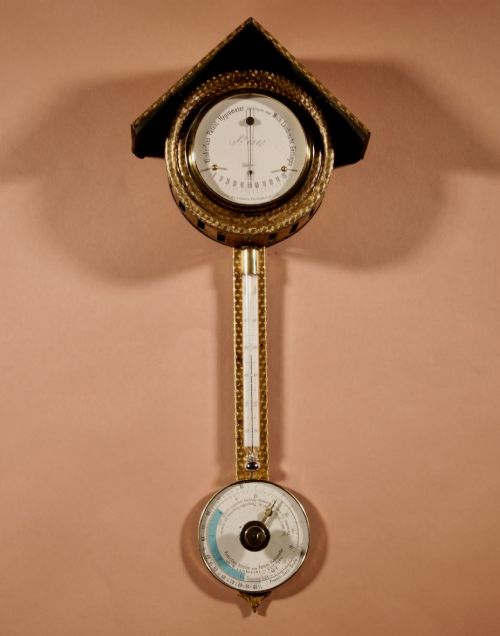
The selection encompasses domestic weather stations, shop display pieces, and specialised instruments such as aneroid barometers and sympiesometers. Materials span from polished brass and silvered metal to timbers like mahogany, oak, walnut, and rosewood.
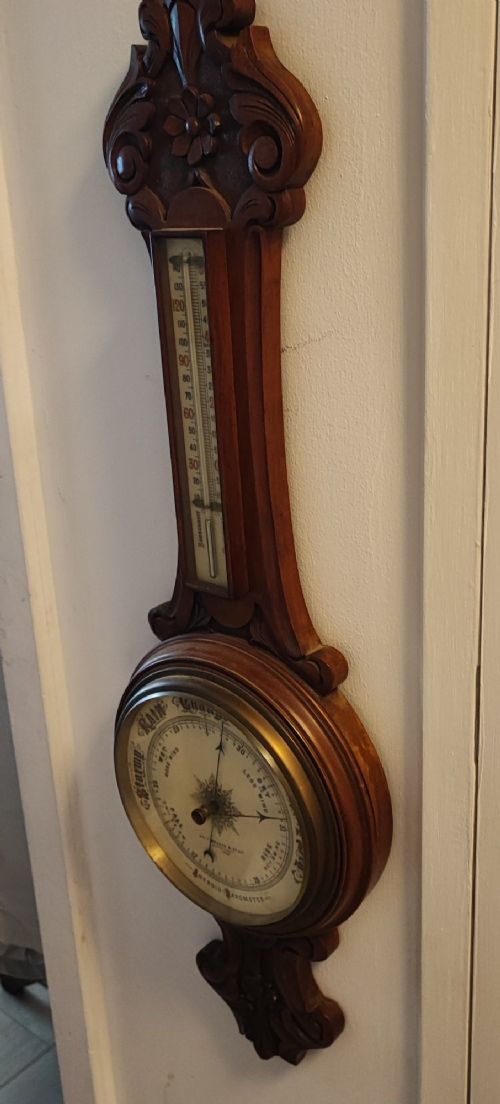
Originating from periods including the Georgian, Victorian, Edwardian, and Regency eras, these instruments reflect both scientific utility and cabinet-making craftsmanship. Examples extend to maritime designs and carved Black Forest styles, providing diverse aesthetic options for interior walls.
Materials and construction techniques
Makers housed sensitive mechanical movements within heavy brass bezels and cast metal cases, frequently mounting them on solid timber backboards of mahogany, oak, walnut, or rosewood. Glass protected the delicate silvered metal dials, indicator hands, and engraved scales.
Cabinet makers utilised marquetry, shell inlay, and geometric carving to embellish the timber surrounds of banjo and wheel barometers. Specialised workshops incorporated mercury columns, aneroid capsules, and hair hygrometers to measure atmospheric pressure and humidity accurately.
Vintage Brass Wall Barometer Retail Price Guide 2026
Typical asking prices for vintage brass wall barometer among the pieces listed under this phrase on Sellingantiques today, from the lower quarter to the upper quarter. They describe what is for sale here now, not the wider market.
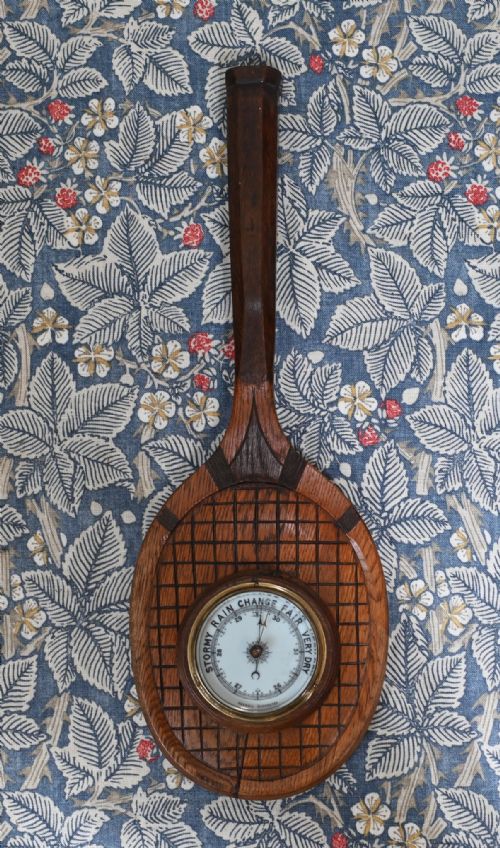
One exceptional Edwardian offering combined meteorology with athletic club enthusiasm inside a tennis racquet frame.
Markers of distinction in barometer manufacture
Distinction lies in the precision of the engraving on the silvered dial and the crispness of the cast brass bezel framing the glass. Superior examples feature signed movements from established opticians and instrument makers rather than unsigned retail stock.
Wilh. Lambrecht·B. Besozzi·Short & Mason·Ganthony of London·Alexander Wright·Jenkins Of Old Swindon·Charles Baker·James H Kelly·Blake & Son·Dollond of London
The Vintage Brass Wall Barometer Glossary
- Aneroid barometer
- An instrument measuring atmospheric pressure through the expansion and contraction of a flexible metal capsule, eliminating the need for liquid mercury. It became common in domestic wall barometers from the Victorian era onward.
- Stick barometer
- A tall, vertical instrument containing a glass tube filled with mercury to measure atmospheric pressure against a calibrated scale. These typically date from the Georgian and Regency periods.
- Banjo barometer
- A household weather glass housed in a distinctive symmetrical wooden case shaped like a musical instrument. They often incorporate a thermometer and a hygrometer alongside the main dial.
- Bulkhead barometer
- A heavy, brass-cased instrument designed originally for marine use on ships and secured to walls via flange mountings. They feature robust glass covers and water-resistant construction.
- Silvered metal
- A copper or brass dial plate treated with a silver compound to create a matte, reflective surface for engraved graduation scales. This finish ensures high legibility under varying indoor lighting conditions.
Vintage Brass Wall Barometer: Frequently Asked Questions
How do I hang a heavy brass wall barometer safely?
Select a sturdy interior wall location away from direct heat sources and constant vibrations from heavy doors. Use appropriate wall anchors and screws that match the weight of the timber backboard and solid brass casing.
Ensure the mounting hook engages securely with the hanging bracket or eyelet on the reverse of the instrument. Verify the plumb alignment before releasing the piece fully to the wall.
What is the difference between an aneroid and a mercury barometer?
An aneroid barometer uses a sealed, flexible metal box that expands or contracts with shifting air pressure, driving an indicator needle via mechanical linkages. This dry system allows for compact wall formats like banjo and bulkhead styles.
Mercury barometers rely on a column of liquid metal balanced against atmospheric pressure within a sealed glass tube. These traditional instruments require careful vertical mounting and are typically found in stick or wheel configurations.
How do I read the weather on these dials?
Locate the fixed indicator scale and observe the position of the pointer relative to standard pressure markings such as rain, change, and fair. Tap the glass gently with a finger to overcome any friction in the mechanical linkages before taking a reading.
Use the movable set hand, adjusted by a knob on the glass bezel, to mark the current pressure level. Observing whether the pointer has risen or fallen away from this marker indicates the impending trend in local weather.
How should I clean the brass and wood?
Dust the timber case periodically with a soft, dry cloth to preserve the finish on mahogany, oak, or walnut surfaces. Avoid chemical polishes that can seep into historic joints or damage delicate veneers.
Clean brass bezels gently with a dry or very slightly dampened microfibre cloth to avoid removing historic patination. Keep moisture entirely away from the exposed silvered dial and glass face to protect the engraved inscriptions.