







Antique Circular Barometer
An antique circular barometer brings reliable meteorological science and handsome domestic joinery into any room.
Antique Circular Barometer
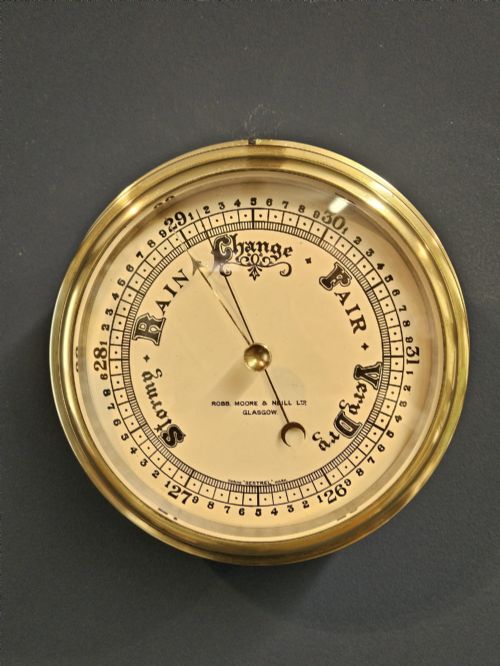
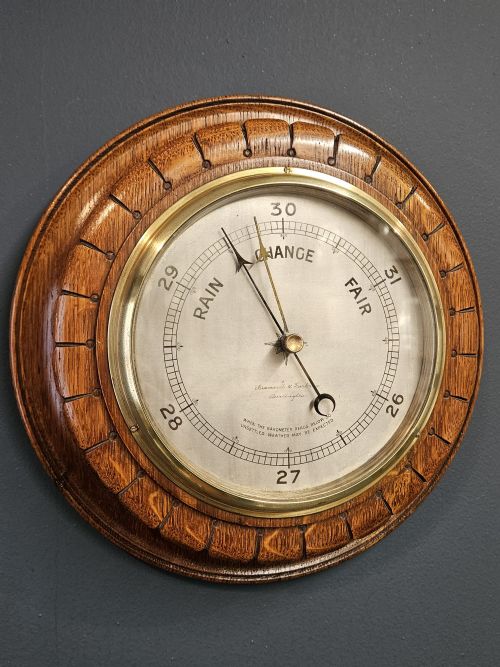
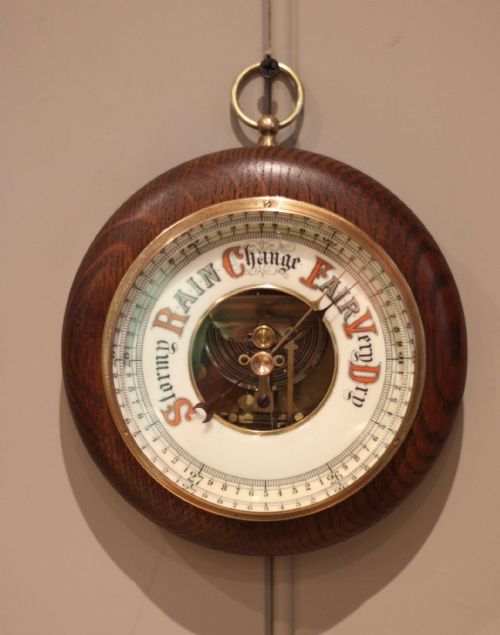
An antique circular barometer offers a neat round housing for atmospheric measurement, most frequently taking the form of an aneroid dial encased in timber or metal.
Buyers seeking this phrase encounter pieces dating from the Victorian and Edwardian eras, spanning from the mid-nineteenth century up to the nineteen-twenties.
The selection ranges from robust oak and walnut wall cases to polished brass bulkhead designs and specialised pocket or table instruments.
Materials and construction
Cabinetmakers housed these mechanisms in circular frames turned from oak, walnut, beechwood, and ebonised timber, often incorporating geometric carvings or brass bezels.
Instrument makers utilised silvered metal for the engraved dials, protecting the delicate graduations beneath bevelled glass while housing the sensitive aneroid vacuum chambers internally.
Antique Circular Barometer Retail Price Guide 2026
Typical asking prices for circular barometer among the pieces listed under this phrase on Sellingantiques today, from the lower quarter to the upper quarter. They describe what is for sale here now, not the wider market.
Distinctions in quality
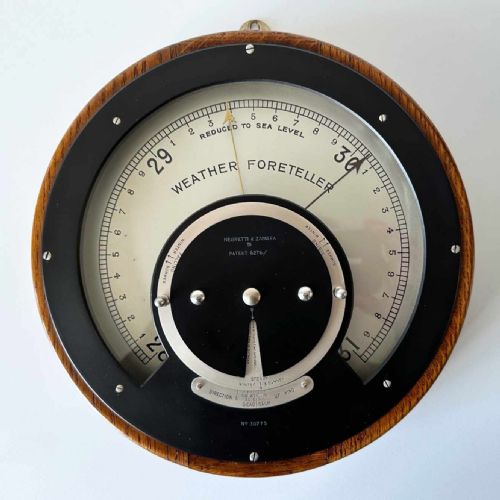
Superior examples carry the signatures of notable scientific instrument makers on the dial face, reflecting precision calibration and higher grade mechanical execution.
The sophistication of the timber case and the clarity of the engraved silvered metal dial separate standard utilitarian weather glasses from finer domestic pieces.
Short & Mason·Negretti & Zambra·Bramwell & Harbron·Blake & Son·Dollond·M Pillischer
The Antique Circular Barometer Glossary
- Aneroid barometer
- A weather-measuring instrument that uses a flexible metal vacuum capsule rather than liquid mercury to register changes in atmospheric pressure. It remains the standard mechanism found in round domestic wall barometers.
- Silvered metal
- A brass or copper dial surface treated with a silver compound to produce a bright, matte finish that takes fine black engraving clearly. This finish allows the weather legends and pressure scales to be read easily.
- Bulkhead barometer
- A heavy, round instrument styled after marine equipment designed for ship walls, usually featuring a thick brass housing and a screw bezel. These pieces originated for maritime use but became popular in domestic halls.
- Hypsometer
- A specialised boiling point barometer used to measure altitude by determining the temperature at which water boils at various atmospheric pressures. It represents a more complex scientific application than standard weather forecasting dials.
- Bezel
- The metal ring that holds the protective glass cover in front of the barometer dial, often hinged to allow access for setting indicators. On better pieces, it is cast in solid brass with a polished or lacquered finish.
Antique Circular Barometer: Frequently Asked Questions
How do I set my barometer?
Most aneroid barometers feature a secondary pointer or hand that you align manually with the current reading using a small knob on the glass or beneath the dial. By observing whether the active needle moves above or below this marker over the course of a day, you can track local weather trends.
For accurate daily use, compare your instrument's reading against a reliable local meteorological report and adjust the internal mechanism via the rear regulating screw if necessary.
Can these barometers be repaired?
Professional horologists and instrument specialists can often service the delicate internal levers, springs, and aneroid capsules if a barometer loses its responsiveness. Finding someone with the specific expertise to calibrate nineteenth-century aneroid movements is essential for successful restoration.
Cosmetic repairs to the timber frames or replacement of cracked glass bezels are straightforward tasks for traditional cabinetmakers and restorers.
Where should I hang a wall barometer?
Select an interior wall that remains relatively free from rapid temperature fluctuations, avoiding direct sunlight and positions immediately above active radiators or fireplaces. Sudden heat changes can affect the metal components inside and distort pressure readings.
Ensure the wall fixing is secure, as timber-cased aneroid instruments possess substantial weight and require firm support from a proper screw or picture hook.
How do I date an Edwardian piece?
Edwardian barometers, dating from the early twentieth century, frequently exhibit simpler oak or beechwood frames with less heavy ornamentation than their high Victorian predecessors. The typography on the silvered dials also tends towards cleaner, sans-serif styles characteristic of the period.
Maker signatures and patent marks stamped onto the metal dial plates provide the most reliable evidence for narrowing down the exact decade of manufacture.