



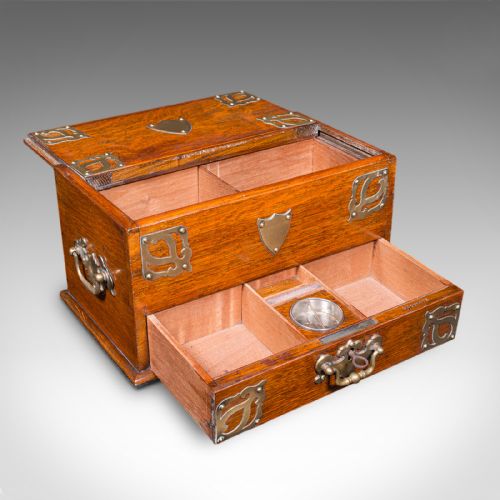


Vintage Brass Tobacco Box
A vintage brass tobacco box is a small, functional receptacle designed to hold pipe tobacco, snuff, or cigars.
Vintage Brass Tobacco Box
A vintage brass tobacco box encompasses small lidded containers and desk pieces made primarily to store smoking materials. When searching for a vintage brass tobacco box, buyers encounter items ranging from Georgian and Victorian pocket snuff boxes to larger Edwardian and Art Deco receptacles.
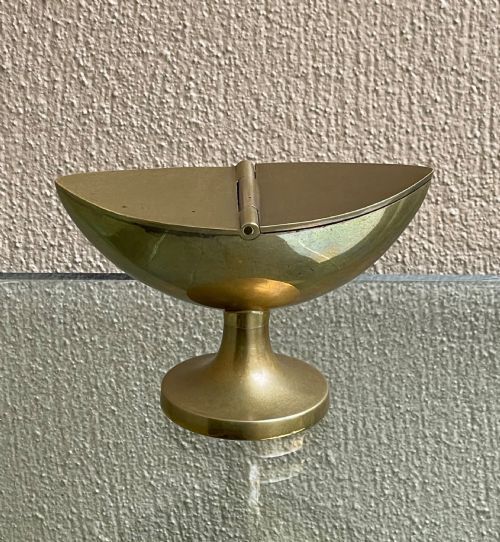
The materials paired with brass across these listings include copper, oak, walnut, and ebonised wood. Form varies from navette-shaped table boxes and engraved tins to novelty items and larger humidor cabinets.
Origins span English, German Dutch, and Indian workshops, with periods stretching from the eighteenth century through to nineteen thirty. The selection balances small pocket snuff boxes with heavier desktop smoking accessories.
How they were made
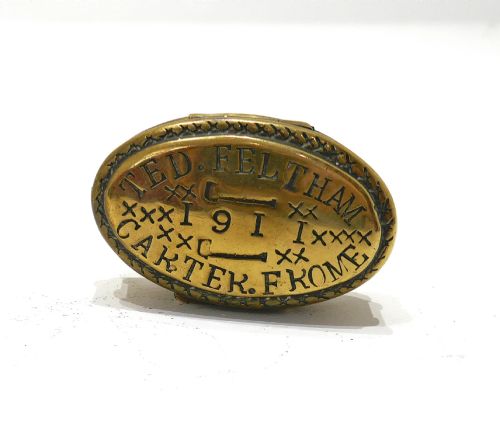
Metalworking techniques form the core of these pieces, utilising cast, beaten, and engraved brass and copper. Surfaces frequently display crisp hand-engraved inscriptions, pictorial battle scenes, or decorative chasing.
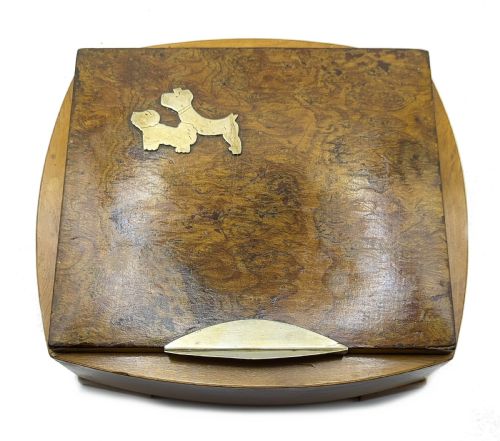
Where wood is combined with metal, such as burr walnut, golden oak, or linden wood, joinery includes fine carving and tambour construction. Black Forest examples demonstrate detailed figurative woodcarving paired with metal hinges and fittings.
Vintage Brass Tobacco Box Retail Price Guide 2026
Typical asking prices for vintage brass tobacco box among the pieces listed under this phrase on Sellingantiques today, from the lower quarter to the upper quarter. They describe what is for sale here now, not the wider market.
A fierce brown bear carved from linden wood stands guard over one nineteenth-century tobacco box.
What varies in quality
Quality in these pieces is dictated by the crispness of the metal engraving and the structural integrity of the hinges and lids. Superior examples retain sharp detail in engraved lettering and decorative motifs without excessive wear.
The choice of secondary materials also separates standard boxes from finer specimens. Solid timber carcasses with well-fitted brass mounts and functioning locks represent superior craftsmanship compared to simpler utilitarian tins.
The Vintage Brass Tobacco Box Glossary
- Snuff box
- A small lidded container designed specifically to hold finely ground tobacco for inhalation. These pocket-sized pieces often feature tight-fitting hinges to keep the contents dry.
- Humidor
- A specialised storage box designed to maintain humidity levels for cigars or tobacco. These larger desktop or cabinet formats frequently incorporate wood interiors.
- Navette shaped
- A boat-shaped form with pointed ends, popular for Georgian table snuff boxes. This symmetrical outline offers an elegant profile on a surface.
- Black Forest
- A nineteenth-century style originating from the wooded mountain region of Central Europe, known for highly realistic carved animal and botanical forms. Bears and woodland creatures are characteristic subjects.
- Tambour
- A method of construction using narrow strips of wood glued to a canvas backing to create a flexible sliding door. This allows for curved cabinet fronts on smokers boxes.
Vintage Brass Tobacco Box: Frequently Asked Questions
What is a vintage brass tobacco box used for?
These boxes were originally utilised to store loose tobacco, snuff, or cigars safely and securely.
Today, collectors use them as decorative desk accessories or small trinket containers.
How do I date a brass tobacco box?
Dating relies on stylistic clues, construction methods, and any engraved dates or maker names present on the metal.
Georgian and Victorian pieces often show hand engraving, while later Edwardian and Art Deco items display distinct period geometry.
Are all tobacco boxes made entirely of brass?
Many feature brass as the primary metal, sometimes combined with copper or housed within wooden bodies.
Oak, walnut, and carved linden wood frequently appear alongside brass hinges, plaques, and mounts.
How should I clean a brass tobacco box?
Gentle dusting with a soft dry cloth is recommended to preserve the historic patina and surface finish.
Avoid harsh chemical polishes that strip away the aged character accumulated over the centuries.