

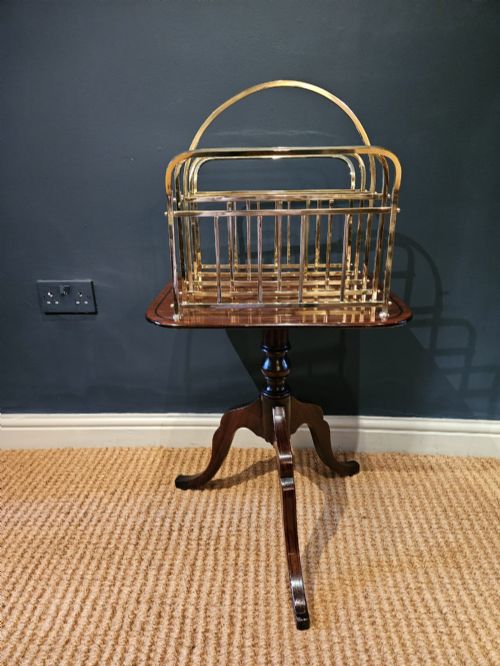
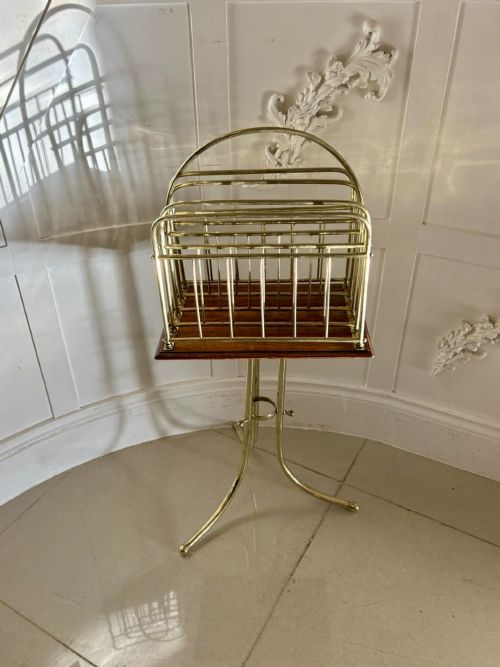


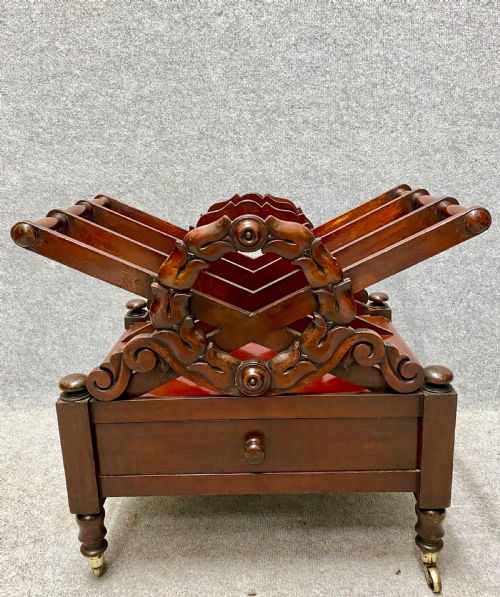


Vintage Brass Magazine Stand
These vintage brass magazine stands combine utility and display, offering a practical way to hold periodicals while bringing warm metallic tones into a room.
Vintage Brass Magazine Stand
A vintage brass magazine stand brings together metal framework and traditional wooden elements, encompassing forms like newspaper racks, canterburys, and revolving stands. The pieces span periods from the nineteenth century through the Edwardian era and the nineteen-thirties, reflecting diverse influences from Regency elegance to Arts and Crafts simplicity.
Buyers frequently encounter combinations of brass paired with timbers such as mahogany, oak, and walnut. These items serve the functional purpose of holding reading material while functioning as decorative furniture within a living space.
The selection ranges from boat-shaped canterburys to kidney-shaped bamboo-style racks and revolving bookcases. Each variation demonstrates how domestic storage adapted across different decades to suit changing interior tastes.
Distinguishing quality in construction and design
Superior quality emerges in the substantial gauge of the brass and the precision of the joinery in the wooden elements. Finer examples display thoughtful proportion, such as balanced divisions in multi-section canterburys and secure mounting on revolving mechanisms.
Material selection dictates the grade of the piece, with dense hardwoods like rosewood and mahogany elevating the status of the stand. Ornate detailing in the brass casting and deliberate decorative inlay further separate standard utility items from superior examples.
Vintage Brass Magazine Stand Retail Price Guide 2026
Typical asking prices for vintage brass magazine stand among the pieces listed under this phrase on Sellingantiques today, from the lower quarter to the upper quarter. They describe what is for sale here now, not the wider market.
Some stands spin smoothly on their axes, proving that nineteenth-century readers appreciated the simple joy of a rotating newspaper.
The Vintage Brass Magazine Stand Glossary
- Canterbury
- A low, partitioned stand originally designed for holding sheet music or loose papers. They frequently feature carrying handles and small feet or castors.
- Folio stand
- A hinged stand designed for holding large books, prints, or portfolios open or upright. They often appear in oversized proportions suited to large rooms.
- Tubular brass
- Hollow metal tubing utilised to reduce weight while maintaining structural strength in frames and handles. It became common in nineteenth-century metalwork.
- Revolving rack
- A stand constructed with a central axis allowing the entire tier of compartments to turn. This mechanism provides access to stored periodicals from any angle.
- Inlay
- A decorative technique where pieces of contrasting timber or material are fitted flush into the wood surface. Burr walnut stands frequently employ this method for visual depth.
Vintage Brass Magazine Stand: Frequently Asked Questions
What is a canterbury?
A canterbury is a low, partitioned stand traditionally used for holding sheet music, folios, and newspapers. These pieces typically include carrying handles and dividers to keep documents upright.
Over time, the form adapted to function primarily as a magazine or newspaper rack while retaining its characteristic slatted or divided compartments.
How do I care for brass and wood?
Maintenance involves dusting the wooden frame with a dry cloth and occasionally treating timber surfaces with appropriate wax. Brass elements require gentle cleaning to preserve their natural surface without removing aged character.
Harsh chemical polishes should be avoided to protect both the metal finish and the surrounding timber components.
Are these stands sturdy enough for daily use?
Most stands are constructed from durable hardwoods and metal frames designed for practical household storage. Multi-division racks and revolving models provide stable compartments for regular handling of periodicals.
Checking the stability of joints and the security of metal fixings ensures the stand safely supports daily retrieval of reading materials.
How do I identify the period of a stand?
Dating relies on observing characteristic style markers, such as Regency boat shapes, Victorian rosewood craftsmanship, or Edwardian oak and brass combinations. Construction methods and material choices offer clear indicators of manufacture date.
Comparing structural details against established period designs helps determine whether an item originates from the nineteenth century or later decades.